
Aluminum is notoriously difficult to surface grind because it is soft, gummy, and prone to wheel loading — yet surface grinding for aluminum is essential in aerospace, automotive, and mold-making shops that need flat, dimensionally accurate aluminum parts. Therefore, this guide explains the wheel choices, coolant strategies, and parameters that make aluminum grinding productive and defect-free. Moreover, we share proven techniques from YUTON’s 150-person engineering team in Dongguan, who grind aluminum components daily on machines equipped with Japanese, Taiwanese, and American core components.
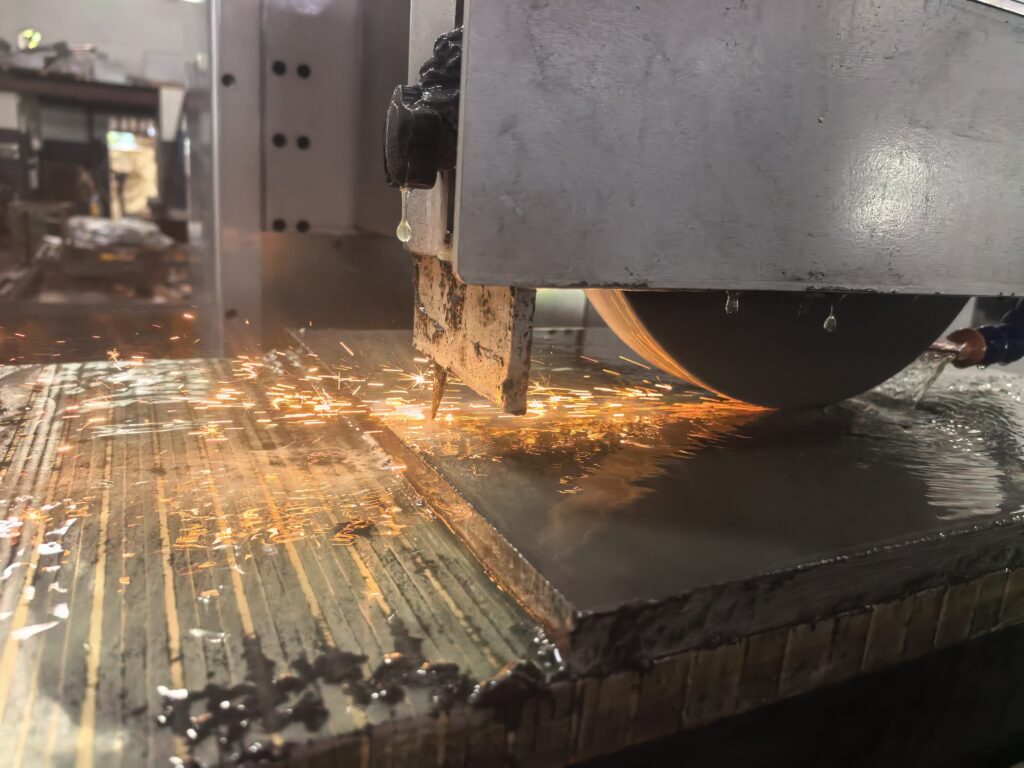
Why Aluminum Is Challenging to Surface Grind
Aluminum’s physical properties create three interrelated problems during grinding. Therefore, understanding these challenges is the first step to overcoming them.
Softness and Wheel Loading
Aluminum’s low hardness (Brinell 15–150 depending on alloy) means the abrasive grains cut deeply, generating long, ductile chips that pack into the wheel pores. Furthermore, these chips weld to the wheel under grinding heat, creating a loaded wheel that loses cutting ability and generates excessive friction. Consequently, loaded wheels produce poor surface finish, burn marks, and dimensional errors — all within minutes if you use the wrong wheel.
Low Melting Point and Thermal Expansion
Aluminum melts at 660°C, far lower than steel’s 1,500°C. Therefore, localized grinding heat can approach or exceed the recrystallization temperature, causing surface smearing and dimensional changes. Moreover, aluminum’s thermal expansion coefficient (23 × 10⁻⁶/°C) is roughly twice that of steel, meaning even modest temperature rises cause significant dimensional growth. However, with proper coolant and light cuts, you can keep the workpiece within ±2°C of ambient — essential for holding tight tolerances on thin aluminum plates.
Surface Smearing and Embedment
Soft aluminum tends to smear rather than fracture cleanly under the abrasive grain. Therefore, the ground surface may appear polished but actually contains smeared metal that hides sub-surface damage. Furthermore, abrasive grains can embed in the soft surface, creating hard inclusions that cause problems in subsequent anodizing or polishing operations. In addition, the Society of Manufacturing Engineers recommends post-grinding etching to detect embedded abrasive on critical aerospace aluminum parts.
Selecting the Right Grinding Wheel for Aluminum
Wheel selection is the single most important decision when surface grinding for aluminum. Therefore, you need an open-structure wheel with sharp abrasive that resists loading and clears chips efficiently.
Silicon Carbide vs Aluminum Oxide
Silicon carbide (SiC) is the preferred abrasive for aluminum grinding. Therefore, its sharp, angular grains cut cleanly into soft metal with minimal rubbing and loading. Moreover, SiC grains fracture readily, continuously exposing fresh cutting edges that resist the gummy welding effect common with aluminum oxide wheels on aluminum.
However, for harder aluminum alloys like 7075-T6 (Brinell 150), premium aluminum oxide (white or blue fired) wheels in very open structure can also work. Furthermore, these wheels cost less than SiC but require more frequent dressing. Consequently, for production volumes above 50 parts, SiC wheels pay for themselves through reduced dressing time and better surface quality.
Recommended Wheel Specifications
| Application | Abrasive | Grit | Hardness | Structure | Bond |
|---|---|---|---|---|---|
| Roughing 6061/6082 | SiC (C) | 36–46 | H–I | 10–12 (very open) | Vitrified |
| Finishing 6061/6082 | SiC (C) | 60–80 | G–H | 8–10 | Vitrified |
| Roughing 7075-T6 | SiC (C) or Al₂O₃ (WA) | 46–54 | I–J | 8–10 | Vitrified |
| Finishing 7075-T6 | SiC (C) | 80–100 | H | 7–9 | Vitrified |
Therefore, the key principle is: open structure (8–12), soft grade (G–I), and relatively coarse grit. Moreover, never use a dense, hard wheel on aluminum — it will load within minutes and produce scrap parts. YUTON ships every CNC surface grinder with adjustable spindle speed specifically to accommodate different wheel types for materials like aluminum.
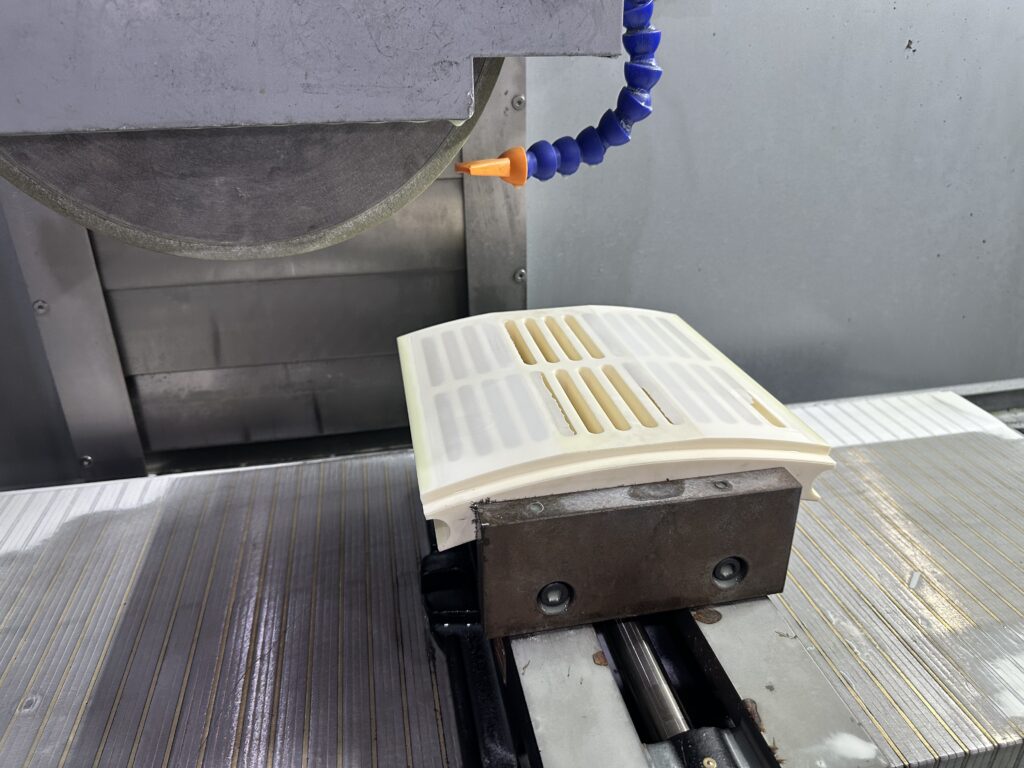
Coolant Strategy: Critical for Aluminum Grinding
If wheel selection is the most important decision, coolant is the second. Therefore, generous, clean coolant is non-negotiable when surface grinding for aluminum.
Coolant Type and Concentration
- Heavy-duty soluble oil (8–12% concentration): Best overall choice for aluminum. Moreover, the higher concentration provides the lubricity needed to prevent chip welding while maintaining adequate cooling.
- Semi-synthetic fluid (6–8%): Good balance of cooling and lubrication. However, some semi-synthetics leave a residue that interferes with anodizing — verify compatibility with your post-grinding process.
- Straight cutting oil: Maximum lubricity for difficult alloys like 2024-T4. Furthermore, oil prevents loading almost entirely but has poor cooling capacity. Therefore, use only for light finishing passes on manual surface grinders.
Furthermore, flow rate should be 25–35 liters per minute per 100 mm of wheel width — higher than for steel grinding. Consequently, the extra volume flushes chips from the wheel pores and keeps the workpiece cool. In addition, maintain filtration to 5 microns; aluminum chips are soft and tend to recirculate as fine sludge if filtration is inadequate, per the ISO 9001 contamination control requirements.
Nozzle Configuration for Aluminum
Use a wide-fan primary nozzle aimed directly at the nip, plus a secondary “wheel washer” nozzle at 90° to the wheel periphery. Therefore, the primary nozzle lubricates the cut, while the secondary nozzle continuously cleans the wheel face of aluminum chips. Moreover, this dual-nozzle setup reduces loading by 60–80% compared to single-nozzle configurations on YUTON’s hydraulic surface grinders.
Grinding Parameters for Common Aluminum Alloys
Correct parameters prevent the heat and loading that ruin aluminum parts. Therefore, here are proven starting points for the most common aerospace and industrial alloys.
Parameter Table
| Parameter | 6061-T6 | 2024-T4 | 7075-T6 | 5052-H32 |
|---|---|---|---|---|
| Wheel speed (m/s) | 20–25 | 18–22 | 22–28 | 18–22 |
| Table speed (m/min) | 20–30 | 15–25 | 15–22 | 20–28 |
| Downfeed roughing (mm) | 0.03–0.06 | 0.02–0.04 | 0.02–0.04 | 0.03–0.05 |
| Downfeed finishing (mm) | 0.005–0.015 | 0.005–0.01 | 0.005–0.01 | 0.005–0.015 |
| Crossfeed (mm/pass) | 2–4 | 1.5–3 | 1–2 | 2–3 |
Therefore, use higher table speeds and wider crossfeed for softer alloys — this spreads the heat and reduces loading per wheel revolution. Moreover, always finish with 2–3 spark-out passes at zero downfeed to clean up the surface and remove any smeared material. Furthermore, never spark-out dry on aluminum — always keep full coolant flowing during spark-out.
Dressing Frequency
Aluminum loads wheels much faster than steel. Therefore, dress the wheel every 5–15 minutes depending on alloy softness and downfeed. Moreover, use a sharp single-point diamond dresser with a traverse rate of 100–200 mm/min and a dress depth of 0.02–0.05 mm. Consequently, a freshly dressed SiC wheel will cut aluminum cleanly for 5–10 minutes before loading becomes noticeable. In addition, if you hear a change in grinding sound (from sharp cutting to dull rubbing), dress immediately — as recommended by MMS Online’s grinding practice guide.
Workholding Considerations for Aluminum Parts
Aluminum’s softness and non-ferromagnetic nature (most alloys) create workholding challenges. Therefore, you cannot simply clamp aluminum on a standard magnetic chuck.
Vacuum Chucks for Thin Aluminum Plates
Vacuum chucks distribute holding force evenly over the entire part surface. Therefore, they are ideal for thin aluminum sheets and plates that would bow under magnetic or mechanical clamping. Moreover, YUTON offers vacuum chuck options on its automatic surface grinder line, with vacuum pumps rated for parts as thin as 2 mm.
However, vacuum chucks have limitations: the part must cover sufficient chuck area (typically 70%+) to maintain holding force, and through-holes break the vacuum seal. Therefore, use rubber masking tape or fixture plates to seal around holes and maintain vacuum integrity.
Mechanical Fixtures and Parallels
For small aluminum blocks and irregular shapes, precision vices and mechanical fixtures work well. Furthermore, use soft jaws (aluminum or nylon) to prevent marring the workpiece. Moreover, always check part flatness with a dial indicator after clamping — aluminum distorts easily under even moderate clamping force. Consequently, the European Commission CE standard for grinding machine safety requires that workholding devices are verified before each setup.
How YUTON Grinders Handle Aluminum Applications
YUTON surface grinders are engineered to handle the full range of workpiece materials, including soft, challenging aluminum alloys. Therefore, every machine features variable-speed spindles (adjustable range 1,400–2,800 RPM) to match wheel speed to the material being ground. Moreover, the precision-ground cast iron base and hydrostatic ways on our hydraulic surface grinders absorb vibration — critical when grinding aluminum, where chatter marks appear easily due to the material’s low stiffness. Furthermore, with 3,100 units sold in 2025 (top three in China), YUTON’s 15,000 m² ISO 9001 and CE-certified factory has the scale to support aluminum grinding applications from prototype shops to high-volume aerospace suppliers. Consequently, YUTON machines grind aluminum with the same confidence as hardened tool steel. Learn more at the YUTON homepage.
FAQ: Surface Grinding for Aluminum
Can you surface grind aluminum on a standard surface grinder?
Yes, but you must change the wheel to silicon carbide and use generous coolant. Therefore, never grind aluminum with the same aluminum oxide wheel you use for steel — it will load within minutes. Moreover, adjust spindle speed down to 20–25 m/s peripheral speed for best results.
What surface finish can I achieve on ground aluminum?
On 6061-T6, expect Ra 0.4–0.8 μm with 60–80 grit SiC and proper coolant. However, on 7075-T6 with a 100 grit SiC wheel, Ra 0.2–0.4 μm is achievable. Furthermore, post-grinding fine abrasive blasting or polishing can bring the finish below Ra 0.1 μm for optical or anodized surfaces.
How do I stop the wheel from loading when grinding aluminum?
Use a very open-structure silicon carbide wheel (structure 10–12), keep soluble-oil coolant flowing at 25–35 L/min, and dress the wheel every 5–15 minutes. Therefore, the open pores clear chips, the coolant prevents chip welding, and frequent dressing exposes fresh sharp grains. Moreover, a wheel-washer nozzle at 90° to the wheel face dramatically reduces loading.
What is the best wheel for grinding 7075-T6 aluminum?
A 46–54 grit silicon carbide wheel, G–H hardness, structure 8–10, vitrified bond works best for roughing 7075-T6. Therefore, the harder alloy allows slightly denser structure than softer grades. Furthermore, for finishing, switch to 80–100 grit SiC with H hardness. Consequently, 7075-T6 responds well to grinding because its higher hardness reduces smearing and loading compared to 6061.
Can I use a magnetic chuck to hold aluminum parts?
Most aluminum alloys are non-ferromagnetic and cannot be held on a magnetic chuck. Therefore, use a vacuum chuck for flat plates, a mechanical vice for blocks, or specialized fixtures for irregular shapes. However, some high-silicon aluminum casting alloys have slight magnetic permeability — but it is insufficient for reliable magnetic holding. In addition, always verify holding force with a pull test before grinding, as recommended by the Association for Manufacturing Technology.
Conclusion
Surface grinding for aluminum is challenging but fully achievable with the right combination of silicon carbide wheels, generous coolant, conservative parameters, and appropriate workholding. Therefore, never approach aluminum grinding with the same setup you use for steel — the soft, gummy nature of aluminum demands specific wheel grades, open structures, and frequent dressing. Moreover, coolant type, flow rate, and nozzle configuration are just as important as wheel selection for preventing loading and thermal damage. Furthermore, YUTON’s surface grinders — built with 150 engineers, 15,000 m² of production space, 3,100 units sold in 2025, and Japanese, Taiwanese, and American core components — provide the variable-speed spindles, rigid bases, and versatile workholding options that aluminum grinding requires. Consequently, with the right machine and the right technique, aluminum grinds just as reliably as any other material. Therefore, equip your shop properly, follow these guidelines, and aluminum surface grinding becomes a routine operation, not a problem to avoid.