
Why Manufacturers Are Investing in CNC Surface Grinder Automation
Manufacturers across aerospace, mold making, automotive, and medical industries face the same challenge: achieving tighter tolerances while reducing labor costs and increasing production capacity.
Traditional surface grinding depends heavily on skilled operators. However, experienced grinding technicians are becoming harder to recruit, labor costs continue to rise, and production consistency often varies between shifts.
As a result, more factories are turning to CNC surface grinder automation to improve productivity, maintain micron-level accuracy, and enable lights-out manufacturing.
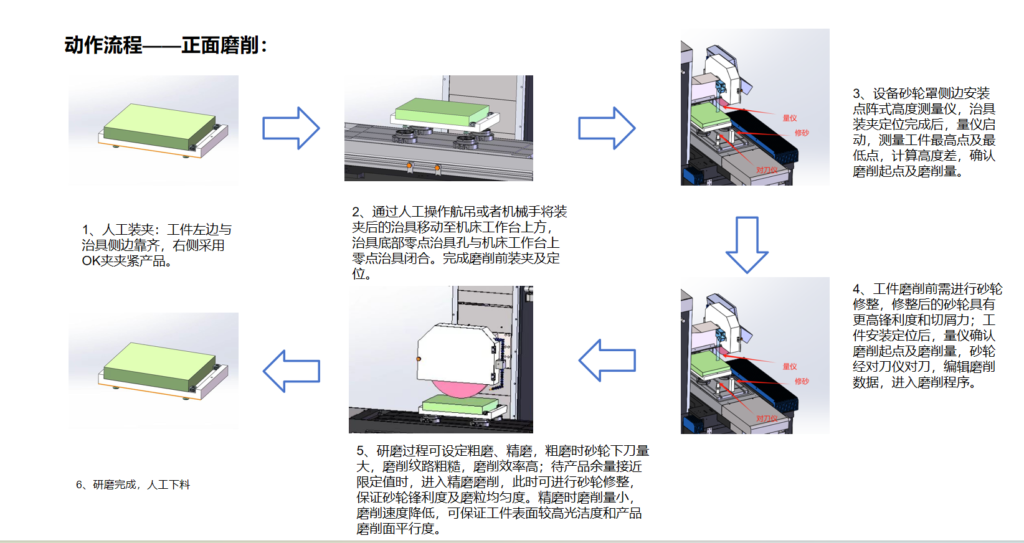
Modern automated grinding systems combine CNC controls, automatic wheel dressing, robotic loading systems, and intelligent monitoring technologies to deliver consistent results with minimal human intervention.
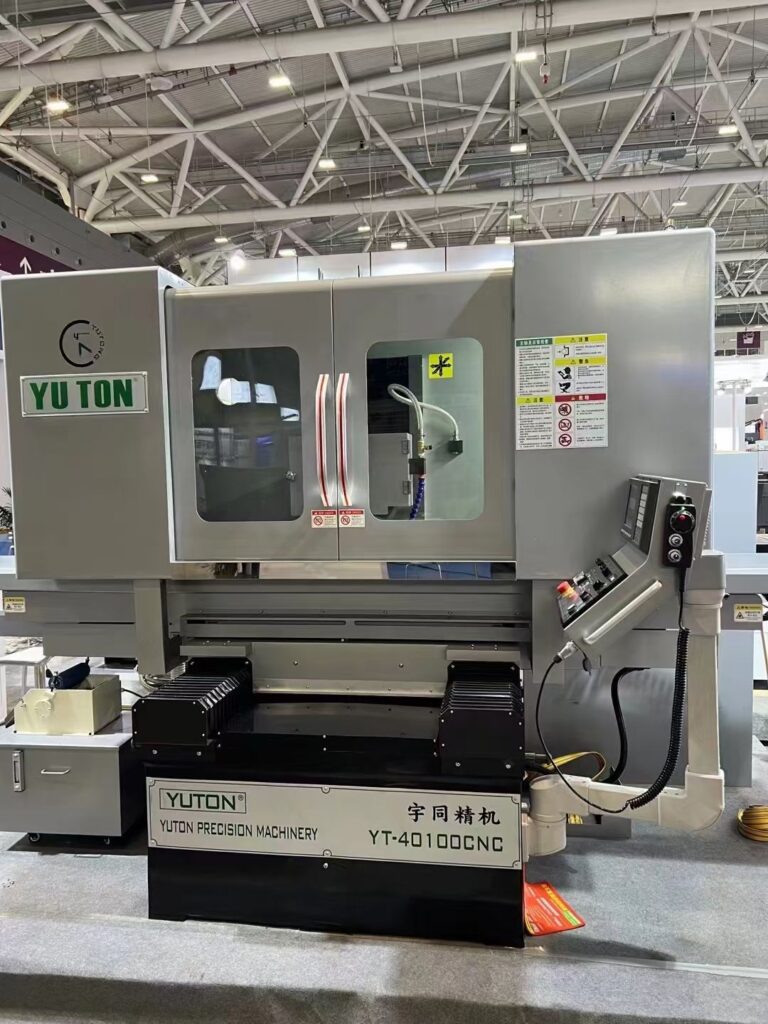
What Is CNC Surface Grinder Automation?
CNC surface grinder automation integrates advanced CNC control systems with automated grinding functions, including:
- Automatic wheel dressing
- Servo-controlled axis movement
- Robotic loading and unloading
- Adaptive grinding cycles
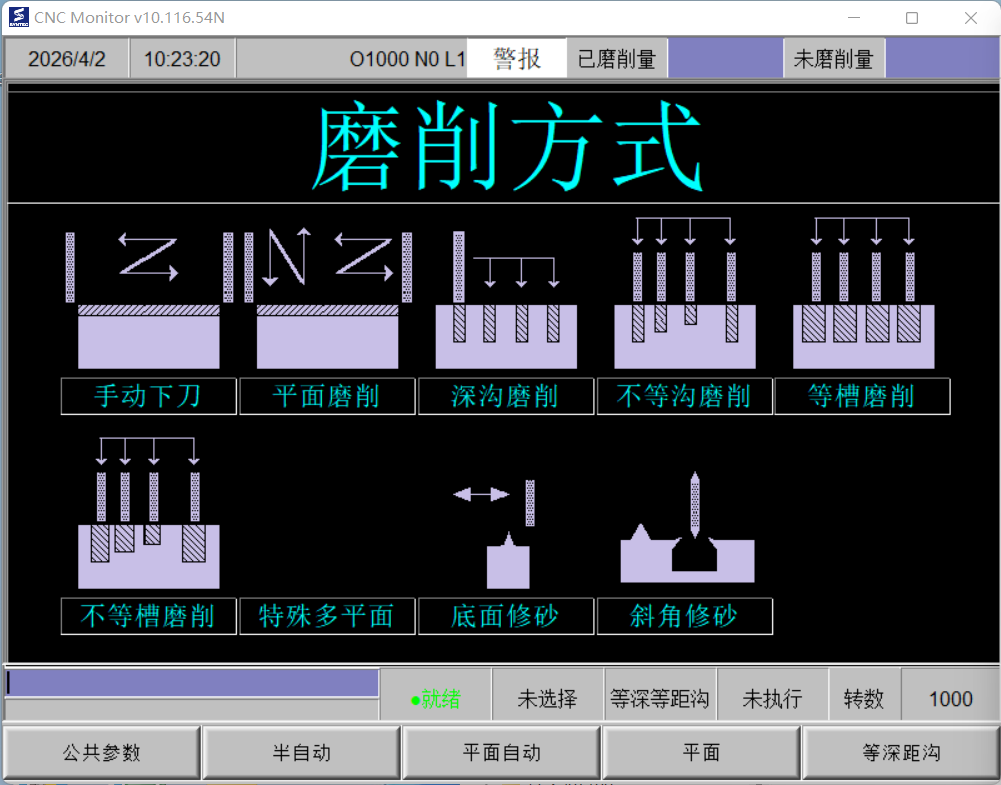
- In-process measurement systems
- Predictive maintenance monitoring
Unlike conventional manual grinders, automated CNC grinders continuously adjust grinding parameters to maintain accuracy throughout long production runs.
Typical positioning accuracy reaches 0.001mm, while grinding flatness can consistently achieve ±0.002mm depending on application requirements.
Key Benefits of Automated Surface Grinding
Consistent Micron-Level Precision
Human error is one of the largest causes of grinding variation.
Automated CNC grinders eliminate operator-dependent inconsistencies through programmable grinding cycles and closed-loop servo control.
Benefits include:
- Better flatness
- Improved parallelism
- Lower scrap rates
- Consistent surface finish
For mold bases, machine components, and aerospace parts, repeatable accuracy directly improves assembly quality.
Reduced Labor Costs
One operator can supervise multiple automated grinding machines simultaneously.
Automation reduces:
- Manual setup time
- Wheel dressing labor
- Workpiece handling
- Operator fatigue
Many manufacturers report labor cost reductions of up to 40%.
Higher Production Efficiency
Automated wheel dressing and robotic handling significantly reduce machine downtime.
Compared with manual grinding, automated systems commonly achieve:
| Production Factor | Manual Grinding | CNC Automation |
|---|---|---|
| Operators Required | 4 | 1 |
| Scrap Rate | 3.5% | 0.8% |
| Parts Per Shift | 100 | 180 |
| Cost Per Part | $2.80 | $1.60 |
For high-volume production environments, these improvements create substantial long-term savings.
Predictive Maintenance
Modern CNC grinders monitor:
- Spindle vibration
- Hydraulic pressure
- Coolant flow
- Bearing temperature
Potential issues can be identified before machine failure occurs, reducing unexpected downtime and maintenance costs.
Manual vs PLC vs CNC Surface Grinders
| Feature | Manual Grinder | PLC Surface Grinder | CNC Surface Grinder |
| Precision | ±0.005mm | ±0.003mm | ±0.001–0.002mm |
| Operator Skill | High | Medium | Low |
| Automation Level | Low | Medium | High |
| Wheel Dressing | Manual | Semi-Automatic | Fully Automatic |
| Best Application | Toolroom Work | Medium Batch Production | High-Volume Manufacturing |
Factories producing more than 500 parts per month typically achieve the fastest ROI from CNC automation.
Industry Applications
Mold and Die Manufacturing
Mold plates and inserts require exceptional flatness and repeatability.
Automated grinding delivers:
- Stable dimensional accuracy
- Reduced thermal distortion
- Faster production cycles
Many mold manufacturers utilize PLC and CNC grinding systems to maintain consistency across large production batches.
Aerospace Components
Titanium alloys, hardened steels, and nickel-based superalloys require highly controlled grinding conditions.
Automated grinding provides:
- Process traceability
- Controlled material removal
- Improved quality documentation
These capabilities support manufacturers working within strict aerospace quality systems.
Medical Device Manufacturing
Medical components often require ultra-fine surface finishes and repeatable dimensions.
Automated CNC grinding reduces contamination risks while maintaining consistent production quality.
Automotive Production
Automotive manufacturers depend on automation to support mass production requirements.
Applications include:
- Brake components
- Transmission parts
- Engine components
- Precision assemblies
Robotic loading systems further increase production efficiency.
Why Global Manufacturers Choose YUTON
Guangdong YUTON Precision Machinery is a professional surface grinder manufacturer located in Dongguan, China.
Key strengths include:
- 15,000㎡ manufacturing facility
- 7 production buildings
- 150 employees
- ISO9001 quality management system
- CE-certified machines
- More than 3,100 machines sold in 2025
- Ranked among China’s Top 3 surface grinder manufacturers
YUTON offers:
- Manual surface grinders
- PLC automatic surface grinders
- CNC surface grinders
- Large-format automatic grinding machines
Core components are sourced from leading suppliers in Japan, Germany, Taiwan, and the United States to ensure long-term reliability and precision.
How to Evaluate a CNC Surface Grinder Supplier
Before purchasing, buyers should consider:
Total Cost of Ownership
Evaluate:
- Machine price
- Installation costs
- Spare parts availability
- Training expenses
- Energy consumption
The cheapest machine often becomes the most expensive over time.
Precision Verification
Always request:
- Sample grinding reports
- Flatness measurements
- Surface finish results
- Long-term accuracy testing
After-Sales Support
Assess:
- Technical response time
- Spare parts inventory
- Remote diagnostics
- Global service capabilities
Reliable support significantly reduces operational risk.
Future Trends in Surface Grinding Automation
AI-Powered Grinding Optimization
Artificial intelligence can automatically adjust grinding parameters based on real-time sensor feedback.
Benefits include:
- Reduced cycle times
- Improved wheel life
- Higher process stability
Digital Twin Technology
Digital simulations allow manufacturers to optimize grinding processes before production begins.
This reduces setup time and material waste.
Sustainable Manufacturing
Energy-efficient spindle systems and advanced coolant filtration technologies are becoming standard requirements for modern factories.
Frequently Asked Questions
What is CNC surface grinder automation?
It combines CNC controls, automatic wheel dressing, robotic handling, and intelligent monitoring to automate grinding operations.
How much labor can automation save?
Many factories reduce direct grinding labor by 30% to 40%.
What accuracy can CNC surface grinders achieve?
High-quality systems can maintain flatness and positioning accuracy within ±0.002mm.
What industries benefit most?
Mold making, aerospace, automotive, medical devices, and precision machining industries.
Is CNC automation suitable for small batch production?
Yes. Modern CNC systems support fast program changes and quick setup.
Can robotic loading be added later?
Many machines can be upgraded with robotic loading systems depending on machine configuration.
What is the typical ROI period?
Most manufacturers achieve payback within 12–18 months.
How often should a CNC grinder be maintained?
Daily inspections, monthly calibration checks, and annual comprehensive servicing are recommended.
Conclusion
CNC surface grinder automation is transforming precision manufacturing by delivering higher accuracy, lower labor costs, and greater production efficiency.
For manufacturers seeking long-term competitiveness, automation is no longer optional—it is becoming essential.
YUTON provides a complete range of manual, PLC, and CNC surface grinding solutions designed for global manufacturers who require reliability, precision, and cost-effective performance.
Ready to upgrade your grinding operations?
Contact YUTON today to request a quotation, free sample grinding test, or technical consultation.