
Surface Grinding Cost: Full Breakdown & 7 Ways to Reduce It
The surface grinding cost of any manufacturing operation depends on much more than the machine price tag. In fact, shops that only focus on purchase price often miss 60% to 80% of the real expenses. Therefore, understanding the full cost structure is the first step toward smarter spending and higher margins.
In this guide, you will learn exactly what drives surface grinding cost, where most shops waste money, and seven practical strategies to cut your total expenses — without sacrificing quality.
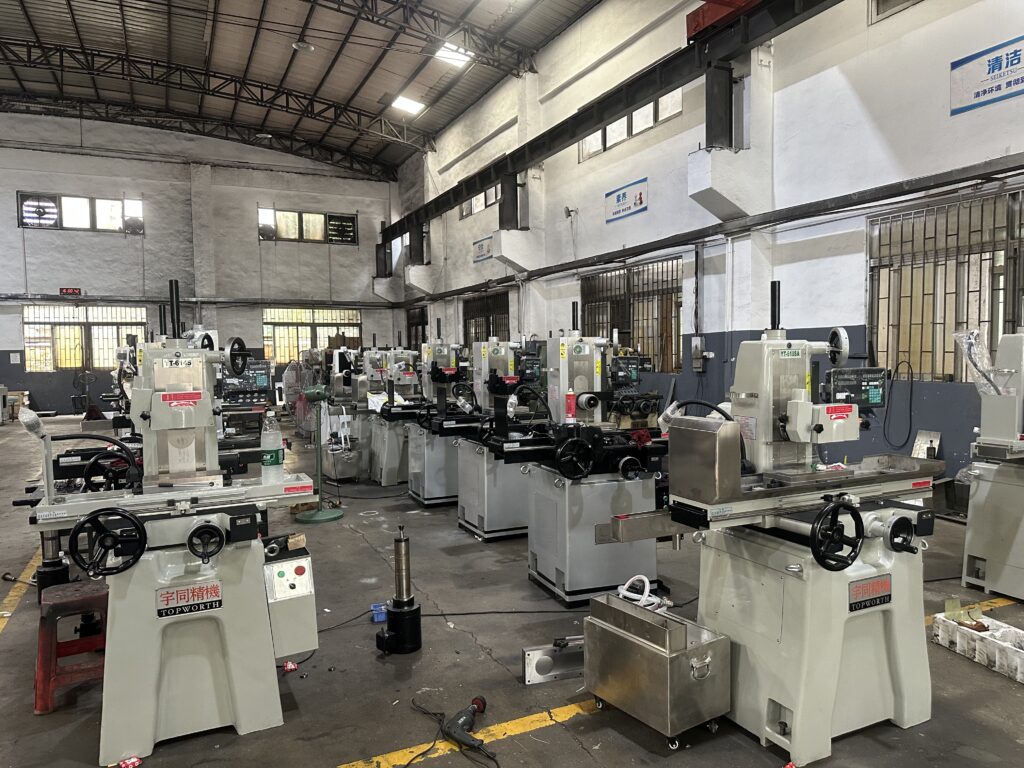
What Makes Up Surface Grinding Cost?
Surface grinding cost is not a single number. Instead, it is a combination of several factors that together determine how much each part costs to grind. Specifically, the major cost components include:
- Machine purchase price and depreciation
- Labor and operator wages
- Energy consumption
- Grinding wheel and tooling costs
- Coolant and consumables
- Maintenance and repair
- Downtime and scrap losses
Moreover, each of these components interacts with the others. For instance, a cheaper machine may consume more energy or require more frequent repairs, which pushes up the total surface grinding cost over time. As a result, smart buyers always look at the full picture rather than just the sticker price.
Machine Purchase Price Breakdown
The purchase price of a surface grinder varies widely depending on type, size, and features. To give you a realistic range:
- Manual surface grinders (check our manual series): $10,000 – $30,000
- Automatic surface grinders (see automatic models): $30,000 – $80,000
- CNC surface grinders (explore CNC options): $80,000 – $250,000+
- Hydraulic surface grinders (view hydraulic series): $50,000 – $180,000
However, the purchase price is only the starting point. On average, machine depreciation accounts for just 10% to 20% of the total cost per part. In other words, the machine itself is a relatively small part of your overall surface grinding cost.
Additionally, machines built with high-quality core components — such as Japanese spindle bearings, Taiwanese ball screws, and American linear guides — last longer and hold accuracy better. This reduces cost over the machine’s 15- to 20-year lifespan. Therefore, investing in quality upfront often saves more money in the long run.
Key Factors That Affect Machine Price
Several factors determine where a machine falls in that price range. First, the control system (manual, PLC, or full CNC) is the biggest cost driver. Second, the table size and grinding capacity directly affect the price. Third, the quality of core components — spindle, bearings, ball screws, and linear guides — can double or halve the cost.
For example, a CNC surface grinder with a high-precision spindle and automated wheel dressing will cost more upfront but deliver significantly lower cost per part in high-volume production.
Surface Grinding Cost: Labor vs. Automation
Labor is one of the largest cost drivers in surface grinding. In many traditional shops, a skilled grinder operator earns $25 to $45 per hour — and that cost does not stop when the machine is running. In addition to wages, you also pay for benefits, training, overtime, and the risk of human error.
However, automation changes this equation dramatically. According to recent industry data, automated grinding systems can reduce labor cost by up to 80%. A single automatic surface grinder can run 24 hours a day with minimal supervision, producing the output of two or three skilled operators.
Moreover, automation penetration in grinding is still below 5% globally. This means most shops have not yet captured these savings. Therefore, early adopters gain a significant cost advantage over competitors.
Real Cost Comparison
Consider a typical shop running two manual grinders with two operators each:
- Labor cost: 4 operators × $35/hour × 2,000 hours/year = $280,000/year
- Scrap rate: 3% to 5% = additional $15,000 to $25,000/year
Now compare with an automatic setup:
- Labor cost: 1 operator × $35/hour × 2,000 hours/year = $70,000/year
- Scrap rate: <1% = $5,000 to $8,000/year
The annual savings? Over $200,000. As a result, the return on investment for automation is typically 12 to 18 months.
Energy, Tooling, and Coolant Expenses
These three categories often fly under the radar, but they add up quickly. Specifically:
Energy Cost
A standard surface grinder consumes 5 to 15 kW during operation. Running 8 hours a day, 250 days a year, that translates to $2,000 to $6,000 in annual electricity cost. However, newer machines with energy-efficient motors and variable-frequency drives can reduce this by 20% to 30%.
Grinding Wheel and Tooling Cost
The choice of grinding wheel has a major impact on surface grinding cost. Traditional aluminum oxide wheels are cheap upfront but wear faster and require frequent dressing. On the other hand, CBN (cubic boron nitride) wheels cost 3 to 5 times more initially but last up to 5 times longer and maintain sharper cutting edges. In high-volume production, CBN wheels often deliver lower cost per part.
Coolant and Consumables
Coolant, filters, and cleaning supplies typically add $3,000 to $8,000 per machine per year. In addition, proper coolant management — including regular filtration and concentration monitoring — extends tool life and reduces waste disposal cost.
How to Reduce Surface Grinding Cost in 7 Steps
Based on the cost structure above, here are seven proven strategies to lower your total surface grinding cost:
1. Choose the Right Machine Type for Your Volume
Don’t over-spec or under-spec. For low-volume, high-mix work, a manual surface grinder may be most cost-effective. For high-volume production, invest in a CNC or automatic grinder to reduce labor cost per part.
2. Invest in Quality Core Components
Machines with premium spindles, bearings, and guides hold accuracy longer, produce fewer scrap parts, and need less frequent repair. Over a 15-year lifespan, the total cost of ownership is often lower than cheaper alternatives. For instance, manufacturers like YUTON use Japanese, Taiwanese, and American core components to ensure long-term precision and reliability.
3. Automate Repetitive Operations
Even partial automation — such as automatic wheel dressing, in-process gauging, or robotic part loading — can cut labor cost by 30% to 50%. Moreover, it reduces human error and improves consistency.
4. Optimize Grinding Parameters
Running the wheel at the wrong speed or feed rate wastes energy and wears the wheel faster. Therefore, work with your machine supplier to dial in optimal parameters for each material and operation.
5. Implement Preventive Maintenance
A scheduled maintenance program prevents costly unplanned downtime. For instance, regular spindle bearing inspection, way lubrication, and ball screw checks can extend component life by 30% to 50%. At YUTON, every machine undergoes 48 hours of continuous testing before shipment to catch potential issues early.
6. Upgrade to CBN Wheels Where Applicable
For production runs above 500 parts, CBN wheels typically deliver lower cost per part despite higher initial price. Additionally, they produce better surface finish and tighter tolerances.
7. Monitor and Track Cost Data
You cannot reduce what you do not measure. Track energy consumption, wheel life, scrap rate, and maintenance cost per machine. In most cases, this data reveals quick wins that save 10% to 20% on total surface grinding cost.
Maintenance and Downtime Cost
Unplanned downtime is one of the most expensive — and most underestimated — components of surface grinding cost. When a machine breaks down unexpectedly, you lose:
- Production output (often $500 to $2,000 per hour)
- Repair parts and service calls
- Operator idle time
- Late delivery penalties
On the other hand, a proactive maintenance program typically costs $5,000 to $15,000 per machine per year but prevents 70% to 80% of unplanned failures. Therefore, preventive maintenance is not an expense — it is an investment with clear returns.
Common Maintenance Cost Traps
Several common mistakes drive up maintenance cost:
- Skipping daily inspections to “save time”
- Using low-quality replacement parts
- Ignoring unusual noises or vibrations
- Running machines beyond recommended duty cycles
In fact, most major breakdowns start as small, fixable issues that were ignored. So, building a simple daily checklist can save thousands in emergency repair cost.
Total Cost of Ownership: The Big Picture
When you add up all these factors, the true surface grinding cost picture becomes clear. Here is a simplified total cost of ownership (TCO) comparison for a 5-year period:
表格
| Cost Category | Manual Grinder | CNC Surface Grinder |
|---|---|---|
| Machine purchase | $20,000 | $150,000 |
| Labor (5 years) | $350,000 | $175,000 |
| Energy | $15,000 | $12,000 |
| Tooling | $25,000 | $18,000 |
| Maintenance | $35,000 | $45,000 |
| Scrap (3% vs 0.5%) | $45,000 | $7,500 |
| Total (5 years) | $490,000 | $407,500 |
As this table shows, the CNC grinder costs 7.5× more upfront but saves $82,500 over 5 years. Moreover, it produces higher-quality parts with tighter tolerances, which opens doors to premium customers.
Therefore, when evaluating surface grinding cost, always look at the full picture — not just the purchase price. A trusted surface grinder manufacturer with ISO 9001 certification and a proven export track record (like YUTON, serving 50+ countries with 3,100+ units sold in 2025) can help you make the right investment decision.
For more industry insights on quality standards, refer to ISO 9001 certification frameworks. For machining cost benchmarks, check resources from SME and Modern Machine Shop.
FAQ
What is the average surface grinding cost per part?
It depends on part size, material, tolerance, and volume. For simple flat stock in mild steel, expect $0.50 to $3.00 per part in high volume. For complex, tight-tolerance work, cost can range from $10 to $50+ per part.
How can I reduce surface grinding cost without sacrificing quality?
Focus on automation, CBN wheel adoption, optimized parameters, and preventive maintenance. These four changes typically deliver 15% to 30% cost reduction while maintaining or improving quality.
Is a CNC surface grinder worth the higher price?
For production volumes above 100 parts per batch, yes. The higher upfront cost is offset by lower labor cost, less scrap, and better consistency. Over 5 years, total cost of ownership is often lower than manual alternatives.
What is the biggest hidden cost in surface grinding?
Unplanned downtime. A single major breakdown can cost $5,000 to $20,000 in lost production, repairs, and missed deadlines. Preventive maintenance is the best defense.