
Unbalanced grinding wheels cause chatter, poor surface finish, and premature spindle bearing wear — and proper surface grinder wheel balancing is the most effective way to prevent all three. Therefore, this guide covers static and dynamic balancing methods, tools, and step-by-step procedures so you can keep your grinder running smooth and your parts meeting specification. Moreover, we draw on practices from YUTON’s 150-person production team in Dongguan, who balance and test every wheel spindle assembly before shipping from their 15,000 m² ISO 9001 and CE-certified facility.
Why Wheel Balancing Matters
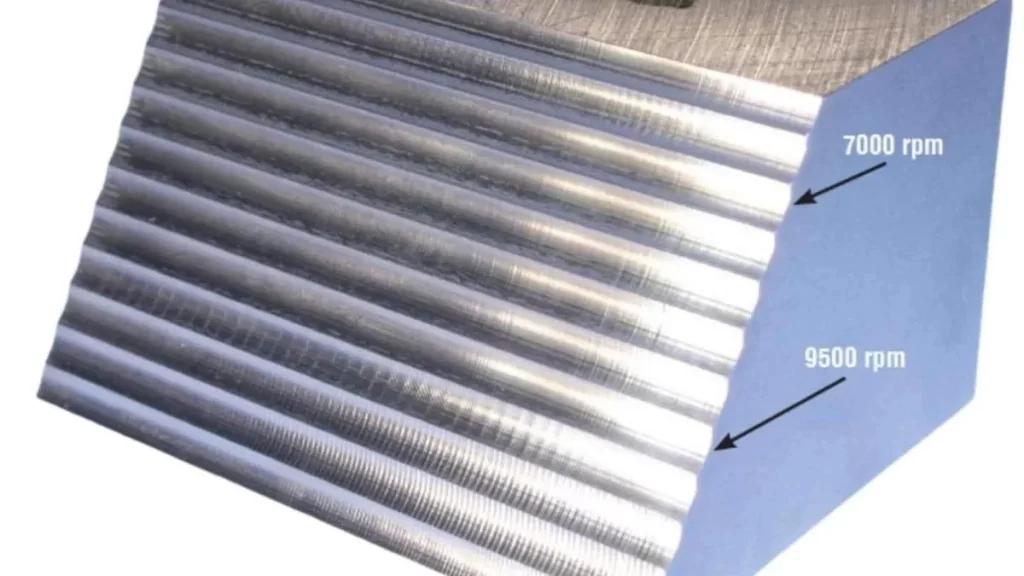
A grinding wheel rotating at 1,400–2,800 RPM generates centrifugal force proportional to the imbalance mass and the square of rotational speed. Therefore, even a small imbalance of 5 grams at 30 mm radius creates significant vibration at operating speed. Furthermore, this vibration transfers directly to the workpiece surface as chatter marks — evenly spaced ripple patterns that destroy surface finish and dimensional accuracy.
Consequences of Poor Balance
- Chatter marks on workpiece: The most visible symptom. Therefore, if you see regular wave patterns on the ground surface, check wheel balance first — before adjusting parameters or blaming the material.
- Spindle bearing damage: Vibration from imbalance loads spindle bearings cyclically. Moreover, this accelerates wear by 3–5× compared to a well-balanced wheel. Consequently, bearing replacement costs and downtime add up quickly on CNC surface grinders running production shifts.
- Wheel breakage risk: Severe imbalance at high speed creates uneven centrifugal stress in the wheel body. However, this is rare with modern vitrified wheels but is a real hazard with large-diameter wheels above 350 mm. Furthermore, the European Commission machinery directive requires wheel balance verification after mounting as part of CE-compliant grinding safety.
What Causes Wheel Imbalance
Grinding wheels are manufactured with inherent density variations — the abrasive mix, bond, and porosity are never perfectly uniform. Therefore, every new wheel has some initial imbalance, typically 10–50 gram-mm. Moreover, dressing removes material asymmetrically, and wheel wear during grinding further changes the balance condition. Consequently, a wheel that was balanced on Monday may need rebalancing by Wednesday if it has seen heavy grinding duty.
Static Balancing: The Essential First Step
Static balancing corrects the wheel’s heavy spot in a single plane and is sufficient for most surface grinder applications where the wheel width-to-diameter ratio is less than 0.5. Therefore, this is the method most shops use on hydraulic surface grinders and manual machines.
Equipment Needed
- Balancing stand (balancing arbor): A precision-ground shaft with low-friction rollers or knife edges. Furthermore, the stand must be level to within 0.02 mm/m — check with a precision level before starting.
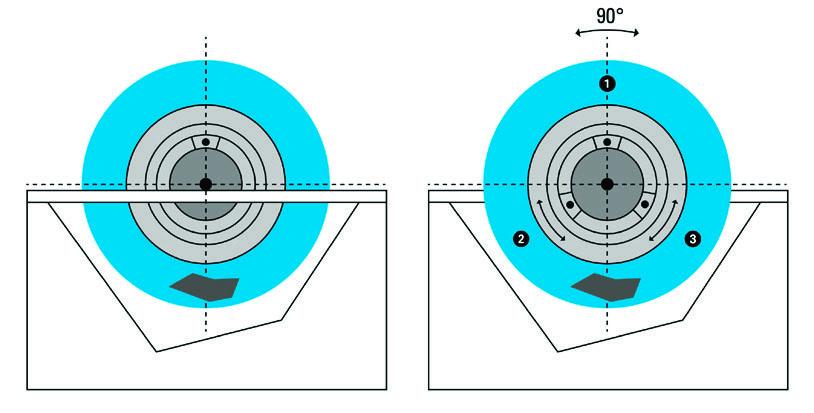
- Balancing weights (3 or 4): These screw into the wheel flange at specific angular positions. Moreover, most flanges have 3 weight slots at 0°, 120°, and 240°.
- Balancing mandrel: Mounts the wheel on the balancing stand. Therefore, the mandrel must match the spindle taper exactly — a loose mandrel gives false balance readings.
Step-by-Step Static Balancing Procedure
- Mount the wheel on the flange with blotter papers on both sides. Therefore, the blotters distribute clamping force evenly and prevent wheel cracking.
- Mount the flange on the balancing mandrel and place on the balancing stand. Moreover, ensure the stand is on a vibration-free surface — not on the grinder table.
- Allow the wheel to rotate freely and find its resting position. Therefore, the heavy spot will settle at the bottom (6 o’clock position).
- Move the top balancing weight to the 12 o’clock position (opposite the heavy spot). Furthermore, this counteracts the imbalance.
- Rotate the wheel 90° and release. If it still rolls back to the same heavy spot, adjust the other two weights: move one weight 30° toward the heavy spot and the other 30° away. Moreover, the goal is to make the wheel rest in any angular position without rolling.
- Verify by rotating 90° increments — the wheel should show no tendency to roll to one position. Therefore, if it does, fine-tune by shifting weights in small increments (10–15°).
- Tighten all weight lock screws and re-verify. Consequently, a properly balanced wheel will rest indifferently at any angle on the balancing stand.
Furthermore, the Society of Manufacturing Engineers recommends that static balance should achieve residual imbalance below 0.002 mm equivalent eccentricity for precision grinding applications.
Dynamic Balancing: For Critical Applications
Dynamic balancing corrects imbalance in two planes and is necessary for wide wheels (width/diameter > 0.5) and high-speed applications above 2,000 RPM. Therefore, dynamic balancing is standard practice for large automatic surface grinders running CBN or diamond wheels at elevated peripheral speeds.
When Dynamic Balancing Is Required
- Wheel diameter exceeds 350 mm. Therefore, larger wheels have more mass and generate greater centrifugal force from imbalance.
- Wheel peripheral speed exceeds 35 m/s. Moreover, centrifugal force scales with speed squared — small imbalance becomes large force at high speed.
- Wheel width exceeds 100 mm. Furthermore, wide wheels can have different heavy spots at each face — static balancing only corrects one plane.
- Chatter persists after static balancing. Consequently, this indicates a two-plane imbalance that static methods cannot resolve.
Electronic Dynamic Balancers
Modern dynamic balancers use vibration sensors (accelerometers) mounted on the spindle housing and display imbalance magnitude and phase angle digitally. Therefore, the operator adds correction weights at the calculated positions and re-measures until the display reads within tolerance. Moreover, some advanced systems like those available on YUTON CNC grinders can balance the wheel while it runs on the spindle — no removal or balancing stand needed. However, these on-machine balancers require an initial calibration and are typically specified as options on new machines, as documented by the ISO 9001 procedure for grinding equipment qualification.
Balancing After Dressing: A Common Oversight
Many operators balance the wheel once when first mounted and never again. However, dressing changes the wheel geometry and shifts the balance condition. Therefore, rebalancing after dressing is essential for maintaining chatter-free grinding.
How Dressing Affects Balance
- Single-point diamond dressing removes material from one side of the wheel per pass. Therefore, if the dresser traverses in only one direction, it creates an asymmetric wear pattern that shifts the heavy spot.
- Rotary diamond dressers remove material more symmetrically. Moreover, they cause less balance shift per dress cycle. Consequently, rotary dressers are preferred on CNC grinders where minimal rebalancing is desired.
- Crash dressing (heavy single-pass dress) removes significant material and can shift balance by 10–20 gram-mm. Therefore, always dress incrementally with light cuts (0.02–0.03 mm per pass).
Furthermore, the practical rule is: rebalance after every major dressing session (removing more than 0.1 mm of wheel diameter) or whenever chatter appears. In addition, MMS Online recommends establishing a balance-check schedule based on wheel wear rate — typically every 4–8 hours of grinding time.
Troubleshooting Vibration: Is It Balance or Something Else?
Not all grinding vibration comes from wheel imbalance. Therefore, systematic diagnosis prevents wasted time balancing a wheel that is already fine.
Vibration Diagnosis Checklist
| Symptom | Likely Cause | Check |
|---|---|---|
| Regular chatter at constant spacing | Wheel imbalance | Rebalance wheel |
| Irregular chatter, varies with speed | Spindle bearing wear | Check spindle runout — should be < 0.002 mm |
| Low-frequency rumble | Table way stick-slip | Clean and re-lubricate ways |
| Vibration at motor frequency | Motor or drive issue | Check motor mounts and VFD settings |
| Chatter only on one end of table | Hydraulic cylinder misalignment | Check cylinder alignment and cushion settings |
Therefore, if rebalancing the wheel does not eliminate chatter, work through this checklist before grinding more parts. Moreover, YUTON machines use Japanese NSK spindle bearings and Taiwanese hydraulic systems precisely to minimize these non-balance vibration sources on manual surface grinders and all other models. Consequently, a YUTON grinder that develops chatter almost always has a wheel balance issue, not a machine issue.
How YUTON Ensures Balance Quality
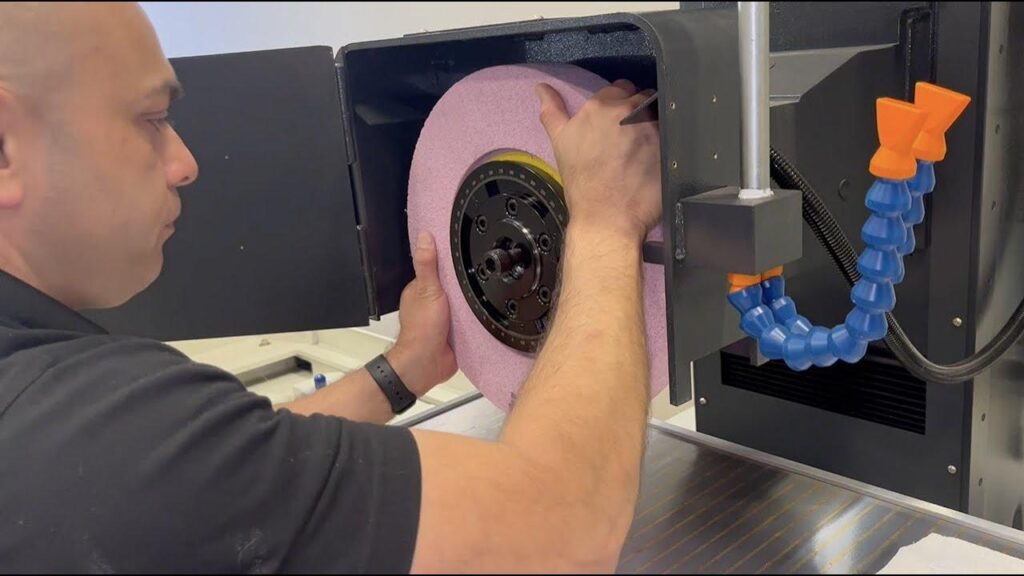
Every YUTON surface grinder undergoes a rigorous balance and vibration test before shipping. Therefore, the spindle assembly is balanced at the factory, and the test grinding report documents vibration levels below 0.5 μm on the spindle housing. Moreover, with 3,100 machines sold in 2025 — ranking top three in China — YUTON’s 15,000 m² Dongguan facility with 150 engineers has the experience and quality systems (ISO 9001 + CE) to deliver grinders that run smooth from day one. Furthermore, all spindles use Japanese NSK or NTN precision bearings rated for the speeds and loads of continuous grinding duty. Consequently, when you invest in a YUTON grinder, balance-related problems are the exception, not the rule. Learn more at the YUTON homepage.
FAQ: Surface Grinder Wheel Balancing
How often should I balance my grinding wheel?
Balance the wheel when first mounted, after any major dressing session (removing >0.1 mm diameter), and whenever chatter appears. Therefore, in production environments grinding 6–8 hours per day, rebalancing every 4–8 hours is typical. Moreover, a wheel that has been crash-dressed or dropped should be rebalanced before reuse.
What is the difference between static and dynamic balancing?
Static balancing corrects imbalance in one plane — sufficient for narrow, slow-speed wheels. However, dynamic balancing corrects imbalance in two planes and is needed for wide or high-speed wheels. Therefore, most surface grinder wheels up to 300 mm diameter and 75 mm width can be statically balanced. Furthermore, larger wheels and CBN wheels running above 35 m/s require dynamic balancing.
Can I balance a wheel while it is on the machine?
Some CNC grinders have built-on electronic dynamic balancers that can balance the wheel on the spindle. Therefore, this saves time compared to removing the wheel for a balancing stand. However, most manual and hydraulic grinders require a separate balancing stand. Moreover, on-machine balancing requires calibration and is an optional feature on YUTON CNC grinders.
Why does my wheel go out of balance after dressing?
Dressing removes material asymmetrically — the diamond traverses one side of the wheel per pass, creating uneven wear. Therefore, this shifts the center of mass away from the rotational axis. Furthermore, the heavier the dress cut, the greater the balance shift. Consequently, dress lightly (0.02–0.03 mm per pass) and in both traverse directions to minimize balance change.
What happens if I run an unbalanced wheel?
Chatter marks on the workpiece are the first visible result. Moreover, continued running accelerates spindle bearing wear by 3–5×, increases power consumption, and can eventually cause wheel breakage at extreme imbalance levels. Therefore, never ignore vibration — a balanced wheel is a safe wheel, as emphasized by the Association for Manufacturing Technology.
Conclusion
Surface grinder wheel balancing is not optional — it is fundamental to grinding quality, machine longevity, and operator safety. Therefore, balance every new wheel on a precision stand, rebalance after significant dressing, and diagnose vibration systematically when chatter appears. Moreover, static balancing handles most surface grinding applications, while dynamic balancing is essential for wide, high-speed wheels. Furthermore, YUTON’s surface grinders — built with 150 engineers, 15,000 m² of production space, 3,100 units sold in 2025, and Japanese, Taiwanese, and American core components — are factory-tested for vibration performance and designed to run smooth from the first day. Consequently, invest in proper balancing tools, follow the procedures in this guide, and your grinder will deliver the chatter-free results your parts demand. Therefore, make wheel balancing a habit, not an afterthought, and your grinding quality will improve immediately and consistently.