
The surface grinder USA market is entering a pivotal phase in 2026. As American manufacturers modernize aging equipment, reshape supply chains, and meet tighter quality demands from aerospace, automotive, and medical sectors, the need for reliable, high-performance grinding machines has never been greater. In fact, the global grinding machine market reached $68.8 billion in 2025 and is projected to hit $114.2 billion by 2034, with North America remaining one of the most valuable import destinations.
For procurement managers, shop owners, and distributors in the United States, understanding current market dynamics is essential to making smart purchasing decisions. This guide covers the key sectors driving demand, regional buying patterns, what to look for in a supplier, and why Chinese manufacturers like YUTON are gaining rapid ground in the American market.
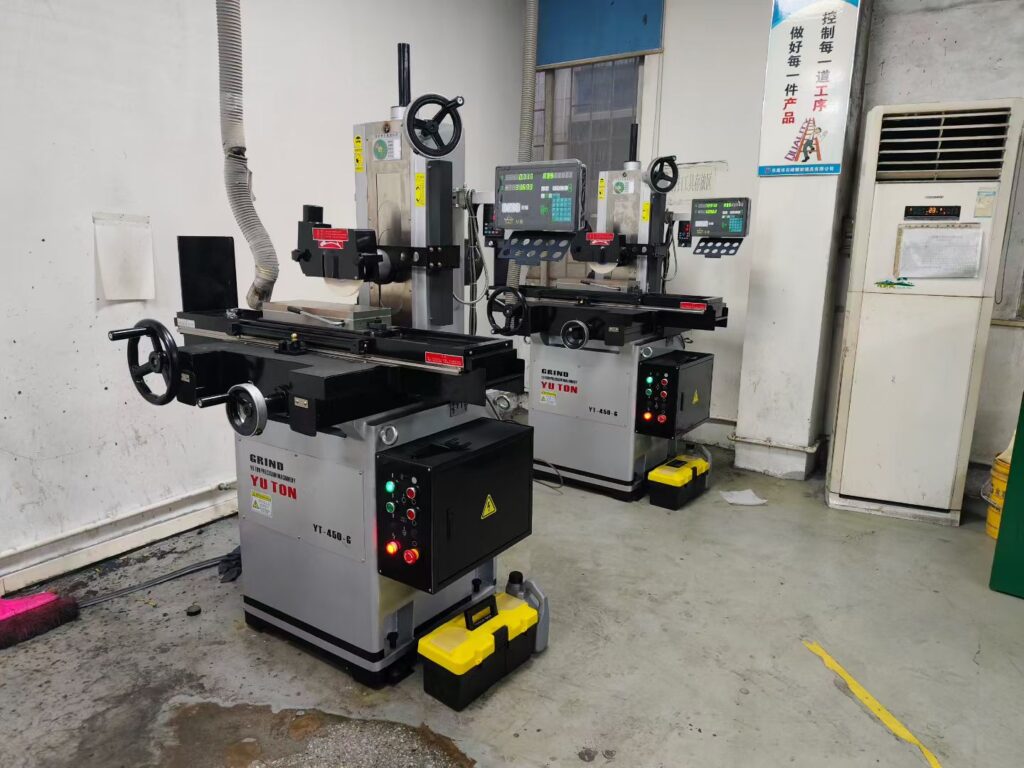
Market Size and Growth Outlook for Surface Grinders in America
The surface grinder USA market has shown steady recovery and expansion over the past three years. According to industry data, the North American grinding machine import market exceeded $8 billion in 2025, with surface grinders accounting for a significant share. Several macro trends are fueling this growth.
First, the reshoring movement has prompted American factories to invest in new equipment. As companies bring production back from overseas, they need modern machines to replace outdated infrastructure. In addition, the infrastructure bill and defense spending have created fresh demand for precision-machined components, directly benefiting the surface grinder USA market.
Second, the workforce shortage in skilled machining has accelerated the shift toward automated and CNC-equipped grinding machines. With fewer experienced operators available, shops are turning to machines that deliver consistent quality with minimal manual intervention. As a result, demand for automatic surface grinders and CNC surface grinders has surged across the country.
Meanwhile, the Asia-Pacific region — which holds over 60% of the global market share — continues to serve as the world’s primary manufacturing base. However, American buyers are increasingly sourcing directly from established Asian manufacturers to reduce lead times and costs, further expanding the surface grinder USA market’s international supply chain.
Key Industries Driving Surface Grinder Demand in the United States
Several major industries are shaping the surface grinder USA market in 2026. Each sector has unique requirements, from tolerance specifications to production volume, and understanding these nuances helps buyers select the right equipment.
Automotive and Electric Vehicles
The automotive sector remains the largest consumer of grinding equipment in America. Specifically, the rapid growth of electric vehicle (EV) production has created new demand for high-precision surface grinders. EV battery housings, motor rotors, and transmission components all require tight-tolerance flat surface finishing. Therefore, many American auto parts suppliers are upgrading from manual machines to hydraulic surface grinders for better consistency and throughput.
Aerospace and Defense
Aerospace components demand the highest levels of precision. Turbine blades, landing gear parts, and structural brackets must meet exacting surface finish standards. Consequently, the surface grinder USA market in this sector leans heavily toward CNC and precision-grade machines. Moreover, defense spending increases have expanded the order pipeline for precision-machined military components.
Medical Device Manufacturing
Medical implants, surgical instruments, and diagnostic equipment require mirror-finish surfaces and ultra-tight tolerances. In this niche, the demand for precision surface grinders is particularly strong. Furthermore, the aging American population continues to drive up the volume of medical device production, sustaining long-term demand.
Tool, Die, and Mold Making
Tool and die shops form the backbone of American manufacturing. They rely on surface grinders daily for maintaining mold surfaces, sharpening inserts, and finishing die components. For these shops, a reliable manual surface grinder remains an essential workhorse, while CNC models handle complex form grinding tasks.
Energy and Heavy Industry
Wind turbine components, hydraulic valves, and large-scale industrial parts require heavy-duty surface grinding capability. On the other hand, these applications prioritize machine rigidity and table size over ultra-fine finish, making large-format automatic surface grinders the preferred choice.
Regional Buying Trends Across the American Market
The surface grinder USA market is not uniform — buying patterns vary significantly by region, reflecting local industrial clusters and economic conditions.
Midwest (Michigan, Ohio, Indiana, Illinois): This region is the heartland of American automotive manufacturing. Shops here predominantly purchase hydraulic and automatic surface grinders for high-volume production. Additionally, the presence of major OEMs and Tier-1 suppliers drives consistent demand for precision-grade equipment.
Southeast (Georgia, Tennessee, Alabama, South Carolina): The Southeast has become a hotbed for new manufacturing investment, especially in EV battery production and aerospace. As a result, the surface grinder USA market in this region is growing faster than the national average. Many new facilities are being built from scratch, creating greenfield equipment procurement opportunities.
Northeast (Connecticut, Massachusetts, New York): This area specializes in medical devices and aerospace components. Buyers in this region tend to prioritize precision and certification compliance. Specifically, they look for ISO 9001-certified manufacturers with documented quality processes.
West Coast (California, Oregon, Washington): Technology companies and defense contractors dominate the West Coast market. These buyers often seek advanced CNC surface grinders with integrated automation and Industry 4.0 connectivity. In fact, this region leads in adopting smart manufacturing solutions for grinding operations.
South Central (Texas, Oklahoma): The energy sector drives grinding machine demand in this region. Oil and gas equipment, hydraulic systems, and large-scale industrial components all require robust surface grinding capability. Meanwhile, Texas’s growing aerospace presence (led by companies like SpaceX) adds further demand.
What to Look for in a Surface Grinder Supplier for the US Market
Selecting the right supplier is one of the most critical decisions in the surface grinder USA market. The wrong choice can lead to costly downtime, inconsistent quality, and poor after-sales support. Here are the key factors American buyers should evaluate.
Quality Certifications: Any supplier targeting the US market should hold ISO 9001 certification at minimum. For machines sold into Europe or exported through European distributors, CE marking is also essential. These certifications demonstrate that the manufacturer follows international quality management standards.
Component Quality: The best surface grinder manufacturers source critical components — such as spindle bearings, linear guides, and control systems — from established suppliers in Japan, Taiwan, or Germany. This ensures long-term reliability and ease of maintenance. In addition, it means replacement parts are readily available in the global supply chain.
Testing and Validation: Reputable manufacturers test every machine before shipment. For instance, YUTON runs each surface grinder through a 48-hour continuous test cycle to verify stability, accuracy, and thermal performance. This kind of rigorous pre-delivery testing reduces the risk of on-site issues.
After-Sales Support: The surface grinder USA market demands responsive technical support. Buyers should confirm that the supplier offers remote diagnostics, spare parts availability, and — ideally — a local service network or distributor partnership.
Total Cost of Ownership: Rather than focusing solely on the purchase price, smart buyers evaluate the total cost of ownership, including energy consumption, wheel consumption, maintenance frequency, and expected machine lifespan. A machine with a slightly higher upfront cost but lower operating expenses often delivers better long-term value.
Why Chinese Surface Grinder Manufacturers Are Gaining Ground
Chinese surface grinder manufacturers have made remarkable progress over the past decade. In 2020, domestic Chinese brands held less than 30% of their own national market. By 2025, that figure had risen to 48%, and Chinese-made machines are now winning customers worldwide, including in the surface grinder USA market.
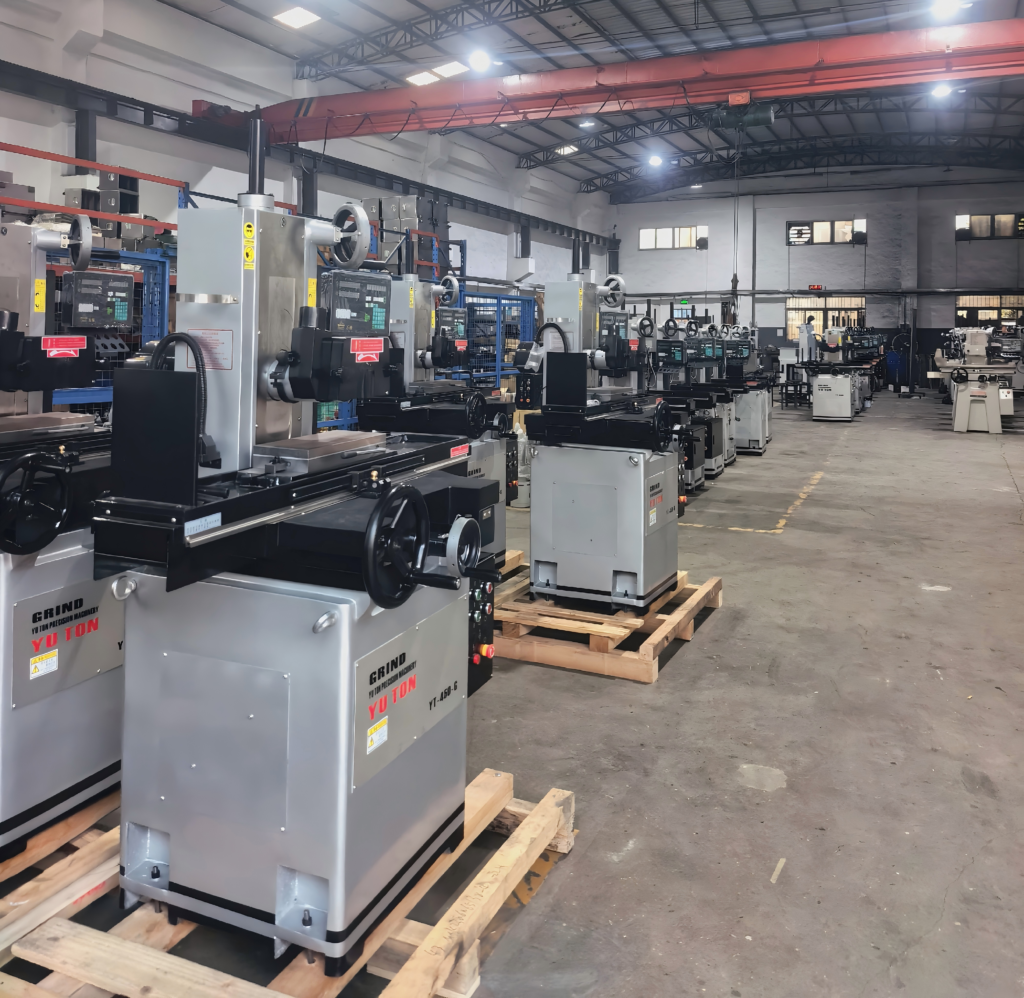
Several factors explain this shift. First, Chinese manufacturers have invested heavily in modern production facilities. For example, YUTON operates a 15,000-square-meter facility with seven production buildings and a workforce of 150 skilled employees in Dongguan, China. The company sold 3,100 units in 2025, ranking among the top three manufacturers nationally.
Second, the quality gap between Chinese and Japanese or European machines has narrowed significantly. By integrating core components from Japan, Taiwan, and the United States, leading Chinese manufacturers now deliver machines that match international precision standards at a fraction of the cost. Industry organizations such as the Society of Manufacturing Engineers have also noted the growing competitiveness of Asian machine tool builders in global markets.
Third, American buyers are under increasing pressure to reduce costs while maintaining quality. Chinese surface grinders offer a compelling value proposition — professional-grade performance at 30-50% lower price points than comparable Japanese or European models.
Finally, many Chinese manufacturers have improved their export capabilities. They now provide English-language documentation, US-compatible electrical standards, responsive online support, and partnerships with American distributors. As a result, buying from a Chinese surface grinder supplier has become far easier than it was just five years ago.
For buyers exploring options in the surface grinder USA market, it is worth requesting quotes from established Chinese manufacturers. The combination of competitive pricing, improving quality, and growing service infrastructure makes them a serious consideration for both end users and distributors.
Final Thoughts on the Surface Grinder USA Market in 2026
The surface grinder USA market in 2026 is defined by modernization, supply chain diversification, and rising quality expectations. Whether you operate an automotive parts shop in Michigan, a medical device facility in Massachusetts, or a tool and die shop in Texas, the right surface grinder can transform your productivity and competitiveness.
As industry publications like Modern Machine Shop have highlighted, supply chain diversification is now a top priority for American manufacturers. The key takeaway is this: do not limit your supplier search to traditional domestic or Japanese brands alone. Chinese manufacturers have proven their capability to deliver world-class grinding machines at competitive prices. With proper due diligence — checking certifications, component quality, testing protocols, and after-sales support — you can find a reliable partner that meets your production needs and budget.
To explore YUTON’s range of surface grinding solutions for the American market, visit surfacegrindermfg.com or contact the sales team for a personalized consultation.
FAQ
Q1: What is the current size of the surface grinder USA market?
The North American grinding machine import market exceeded $8 billion in 2025, with surface grinders representing a significant portion. The surface grinder USA market continues to grow, driven by reshoring initiatives, EV production expansion, and infrastructure investment.
Q2: Which industries buy the most surface grinders in the United States?
The top industries include automotive (especially EV components), aerospace and defense, medical device manufacturing, tool and die making, and energy/heavy industry. Each sector has distinct requirements for precision, volume, and machine type.
Q3: Are Chinese surface grinders reliable for American buyers?
Yes. Leading Chinese manufacturers like YUTON integrate Japanese, Taiwanese, and American core components, hold ISO 9001 and CE certifications, and test every machine for 48 hours before shipment. Many American shops and distributors now source from China for its excellent value proposition.
Q4: What certifications should I look for in a surface grinder supplier?
At minimum, look for ISO 9001 quality management certification. If you also serve European markets, CE marking is important. Additionally, check whether the supplier complies with US electrical standards (UL/CSA) for seamless installation.
Q5: How do I choose between a manual, automatic, and CNC surface grinder?
It depends on your production volume and precision requirements. Manual grinders suit low-volume tool room work. Automatic grinders excel in batch production with consistent quality. CNC grinders handle the most complex geometries and tightest tolerances. For more details, see our guide on how to choose a surface grinder.