
Therefore, if you are sourcing a surface grinder Philippines suppliers trust, this guide gives you the market data, import rules, and machine selection tips you need in 2026. The Philippines is rapidly emerging as a precision manufacturing hub in Southeast Asia. Meanwhile, growing electronics, automotive, and die-mould sectors are driving strong demand for high-quality grinding machines. However, many Filipino buyers still face challenges when selecting the right equipment. Consequently, understanding the local market landscape is essential before making a purchase.
Why the Philippines Needs More Surface Grinders
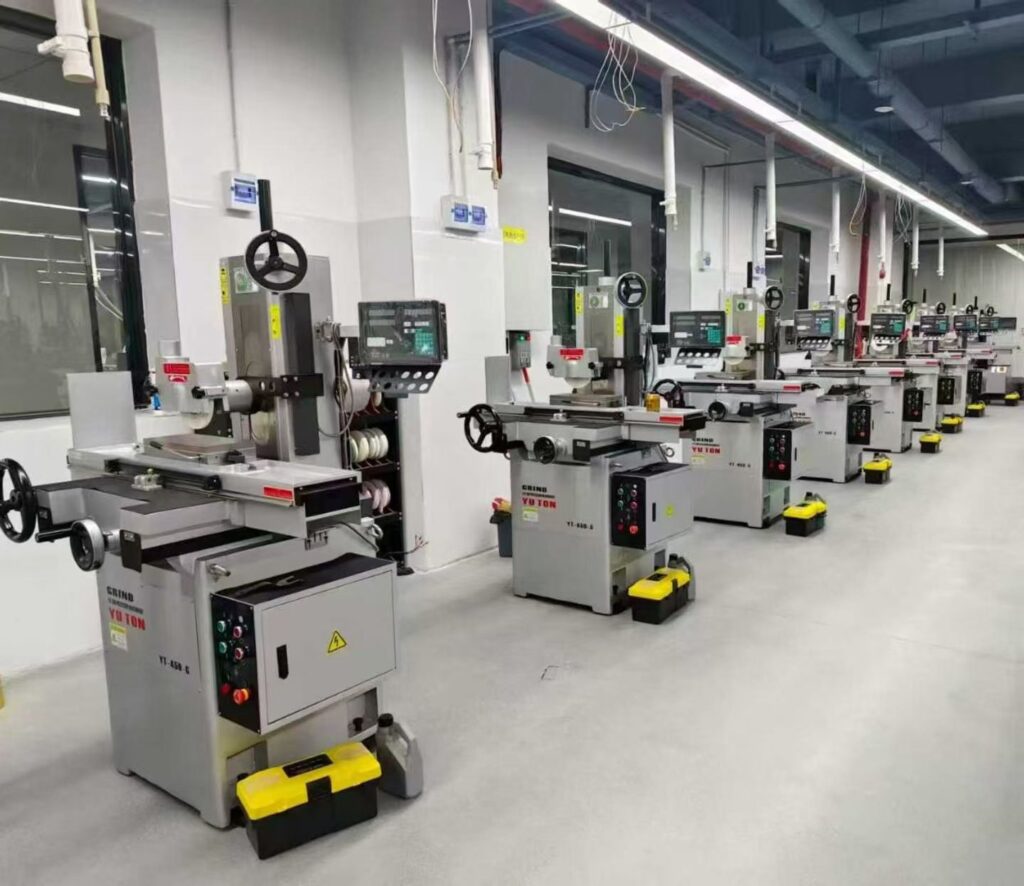
The Philippine manufacturing sector reached approximately PHP 8.2 trillion in nominal output in 2026. Moreover, this represents roughly 22% of national GDP, growing at an annualized pace of 4.8%. As a result, factories across the country are upgrading their machining capabilities. In March 2026, industrial production climbed 10.5% year-on-year. Indeed, this was the strongest annual growth since January 2023. Therefore, precision grinding equipment has become a critical investment for Filipino manufacturers.
Electronics and Semiconductor Demand
Electronics and semiconductors now account for 34% of total Philippine exports. Furthermore, contract manufacturers like Flex, Foxconn, and Amkor Technology have expanded assembly operations in Laguna and Cavite. Consequently, these facilities require surface grinders for lead frame finishing, package trimming, and fixture plate preparation. In addition, power semiconductor packaging at Amkor’s Batangas plant processes over 1.2 million wafers annually. Thus, the semiconductor sector alone generates sustained demand for precision grinding machines.
Automotive and Die-Mould Growth
Meanwhile, the Philippine automotive market reached 515,400 units in 2025. In addition, it projects growth at a CAGR of 8.41% through 2034. Therefore, local parts manufacturers need surface grinders for die plates, punch components, and transmission parts. Specifically, the Philippine tooling market was valued at USD 1.3 billion in 2025. Moreover, it is projected to reach USD 2.8 billion by 2034 at a CAGR of 8.05%. As a result, die-mould shops represent one of the fastest-growing buyer segments for surface grinders.
Key Industries Driving Precision Grinding Demand
Several industries across the Philippines depend on surface grinding for daily production. Below are the top sectors creating the strongest demand.
Automotive Parts Manufacturing
Denso Philippines and JTEKT produce steering systems and transmission components locally. Furthermore, these operations require tight flatness tolerances that only a precision surface grinder can achieve. Therefore, many Filipino automotive suppliers are upgrading from manual grinders to CNC or PLC-controlled models. Meanwhile, the growing electric vehicle assembly sector adds another layer of demand for high-precision grinding.
Mold and Die Making
The Philippine Die and Mould Machineries and Equipment Exhibition (PDMEX 2026) highlighted this sector’s importance. Additionally, mold making demands surface finish quality below Ra 0.4 μm. Consequently, tool and die shops need rigid, vibration-resistant grinding machines. In particular, hydraulic surface grinders remain popular for their balance of power and affordability. However, CNC models are gaining ground for complex contour grinding tasks.
Electronics Assembly
PEZA-accredited electronics firms represent the largest industrial buyer group. Moreover, machinery and equipment imports rose 12% year-on-year in early 2026. Therefore, semiconductor back-end assembly plants regularly purchase surface grinders for wafer-level and package-level operations. Additionally, these facilities demand CE-certified equipment that meets international cleanroom standards.
Import Regulations and Certification Requirements
Before importing a surface grinder to the Philippines, buyers must understand the regulatory framework. Consequently, proper compliance avoids customs delays and unexpected costs.
BPS Standards and Customs Process
The Bureau of Philippine Standards (BPS) oversees product quality certifications. Furthermore, while surface grinders do not require mandatory BPS marks, importers must secure a Certificate of Product Conformity for electrical safety. Meanwhile, customs duties under ASEAN Trade in Goods Agreement (ATIGA) can be reduced to 0-5% for machinery from ASEAN-origin suppliers. In addition, the CREATE Act provides income tax incentives for PEZA-registered manufacturers importing capital equipment. Therefore, buyers operating within economic zones enjoy significant duty advantages.
Moreover, RCEP implementation has reduced tariffs on 92% of manufactured goods across member states. Consequently, Philippine buyers sourcing from China, Japan, or other RCEP members benefit from lower import costs. Additionally, proper HS code classification under 8460 for grinding machines ensures correct duty assessment.
How to Choose the Right Surface Grinder in the Philippines
Selecting the right machine depends on your production volume, part complexity, and budget. Therefore, understanding the differences between control types is essential.
CNC vs Manual vs Hydraulic
CNC surface grinders offer the highest precision and repeatability. Furthermore, they are ideal for high-volume production and complex geometries. Meanwhile, manual surface grinders remain cost-effective for toolroom and one-off jobs. Additionally, hydraulic surface grinders provide a practical middle ground with automated table traversal and cross-feed. Therefore, Filipino buyers should match the control type to their specific application needs.
For example, a die-mould shop running 500+ parts per month benefits most from a CNC model. Alternatively, a maintenance workshop doing occasional fixture grinding can start with a manual unit. Moreover, hydraulic grinders suit automotive suppliers needing consistent quality at moderate volumes.
Why YUTON Is a Trusted Supplier for Filipino Buyers
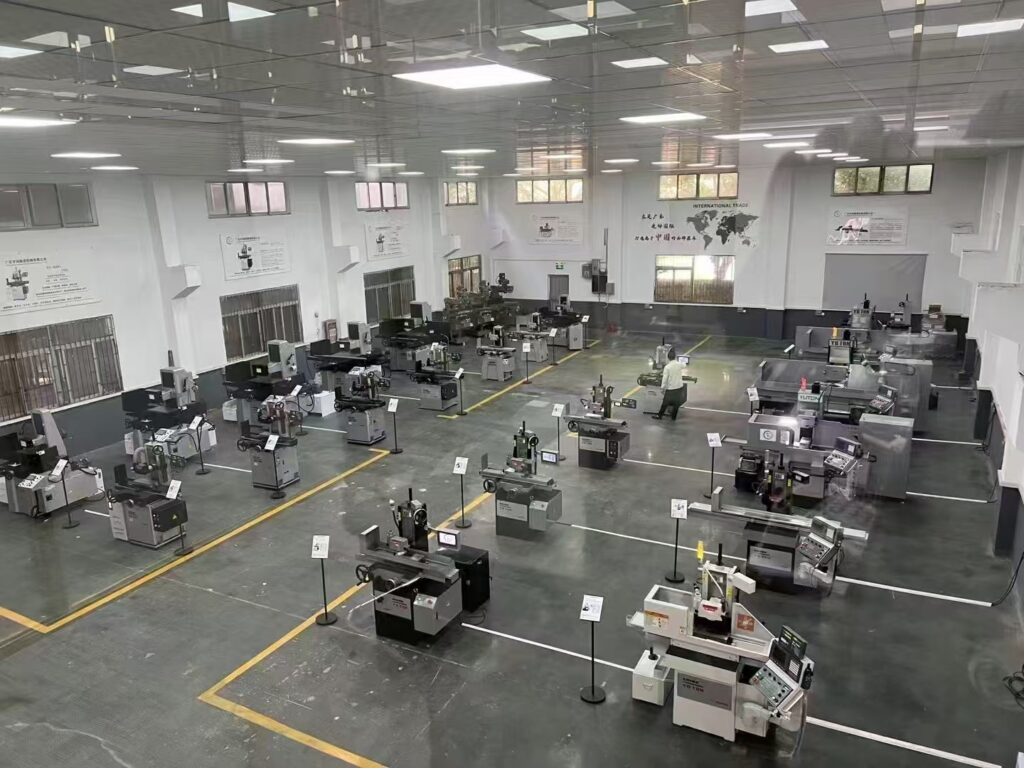
YUTON (Guangdong Yutong Precision Machinery Co., Ltd.) has earned trust among Southeast Asian buyers. Furthermore, the company operates a 15,000㎡ facility staffed by 150 skilled workers. In addition, YUTON produces 3,100 surface grinders annually, ranking among the top three manufacturers in China.
Specifically, YUTON grinders use core components sourced from Japan, Taiwan, and the USA. Moreover, the machine base is cast from Meehanite iron for superior vibration damping. Consequently, Filipino buyers receive ISO 9001 and CE-certified machines that meet international quality standards. Meanwhile, YUTON offers the full product range: CNC surface grinders, automatic surface grinders, hydraulic surface grinders, and manual surface grinders. Therefore, whether you run a semiconductor plant in Cavite or a die shop in Cebu, YUTON has a model that fits.
FAQ: Surface Grinder Philippines
What is the average import duty for surface grinders in the Philippines?
Generally, grinding machines classified under HS 8460 face a 0-5% tariff under ATIGA and RCEP agreements. Additionally, PEZA-registered manufacturers may qualify for full duty exemption. However, standard importers should budget for 5% duty plus 12% VAT.
Which type of surface grinder is most popular in the Philippines?
Currently, hydraulic surface grinders hold the largest market share among Filipino buyers. Furthermore, they offer a balance of automation and affordability that suits small and medium factories. Meanwhile, CNC models are gaining popularity in electronics and automotive sectors.
How long does shipping take from China to the Philippines?
Typically, ocean freight from Guangdong to Manila takes 7-12 days. In addition, customs clearance usually requires 3-5 working days. Therefore, the total delivery timeline from order to factory floor is approximately 3-4 weeks.
Do surface grinders need special electrical requirements in the Philippines?
Yes, the Philippines uses 230V/60Hz power supply. Moreover, most industrial areas have stable three-phase power available. Consequently, buyers should confirm voltage compatibility before ordering. Additionally, a voltage stabilizer is recommended for shops with fluctuating power.
Can YUTON provide after-sales support in the Philippines?
Indeed, YUTON provides remote technical support and spare parts delivery to Filipino buyers. Furthermore, the company can arrange on-site installation and training upon request. Meanwhile, comprehensive operation manuals in English are included with every machine.
Conclusion
The Philippine surface grinder market is entering a period of strong growth. Specifically, electronics, automotive, and die-mould sectors are all driving demand for precision grinding equipment. Moreover, favorable import policies under RCEP and CREATE make it easier than ever to bring quality machines into the country. Therefore, Filipino manufacturers who invest in the right surface grinder today will gain a competitive edge in the years ahead.
Whether you need a CNC surface grinder for high-volume production or a manual surface grinder for toolroom work, choosing a reliable supplier matters. Visit YUTON’s homepage to explore the full product range and request a quote tailored to your production needs.
Reference Links: