
The magnetic chuck is the most widely used workholding device on surface grinders, and choosing the right surface grinder magnetic chuck directly affects part flatness, grinding accuracy, and production efficiency. Therefore, this guide compares electromagnetic, permanent, and electro-permanent types so you can match the chuck to your workload and budget. Moreover, we include setup tips, maintenance practices, and real-world recommendations from YUTON’s 150-person engineering team, who build grinders shipped to over 30 countries from a 15,000 m² facility in Dongguan.
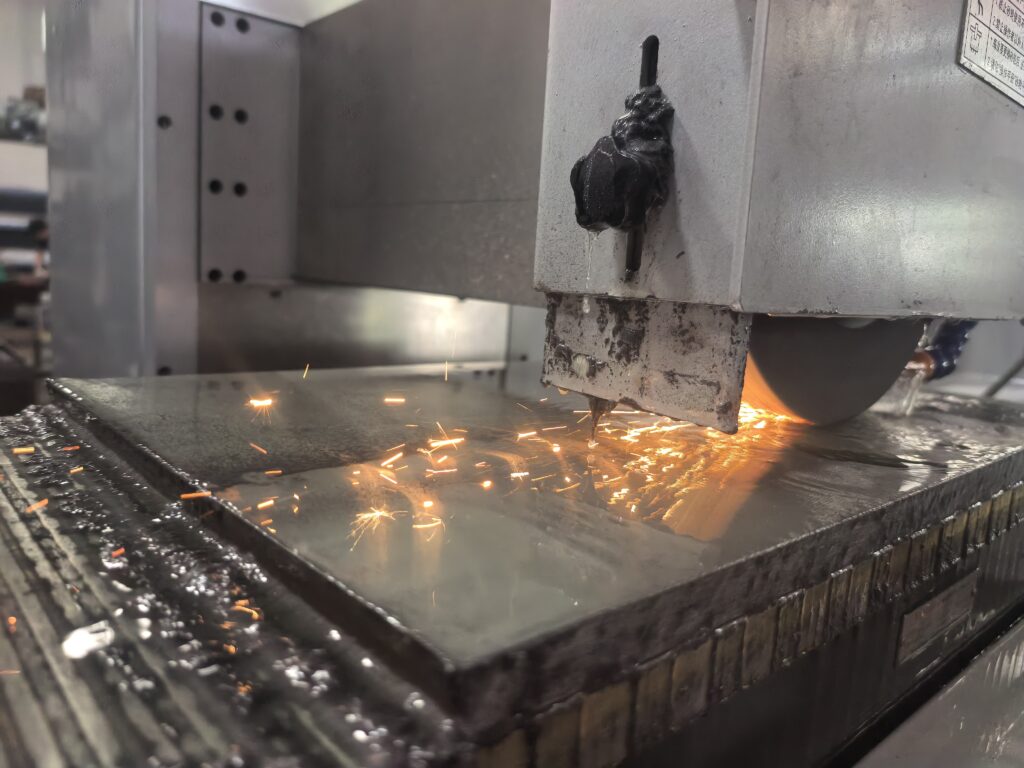
Electromagnetic Chucks: Power and Flexibility
Electromagnetic chucks use DC current to generate holding force, offering strong and adjustable clamping for ferromagnetic workpieces. Therefore, they remain the dominant choice for automatic surface grinders running medium-to-large batch production.
How Electromagnetic Chucks Work
Current flows through coils embedded in the chuck body, creating a magnetic field that passes through the pole pieces and into the workpiece. Furthermore, the holding force is proportional to current, so operators can reduce power for thin parts to minimize distortion. However, the chuck requires continuous power during grinding — if power fails, the part releases instantly, creating a serious safety hazard.
Advantages and Limitations
Advantages:
- Holding force up to 150 N/cm² — sufficient for most grinding operations. Moreover, force is adjustable via current control.
- Rapid demagnetization cycle (0.5–2 seconds) for fast part changeover. Consequently, cycle times improve significantly in production environments.
- Works well on YUTON’s hydraulic surface grinders with integrated chuck controllers.
Limitations:
- Requires continuous DC power. Therefore, power failure means part release.
- Generates heat during extended runs (typically 2–5°C rise over 4 hours). However, water-cooled variants reduce this to under 1°C.
- Not suitable for non-ferromagnetic materials (aluminum, copper, austenitic stainless). Furthermore, residual magnetism can remain in parts after grinding, as noted by the Society of Manufacturing Engineers.
Permanent Magnetic Chucks: Simplicity and Reliability
Permanent magnetic chucks use rare-earth or ceramic magnets arranged in a reversible mechanism — rotating or sliding the magnet blocks switches the chuck on and off mechanically. Therefore, no electrical power is needed during operation, making them inherently safe against power failure.
Design and Operating Principle
The most common design uses a rotating magnet system. When the lever is at “ON,” the magnet poles align with the chuck top plates, completing the magnetic circuit through the workpiece. Moreover, at “OFF,” the magnets rotate 90°, breaking the circuit and releasing the part. Consequently, there is zero residual heat and no power consumption, which is ideal for precision work on manual surface grinders.
When to Choose Permanent Magnetic Chucks
- Small workshops with intermittent grinding — no power supply or controller needed. Therefore, installation cost is lower.
- Jobs requiring maximum thermal stability — zero chuck heat means zero thermal drift. Furthermore, this is critical for parts with tolerances tighter than 0.005 mm.
- Environments with unreliable power — the chuck never releases unexpectedly. In addition, permanent chucks meet CE safety requirements for hold-down devices, per the European Commission machinery directives.
However, holding force is fixed (typically 80–120 N/cm²) and cannot be adjusted for thin or delicate parts. Moreover, demagnetization takes 2–5 seconds with the lever, slightly slower than electromagnetic types.
Electro-Permanent Magnetic Chucks: The Best of Both
Electro-permanent chucks combine the adjustable force of electromagnetic types with the fail-safe holding of permanent types. Therefore, they are rapidly becoming the preferred choice for modern CNC surface grinders.
How Electro-Permanent Technology Works
A short electrical pulse (0.5–3 seconds) magnetizes or demagnetizes the permanent magnet blocks inside the chuck. Therefore, once magnetized, the chuck holds with zero power consumption — just like a permanent chuck. Furthermore, the pulse-based system allows variable holding force by controlling the pulse strength, giving you electromagnetic-style adjustability without continuous power draw.
Key Benefits for Surface Grinding
- Fail-safe holding: Power loss does not release the part. Consequently, this is the safest chuck type for unattended or lights-out grinding.
- Zero thermal drift: No continuous current means no heat. Moreover, chuck surface temperature stays within 0.3°C of ambient over 24 hours.
- Fast switching: Magnetize/demagnetize in under 3 seconds. Therefore, changeover is nearly as fast as electromagnetic types.
- Holding force 60–160 N/cm²: Adjustable via pulse controller. However, the initial purchase price is 2–3× higher than electromagnetic chucks.
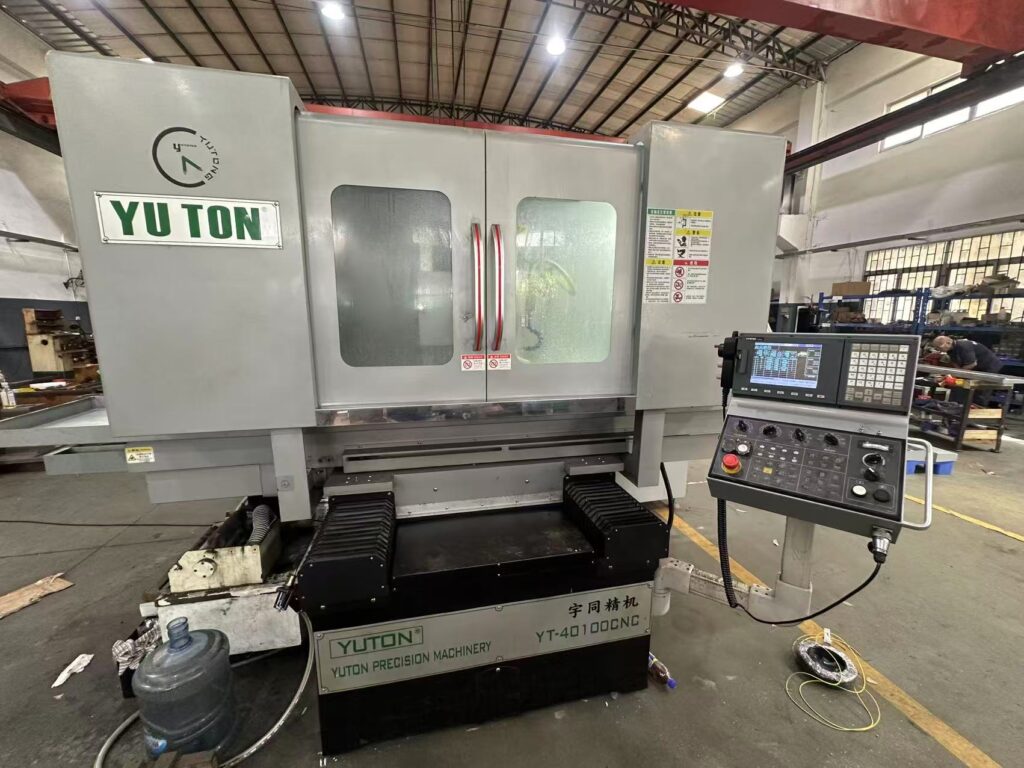
Furthermore, YUTON offers electro-permanent chucks as standard on its CNC grinder line, sourced from Japanese and Taiwanese specialists — part of the Japanese, Taiwanese, and American core component philosophy that ensures long-term reliability.
Chuck Selection: Matching Chuck to Your Application
Therefore, use this decision framework to choose the right surface grinder magnetic chuck for your specific needs.
Decision Criteria
| Factor | Electromagnetic | Permanent | Electro-Permanent |
|---|---|---|---|
| Power fail safety | ✗ | ✓ | ✓ |
| Holding force adjust | ✓ | ✗ | ✓ |
| Thermal stability | Moderate | Excellent | Excellent |
| Changeover speed | Fast (0.5–2s) | Moderate (2–5s) | Fast (0.5–3s) |
| Initial cost | Low | Low | High (2–3×) |
| Best for | Batch production | Toolroom / precision | CNC / lights-out |
Moreover, consider workpiece material and thickness. Thin parts (under 3 mm) need adjustable force to prevent bowing. Therefore, electromagnetic or electro-permanent types are preferred. Furthermore, for non-ferromagnetic parts, you must use a vacuum chuck or mechanical fixture instead — magnetic chucks simply cannot hold them regardless of type.
Maintenance and Care Tips
- Keep the chuck face clean and flat — regrind periodically to maintain flatness within 0.005 mm. Therefore, mount a dressing stone and spark-out the surface.
- Check electrical connections (electromagnetic) — corrosion at terminals causes resistance and heat. Moreover, clean terminals monthly with contact cleaner.
- Lubricate the lever mechanism (permanent) — a dry lever eventually jams. However, never oil the chuck face — oil attracts grinding swarf and degrades holding force.
- Monitor residual magnetism — use a gauss meter after demagnetization. Furthermore, excessive residual magnetism attracts swarf and contaminates subsequent operations. The ISO 9001 standard requires documented chuck maintenance procedures for certified shops.
- Store chucks on a flat surface — never stack or hang by the cable. Consequently, stored chucks maintain their calibration longer.
FAQ: Surface Grinder Magnetic Chuck
What holding force do I need for surface grinding?
Most surface grinding operations need 80–120 N/cm² of holding force. However, heavy roughing cuts on large parts may require 120–150 N/cm². Therefore, electromagnetic or electro-permanent chucks with adjustable force give you the flexibility to match holding power to the cut.
Can a magnetic chuck hold thin stainless steel parts?
Standard magnetic chucks cannot effectively hold austenitic stainless steel (304/316) because these grades are non-ferromagnetic. Therefore, you need a vacuum chuck, mechanical clamp, or specialized fixture for thin stainless parts. Moreover, martensitic grades (410/440C) are ferromagnetic and can be held magnetically.
How often should I regrind my magnetic chuck surface?
Regrind the chuck face when flatness exceeds 0.01 mm over the full surface, typically every 6–12 months in production environments. Furthermore, always grind the chuck in-place on the machine to match the table way alignment. Consequently, this ensures your chuck surface and table travel are co-planar, as recommended by MMS Online.
What is the difference between electromagnetic and electro-permanent?
Electromagnetic chucks require continuous DC power to hold; turn off power and the part releases. However, electro-permanent chucks use a short electrical pulse to magnetize permanent magnets, then hold with zero power. Therefore, electro-permanent is fail-safe while electromagnetic is not — a critical difference for unattended grinding.
Why does my electromagnetic chuck get hot during grinding?
Heat comes from resistive losses in the coil windings (I²R heating). Therefore, reduce current for lighter holding-force requirements, and consider a water-cooled chuck for extended operations. Moreover, a 2–5°C temperature rise is normal; anything above 5°C indicates possible coil degradation or poor connection resistance.
Conclusion
Choosing the right surface grinder magnetic chuck is a decision that affects your grinding quality, safety, and throughput for years to come. Therefore, electromagnetic chucks suit budget-conscious batch production, permanent chucks excel in toolroom precision, and electro-permanent chucks deliver the best combination of safety and performance for modern CNC grinders. Moreover, proper selection, setup, and maintenance extend chuck life and maintain the part flatness your customers demand. Furthermore, YUTON’s surface grinders — built with 150 engineers in a 15,000 m² ISO 9001 and CE-certified factory, selling 3,100 units in 2025 (top three in China) — come equipped with chucks matched to each machine’s capability, using Japanese, Taiwanese, and American core components for lasting reliability. Consequently, when you invest in a YUTON grinder, the chuck is already right for the job. Learn more at the YUTON homepage, and explore chuck-related standards at the Association for Manufacturing Technology.