
A surface grinder for mold making is one of the most essential machines in any tooling shop. Whether producing injection molds for consumer electronics or stamping dies for automotive panels, mold makers depend on surface grinding to achieve the flatness, parallelism, and surface finish that milling alone cannot deliver. In fact, the global mold market reached $1,280 billion in 2025 and is projected to exceed $1,800 billion by 2030, driving strong demand for precision grinding equipment across the tooling industry.
For mold shop owners, tooling engineers, and procurement managers, selecting the right surface grinder for mold making can mean the difference between winning high-value contracts and losing them. This guide explains why surface grinding is critical in mold production, what machine features matter most, how to match machine types to different mold applications, and practical tips for getting the best results.
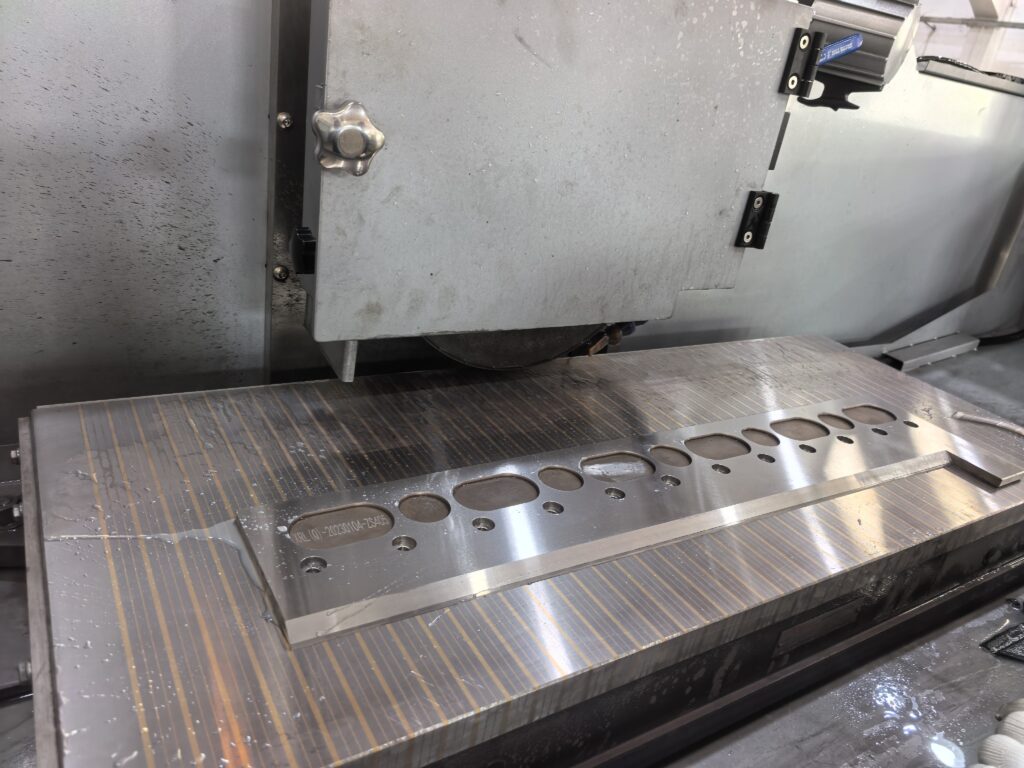
Why Mold Making Demands High-Quality Surface Grinding
Mold making is one of the most demanding applications in all of machining. Unlike general-purpose part production, mold work requires extreme precision, exceptional surface finish, and the ability to handle a wide range of materials — from pre-hardened steels to hardened tool steels and carbide inserts.
Surface grinding plays several irreplaceable roles in mold production. First, it creates the precise reference surfaces that all other machining operations depend on. Before a mold block can be milled, EDM’d, or polished, its base surfaces must be ground to within 0.002mm flatness. Without this foundation, every subsequent operation will carry forward errors.
Second, surface grinding delivers the final parting-line surfaces, core seats, and ejector plate faces that directly affect mold function and part quality. Specifically, these surfaces must achieve surface finishes of Ra 0.4μm or better to prevent flash and ensure clean mold separation.
Third, many mold materials — such as D2, H13, and S136 tool steels — are heat-treated to high hardness levels (HRC 50-62) after rough machining. At these hardness levels, grinding is often the only practical method for achieving final dimensions and surface quality. Therefore, a reliable surface grinder for mold making is not optional — it is a fundamental requirement.
Types of Molds That Require Precision Surface Grinding
Different mold types place different demands on surface grinding equipment. Understanding these variations helps shops select the right machine configuration for their specific work.
Injection Molds
Injection molds are the most common type produced worldwide. They typically consist of a core half and a cavity half, both of which require ground reference surfaces, parting lines, and ejector plate faces. For standard injection molds, a medium-size automatic surface grinder with a 300×600mm or 400×800mm table usually provides the best balance of capacity and precision.
Stamping Dies and Progressive Dies
Stamping dies — used in automotive, appliance, and electronics manufacturing — often involve larger mold blocks and heavier cutting forces. The die plates must be ground to tight parallelism to ensure clean shearing across the entire part. Therefore, larger-format hydraulic surface grinders with high rigidity are preferred for this application.
Compression and Transfer Molds
These molds, commonly used for rubber and composite materials, require large flat surfaces with excellent parallelism. The molding surfaces themselves often need mirror finishes achieved through fine grinding and hand polishing.
Blow Molds
Blow molds for plastic bottle production require precision-ground neck rings and pinch-off areas. While the overall tolerances may be less extreme than injection molds, the surface finish requirements for certain areas are very demanding.
Die Casting Dies
Die casting dies operate under extreme temperatures and pressures. The mold surfaces must be ground flat and smooth to ensure proper heat transfer and prevent premature wear. As EV manufacturers adopt mega-casting techniques (similar to Tesla’s Gigacasting), the demand for large-format precision grinding has surged.
Key Machine Features for Mold Making Applications
Not all surface grinders are equal when it comes to mold work. Here are the features that matter most for a surface grinder for mold making.
High-Precision Spindle: The spindle is the heart of any grinding machine. For mold applications, look for hydrodynamic or hydrostatic spindles that deliver runout below 0.001mm. These spindles maintain accuracy even under heavy stock removal, which is essential when grinding hardened mold steel.
Rigid Machine Construction: Mold grinding often involves interrupted cuts and uneven stock removal. A heavily constructed machine body — ideally made from high-grade cast iron with stress-relieved design — resists vibration and maintains accuracy. In addition, the table should ride on precision ground ways or linear guides for smooth, chatter-free movement.
Accurate Crossfeed and Downfeed: Mold makers frequently need to control depth of cut to within 0.001mm. Therefore, fine-feed mechanisms with minimal backlash are essential. CNC-equipped models offer digital control over feed rates, making them ideal for repeatable mold work. For the highest precision, a CNC surface grinder with programmable cycles delivers the best results.
Magnetic Chuck Quality: The chuck holds the mold block during grinding. A high-quality electromagnetic or electro-permanent chuck provides uniform holding force across the entire workpiece, preventing distortion during grinding. Moreover, electro-permanent chucks are safer and more energy-efficient than traditional electromagnetic types.
Coolant Delivery System: Effective cooling is critical when grinding hardened tool steels. A high-volume coolant system with proper nozzle placement prevents thermal damage, wheel loading, and surface burns on the mold surface. For shops in Europe, ensure the machine also complies with EU machinery safety standards as outlined on the European Commission’s website.
Manual vs. Automatic vs. CNC: Which Type Suits Mold Making Best?
The choice between manual, automatic, and CNC surface grinders depends on your shop’s workload, precision requirements, and budget.
Manual Surface Grinders remain popular in small mold shops and tool rooms. They offer flexibility for one-off jobs and allow experienced operators to make real-time adjustments. A quality manual surface grinder is an excellent choice for shops doing mainly repair work, prototype molds, or low-volume production.
Automatic Surface Grinders add programmable cycles for repetitive operations. Once the operator sets the parameters, the machine runs through roughing, semi-finishing, and finishing passes automatically. This is ideal for mold shops that produce the same mold base sizes repeatedly.
CNC Surface Grinders deliver the highest level of precision and repeatability. They can store programs for different mold types, automatically dress wheels, and compensate for wheel wear. For high-volume mold production or shops working to ±0.002mm tolerances, a CNC surface grinder for mold making is the best investment.
Material Considerations: Grinding Common Mold Steels
Mold makers work with a variety of hardened materials, each requiring specific grinding approaches.
P20 Steel (HRC 28-32): Pre-hardened mold steel that is relatively easy to grind. Standard aluminum oxide wheels work well, and material removal rates can be higher than with harder steels.
H13 Steel (HRC 48-52): A hot-work tool steel widely used in die casting and injection molds. It requires CBN or white aluminum oxide wheels for efficient grinding without thermal damage.
D2 Steel (HRC 58-62): A high-carbon, high-chromium cold-work steel known for excellent wear resistance. Its high hardness demands careful grinding with appropriate wheel selection and generous coolant flow.
S136 / 420 Stainless (HRC 50-54): A corrosion-resistant mold steel used for medical and optical molds. It requires sharp wheels and light passes to avoid surface smearing.
Tungsten Carbide Inserts: Some molds incorporate carbide inserts for extended wear life. Grinding carbide requires diamond wheels and specialized techniques. However, the results — exceptional hardness and wear resistance — justify the additional effort.
Practical Tips for Getting the Best Results
To maximize the performance of your surface grinder for mold making, follow these practical guidelines.
Start with Proper Setup: Always indicate the mold block to ensure it is square with the grinding wheel. Take light preliminary passes to establish a true reference surface before proceeding to final dimensions.
Use the Right Wheel for Each Material: Matching the wheel abrasive, grit size, and bond to the workpiece material is the single most important factor in achieving good results. When in doubt, consult with your wheel supplier for recommendations. Industry best practices recommended by the Society of Manufacturing Engineers suggest dressing the wheel at the start of each shift and whenever surface finish degrades.
Control Heat Input: Thermal damage is the most common defect in mold grinding. Use adequate coolant, light finishing passes (0.005mm or less), and avoid dwelling in one area. As a result, you will prevent grinding burns that can lead to cracking in hardened steels.
Dress Wheels Regularly: A dull or loaded wheel generates excess heat and produces poor surface finish. Therefore, dress the wheel frequently — especially when switching between materials or moving from roughing to finishing operations.
Measure Frequently: In mold work, tolerances are tight. Use a high-resolution dial indicator or digital depth gauge to check dimensions after every few passes. Moreover, allow the workpiece to stabilize thermally before taking final measurements.
Final Thoughts on Choosing a Surface Grinder for Mold Making
Investing in the right surface grinder for mold making directly impacts your shop’s ability to deliver high-quality molds on time. Whether you operate an automotive parts shop in Michigan, a medical device facility in Massachusetts, or a tool and die shop in Texas, the right surface grinder can transform your productivity and competitiveness.
As industry publications like Modern Machine Shop have highlighted, supply chain diversification is now a top priority for American manufacturers. The key takeaway is this: do not limit your supplier search to traditional domestic or Japanese brands alone. Chinese manufacturers have proven their capability to deliver world-class grinding machines at competitive prices. With proper due diligence — checking certifications, component quality, testing protocols, and after-sales support — you can find a reliable partner that meets your production needs and budget.
YUTON offers a full range of surface grinding solutions for mold making applications — from compact manual grinders for prototype work to large-format CNC machines for production mold shops. With ISO 9001 certification, CE compliance, and 48-hour testing on every unit, YUTON ensures that each machine meets the demands of professional mold makers worldwide.
Visit surfacegrindermfg.com to explore the full product line or contact the technical team for application-specific recommendations.
FAQ
Q1: Why is surface grinding essential in mold making?
Surface grinding creates the precise reference surfaces, parting lines, and critical faces that milling alone cannot achieve. It is often the only practical method for finishing hardened mold steels to the required flatness and surface finish.
Q2: What type of surface grinder is best for mold making?
It depends on your workload. Manual grinders suit prototype and repair work. Automatic grinders handle repetitive mold base grinding. CNC grinders deliver the highest precision for production mold shops working to tight tolerances.
Q3: What wheel should I use for grinding hardened mold steel?
For steels like H13 and D2 (HRC 48-62), CBN or white aluminum oxide wheels are recommended. For carbide inserts, use diamond wheels. Always match the grit size and bond to the specific material and operation.
Q4: How do I prevent grinding burns on mold surfaces?
Use adequate coolant flow, light finishing passes (0.005mm or less), and avoid dwelling in one area. In addition, allow the workpiece to cool between heavy passes.
Q5: Can a surface grinder handle large mold blocks?
Yes. Large-format hydraulic surface grinders with tables of 500×1000mm or larger can handle most mold blocks. For very large molds, such as those used in automotive bumpers, specialized large-table CNC grinders are available.