
Die making demands some of the tightest tolerances in manufacturing, and a surface grinder for die making is essential to achieve the flat, parallel, and perpendicular surfaces that dies require. Therefore, this guide explains why surface grinding is indispensable in tool and die shops, which machine features matter most, and how to choose the right grinder for your die-making workload. Moreover, we draw on insights from YUTON’s 150-person engineering team in Dongguan, who supply precision grinders to die shops worldwide from their 15,000 m² ISO 9001 and CE-certified factory.
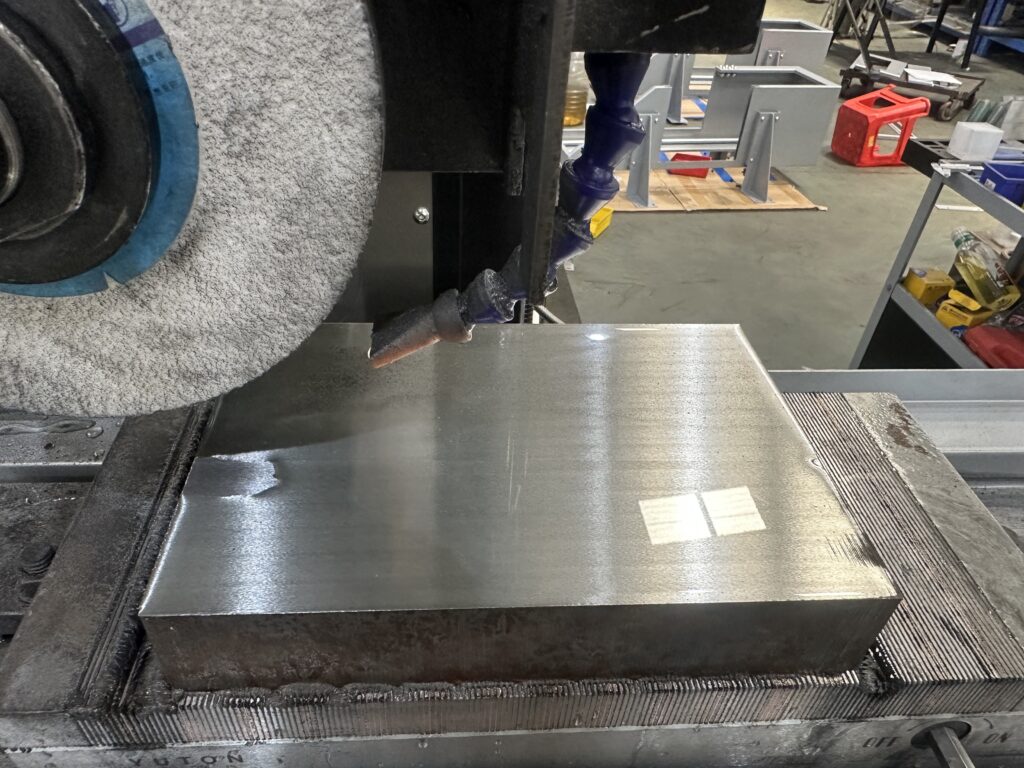
Why Dies Require Surface Grinding
Every die — whether blanking, forming, drawing, or progressive — has surfaces that must be flat, parallel, and dimensionally accurate to within a few microns. Therefore, surface grinding is the only practical process that can deliver these requirements consistently on hardened tool steel. Furthermore, milling and EDM leave surface finishes and flatness errors that only grinding can correct.
Critical Die Surfaces That Need Grinding
- Die face (cutting edge land): Must be flat within 0.005 mm for clean blanking. Therefore, any waviness transfers directly to the stamped part as burrs or dimensional errors.
- Backup plate surfaces: Parallel to the die face within 0.01 mm. Moreover, misalignment causes uneven cutting force distribution and premature edge chipping.
- Punch and die clearance surfaces: Control the burr height and strip force. However, if these surfaces are not ground flat, clearance varies across the profile, producing inconsistent parts.
- Shoe and heel surfaces: Guide the punch into the die with minimal deflection. Consequently, these surfaces need both flatness and perpendicularity, which a CNC surface grinder achieves in a single setup.
Therefore, without surface grinding, dies wear faster, produce more scrap, and require more frequent rework — all of which erode profitability. In addition, the Society of Manufacturing Engineers identifies precision grinding as one of the five critical processes in die manufacturing.
Choosing the Right Surface Grinder for Die Making
Die shops have specific requirements that general-purpose grinders may not meet. Therefore, you need to evaluate machines on rigidity, chuck capacity, accuracy, and ease of setup.
Key Machine Specifications
| Specification | Recommended for Die Making | Why It Matters |
|---|---|---|
| Table size (L×W) | 600×300 mm minimum | Dies and backup plates are often large. Moreover, a small table limits your part range. |
| Max workpiece height | 300 mm minimum | Progressive dies can be tall assemblies. |
| Table flatness | ≤ 0.005 mm/m | Directly affects die face flatness. Therefore, tighter is always better. |
| Spindle runout | ≤ 0.002 mm | Determines achievable surface finish. Furthermore, high runout causes chatter on hardened tool steel. |
| Downfeed resolution | 0.001 mm | Essential for finish passes on die surfaces. |
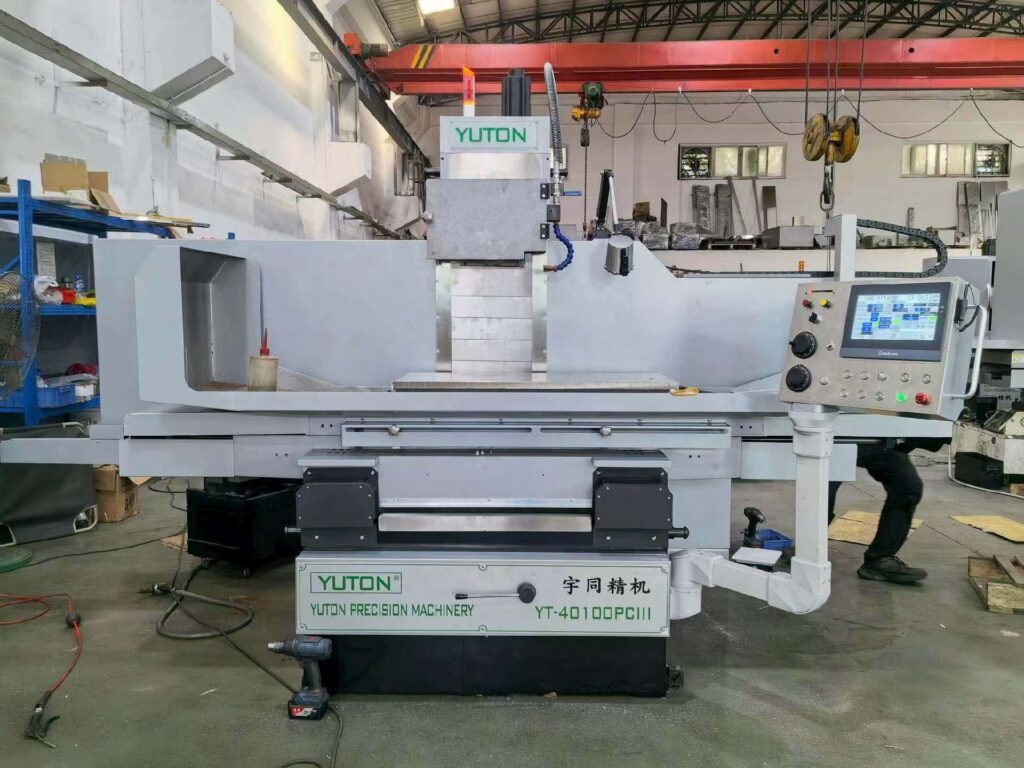
Furthermore, die makers should prioritize machines with built-in chuck regrinding capability — you need to refresh the chuck surface periodically to maintain accuracy. Therefore, YUTON’s hydraulic surface grinders offer table sizes from 500×250 to 800×400 mm with factory-certified flatness of 0.005 mm/m.
Manual vs CNC vs Hydraulic for Die Shops
- Manual surface grinder: Best for small die shops with varied, low-volume work. Therefore, lower cost and simpler maintenance. However, operator skill directly affects accuracy.
- Hydraulic surface grinder: Ideal for medium-volume production where repetitive downfeed and table speed control improve consistency. Moreover, hydraulic feed is smoother than manual, reducing operator fatigue on long grinding runs.
- CNC surface grinder: Essential for high-precision, high-volume die work with programmed spark-out passes and automatic downfeed stepping. Furthermore, CNC enables complex multi-step grinding without manual intervention, as recommended by MMS Online’s die-making guide.
Consequently, most progressive die shops invest in at least one CNC grinder for finish work and one hydraulic or manual grinder for roughing and backup plates.
Grinding Parameters for Common Die Steels
Die steels range from pre-hardened P20 (HRC 30–36) to fully hardened D2 and M2 (HRC 58–64). Therefore, grinding parameters must be adjusted for each material hardness level.
Parameter Guide by Die Steel
| Die Steel | Hardness | Wheel Grit | Downfeed (mm) | Table Speed (m/min) | Coolant |
|---|---|---|---|---|---|
| P20 (pre-hard) | HRC 30–36 | 46–60 | 0.02–0.04 | 18–25 | Soluble oil 5% |
| H13 (hot work) | HRC 44–52 | 60–80 | 0.01–0.03 | 15–22 | Soluble oil 8% |
| D2 (cold work) | HRC 58–62 | 80–100 (Al₂O₃) or 80 CBN | 0.005–0.02 | 12–18 | Synthetic or semi-syn |
| M2 (high-speed) | HRC 60–65 | 80 CBN | 0.003–0.01 | 10–15 | Synthetic |
Therefore, harder die steels require finer grit, lighter downfeed, and more aggressive coolant. Moreover, always use a spark-out pass (zero downfeed, 2–3 table reversals) after the final cut to eliminate deflection error and achieve the best surface finish.
Wheel Selection for D2 and M2
D2 and M2 are among the hardest die steels and challenge conventional aluminum oxide wheels. However, CBN wheels in vitrified bond deliver 5–10× longer life and cooler grinding on these grades. Furthermore, the European Commission CE standards for grinding machine safety require that CBN wheel guards accommodate higher peripheral speeds — verify your machine is rated for CBN before upgrading. Consequently, YUTON CNC grinders are factory-equipped with CBN-rated guards and spindle bearings (Japanese NSK/NTN), making the upgrade seamless.
Setup and Workholding Tips for Die Components
Die components have unique shapes — irregular profiles, thin sections, and hard-to-reach surfaces. Therefore, proper workholding is critical to prevent distortion and achieve the required accuracy.
Magnetic Chuck Best Practices
- Grind the chuck face flat before starting a die job. Therefore, you establish a true reference plane from the first cut.
- Use parallel strips under warped die blocks to establish initial contact. Moreover, grind the top face first, then flip and grind the opposite face — this corrects warpage in two setups.
- For thin die sections (under 5 mm), reduce magnetic force to prevent bowing. However, if the part lifts during grinding, increase force slightly or add mechanical stops.
Furthermore, always demagnetize die components after grinding — residual magnetism attracts ferrous swarf during subsequent die assembly and operation. In addition, the ISO 9001 quality standard requires documented workholding procedures for die components in certified tool rooms.
Grinding Irregular Die Profiles
For die inserts with irregular shapes, consider these approaches:
- Form grinding with a dressed wheel: Dress the wheel to the die profile and plunge-grind. Therefore, this works for simple radii and chamfers.
- Index grinding: Rotate the part on a sine plate or index fixture. Moreover, this handles angled surfaces common in progressive dies.
- CNC contour grinding: Program the wheel path for complex die profiles. Consequently, this is the most flexible method and eliminates custom fixtures.
How YUTON Grinders Serve Die Makers Worldwide
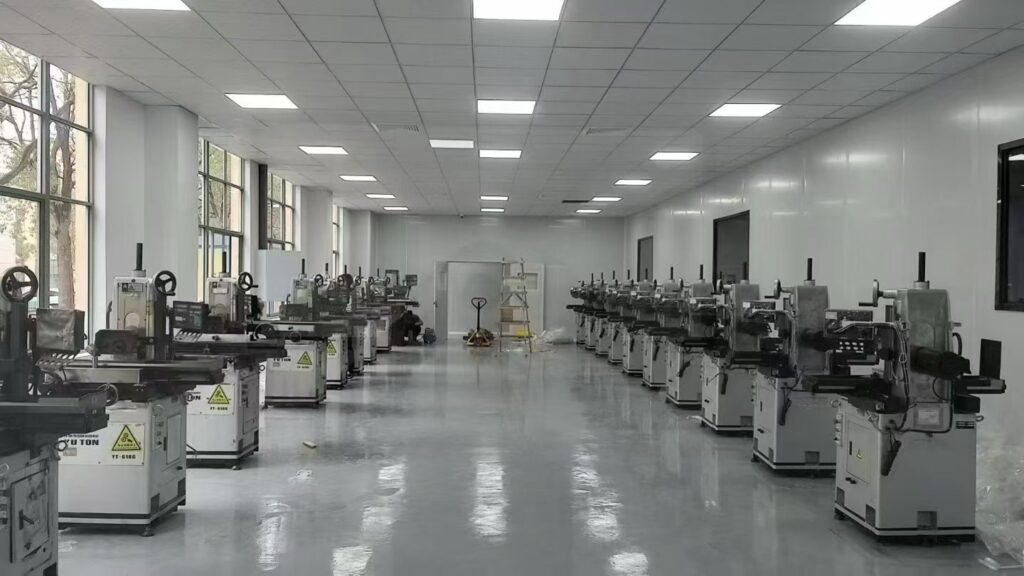
YUTON surface grinders are purpose-built for the demands of tool and die work. Therefore, every machine features precision-ground cast iron bases, Japanese spindle bearings, Taiwanese hydraulic systems, and American-grade electromagnetic chucks — the combination that die shops trust for long-term accuracy. Furthermore, with 3,100 units sold in 2025 (top three in China), YUTON has proven its machines in thousands of die-making applications from Dongguan to Detroit. Moreover, our 15,000 m² factory with 7 production buildings and 150 skilled workers means every grinder ships with consistent quality, backed by ISO 9001 process control and CE certification for the European market. Consequently, die makers who invest in YUTON gain a grinding partner, not just a machine. Learn more at the YUTON homepage.
FAQ: Surface Grinder for Die Making
What type of surface grinder is best for die making?
For most die shops, a hydraulic surface grinder with 600×300 mm table is the best all-around choice. Therefore, it provides smooth feed for long grinding runs on hardened die steels. However, shops doing high-volume progressive die work should add a CNC grinder for finish passes. Moreover, small toolrooms can start with a manual grinder and upgrade later.
Can I grind D2 tool steel on a manual surface grinder?
Yes, but with limitations. Therefore, keep downfeed below 0.02 mm per pass, use a 60–80 grit aluminum oxide wheel, and flood with coolant. However, for batch production on D2 at HRC 60+, a CNC grinder with CBN wheel delivers far better consistency and wheel life. Furthermore, operator fatigue on long manual runs often degrades finish quality.
How flat does a die face need to be after grinding?
Most blanking die faces require flatness within 0.005 mm over the full surface. Therefore, this demands a machine with table flatness of 0.005 mm/m or better, plus a spark-out pass on every finish cut. Moreover, progressive dies often require even tighter flatness — 0.002–0.003 mm — on critical working surfaces.
How do I prevent thin die plates from bowing during grinding?
Reduce magnetic chuck force, use parallel strips to support the entire surface, and take light cuts (0.005 mm or less). Therefore, the part conforms to the chuck rather than being pulled into a curve. Furthermore, grind both faces alternately to correct any existing warpage. In addition, consider a vacuum chuck for very thin plates — it distributes holding force evenly without magnetic pull.
What maintenance is critical for a die-making surface grinder?
Regular spindle bearing checks, way lubrication, and chuck face regrinding are the top three. Therefore, schedule chuck regrinding every 6–12 months, spindle inspection annually, and way cleaning weekly. Moreover, coolant filtration to 10 microns is essential — die steel swarf is fine and abrasive. Consequently, well-maintained grinders hold tolerance for years, while neglected machines drift within months, as confirmed by the Association for Manufacturing Technology.
Conclusion
A surface grinder for die making is not optional — it is the foundation of die accuracy, life, and production consistency. Therefore, choose a machine with adequate table size, spindle precision, and feed resolution for your specific die work. Moreover, match your grinding parameters to the die steel hardness, use proper workholding to prevent distortion, and maintain your machine religiously. Furthermore, YUTON’s surface grinders — built with 150 engineers, 15,000 m² of production space, 3,100 units sold in 2025, and Japanese, Taiwanese, and American core components — are engineered for the exacting demands of die making. Consequently, whether you run a small toolroom or a large progressive die shop, YUTON has a grinder that fits your needs and budget, backed by ISO 9001 quality and CE certification. Therefore, invest in the right surface grinder, and your dies will run longer, scrap less, and make your stamping operation more profitable.