
A surface grinder for construction equipment produces the flat, dimensionally accurate surfaces that excavators, cranes, loaders, and bulldozers depend on for hydraulic performance and structural integrity. Therefore, precision grinding is not a finishing step — it is a functional requirement that directly affects machine safety and service life.
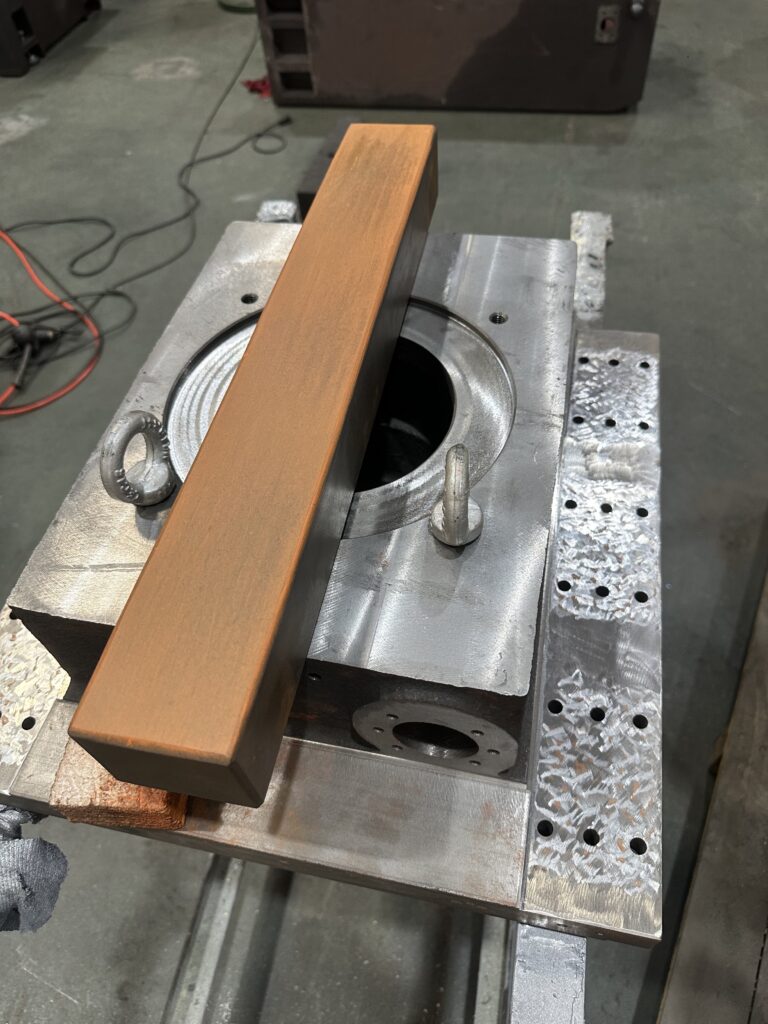
Why Construction Equipment Needs Precision Surface Grinding
Heavy construction machinery operates under extreme loads, shock forces, and abrasive environments. Furthermore, hydraulic systems in excavators and cranes operate at pressures exceeding 350 bar, where even minor surface imperfections on cylinder bores, piston rods, or valve spools cause internal leakage and power loss. Consequently, surface grinding these critical interfaces to tight tolerances is essential for efficient, reliable operation.
Consider the cascade: a piston rod with Ra above 1.6 μm acts like a slow-motion file against the hydraulic seal. Therefore, the seal wears prematurely, fluid leaks past the rod, and the cylinder loses holding force — a crane that drifts under load is a life-safety hazard. Moreover, a single hydraulic cylinder failure on an excavator boom can idle a $500,000 machine for days.
Critical Surface Requirements in Construction Machinery
Different functional zones demand specific surface finishes. Moreover, these are not cosmetic targets — they directly govern component performance:
- Hydraulic piston rods: Ra 0.2–0.4 μm after hard chrome plating. This ultra-smooth finish preserves seal life.
- Cylinder bore surfaces: Ra 0.4–0.8 μm internal finish for optimal seal glide and pressure holding.
- Valve spool lands: Ra 0.1–0.2 μm for zero-leakage proportional hydraulic control.
- Structural joint faces: Ra 1.6–3.2 μm flatness within 0.05 mm per 300 mm for bolted connection integrity.
- Swing bearing mating surfaces: Ra 0.8–1.6 μm with flatness ≤ 0.02 mm for slewing ring preload accuracy.
Therefore, a surface grinder for construction equipment must consistently achieve these finishes across a wide range of part sizes and materials.
Key Components That Require a Surface Grinder for Construction Equipment
Understanding which construction equipment parts need precision grinding helps specify the right surface grinder for construction equipment. Furthermore, each category presents distinct challenges in size, material, and tolerance.
Hydraulic Cylinder Components
Hydraulic cylinders are the muscles of excavators, loaders, and cranes. Moreover, every cylinder contains at least three surfaces that demand precision grinding:
- Piston rod outer diameter: Hard chrome plated after grinding, typically 40–200 mm diameter × 500–3000 mm length. The rod must be straight within 0.1 mm per meter and round within 0.01 mm.
- Cylinder bore inner diameter: Honed to Ra 0.4 μm after initial bore grinding, typically 80–300 mm diameter.
- Gland and cap sealing faces: Flat within 0.02 mm to prevent external leakage under pressure.
These components frequently use hardened chrome-moly steels (AISI 4140, 4340) at HRC 55–62. Furthermore, grinding such hard, long workpieces demands a rigid machine with steady rest support and sufficient table travel (https://surfacegrindermfg.com/hydraulic-surface-grinder/).
Swing Bearing and Slewing Ring Mating Surfaces
Excavator upper structures rotate on large-diameter slewing bearings. Moreover, the mating surfaces on both the upper carbody and the undercarriage must be flat and parallel to maintain even bearing preload. Therefore, grinding these surfaces — which can exceed 1000 mm in diameter — requires a surface grinder with large table capacity and magnetic chuck holding.
Uneven bearing preload from non-flat mounting surfaces causes localized roller loading, premature spalling, and eventual bearing failure. Furthermore, replacing a slewing bearing on a 36-ton excavator requires 8–16 hours of downtime at shop rates exceeding $150/hour.
Transmission and Gearbox Components
Construction equipment gearboxes use ground surfaces on shift fork pads, bearing journals, and clutch hub faces. Moreover, these surfaces must be flat and parallel within 0.01 mm to ensure smooth shifting and even load distribution across gear teeth. Therefore, a CNC surface grinder with programmable infeed achieves the consistency that manual grinding cannot match on batch quantities.
Structural Pin and Bushing Bores
Bucket pins, track pins, and pivot bushings all require precision-ground bores and outer diameters. Furthermore, these joints operate in abrasive, contaminated environments where clearance control directly affects wear rate. Therefore, grinding to H7/g6 tolerance fits with Ra 0.8 μm ensures proper lubrication film formation between pin and bushing.
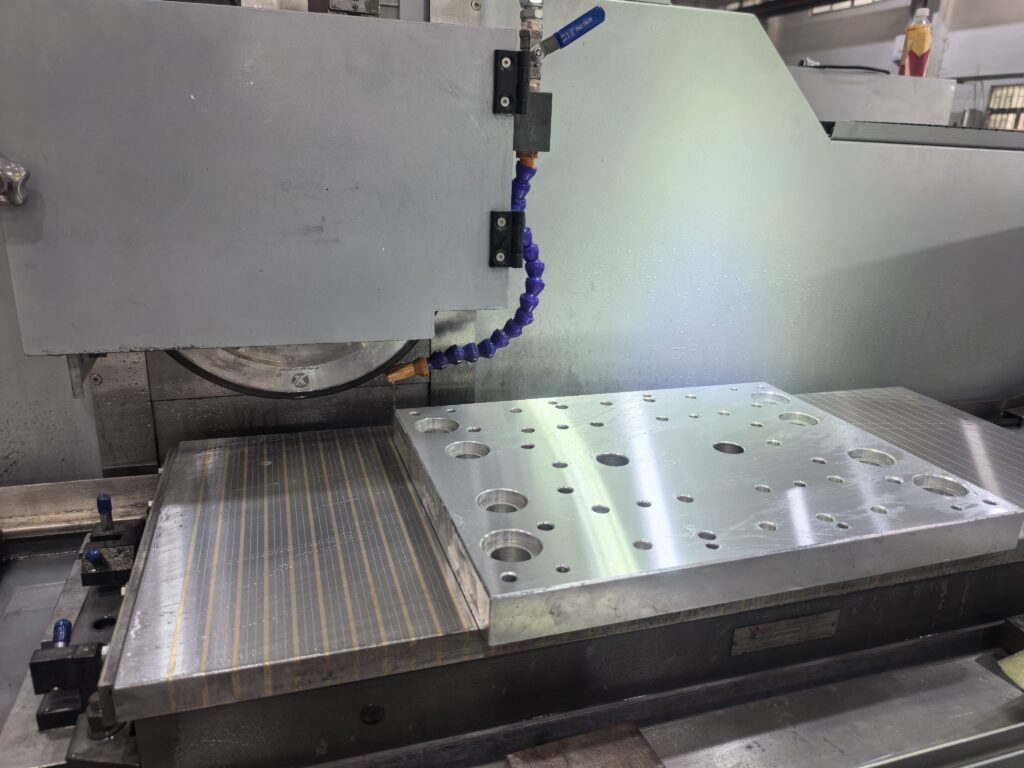
Material Challenges in Construction Equipment Grinding
Construction machinery uses tough, wear-resistant alloys that challenge grinding operations. Therefore, wheel selection and process parameters must be optimized for each material category.
Hardened Chrome-Moly Steels (AISI 4140, 4340)
These alloy steels, hardened to HRC 55–62, are the standard for hydraulic piston rods and high-stress shafts. Moreover, they grind well with CBN wheels in vitrified bonds at moderate wheel speeds (30–35 m/s). However, they are sensitive to grinding burn — localized thermal damage that softens the surface and creates tensile residual stress. Therefore, adequate coolant delivery (50+ L/min) and controlled infeed rates are essential.
High-Strength Low-Alloy (HSLA) Structural Steels
Excavator booms, crane chassis, and loader arms use HSLA steels (ASTM A572, A588) in plate thicknesses from 10 to 80 mm. Furthermore, these materials are relatively easy to grind but require machines with sufficient table load capacity to handle large, heavy weldments. Therefore, a surface grinder for construction equipment must accommodate workpieces weighing 500–2000 kg (https://surfacegrindermfg.com/cnc-surface-grinder/).
Wear-Resistant AR Plate
Abrasion-resistant (AR400, AR500) plate used for bucket edges and dozer cutting edges presents high hardness (HRC 40–50) with challenging microstructures. Moreover, grinding AR plate requires friable aluminum oxide wheels with open structures to prevent wheel loading and maintain free-cutting action.
Hard Chrome Plating Re-Grinding
During cylinder overhaul, worn piston rods are stripped of old chrome, re-plated, and then ground to final diameter. Furthermore, the chrome layer (typically 0.05–0.25 mm thick) is extremely hard (HRC 65–70) and requires CBN or diamond wheels with fine grit (150–320) for effective material removal without chatter. Therefore, a grinder with rigid spindle bearings and balanced grinding wheel is essential for chrome work.
Machine Selection: Choosing a Surface Grinder for Construction Equipment
Choosing a surface grinder for construction equipment requires evaluating capacity, precision, and durability for heavy-industrial service. Moreover, construction equipment workshops often run multiple shifts in demanding environments.
Work Envelope and Load Capacity
- Table size: 600 × 300 mm for small hydraulic components; 1500 × 500 mm for structural joint faces and slewing ring mounts
- Max workpiece weight: 500 kg for cylinder components; 2000+ kg for large structural parts
- Spindle motor power: 7.5–15 kW for heavy stock removal on hardened steels
Precision Capabilities
- Flatness: ≤ 0.01 mm per 300 mm for seal faces and bearing journals
- Surface finish: Consistent Ra 0.2–0.8 μm depending on functional zone
- Infeed resolution: 0.001 mm for chrome re-grinding and finish passes
A CNC surface grinder with automatic spark-out and programmable feed rates ensures these tolerances are met consistently across production runs. Moreover, PLC hybrid control offers the flexibility to handle both one-off repair work and repetitive production cycles — common in construction equipment service shops (https://surfacegrindermfg.com/automatic-surface-grinder/).
Coolant System Requirements
High-pressure coolant delivery (5–10 bar, 50+ L/min) is essential for grinding hardened steels without burn. Furthermore, magnetic particle separation or paper filtration keeps coolant clean when grinding large cast iron and steel components that generate heavy swarf loads. Therefore, specify a grinder with robust coolant filtration rated for the material volumes you process.
The Cost of Poor Grinding in Construction Equipment
The consequences of substandard surface grinding extend far beyond the machine shop. Moreover, the total cost of a grinding-related failure includes:
- Direct repair cost: Cylinder rebuild at $1,500–5,000 per unit
- Machine downtime: $500–2,000 per day depending on equipment class
- Project delay penalties: Liquidated damages on construction contracts can reach $10,000+ per day
- Safety liability: Hydraulic failure on a crane or excavator creates life-safety risk
Therefore, investing in a surface grinder for construction equipment pays for itself by preventing a single major field failure. Furthermore, construction equipment OEMs increasingly require documented surface finish measurements on critical hydraulic components as part of warranty compliance (https://www.sme.org/).
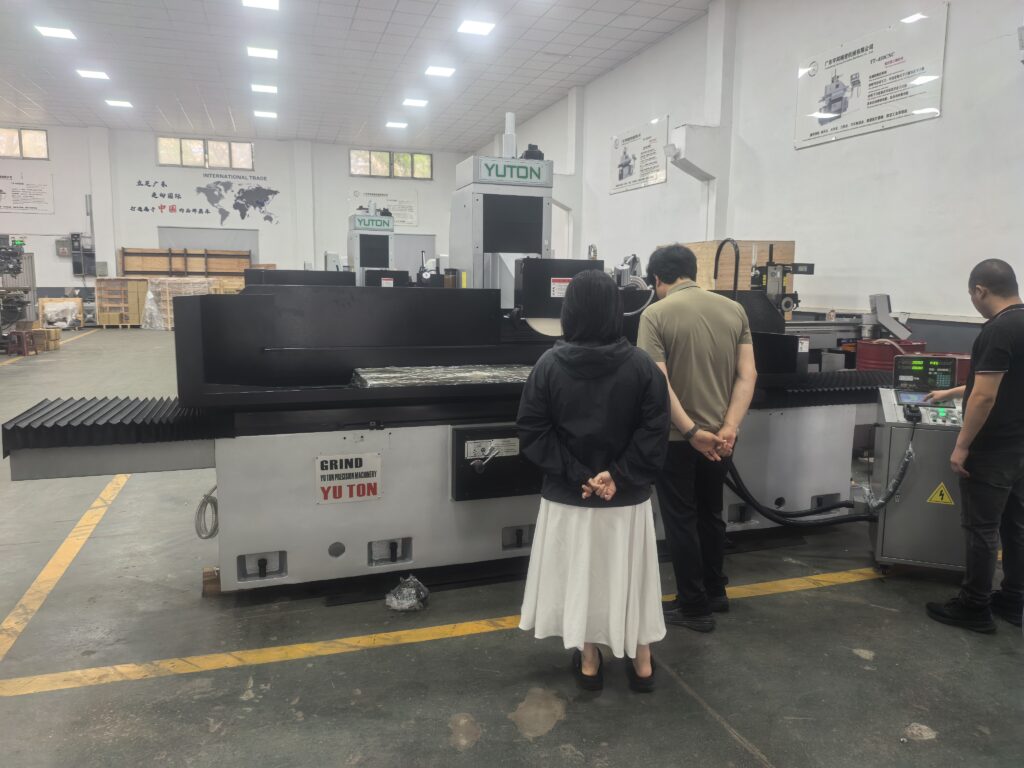
YUTON Surface Grinders: Built for Heavy-Industrial Precision
YUTON surface grinders are engineered for the precision and durability that construction equipment manufacturing and repair demand. Furthermore, our machines deliver the performance needed for hydraulic components, structural joints, and drivetrain parts:
- Meehanite cast iron construction provides superior vibration damping and thermal stability — essential for holding flatness on large, heavy workpieces during extended grinding cycles.
- Japanese, Taiwanese, and American core components deliver the spindle accuracy, feed resolution, and long-term reliability that heavy-industrial production requires.
- ISO 9001 + CE certification ensures every machine from our 15,000 m² Dongguan facility meets documented quality standards — the traceability that construction OEMs demand (https://www.iso.org/). CE marking also confirms compliance with the European Machinery Directive for safety and electromagnetic compatibility (https://ec.europa.eu/).
- 3,100 units sold in 2025, ranking YUTON among China’s top three surface grinder manufacturers. Moreover, this production scale ensures consistent quality and engineering depth to customize machines for construction-specific work envelopes.
- CNC, PLC hybrid, and manual models match control sophistication to your workload — from manual toolroom repair to CNC-programmed batch production of cylinder components (https://surfacegrindermfg.com/manual-surface-grinder/).
Explore YUTON surface grinders at https://surfacegrindermfg.com/ — proven in heavy-industrial service, backed by 150 people and 7 production buildings in Dongguan. For hydraulic grinder capabilities, see https://surfacegrindermfg.com/hydraulic-surface-grinder/.
FAQ: Surface Grinder for Construction Equipment
What surface finish do hydraulic piston rods need?
Hydraulic piston rods require Ra 0.2–0.4 μm after hard chrome plating. Furthermore, this ultra-smooth finish is essential for seal longevity and leak-free operation at pressures above 350 bar.
Can a manual surface grinder handle construction equipment parts?
A manual surface grinder can handle smaller components like valve spools and shift fork pads. However, large hydraulic cylinder rods and structural joint faces benefit from CNC control for consistent finish and reduced operator dependency. Therefore, CNC or PLC hybrid models are recommended for construction equipment shops.
What grinding wheel is best for hardened chrome-moly steel?
CBN wheels in vitrified bonds at 30–35 m/s wheel speed work best for hardened AISI 4140 and 4340 steels. Moreover, adequate coolant flow prevents grinding burn and the tensile residual stress that causes fatigue cracking in service.
How does surface grinding affect hydraulic cylinder life?
Precision surface grinding directly extends hydraulic cylinder life by maintaining the Ra and dimensional tolerances that preserve seal integrity. Therefore, a piston rod ground to Ra 0.2 μm typically achieves 3–5 times the seal life of one finished to Ra 1.6 μm.
What machine capacity do I need for excavator components?
For excavator cylinder rods (typically 40–200 mm diameter × 500–3000 mm length), you need a grinder with at least 3000 mm longitudinal travel and steady rest capability. Furthermore, slewing ring mating surfaces may require table sizes exceeding 1000 mm (https://www.amtonline.org/).
Conclusion
A surface grinder for construction equipment must deliver precision finishes on the hydraulic, structural, and drivetrain components that keep excavators, cranes, and loaders working safely and efficiently. Therefore, the investment in proper grinding capability prevents costly field failures, extends component life, and supports warranty compliance.
From hydraulic piston rods to slewing bearing mounts, from gearbox faces to pin bushing bores, every ground surface on construction equipment directly affects machine performance and total cost of ownership. Moreover, YUTON surface grinders — with Meehanite cast iron construction, Japanese/Taiwanese/American core components, and ISO 9001 + CE certification — provide the precision foundation that heavy-industrial workshops need.
Discover the full YUTON range at https://surfacegrindermfg.com/ — CNC, automatic, hydraulic, and manual models built for construction equipment precision, backed by 3,100 units delivered in 2025 (https://www.mmsonline.com/).