
Manufacturers worldwide are discovering the PLC surface grinder advantages that bridge the gap between manual flexibility and CNC automation. For shops that need both hands-on control and repeatable precision, a PLC-controlled surface grinder offers the best of both worlds. Therefore, understanding these benefits helps you make a smarter investment decision.
What Is a PLC Surface Grinder
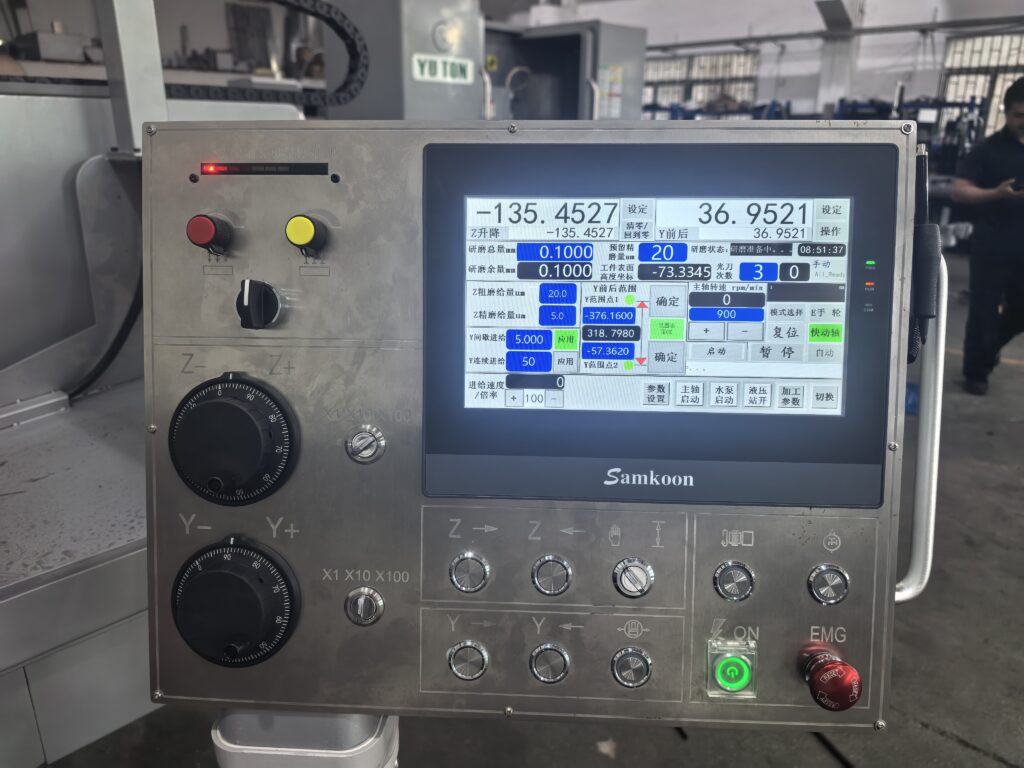
A PLC surface grinder uses a programmable logic controller to manage grinding cycles, feed rates, and table movements. Unlike a full CNC system, however, a PLC surface grinder still allows manual operation when needed. As a result, operators can switch between automatic and manual modes depending on the job requirements.
Furthermore, this hybrid approach means you do not need a skilled CNC programmer for every task. Simple jobs run manually, while repetitive grinding cycles benefit from PLC automation. This flexibility is one of the key PLC surface grinder advantages that attract buyers globally. Learn more about YUTON’s grinding solutions at https://surfacegrindermfg.com/
Top PLC Surface Grinder Advantages for Modern Workshops
Why are more manufacturers choosing PLC-controlled machines? Here are the most significant benefits:
- Dual-mode operation — Switch between manual and automatic grinding instantly, adapting to any workload
- Lower programming barrier — PLC interfaces are simpler than CNC programming, reducing training time and operator errors
- Consistent repeatability — Once a grinding cycle is set, the PLC repeats it with minimal variation
- Cost efficiency — PLC models typically cost 30-50% less than full CNC machines while delivering much of the same automation value
- Faster setup — Operators can begin grinding immediately in manual mode while programming the PLC for the next batch
These PLC surface grinder advantages make the technology particularly appealing for small to medium workshops. Explore automatic options at https://surfacegrindermfg.com/automatic-surface-grinder/
PLC vs CNC: Which Makes Sense for You
This comparison comes up frequently among buyers evaluating their options. In fact, the answer depends on your production profile.
A CNC surface grinder excels at complex geometries, multi-axis interpolation, and fully unmanned operation. However, CNC machines require skilled programmers and carry higher purchase costs. Discover CNC models at https://surfacegrindermfg.com/cnc-surface-grinder/
A PLC surface grinder, by contrast, handles the majority of common grinding tasks at a fraction of the cost. Moreover, the manual override capability means operators can handle unusual parts without reprogramming. For workshops running mixed batches of simple and complex workpieces, the PLC surface grinder advantages clearly tip the balance.
The Society of Manufacturing Engineers discusses control system trends at https://www.sme.org/
Real-World Applications That Benefit from PLC Surface Grinder Advantages
Many common manufacturing scenarios highlight the practical value of PLC control:
- Job shops with mixed orders — Handle one-off manual jobs and repeating PLC cycles in the same shift
- Tool and die maintenance — Use manual mode for delicate rework, then switch to PLC for batch grinding
- Small-batch production — Program quick cycles without investing in full CNC infrastructure
- Operator training — New operators learn manual grinding first, then gradually add PLC automation as skills develop
- Cost-sensitive operations — Achieve automation benefits without the CNC price tag
Each scenario leverages different PLC surface grinder advantages. Consequently, the machine adapts to your workflow rather than forcing your workflow to adapt to the machine.
How to Maximize PLC Surface Grinder Advantages
Getting the most from a PLC-controlled machine requires proper technique. Here are proven tips:
- Start with manual grinding to confirm parameters, then program the PLC cycle for production runs
- Use the PLC’s dwell settings to improve surface finish on critical faces
- Save successful grinding programs with descriptive names for quick recall
- Schedule regular PLC backup to prevent program loss during power interruptions
- Train operators on both manual and automatic modes to maximize machine utilization
The International Organization for Standardization provides quality management guidelines that support these practices at https://www.iso.org/ For technical grinding insights, Modern Machine Shop offers extensive resources at https://www.mmsonline.com/
Why YUTON’s PLC Surface Grinders Stand Out
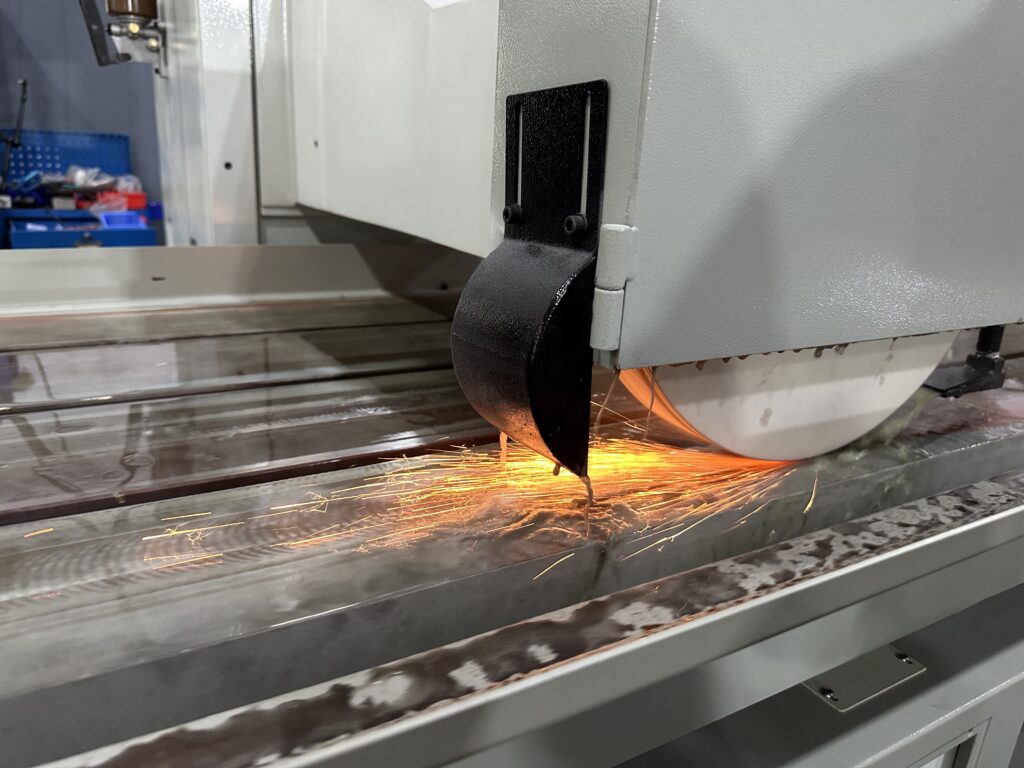
YUTON has invested significantly in PLC-controlled grinding technology. With 150 employees and 15,000 square meters of production space across 7 buildings in Dongguan, China, YUTON builds machines that deliver the PLC surface grinder advantages international buyers seek.
Specifically, YUTON uses core components from Japan, Taiwan, and the United States. This ensures the spindle precision, hydraulic stability, and control reliability that PLC grinding demands. In addition, YUTON’s PLC interface is designed for intuitive operation — operators can set up grinding cycles quickly without extensive training.
With 3,100 units sold in 2025 and ISO 9001 plus CE certifications, YUTON is a proven partner for manufacturers seeking reliable hybrid-control grinding solutions. See the hydraulic model at https://surfacegrindermfg.com/hydraulic-surface-grinder/ The European Commission’s machinery safety standards provide additional regulatory context at https://ec.europa.eu/
Request specifications and pricing at https://surfacegrindermfg.com/
Conclusion
The PLC surface grinder advantages are clear: dual-mode flexibility, lower cost than CNC, easier programming, and consistent repeatability. For manufacturers who need automation without sacrificing manual control, a PLC-controlled surface grinder is a smart, cost-effective choice. By understanding these benefits and applying proper technique, workshops can boost productivity while keeping investment manageable.
Explore YUTON’s PLC surface grinder lineup and request a quote at https://surfacegrindermfg.com/manual-surface-grinder/