
Hydraulic vs CNC Surface Grinder: Core Differences
The fundamental difference between a hydraulic vs CNC surface grinder lies in how the table feed and wheel infeed are controlled:
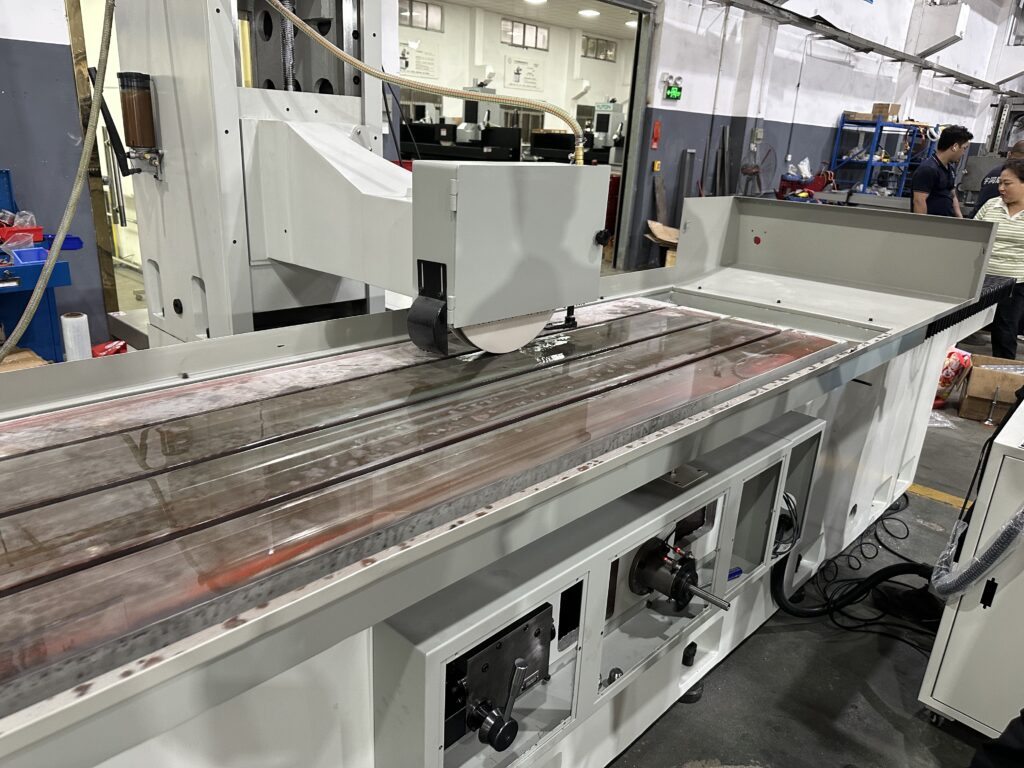
- Hydraulic surface grinder: Table movement is driven by a hydraulic cylinder. The operator sets feed speed with a flow control valve and engages crossfeed manually or via a mechanical automatic mechanism. Infeed is typically manual with a handwheel, though some models add automatic downfeed.
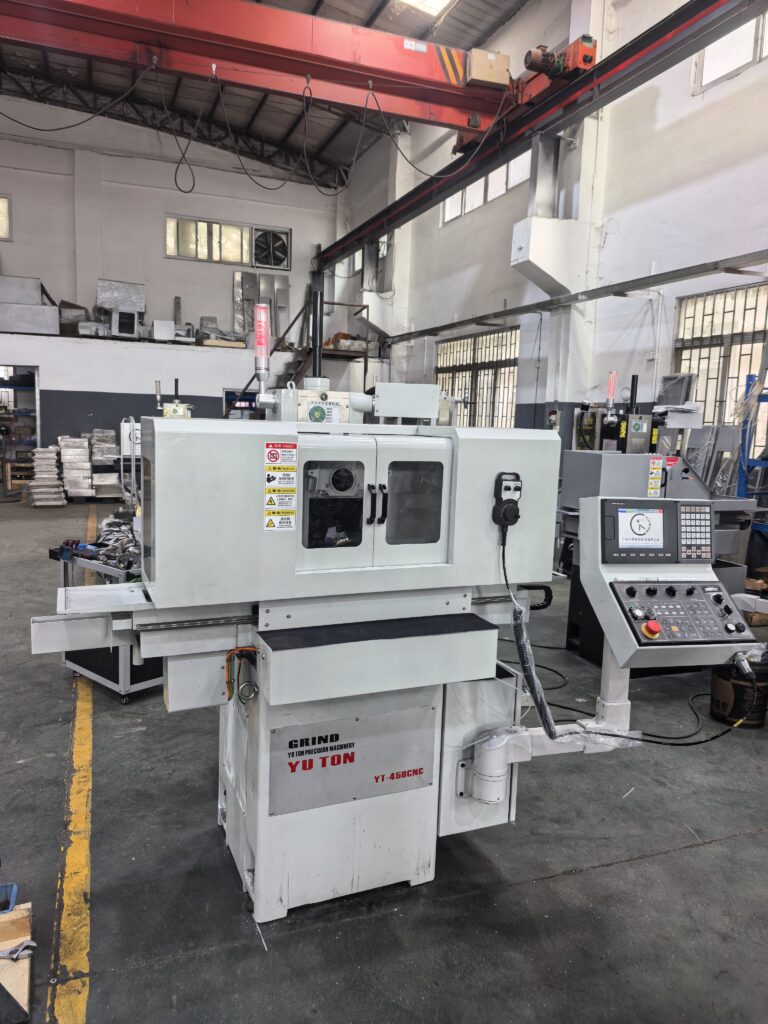
- CNC surface grinder: A computer numerical control system drives servo motors on all axes. The operator programs grinding parameters, and the machine executes the cycle automatically. Dressing is often integrated into the CNC program.
In short, hydraulic machines rely on the operator for setup and infeed decisions, while CNC machines automate the entire grinding cycle. Explore both types at https://surfacegrindermfg.com/hydraulic-surface-grinder/ and https://surfacegrindermfg.com/cnc-surface-grinder/.
Precision and Repeatability
When comparing hydraulic vs CNC surface grinder performance, precision and repeatability are key:
- Hydraulic machines achieve tight tolerances when operated by skilled machinists. Typical capability is ±0.005 mm for flatness and ±0.003 mm for thickness. However, results depend heavily on operator technique, and part-to-part variation is higher.
- CNC machines deliver consistent ±0.003 mm flatness and ±0.002 mm thickness across production runs. The servo-driven infeed eliminates the human variation in downfeed increments. For high-precision batch work, CNC is the clear winner.
If your shop grinds mostly one-off parts where operator skill compensates for variation, a hydraulic grinder is sufficient. For production batches that demand part-to-part consistency, CNC pays for itself. The ISO 1101 standard defines geometric tolerance requirements — see https://www.iso.org/.
Speed and Productivity
Speed is another major factor in the hydraulic vs CNC surface grinder decision:
- Hydraulic: Table speed is adjustable via the hydraulic valve, and experienced operators can work quickly on simple jobs. Setup is fast for single parts — just mount, dress and grind. Cycle time depends on operator skill.
- CNC: Setup takes longer because you must program the grinding path, infeed increments and dressing cycles. However, once the program is saved, repeating the job takes minimal setup time. Automatic dressing between passes keeps the wheel sharp without stopping.
For short runs and toolroom work, hydraulic machines often complete jobs faster because there is no programming overhead. For medium to long production runs, CNC machines outperform due to automated cycles and consistent feed rates. See hydraulic options at https://surfacegrindermfg.com/automatic-surface-grinder/.
Cost Comparison
Cost is always central to the hydraulic vs CNC surface grinder debate:
| Cost Factor | Hydraulic Grinder | CNC Grinder |
|---|---|---|
| Purchase price | Lower | 30–80% higher |
| Installation | Standard | May need compressed air and electrical upgrades |
| Tooling | Manual dressers, standard wheels | May require rotary diamond dressers |
| Operator skill | High — experienced machinist needed | Moderate — programming skill needed |
| Maintenance | Hydraulic system service, seal replacements | Servo motor and controller maintenance |
A hydraulic surface grinder from https://surfacegrindermfg.com/hydraulic-surface-grinder/ typically costs significantly less upfront than a CNC model from https://surfacegrindermfg.com/cnc-surface-grinder/. However, CNC machines reduce labor cost per part in production environments because one operator can manage multiple machines. Modern Manufacturing covers total cost of ownership analysis for grinding machines — see https://www.mmsonline.com/.
The Association for Manufacturing Technology publishes data on machine tool cost of ownership — see https://www.amtonline.org/.
Hydraulic vs CNC Surface Grinder: Automation
Automation capability is where the hydraulic vs CNC surface grinder gap widens:
- Hydraulic grinders offer basic automatic table reversal and crossfeed. Some models add PLC-based automatic downfeed for semi-automated cycle control. Full automation is limited.
- CNC grinders support fully automated grinding cycles, integrated wheel dressing, automatic workpiece measurement and lights-out operation. They integrate easily with robotic loaders and factory MES systems.
If your shop is moving toward smart manufacturing or needs unattended operation, CNC is the only practical choice. The Society of Manufacturing Engineers covers automation trends in grinding — see https://www.sme.org/.
Best Applications for Each Type
The hydraulic vs CNC surface grinder question often comes down to what you grind:
Choose Hydraulic When:
- Your work is mostly one-off or small batch
- Operators are skilled and prefer manual control
- Budget is limited but you need a reliable precision grinder
- Your parts have simple flat surfaces without complex profiles
- You need a versatile machine for the toolroom
Choose CNC When:
- You grind medium to large production batches
- Part-to-part consistency is critical
- Complex profiles, steps or contours are required
- You want to integrate with automated loading systems
- You need automatic dressing and measurement
Many shops own both types — hydraulic for flexibility and CNC for production. The European Commission’s machinery directives apply to both types sold in the EU market — see https://ec.europa.eu/. Visit https://surfacegrindermfg.com/ to explore the full range.
PLC Hybrid: A Middle Ground
Some manufacturers offer PLC-controlled surface grinders that combine hydraulic table drive with programmable infeed. YUTON’s PLC hand-auto hybrid models give operators manual control when they want it and programmable automatic downfeed when they need it. This is a practical option for shops that want more automation than a pure hydraulic machine but cannot justify full CNC cost. See more at https://surfacegrindermfg.com/manual-surface-grinder/.
Conclusion
The hydraulic vs CNC surface grinder decision depends on your production volume, precision requirements, automation goals and budget. Hydraulic grinders offer simplicity, lower cost and operator control. CNC grinders deliver consistency, automation and integration capability. Many successful shops run both. Choose based on your actual workload, not assumptions. For reliable machines in both categories, visit https://surfacegrindermfg.com/.