
The medical device industry operates at the intersection of precision engineering and human health. Every component—from surgical instruments to implantable devices—must meet extraordinarily tight tolerances and surface finish requirements. This is precisely why a surface grinder for medical devices has become indispensable in modern healthcare manufacturing.
Unlike many other industries, medical devices directly impact patient safety and treatment outcomes. A microscopic surface imperfection in a surgical tool can compromise sterility; a dimensional deviation in an implant can cause rejection or failure. Consequently, surface grinding quality in medical manufacturing isn’t just about specifications—it’s about patient lives.
Moreover, the global medical device market continues expanding rapidly, projected to exceed $700 billion by 2027. As medical technology advances, components become smaller, more complex, and more demanding of precision. In particular, minimally invasive surgical instruments, orthopedic implants, and diagnostic equipment all rely on precision-ground surfaces to function correctly.
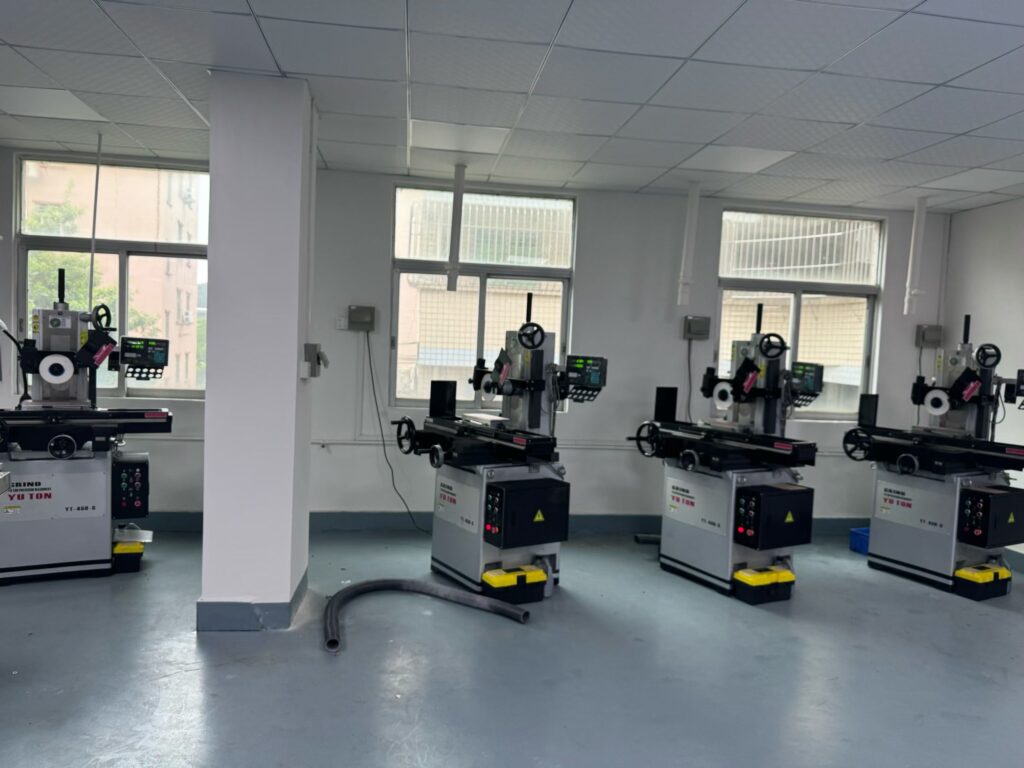
At YUTON, we understand what medical device manufacturers need. Our precision CNC surface grinders and automatic surface grinders deliver the accuracy and surface quality that medical manufacturing demands. With ISO 9001 certification, 15 years of grinding expertise, and annual sales exceeding 3,100 units, we’re a trusted partner for medical device manufacturers worldwide.
Why Medical Device Manufacturing Requires Precision Surface Grinding
The medical device industry operates at the intersection of precision engineering and human health. Every component—from surgical instruments to implantable devices—must meet extraordinarily tight tolerances and surface finish requirements. This is precisely why a surface grinder for medical devices has become indispensable in modern healthcare manufacturing.
Unlike many other industries, medical devices directly impact patient safety and treatment outcomes. A microscopic surface imperfection in a surgical tool can compromise sterility; a dimensional deviation in an implant can cause rejection or failure. Consequently, surface grinding quality in medical manufacturing isn’t just about specifications—it’s about patient lives.
Moreover, the global medical device market continues expanding rapidly, projected to exceed $700 billion by 2027. As medical technology advances, components become smaller, more complex, and more demanding of precision. In particular, minimally invasive surgical instruments, orthopedic implants, and diagnostic equipment all rely on precision-ground surfaces to function correctly.
At YUTON, we understand what medical device manufacturers need. Our precision CNC surface grinders and automatic surface grinders deliver the accuracy and surface quality that medical manufacturing demands. With ISO 9001 certification, 15 years of grinding expertise, and annual sales exceeding 3,100 units, we’re a trusted partner for medical device manufacturers worldwide.
Critical Medical Device Components That Need Surface Grinding
Surgical Instruments
Surgical tools represent one of the most demanding applications for medical grinding. Scalpel handles, forceps, scissors, and retractors all require precision-ground surfaces to ensure proper function and ergonomics. Specifically, instrument mating surfaces must be flat within microns to maintain alignment during delicate procedures.
In addition, endoscopic instruments and laparoscopic tools feature tiny, complex geometries that demand exceptional surface finish quality. Any burr or roughness can compromise instrument function or damage surrounding tissue. Therefore, a reliable surface grinder for medical devices is essential for any surgical instrument manufacturer.
Orthopedic Implants
Orthopedic implants—knee joints, hip replacements, spinal hardware—require precision grinding for proper fit and longevity. Specifically, implant bearing surfaces must achieve mirror-finish quality (Ra < 0.1μm) to minimize wear and extend implant life. Moreover, bone-contacting surfaces often require controlled roughness values to promote osseointegration.
Furthermore, surgical guide blocks and cutting jigs used during implant surgery must be ground to exact specifications. These guides ensure surgeons cut bone at precise angles; any deviation can lead to improper implant positioning and poor patient outcomes.
Dental Equipment and Implants
Dental manufacturing also relies heavily on precision grinding. Dental handpieces, implant abutments, and prosthetic frameworks all require ground surfaces for proper function and biocompatibility. In particular, dental implant surfaces often undergo specialized grinding to create specific topographies that promote bone integration.
Additionally, dental lab equipment like articulators and models require flat reference surfaces achieved through grinding. These surfaces ensure accurate bite registration and proper prosthetic fit.
Diagnostic and Laboratory Equipment
Diagnostic instruments, from blood analyzers to MRI components, depend on precision-ground surfaces for accurate measurements. Specifically, sample chambers, optical mounts, and detector housings must be flat and smooth to ensure proper sealing, alignment, and signal quality.
Moreover, laboratory centrifuges, pipettes, and automated handlers feature precision-ground components that maintain calibration and repeatability across thousands of test cycles.
Drug Delivery Devices
Finally, drug delivery systems like insulin pumps, inhalers, and auto-injectors contain precision-ground components. Valve seats, piston surfaces, and nozzle geometries all require grinding to ensure proper fluid dynamics and dosing accuracy. As a result, patients receive correct medication amounts every time.
Types of Surface Grinders Used in Medical Device Production
CNC Surface Grinders
For complex medical device geometries and tight tolerances, CNC surface grinders are the gold standard. These machines handle intricate contours, multiple operations in single setups, and integration with inspection systems. Specifically, CNC surface grinders excel at producing complex orthopedic implant surfaces and precision surgical instruments.
Additionally, CNC grinders offer programmable wheel dressing and adaptive control—features that medical device quality systems demand. For high-mix, low-volume medical production (common in customized implants), CNC flexibility is invaluable.
Automatic Surface Grinders
For high-volume medical device components like standard surgical instruments and disposable devices, automatic surface grinders deliver consistent quality at production rates. These machines feature programmable cycles and integrated gauging. In particular, YUTON’s automatic surface grinders maintain tolerances within 5μm across continuous production runs.
Moreover, automatic grinders reduce operator dependency and ensure every component meets specification—critical for medical device quality requirements and regulatory compliance.
Hydraulic Surface Grinders
For larger medical equipment components—MRI housings, CT scanner beds, and surgical table parts—hydraulic surface grinders provide the power and stability needed. Their smooth, vibration-free operation is essential for achieving the surface finishes that medical applications demand. In particular, hydraulic surface grinders excel at grinding large medical equipment fixtures and mounting plates.
Manual Surface Grinders
For medical device prototyping, custom instruments, and repair work, manual manual surface grinders remain valuable. They offer the flexibility needed for one-off surgical instruments, experimental implants, and situations where operator judgment is critical. However, for production medical components, automatic or CNC grinders are preferred.
How to Choose a Surface Grinder for Medical Devices
Evaluate Precision and Surface Finish Capability
Medical devices often require tolerances tighter than 3μm and surface finishes better than Ra 0.2μm. Therefore, your grinder must deliver these capabilities consistently. Look for machines with proven track records in medical applications and documented precision specifications.
Assess Cleanroom Compatibility
Many medical device components are manufactured in cleanroom environments. Your grinder must be compatible with cleanroom requirements: minimal particle generation, appropriate lubricants, and easy cleaning. Specifically, look for machines with sealed ways, contained coolant systems, and smooth surfaces that don’t trap contaminants.
Check for Documentation and Traceability
Medical device regulations like FDA 21 CFR Part 820 require comprehensive documentation. Your grinder must support this through data logging, parameter recording, and full traceability. Look for machines that can document every grinding parameter for every component—essential for FDA audits and quality investigations.
Verify Material Compatibility
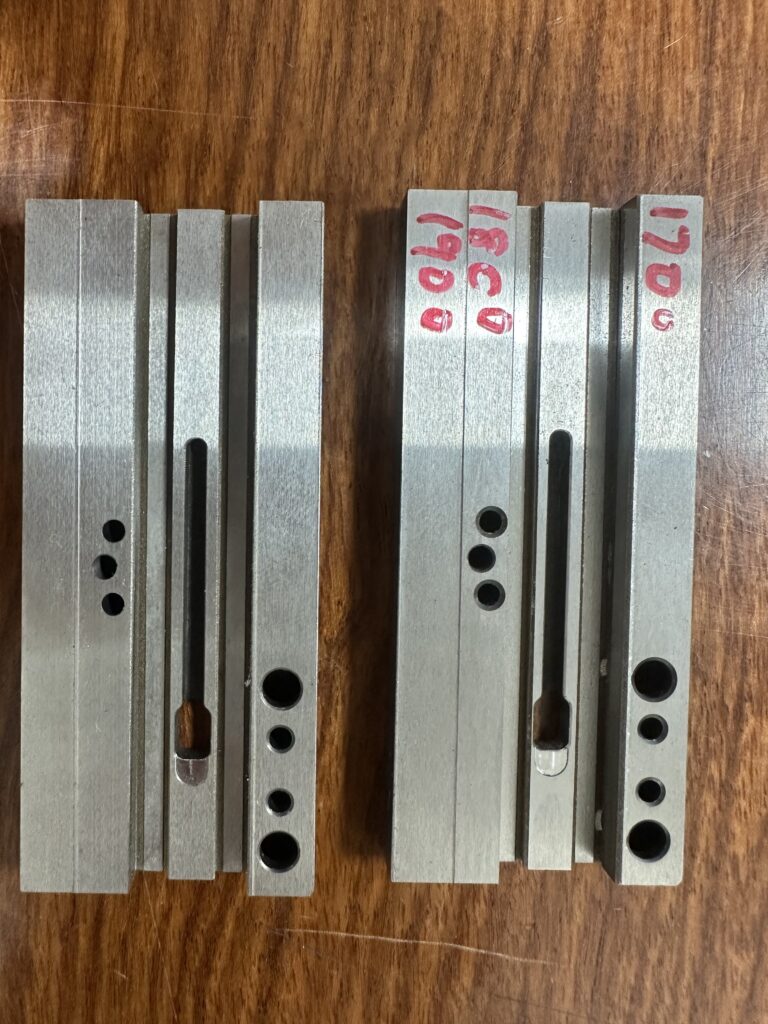
Medical devices use specialized materials: surgical-grade stainless steels (316L, 17-4PH, 440C), titanium alloys, cobalt-chromium alloys, and biocompatible ceramics. These materials present unique grinding challenges. Consequently, your grinder must handle these materials effectively with appropriate wheels, speeds, and coolant systems.
Confirm Supplier Quality System
Medical device suppliers must demonstrate rigorous quality management. When selecting a grinder manufacturer, verify their ISO certifications, medical customer references, and regulatory compliance. For instance, YUTON holds ISO 9001 certification, operates a 15,000㎡ facility with 150 employees, and exports to over 50 countries—including medical device manufacturers in regulated markets.
Material Considerations in Medical Device Grinding
Surgical-Grade Stainless Steels (316L, 17-4PH, 440C)
Stainless steels dominate surgical instruments and many implant components. These materials offer excellent corrosion resistance and biocompatibility. However, they can be gummy and prone to built-up edge during grinding. Therefore, grinding medical stainless steels requires sharp, appropriately friable wheels and generous coolant flow.
Titanium Alloys (Ti-6Al-4V, CP Titanium)
Titanium alloys are widely used in orthopedic implants due to their biocompatibility and bone-like elastic modulus. Unfortunately, titanium’s low thermal conductivity causes heat concentration during grinding, potentially damaging surface integrity. As a result, grinding titanium requires lower speeds, high coolant volumes, and careful thermal management to prevent surface burns.
Cobalt-Chromium Alloys
CoCr alloys are used in high-wear orthopedic applications like knee and hip implant bearing surfaces. These extremely hard, wear-resistant materials are challenging to grind. Specifically, grinding CoCr requires CBN (cubic boron nitride) wheels or diamond abrasives, slow feed rates, and precise process control.
Biocompatible Ceramics (Alumina, Zirconia)
Emerging medical applications increasingly use advanced ceramics for implants and instrument components. These materials offer exceptional hardness and biocompatibility but are extremely abrasive and brittle. Grinding them requires diamond wheels, specialized coolant strategies, and careful process control to prevent cracking or subsurface damage.
Shape Memory Alloys (Nitinol)
Nitinol, a nickel-titanium alloy, is used in self-expanding stents and orthodontic wires. This shape memory alloy presents unique grinding challenges due to its superelasticity and work-hardening behavior. Therefore, grinding Nitinol requires specialized wheels, controlled parameters, and thorough process validation.
Regulatory Compliance and Quality Standards
FDA 21 CFR Part 820 (Quality System Regulation)
In the United States, FDA’s Quality System Regulation governs medical device manufacturing. While FDA doesn’t certify individual machines, your grinding equipment must support the quality system requirements: documented processes, validated parameters, calibration records, and full traceability.
ISO 13485 (Medical Device Quality Management)
ISO 13485 is the international quality management standard specifically for medical devices. It builds on ISO 9001 with additional medical device requirements. Your grinding equipment must support ISO 13485 compliance through documented process control, validated procedures, and comprehensive records.
CE Marking (European Medical Device Market)
For medical devices sold in Europe, CE marking under the Medical Device Regulation (MDR) is mandatory. The European Commission oversees MDR requirements. While CE marking applies to the medical device itself rather than manufacturing equipment, your grinder must support the quality and traceability requirements that MDR demands.
ISO 9001:2015 Foundation
ISO 9001 forms the foundation for most medical device quality systems. Machines from ISO 9001-certified manufacturers like YUTON come with documented quality processes, traceable components, and consistent build quality. For more information on ISO standards, visit ISO’s official website.
Industry Resources
The Association for the Advancement of Medical Instrumentation (AAMI) provides valuable resources on medical device manufacturing, quality management, and regulatory compliance. Their standards and guidance documents help manufacturers navigate the complex medical device regulatory landscape.
Benefits of Investing in Medical-Grade Grinding Equipment
Exceptional Precision and Surface Quality
Medical-grade grinders deliver consistent tolerances within 3μm and surface finishes better than Ra 0.1μm. This level of precision is non-negotiable in medical devices, where component quality directly impacts patient outcomes. Consequently, investing in proven grinding capability is essential.
Regulatory Compliance Support
High-quality medical grinders provide the documentation, traceability, and process control that regulatory bodies demand. Every parameter can be recorded, every component traced back to its manufacturing data. This documentation satisfies FDA, ISO 13485, and MDR requirements, streamlining audits and approvals.
Reduced Reject Rates and Liability Risk
Medical device failures can have catastrophic consequences—not just for patients, but for manufacturers facing recalls and liability. Precision grinding equipment with consistent performance reduces reject rates from 5–8% to 1–2%, minimizing waste and liability exposure.
Faster Time to Market
With validated grinding processes and documented quality systems, medical device manufacturers can move faster from development to production approval. Equipment that supports regulatory requirements from the start accelerates design validation and production transfer timelines.
Enhanced Reputation and Market Access
Medical device manufacturers known for precision quality gain competitive advantages. They win contracts with major healthcare companies, gain access to regulated markets, and build reputations for reliability. Investing in high-quality grinding equipment demonstrates your commitment to medical-grade quality.
Long-Term Cost of Ownership
While medical-grade grinders represent significant upfront investment, their total cost of ownership is often lower than cheaper alternatives. Reduced scrap, fewer quality escapes, faster regulatory approvals, and longer service life all contribute to compelling ROI.
Future Trends in Medical Device Surface Grinding
Micro-Grinding for Miniaturized Devices
As medical devices continue miniaturizing—think next-generation surgical robots, implantable sensors, and micro-fluidic devices—micro-grinding becomes increasingly important. These applications require grinding features smaller than 100μm with sub-micron accuracy. Consequently, specialized micro-grinding machines and processes are emerging to meet these demands.
Biocompatible Surface Engineering
Beyond just dimensional accuracy, medical grinding increasingly focuses on surface engineering for biocompatibility. Specific surface topographies can promote cell growth, reduce bacterial adhesion, or improve osseointegration. Therefore, grinding processes are being developed to create these functional surface features.
Additive Manufacturing Post-Processing
Metal additive manufacturing (3D printing) is transforming medical device production, particularly for customized implants. However, additively manufactured parts require precision grinding to achieve final dimensions and surface finishes. As a result, surface grinders are becoming essential in medical additive manufacturing workflows.
Automation and Robotics Integration
Medical device manufacturing is increasingly automated to reduce contamination risk and improve consistency. Robotic loading, automated inspection, and integrated cleaning systems all require grinders that support seamless integration. This trend toward lights-out medical manufacturing demands highly automated grinding cells.
Advanced Monitoring and Data Analytics
IoT connectivity and data analytics are transforming medical grinding operations. Real-time monitoring of grinding forces, temperatures, and vibrations enables predictive quality control—identifying potential issues before they affect components. Furthermore, data analytics help optimize grinding processes and reduce variability.
Sustainable Medical Manufacturing
Environmental concerns are influencing medical device manufacturing as well. Coolant recycling, energy-efficient drives, and reduced waste generation all contribute to greener medical manufacturing. In addition, sustainable practices help medical companies meet corporate responsibility goals and regulatory requirements.
Conclusion
A surface grinder for medical devices represents far more than equipment—it’s a strategic investment in precision, quality, and patient safety. Whether you manufacture surgical instruments, orthopedic implants, dental devices, diagnostic equipment, or drug delivery systems, the right grinding machine directly impacts your ability to meet medical industry demands.
From CNC grinders for complex implant geometries to automatic systems for high-volume instrument production, YUTON offers precision grinding solutions designed for medical applications. With ISO 9001 certification, 15 years of manufacturing excellence, and proven capability in grinding biocompatible materials, we deliver the quality and reliability that medical device manufacturers require.
Ready to upgrade your medical device production? Visit YUTON’s website to explore our full range of surface grinders, or contact our team for a personalized consultation.