
Poland has become one of the fastest-growing markets for precision grinding equipment in Europe. Strong industrial output, competitive labor costs, and strategic location at the crossroads of Western and Eastern Europe make the country an attractive base for manufacturing. This guide explores the grinding machine Poland market—key industries driving demand, import trends, regulatory requirements, and practical tips for sourcing the right equipment.
Why Poland Is a Growing Market for Grinding Machines
Poland’s manufacturing sector contributes roughly 22% of GDP, well above the European average. The country hosts thousands of metalworking factories producing automotive components, mold and die sets, aerospace parts, and industrial machinery.
Several factors fuel the demand for grinding machines in Poland:
- Automotive expansion: Poland is the largest automotive producer in Central and Eastern Europe, with plants operated by Volkswagen, Fiat, Opel, and Toyota supplying both domestic and export markets.
- Mold and die industry: Polish tool shops serve German, Scandinavian, and UK OEMs, requiring high-precision grinding for mold bases, cavities, and die inserts.
- Aerospace growth: Poland’s aerospace sector has attracted investment from companies like Pratt & Whitney and GE Aviation, driving demand for tight-tolerance grinding equipment.
- EU structural funds: European Union funding supports manufacturing modernization, helping Polish factories upgrade from manual to CNC grinding equipment.
According to the European Commission’s industry data (https://ec.europa.eu/), Poland ranks among the top five machine tool importers in the EU, with grinding machines representing a significant share of capital equipment purchases.
Key Industries Using Grinding Machines in Poland
Automotive Components
Polish automotive suppliers produce engine blocks, crankshafts, transmission shafts, brake rotors, and stamping dies. Surface grinding is essential for achieving the flatness and surface finish these components demand. Both CNC and hydraulic surface grinders serve this sector, depending on batch size and precision requirements.
Mold and Die Manufacturing
Polish toolmaking shops grind mold bases, core inserts, and die shoes to tolerances as tight as ±0.005 mm. Precision surface grinding ensures proper parting line contact and cavity accuracy. For these applications, CNC surface grinders (https://surfacegrindermfg.com/cnc-surface-grinder/) with adaptive control deliver the consistency and repeatability that export customers require.
Aerospace Parts
Aerospace components demand the highest grinding precision. Turbine blade roots, landing gear bushings, and structural fittings all require surface grinding with tight tolerances and documented traceability. Polish aerospace suppliers must meet both ISO quality standards (https://www.iso.org/) and EN 9100 (the aerospace-specific quality management standard).
General Machinery and Heavy Equipment
Polish factories producing pumps, valves, hydraulic cylinders, and industrial gearboxes rely on surface grinding for seal faces, bearing journals, and mounting surfaces. These applications typically use hydraulic or automatic grinders for medium-to-high volume production.
Import Landscape: How Polish Buyers Source Grinding Machines
Poland imports the majority of its grinding machines. Key source countries include Germany, Italy, Japan, Taiwan, and increasingly China.
German and Italian Machines
Western European brands dominate the premium segment, offering high-end CNC grinders with advanced automation. However, these machines carry premium price tags—often 2–3 times the cost of comparable Asian-built alternatives—and longer lead times.
Japanese and Taiwanese Machines
Japanese and Taiwanese grinders occupy the mid-to-high range, known for reliable spindle performance and consistent build quality. Their pricing sits between European premium and Chinese value offerings.
Chinese-Built Machines
Chinese surface grinders have gained significant market share in Poland over the past decade. Improvements in build quality, wider availability of ISO 9001 and CE certification, and competitive pricing make them an attractive option for price-sensitive buyers who still need reliable precision.
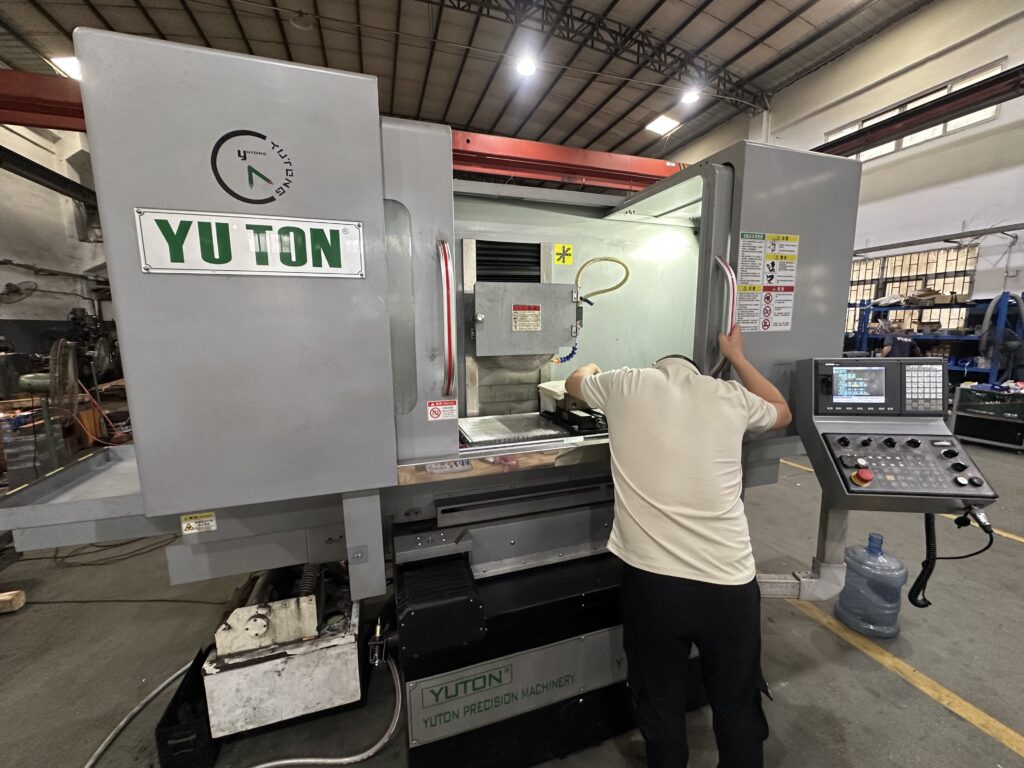
For Polish buyers evaluating Chinese suppliers, YUTON offers CE-certified surface grinders (https://surfacegrindermfg.com/) with Japanese, Taiwanese, and American core components—delivering European-grade precision at a more accessible price point.
Regulatory Requirements for Grinding Machines in Poland
As an EU member state, Poland requires grinding machines to comply with several regulatory frameworks.
CE Marking
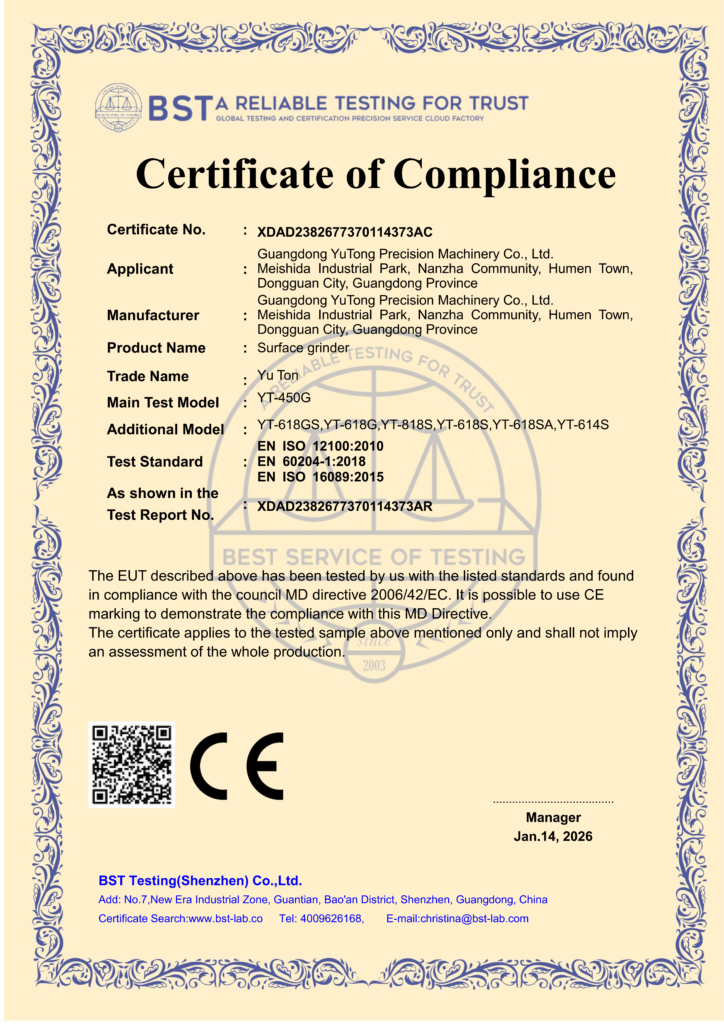
All grinding machines sold or operated in Poland must carry the CE mark, confirming compliance with the EU Machinery Directive (2006/42/EC). This directive covers essential health and safety requirements including emergency stops, guarding, electrical safety, and noise limits.
EU Declaration of Conformity
The manufacturer must provide a Declaration of Conformity stating that the machine meets all applicable EU directives. Without this document, customs clearance and legal operation in Poland are not possible.
Documentation in Polish
While technical documentation in English is widely accepted, user manuals and safety instructions must be available in Polish for operator use. Reputable suppliers provide translated documentation as part of their standard offering.
Electrical Standards
Grinding machines must comply with EU electrical standards, including proper voltage (400V three-phase is standard in Poland), IP-rated electrical enclosures, and CE-marked electrical components.
When sourcing from non-EU suppliers, verify that CE certification is genuine and supported by a technical file. According to EU product safety guidelines (https://ec.europa.eu/), buyers should request the full EC Declaration of Conformity and verify the notified body number if third-party assessment was required.
Tips for Polish Buyers Sourcing Grinding Machines
Verify the Manufacturer
Confirm that your supplier is an actual manufacturer—not a trading company. Direct manufacturers offer better pricing, customization options, and accountable after-sales support. Request factory photos, production videos, or schedule a virtual factory tour.
Request CE Documentation Early
Do not wait until shipment to request CE certificates and the Declaration of Conformity. Verify these documents during the quotation stage to avoid delays at Polish customs.
Evaluate Component Quality
Ask specifically about the brands used for linear guideways, ball screws, spindle bearings, and control systems. Machines built with components from established Japanese, Taiwanese, or American brands deliver better long-term performance and easier spare parts sourcing in Europe.
YUTON’s hydraulic surface grinders (https://surfacegrindermfg.com/hydraulic-surface-grinder/) use premium core components sourced from top-tier global suppliers, ensuring reliable operation in demanding Polish production environments.
Consider Total Cost of Ownership
Purchase price is only part of the equation. Factor in shipping, import duties (typically 2.7% for grinding machines under EU tariff codes), installation, training, spare parts availability, and ongoing maintenance costs when comparing suppliers.
Plan for After-Sales Support
Confirm that your supplier provides installation guidance, operator training, and accessible spare parts. Remote technical support via video call has become standard practice, reducing the need for expensive on-site service visits.
Why Polish Buyers Choose YUTON
YUTON (广东宇同精密机械有限公司) has built growing relationships with Polish manufacturers by addressing the specific needs of this market:
- CE certification: All grinding machines carry genuine CE marking with full technical documentation, ensuring smooth customs clearance and legal compliance in Poland.
- European-compatible specifications: Machines are configured for 400V three-phase power, EU-standard electrical components, and Polish-language documentation options.
- Proven component quality: Core parts from Japanese, Taiwanese, and American brands deliver the precision and reliability that Polish export manufacturers require.
- Competitive pricing: YUTON grinders offer precision comparable to mid-range European brands at a significantly lower total cost of ownership.
- Scale and stability: 150 employees, 15,000㎡ factory, 3,100+ units per year—ranking among China’s top three surface grinder manufacturers.
- Responsive communication: English-speaking sales and technical teams respond within 24 hours, with detailed quotations and technical proposals typically delivered within 48 hours.
For Polish buyers needing automatic surface grinders (https://surfacegrindermfg.com/automatic-surface-grinder/) for medium-to-high volume production, or manual surface grinders (https://surfacegrindermfg.com/manual-surface-grinder/) for toolroom applications, YUTON provides a practical combination of quality, compliance, and value.
Final Thoughts
The grinding machine Poland market continues to grow, driven by strong automotive, mold-making, and aerospace sectors. Polish buyers have more sourcing options than ever, but selecting the right supplier requires careful evaluation of certifications, component quality, total cost, and after-sales support.
For manufacturers seeking CE-certified precision grinding equipment at competitive prices, Chinese suppliers like YUTON offer a compelling alternative to premium European brands—without compromising on the quality and compliance that Polish industry demands.