
Choosing between a CNC vs manual surface grinder is one of the most important equipment decisions a workshop faces. The right choice depends on your production volume, part complexity, operator skill, and budget. Therefore, understanding the strengths and limitations of each type helps you invest wisely.
CNC vs Manual Surface Grinder: The Core Difference
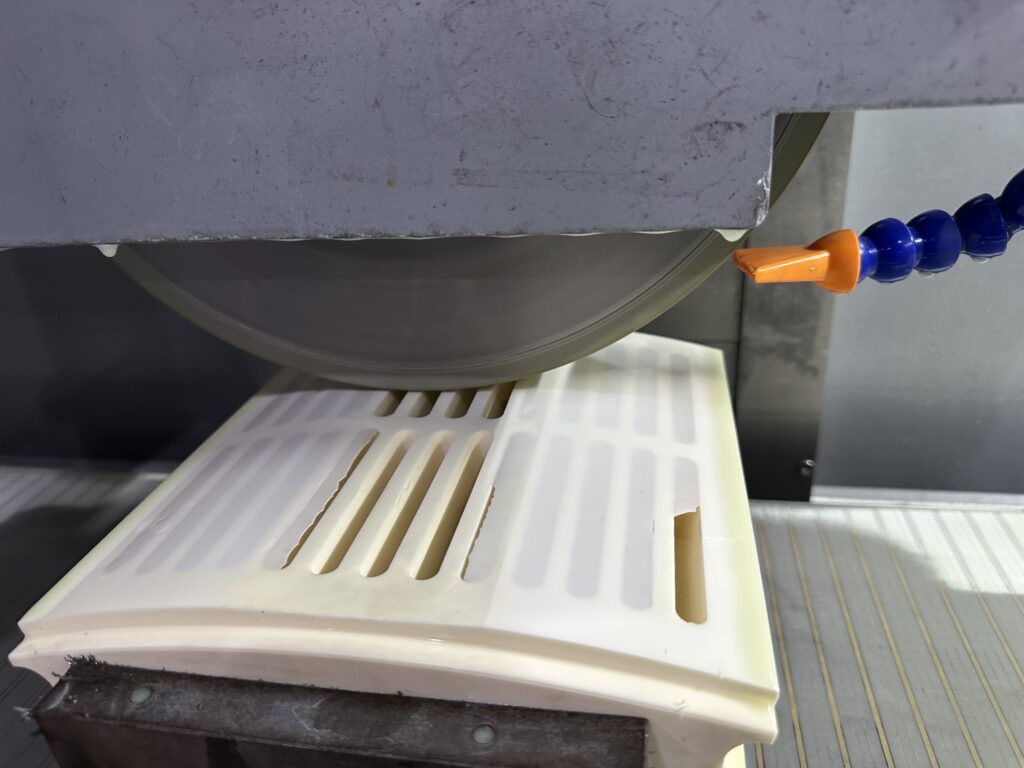
The fundamental distinction in the CNC vs manual surface grinder comparison comes down to control. A CNC surface grinder uses computer programming to control every axis movement, feed rate, and grinding parameter. In contrast, a manual surface grinder relies on the operator’s hands to move the table, crossfeed, and downfeed.
Furthermore, this difference affects everything from setup time to consistency. CNC machines excel at repeating the same grinding cycle with minimal variation. Manual machines, however, give operators direct tactile feedback — they can feel the cut and adjust instantly. As a result, each type serves different operational needs. Explore both options at https://surfacegrindermfg.com/
When a CNC Surface Grinder Makes Sense
A CNC surface grinder is the clear winner in several scenarios:
- High-volume production — Running hundreds or thousands of identical parts demands repeatability that only CNC provides
- Complex geometries — Multi-step grinding sequences with angled surfaces, stepped features, or contour profiles require programmed interpolation
- Tight tolerances — When tolerances are measured in single microns, CNC eliminates operator variability
- Unattended operation — CNC machines can grind overnight with minimal supervision, maximizing machine utilization
Discover YUTON’s CNC models at https://surfacegrindermfg.com/cnc-surface-grinder/
When a Manual Surface Grinder Shines
Despite the automation trend, manual surface grinders remain essential in many shops. Here is where they outperform CNC:
- One-off jobs — Setting up a CNC program for a single part wastes time; manual grinding starts immediately
- Toolroom work — Die maintenance and fixture fabrication require the hands-on feel that experienced toolmakers value
- Budget constraints — Manual machines cost significantly less, making them accessible for small workshops
- Delicate operations — Operators can sense wheel contact and respond instantly, preventing damage on fragile workpieces
See YUTON’s manual models at https://surfacegrindermfg.com/manual-surface-grinder/
CNC vs Manual Surface Grinder: Side-by-Side Comparison
表格
| Factor | CNC Surface Grinder | Manual Surface Grinder |
|---|---|---|
| Purchase cost | Higher | Lower |
| Setup time | Longer (programming) | Shorter (direct operation) |
| Repeatability | Excellent | Operator-dependent |
| Operator skill | CNC programming needed | Grinding experience needed |
| Production speed | Faster for batches | Faster for one-offs |
| Unattended operation | Possible | Not possible |
| Maintenance cost | Higher (servo systems) | Lower (mechanical only) |
As the table shows, the CNC vs manual surface grinder decision involves trade-offs. Neither option is universally better — it depends entirely on your workflow. The Society of Manufacturing Engineers discusses these technology choices at https://www.sme.org/
The Hybrid Alternative: PLC Control
In the CNC vs manual surface grinder debate, many buyers overlook a third option — PLC-controlled machines. A PLC surface grinder combines manual and automatic operation in one machine. Operators can grind manually for flexible one-off work, then switch to PLC mode for repeating cycles.
Consequently, PLC models offer a practical middle ground. They cost less than full CNC while delivering meaningful automation for batch grinding. For workshops handling mixed workloads, this hybrid approach often represents the best value. Learn about hydraulic options at https://surfacegrindermfg.com/hydraulic-surface-grinder/
Real-World Decision Examples
To illustrate the CNC vs manual surface grinder choice, consider these common shop scenarios:
Scenario 1: Automotive Parts Supplier
A shop grinding 500 identical transmission shims per week should choose CNC. The programming investment pays off quickly through consistent output and reduced operator labor.
Scenario 2: Job Shop with Mixed Orders
A shop handling 10-20 different parts per day in small quantities is better served by manual or PLC control. Quick setup flexibility matters more than automation.
Scenario 3: Growing Workshop
A small shop currently running manual machines but planning to add batch work should consider PLC as a stepping stone. It bridges the gap without full CNC investment.
Explore automatic models for growing operations at https://surfacegrindermfg.com/automatic-surface-grinder/
Cost Considerations Beyond Purchase Price
The CNC vs manual surface grinder comparison must include total cost of ownership:
- Training — CNC programming training costs more than manual grinding instruction
- Programming time — Each new part requires a CNC program, adding engineering overhead
- Maintenance — CNC servo systems and controllers need specialized service; manual machines are simpler to maintain
- Resale value — CNC machines retain value better in technology-driven markets
- Productivity — CNC earns back its premium through higher output per labor hour in batch production
The International Organization for Standardization provides cost-of-quality frameworks at https://www.iso.org/ Modern Machine Shop offers practical cost analysis tools at https://www.mmsonline.com/
Why YUTON Offers Both CNC and Manual Options
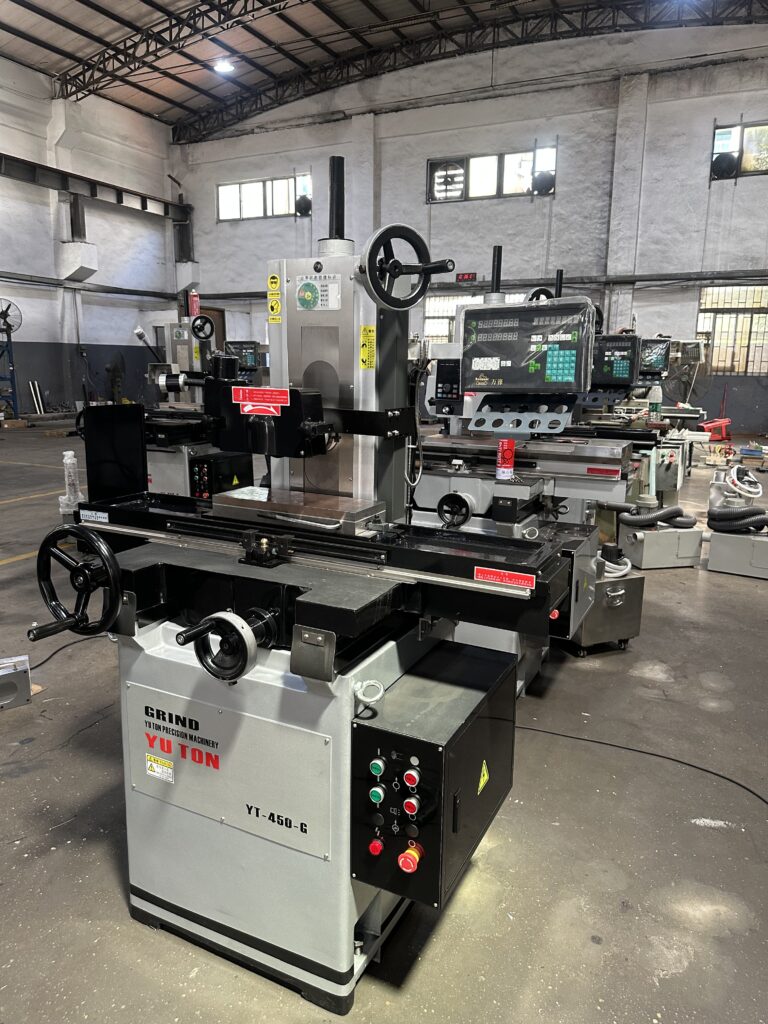
YUTON understands that the CNC vs manual surface grinder decision is not one-size-fits-all. That is why YUTON’s product line covers the full spectrum — from manual grinders for toolroom flexibility to CNC models for high-precision batch production.
With 150 employees and 15,000 square meters of production space across 7 buildings in Dongguan, China, YUTON builds every machine with core components from Japan, Taiwan, and the United States. This ensures consistent quality regardless of control type. YUTON produced 3,100 units in 2025, ranking among China’s top three manufacturers.
Both ISO 9001 and CE certifications apply across the entire product range. The European Commission’s machinery safety framework is available at https://ec.europa.eu/ The Association for Manufacturing Technology provides additional sourcing resources at https://www.amtonline.org/
Discuss your specific requirements at https://surfacegrindermfg.com/
Conclusion
The CNC vs manual surface grinder choice comes down to matching machine capability to your actual workload. CNC excels at volume, complexity, and unattended operation. Manual machines win on flexibility, cost, and tactile control. For many shops, a PLC-controlled hybrid offers the best of both worlds. Evaluate your production mix honestly, and choose the control type that serves your real needs — not just the latest technology trend.
For reliable surface grinders in any control configuration, explore YUTON’s complete lineup at https://surfacegrindermfg.com/cnc-surface-grinder/