
AI Summary
A CNC surface grinder automates precision grinding through computer-controlled movements, automatic wheel dressing, and closed-loop feedback systems. Compared with manual grinding, CNC automation improves accuracy, reduces labor dependency, lowers scrap rates, and boosts productivity. Manufacturers in mold making, aerospace, automotive, and medical industries increasingly adopt CNC surface grinders to achieve consistent quality and faster ROI.
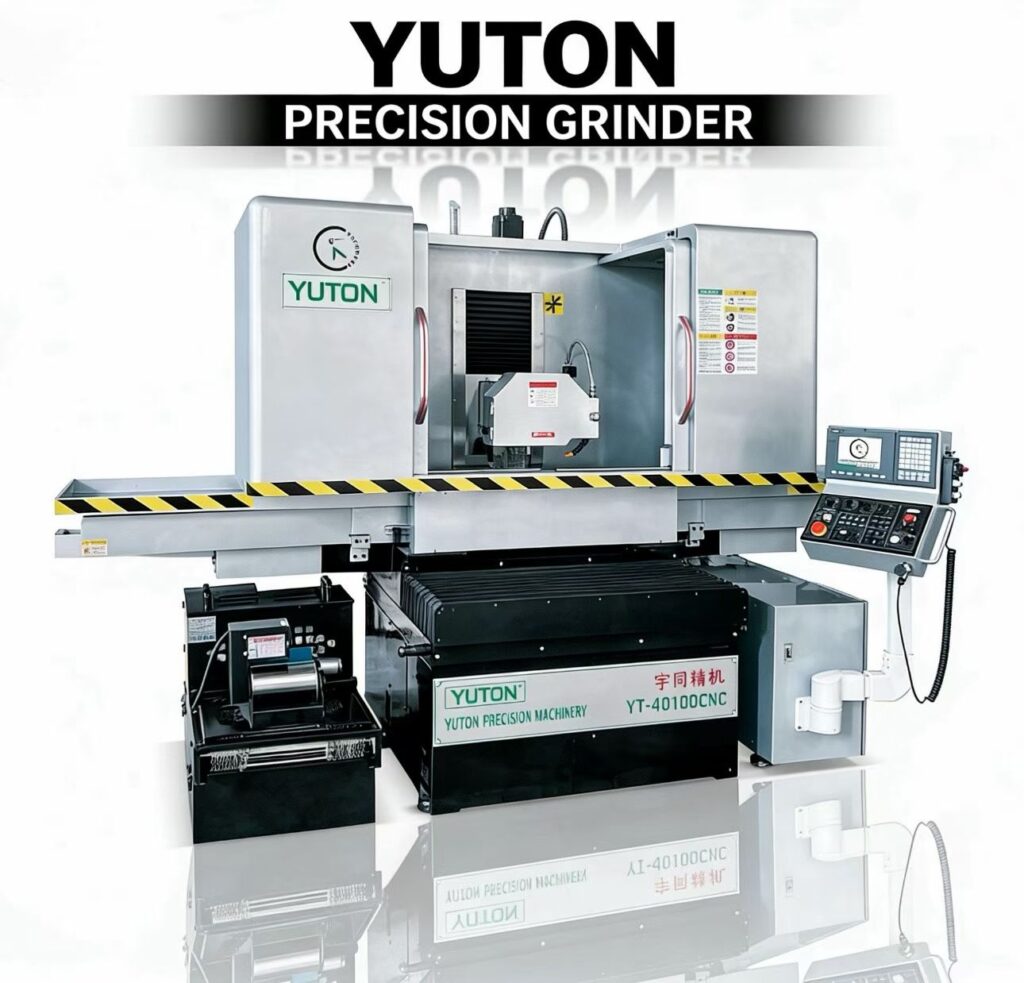
Why CNC Surface Grinder Automation Matters in Modern Manufacturing
Manufacturers worldwide are facing the same challenges: rising labor costs, stricter quality requirements, and increasing pressure to improve production efficiency.
Traditional grinding operations often depend heavily on experienced operators. While skilled technicians can achieve excellent results, production consistency may vary between shifts and individuals. Consequently, many manufacturers are turning to CNC surface grinder automation to improve repeatability and reduce production risks.
A modern CNC surface grinder combines precision engineering, automated controls, and intelligent process management to deliver stable results throughout long production runs.
For industries where micron-level accuracy is critical, automation is no longer optional—it is becoming a competitive necessity.
Why Manufacturers Choose YUTON CNC Surface Grinders
YUTON has specialized in precision grinding machine manufacturing for more than 15 years.
Our production facility in Dongguan, China includes:
- 15,000㎡ manufacturing area
- 7 factory buildings
- 150 employees
- ISO9001 certified production system
- CE-certified machine portfolio
- More than 3,100 machines delivered in 2025
- Ranked among the Top 3 surface grinder manufacturers in China
To ensure long-term reliability, key components are sourced from leading suppliers in Japan, Germany, Taiwan, and the United States.
Today, YUTON grinding machines are operating in more than 50 countries, supporting manufacturers across aerospace, automotive, mold-making, medical, and precision engineering industries.
What Is a CNC Surface Grinder?
A CNC surface grinder is a computer-controlled grinding machine designed to produce highly accurate flat surfaces and precision components.
Unlike manual grinding machines, CNC systems automatically control:
- Table travel
- Cross feed
- Vertical feed
- Wheel dressing
- Spark-out cycles
- Grinding parameters
Once a program is created, the machine executes the process with minimal operator intervention.
This automation reduces human error while maintaining exceptional dimensional accuracy and surface finish quality.
Key Benefits of CNC Surface Grinder Automation
Superior Precision and Repeatability
One of the biggest advantages of CNC grinding is consistency.
YUTON CNC surface grinders can achieve:
- X-axis accuracy: ±0.005 mm
- Y-axis accuracy: ±0.002 mm
- Z-axis accuracy: ±0.002 mm
Because every movement is controlled digitally, manufacturers achieve repeatable results regardless of operator experience.
Reduced Labor Dependency
Skilled grinding operators are becoming increasingly difficult to recruit.
Automation reduces the need for constant manual adjustment and allows one operator to supervise multiple machines simultaneously.
As a result, manufacturers can reduce labor costs while maintaining production output.
Higher Productivity
Automated wheel dressing and programmable grinding cycles minimize downtime.
Compared with conventional grinding operations, manufacturers often achieve:
- 40–60% higher throughput
- Faster setup times
- Reduced scrap rates
- Improved machine utilization
Better Surface Finish Quality
A CNC surface grinder maintains consistent grinding conditions throughout production.
This helps manufacturers achieve:
- Improved flatness
- Better dimensional control
- Reduced rework
- Surface finishes as fine as Ra 0.2–0.4 μm
Manual Grinding vs CNC Surface Grinder
| Factor | Manual Surface Grinder | CNC Surface Grinder |
|---|---|---|
| Precision Consistency | Operator dependent | Program controlled |
| Typical Accuracy | ±0.01 mm | ±0.002 mm |
| Setup Time | 30–60 minutes | 5–15 minutes |
| Labor Requirement | High | Moderate |
| Scrap Rate | Higher | Lower |
| Productivity | Variable | Consistent |
| Multi-Machine Operation | Limited | Efficient |
Although CNC systems require a larger initial investment, lower operating costs often deliver a faster return on investment.
Key Components of an Automated Grinding System
CNC Controller
The CNC controller serves as the machine’s central command system, coordinating all grinding operations with high precision.
Automatic Wheel Dressing System
Wheel condition directly affects grinding quality.
Automatic dressing systems maintain wheel geometry and cutting performance without interrupting production.
Precision Spindle Assembly
High-quality spindle systems reduce vibration and improve surface finish consistency.
Closed-Loop Feedback System
Linear scales and feedback devices continuously monitor machine positioning and compensate for deviations.
This ensures long-term precision during extended production runs.
How to Choose the Right CNC Surface Grinder
Selecting the right machine depends on workpiece size, production volume, and accuracy requirements.
For Tool Rooms and Small Workshops
Recommended Model:
https://surfacegrindermfg.com/product/rotary-surface-grinding-machine-yt-450cnc/YT-450CNC
Advantages:
- Compact footprint
- High precision
- Easy operation
- Suitable for tooling and maintenance work
For Mold and Die Manufacturing
Recommended Model:
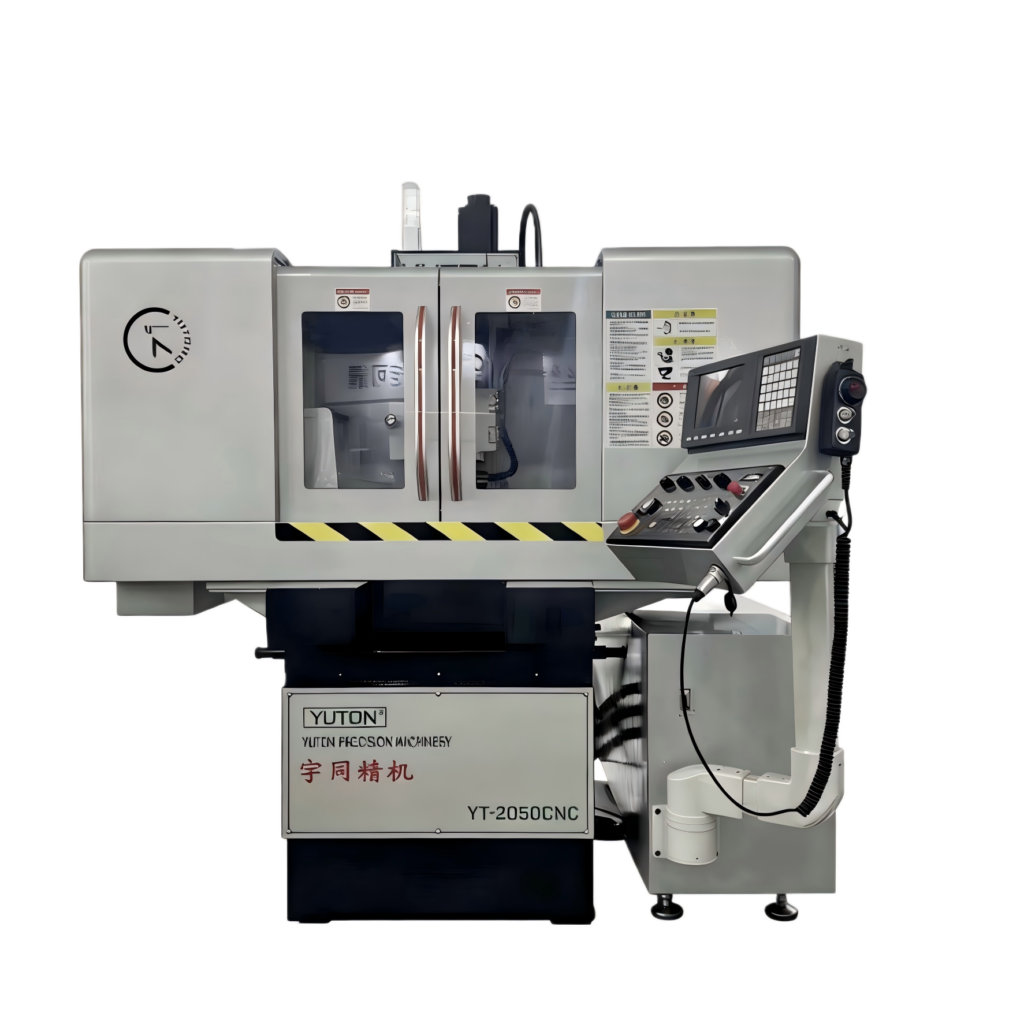
Advantages:
- Excellent surface finish
- Stable accuracy
- Suitable for mold inserts and precision tooling
For High-Volume Production
Recommended Model:
Advantages:
- Large grinding capacity
- Continuous production capability
- Ideal for automotive and industrial applications
Industry Applications of CNC Surface Grinders
Mold and Die Manufacturing
Precision molds require exceptional flatness and dimensional accuracy.
CNC grinding ensures stable cavity dimensions and improved mold life.
Aerospace Components
Aerospace manufacturers frequently process:
- Titanium alloys
- Superalloys
- Hardened steels
These materials demand precision and process stability that automated grinding systems can consistently provide.
Automotive Manufacturing
Automotive suppliers use CNC grinding for:
- Brake components
- Transmission parts
- Engine components
- Production tooling
Automation improves productivity while maintaining consistent quality.
Medical Device Manufacturing
Medical components require tight tolerances and superior surface finishes.
CNC grinding supports these requirements while improving traceability and production control.
Certification and Quality Assurance
International buyers increasingly require certified equipment.
YUTON CNC surface grinders are manufactured under an ISO9001 quality management system and comply with CE safety requirements.
For more information regarding CE compliance standards, visit:
Certification not only improves safety but also simplifies import procedures and supports international regulatory compliance.
Total Cost of Ownership and ROI
When evaluating a CNC surface grinder, purchase price is only one factor.
Manufacturers should also consider:
- Labor savings
- Reduced scrap
- Maintenance costs
- Productivity gains
- Machine lifespan
Many manufacturers recover their investment within 12–18 months through improved efficiency and reduced operating costs.
Frequently Asked Questions
What is a CNC surface grinder?
A CNC surface grinder is a computer-controlled machine used to produce highly accurate flat surfaces and precision components through automated grinding processes.
What industries use CNC surface grinders?
Common industries include mold manufacturing, aerospace, automotive, medical devices, tooling, and precision engineering.
How accurate is a CNC surface grinder?
Modern CNC grinding machines can achieve positioning accuracy as high as ±0.002 mm depending on machine configuration.
What is the difference between a CNC surface grinder and a manual surface grinder?
A manual grinder relies heavily on operator skill, while a CNC surface grinder automatically controls grinding movements through programmed instructions, resulting in higher consistency and productivity.
Can CNC surface grinders process hardened materials?
Yes. CNC grinding machines are widely used for hardened steel, carbide, ceramics, titanium, and aerospace-grade alloys.
How long does a CNC surface grinder typically last?
A properly maintained machine can provide reliable service for more than 15 years.
Does a CNC surface grinder require special training?
Basic CNC training is typically sufficient for operation. Most manufacturers provide training and technical support during installation.
What is the ROI of grinding automation?
Most manufacturers achieve full ROI within 12–18 months through labor savings, reduced scrap, and increased productivity.
How much does a CNC surface grinder cost?
Pricing varies depending on machine size, automation level, and configuration. Contact YUTON for a customized quotation.
Conclusion
Manufacturers seeking higher precision, lower operating costs, and greater production efficiency are increasingly investing in CNC grinding automation.
A CNC surface grinder provides the repeatability, accuracy, and productivity required by today’s competitive manufacturing environment.
Whether you operate a mold shop, an aerospace facility, or a high-volume production line, the right grinding solution can significantly improve product quality and profitability.
YUTON combines over 15 years of manufacturing experience, ISO9001-certified quality systems, CE-compliant machine design, and factory-direct support to help customers achieve long-term success.
Request a Quote Today
Looking for the right CNC surface grinder for your application?
Contact YUTON today to discuss your requirements and receive a customized grinding solution from our engineering team.