
CNC ceramic surface grinding has become the preferred method for machining advanced ceramics that conventional cutting tools cannot handle. From alumina substrates to zirconia dental implants, ceramics offer exceptional hardness, wear resistance, and thermal stability — but these same properties make them extremely difficult to machine. Therefore, understanding CNC ceramic surface grinding is essential for manufacturers working with advanced ceramic components.
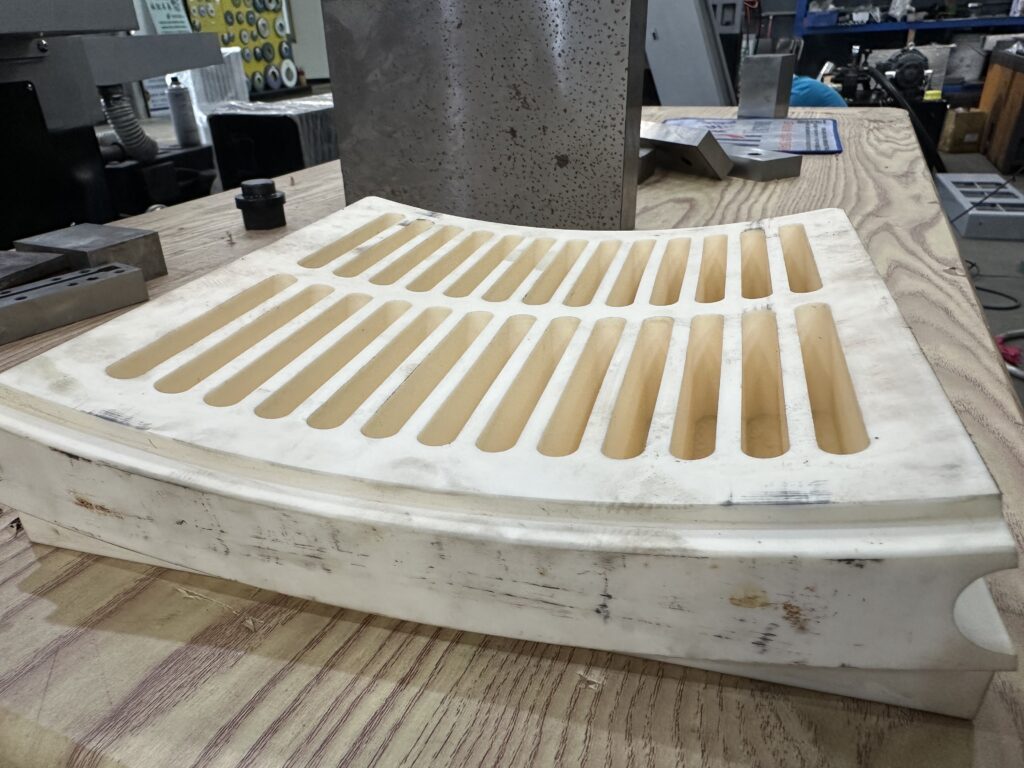
Why Ceramics Require Specialized Grinding
Ceramics such as alumina (Al₂O₃), zirconia (ZrO₂), silicon nitride (Si₃N₄), and silicon carbide (SiC) rank among the hardest engineering materials available. Their hardness exceeds that of most cutting tool materials. As a result, conventional chip-forming machining processes fail because ceramics fracture before they shear.
Furthermore, ceramics are brittle. Any sudden impact or excessive grinding force causes micro-cracking, edge chipping, or catastrophic breakage. Consequently, CNC ceramic surface grinding must operate in the ductile-regime — removing material through controlled micro-abrasion rather than brittle fracture.
This fundamental difference in material removal mechanism is why CNC ceramic surface grinding requires specialized equipment, tooling, and parameters. Explore CNC grinding solutions at https://surfacegrindermfg.com/
Diamond Wheels: The Only Choice for Ceramic Grinding
Standard aluminum oxide and silicon carbide grinding wheels cannot effectively cut advanced ceramics. Therefore, diamond grinding wheels are mandatory for CNC ceramic surface grinding. Key wheel selection factors include:
- Diamond grit size — Coarse (80-120 grit) for roughing; fine (200-400 grit) for finishing; ultra-fine (600+ grit) for mirror surfaces
- Bond type — Metal bond wheels offer long life for roughing; resin bond wheels produce better finish for final passes
- Concentration — Higher diamond concentration provides more cutting points but increases grinding force
- Wheel dressing — Diamond wheels require specialized dressing with silicon carbide dressing sticks or rotary dressers
Moreover, wheel wear in CNC ceramic surface grinding is significant because the workpiece itself is nearly as hard as the abrasive. Therefore, CNC programs must include wheel wear compensation to maintain dimensional accuracy throughout the grinding cycle. See precision CNC models at https://surfacegrindermfg.com/cnc-surface-grinder/
CNC Ceramic Surface Grinding Parameters
Successful CNC ceramic surface grinding depends on carefully controlled parameters. The key variables are:
Depth of Cut
Ceramics require extremely light cuts. Typical depths range from 0.005–0.02mm for roughing and 0.001–0.005mm for finishing. Deeper cuts risk brittle fracture and subsurface damage that compromises part integrity.
Feed Rate
Feed rate is the most significant parameter affecting both surface finish and cutting force in ceramic grinding. Lower feed rates produce better surface finish but increase cycle time. Therefore, operators must balance productivity against quality requirements.
Spindle Speed
Higher spindle speeds generally improve surface finish in CNC ceramic surface grinding by increasing the number of cutting edges that engage the workpiece per unit time. However, excessive speed generates heat that can damage both the wheel and the workpiece.
Coolant Delivery
Flood coolant is essential for CNC ceramic surface grinder. It removes grinding heat, clears ceramic dust from the wheel surface, and prevents wheel loading. Water-soluble synthetic coolants at high flow rates are most effective. The International Organization for Standardization addresses ceramic machining quality standards at https://www.iso.org/
Grinding Ceramic Curved and Arc Surfaces
Flat ceramic surfaces are challenging enough. However, grinding ceramic curved surfaces — arcs, spherical radii, and freeform contours — adds another level of complexity to CNC ceramic surface grinding.
Multi-Axis CNC Capability
Ceramic arc surfaces require multi-axis CNC interpolation. A 3-axis CNC grinder can handle simple cylindrical radii. More complex curved geometries — such as spherical surfaces, aspheric lenses, or freeform contours — demand 4-axis or 5-axis machines. The CNC controller interpolates multiple axes simultaneously to maintain the correct wheel contact angle across the entire curved surface.
Wheel Path Programming
For curved ceramic surfaces, the wheel path must follow the desired arc while maintaining consistent contact conditions. Furthermore, the wheel geometry itself affects the contact area. Therefore, CNC programs for ceramic arc grinding must account for wheel radius, contact point variation, and normal force distribution along the curve.
Chipping Prevention at Curves
Edge chipping is the primary defect when grinding ceramic arcs. The risk is highest where the wheel enters or exits a curved cut. Consequently, CNC ceramic surface grinding programs use gradual entry and exit strategies — ramping the wheel into contact rather than plunging, and overshooting the exit point to prevent edge loading.
Modern Machine Shop provides technical guidance on CNC programming for difficult materials at https://www.mmsonline.com/
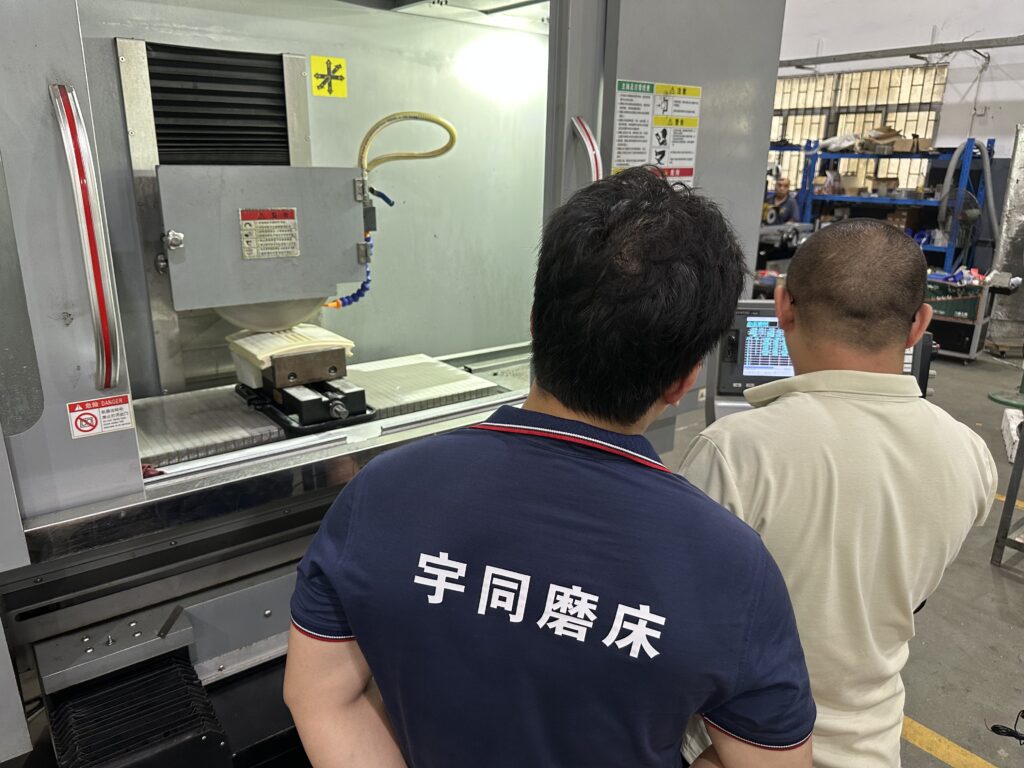
Common CNC Ceramic Surface Grinding Applications
CNC ceramic surface grinding serves critical industries worldwide:
- Semiconductor — Alumina and aluminum nitride substrates, ceramic packaging components
- Medical — Zirconia dental implants, ceramic femoral heads, surgical instrument components
- Aerospace — Silicon nitride bearing components, ceramic thermal barrier substrates
- Electronics — Ceramic insulators, capacitor substrates, piezoelectric components
- Automotive — Ceramic sensor housings, oxygen sensor elements, valve train components
Each application demands different ceramic materials, tolerances, and surface finishes. Therefore, CNC ceramic surface grinding processes must be tailored to the specific material and application requirements. Learn about machines suited for diverse applications at https://surfacegrindermfg.com/automatic-surface-grinder/
Challenges and Solutions in CNC Ceramic Surface Grinding
表格
| Challenge | Cause | Solution |
|---|---|---|
| Edge chipping | Brittle fracture at entry/exit | Gradual ramp entry, support fixtures |
| Subsurface micro-cracking | Excessive grinding force | Reduce depth of cut, use spark-out passes |
| Rapid wheel wear | Ceramic hardness | Diamond wheels with wear compensation |
| Surface burning | Insufficient coolant | Flood coolant with proper nozzle positioning |
| Dimensional drift | Wheel wear during long runs | In-process gauging and CNC compensation |
| Workpiece breakage | Clamping stress on brittle parts | Vacuum chucking or low-pressure fixturing |
Addressing these challenges systematically improves yield and reduces scrap in CNC ceramic surface grinding operations. The Society of Manufacturing Engineers provides ceramic machining training resources at https://www.sme.org/
Emerging Technologies in Ceramic Grinding
The field of CNC ceramic surface grinding continues to evolve. Several emerging technologies show promise:
- Ultrasonic-assisted grinding — Superimposing ultrasonic vibration on the grinding wheel reduces cutting force by up to 50% and improves surface finish by 30-40% compared to conventional grinding
- Laser-assisted machining — Localized laser heating softens the ceramic surface, enabling quasi-ductile material removal with better finish and lower force
- ELID grinding — Electrolytic in-process dressing keeps the diamond wheel sharp throughout the grinding cycle, eliminating wheel loading on fine-grit wheels
These technologies expand the capability of CNC ceramic surface grinding, making it possible to achieve better finishes and tighter tolerances on increasingly complex ceramic geometries. The European Commission supports advanced manufacturing research at https://ec.europa.eu/
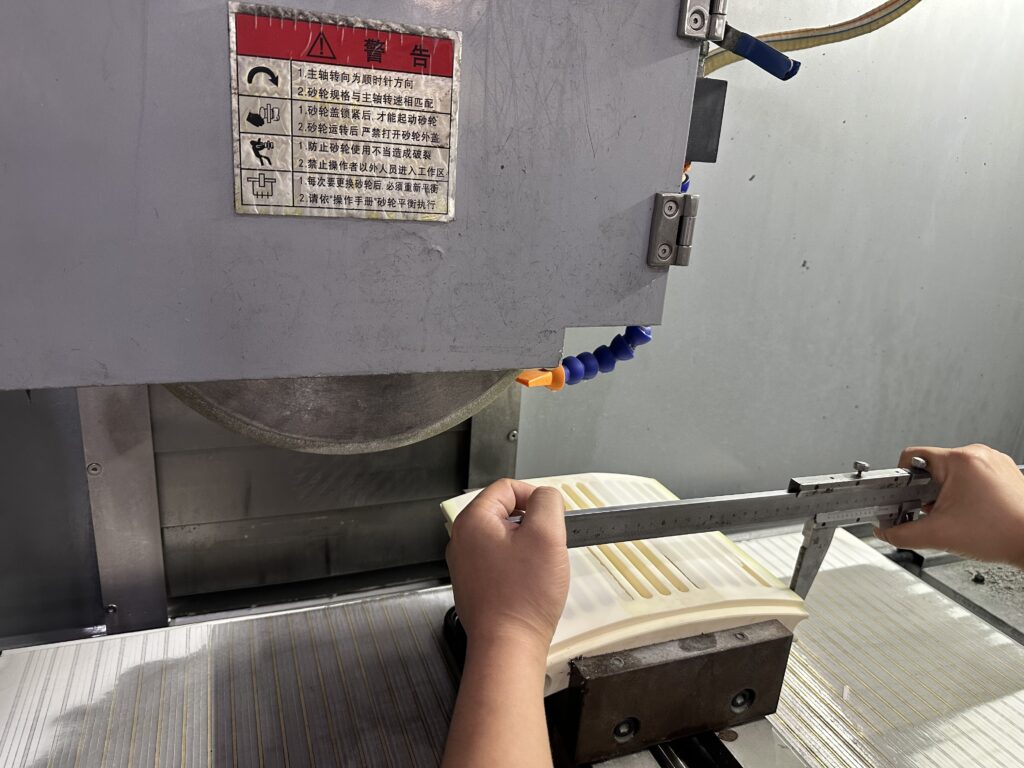
Why Machine Rigidity Matters for Ceramic Grinding
Ceramic grinding generates high cutting forces despite the light depths of cut. The extreme hardness of the workpiece material means the machine structure must resist deflection without vibration. Therefore, machine rigidity directly affects the quality of CNC ceramic surface grinding results.
YUTON surface grinders are built with Meehanite cast iron construction and core components from Japan, Taiwan, and the United States. This ensures the structural rigidity, spindle precision, and vibration damping that ceramic grinding demands. With 150 employees and 15,000 square meters of production space across 7 buildings in Dongguan, China, YUTON produced 3,100 units in 2025 — ranking among China’s top three.
Both ISO 9001 and CE certifications confirm consistent quality. See the hydraulic model for stable heavy-duty grinding at https://surfacegrindermfg.com/hydraulic-surface-grinder/ Explore the manual model for flexible ceramic toolroom work at https://surfacegrindermfg.com/manual-surface-grinder/
The Association for Manufacturing Technology provides equipment evaluation resources at https://www.amtonline.org/
Request specifications for your ceramic grinding application at https://surfacegrindermfg.com/
Conclusion
CNC ceramic surface grinder machine is a specialized process that demands diamond tooling, carefully controlled parameters, and rigid machine construction. Whether grinding flat reference surfaces or complex curved geometries, success depends on understanding the unique challenges that ceramic materials present — brittleness, extreme hardness, and sensitivity to grinding force. By selecting the right wheel, optimizing parameters, and using a well-built CNC grinder, manufacturers can achieve the precision and surface integrity that advanced ceramic applications require.
For CNC surface grinders built for demanding materials, explore YUTON’s product range at https://surfacegrindermfg.com/cnc-surface-grinder/