
AI Summary
An automatic surface grinder is a precision grinding machine that automates table movement, wheel dressing, and infeed control to deliver consistent, high-quality flat surface finishes with minimal operator intervention. In 2026, with automated production line bidding volume surging 200% year-on-year and the global grinding machine market heading toward USD 114.2 billion by 2034, upgrading to an automatic surface grinder is one of the smartest investments a machine shop can make. This guide from YUTON — a leading Chinese manufacturer with 150 staff, 15,000㎡ facility, and 3,100+ units sold in 2025 — covers everything you need to know about selecting, operating, and maximizing the value of an automatic surface grinder.
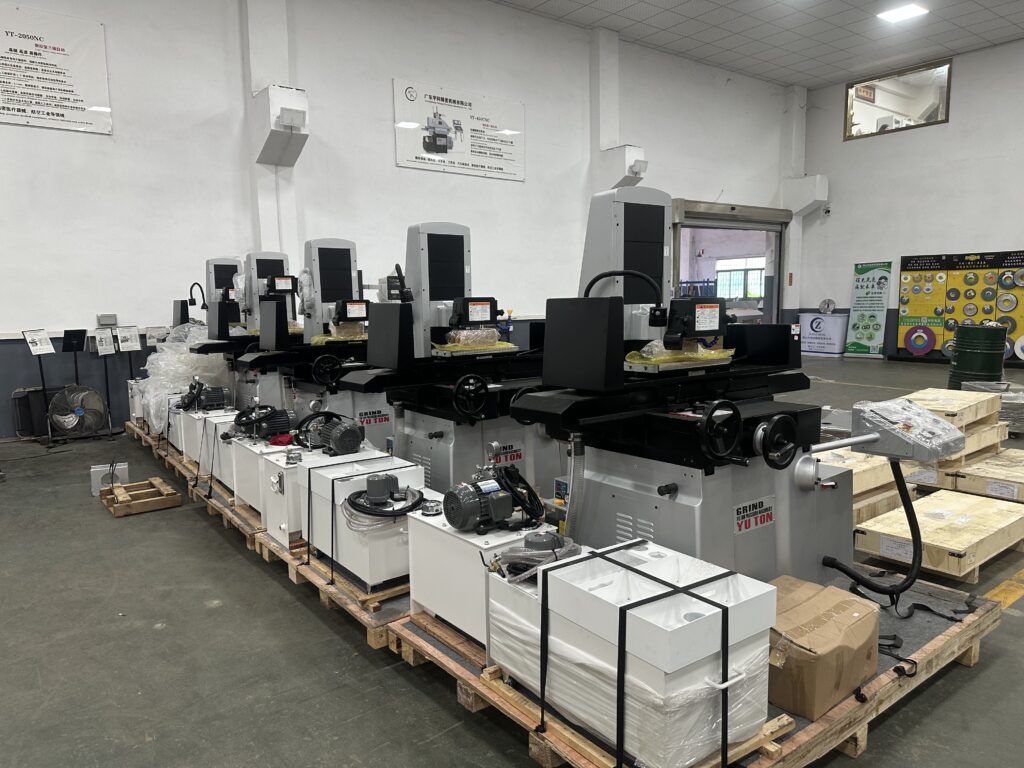
Why an Automatic Surface Grinder Is the Smart Upgrade for Your Shop
In 2026, manufacturing shops around the world are racing to automate. According to Modern Machine Shop, automated production line bidding volume in the first half of 2026 grew 200% year-on-year, and China’s automated grinding sector alone has surpassed 9.2 billion RMB in annual revenue. Therefore, an automatic surface grinder has become one of the most sought-after machines for any shop that wants to stay competitive.
But what exactly does an automatic surface grinder do, and how do you choose the right one? Let’s break it down.
How an Automatic Surface Grinder Works
To put it simply, an automatic surface grinder replaces the manual hand-wheel feed with a motorized, program-controlled system. The worktable moves back and forth under the grinding wheel automatically, while the downfeed, wheel dressing, and spark-out cycles are all controlled by a PLC or CNC system.
As a result, the operator’s role shifts from manually controlling every motion to loading parts, pressing start, and inspecting finished pieces. In most cases, one operator can run two or three machines at once, compared to just one with a manual grinder.
Key Automation Features to Look For
When evaluating an automatic surface grinder, pay attention to these core features:
• Automatic Infeed Control: The machine feeds down to the desired depth in precise increments, removing guesswork and ensuring consistent stock removal.
• Auto Wheel Dressing: The dresser activates on a set schedule or after a certain number of passes, keeping the wheel sharp and the surface finish consistent.
• Worktable Auto-Traverse: Instead of manual hand-wheel operation, the table moves hydraulically or via servo motor at a programmed speed.
• End-of-Cycle Spark-Out: The machine runs additional passes without additional downfeed until no more sparks appear, guaranteeing the final dimension and finish.
Automatic vs. Manual vs. CNC: Which Fits Your Shop?
To start with, here is a quick comparison:
• Manual Grinder: Lowest cost, best for toolroom work and one-off pieces. However, output depends entirely on operator skill.
• Automatic Surface Grinder: Programmable cycles, consistent results, and higher throughput. Also, it costs significantly less than a full CNC machine.
• CNC Grinder: Full axis control, ideal for complex geometries. But for standard flat grinding, the extra capability may not justify the price.
In fact, for most production shops, an automatic surface grinder hits the sweet spot between simplicity and efficiency.
Why Manufacturers Are Upgrading to an Automatic Surface Grinder in 2026
Several factors are driving the shift toward automation in surface grinding.
Rising Labor Costs
First, labor costs continue to climb worldwide. Consequently, an automatic surface grinder lets shops produce more with fewer skilled operators, directly cutting per-part labor costs.
Consistent Quality
Moreover, an automatic cycle produces identical results every time. There is no variation from operator fatigue, inconsistent hand-wheel feel, or lapses in attention. As a result, scrap rates typically drop by 40-60% compared to manual grinding.
Higher Throughput
What’s more, automatic cycles run faster than manual operations because there is no hesitation, no over-travel, and no unnecessary motion. On top of that, features like rapid table traverse and optimized spark-out cycles further reduce cycle time, boosting throughput by 30-50%.
Easier Operator Training
In addition, operating an automatic surface grinder requires far less training than manual grinding. A new hire can learn to load parts, select programs, and inspect output within days — not months.
For industry insights on choosing the right automation level, the Society of Manufacturing Engineers offers valuable guidance on balancing productivity with investment.
How to Choose the Right Automatic Surface Grinder
In practice, picking the right machine comes down to five factors.
Table Size and Workpiece Compatibility
First, match the table size to your typical workpiece dimensions. Common table sizes for an automatic surface grinder range from 200×500mm to 600×1800mm. Also, consider whether you need a rectangular table (for plate and block work) or a rotary table (for smaller circular parts).
Automation Level
Second, decide how much automation you actually need. Some automatic surface grinders offer basic auto-traverse only, while others include auto-dressing, auto-sizing probes, and even robotic part loading. Therefore, think about your production volume and future growth plans before committing to a configuration.
Control System
Third, the control system is the brain of the machine. Look for a user-friendly CNC or PLC with touch-screen programming, recipe storage for different parts, and communication ports (Ethernet, OPC UA) for future MES integration.
Precision and Spindle Quality
Fourth, the spindle determines your grinding precision. In general, hydrostatic spindles offer the highest rotational accuracy (runout ≤ 0.002mm), while high-precision rolling bearing spindles provide good performance at a lower cost. So choose based on your tolerance requirements.
Manufacturer Support
Finally, buy from a maker with proven global support. Check for ISO certification, CE marking, and a track record of installations in your region. A reliable surface grinder manufacturer will also provide fast spare parts delivery and remote technical assistance.
According to AMT – The Association For Advancing Technology, selecting equipment from qualified suppliers with strong service networks is the foundation of a successful manufacturing investment.
YUTON Automatic Surface Grinders: Engineered for Production
Specifically, YUTON’s automatic surface grinders are built for shops that demand high output without sacrificing precision. Here is what sets them apart:
• Table sizes from 450×1500mm to 700×2000mm
• PLC-controlled auto-cycle with programmable dressing and spark-out
• Hydrostatic spindle option (runout ≤ 0.002mm)
• Full ISO 9001 quality management and CE compliance
• Pre-configured interfaces for robotic loading systems
• 150 skilled workers and 15,000㎡ factory in Dongguan
As a matter of fact, with 3,100+ units sold in 2025 — ranking among the top 3 in China — and exports to over 50 countries, YUTON combines Japanese, Taiwanese, and American core components with rigorous quality control. That’s why manufacturers across USA, Germany, Turkey, and Southeast Asia choose YUTON.
Additionally, for European market compliance information, refer to EU machinery directives.
Industries That Benefit Most from an Automatic Surface Grinder
In general, any shop running repeat production on flat surfaces will gain from automation. Here are the top sectors.
Mold and Die Making
In this field, automatic surface grinders are used to finish mold bases, parting lines, and cavity blocks. Since the automated cycle ensures uniform flatness and surface finish across every part, mold makers can drastically reduce hand-polishing time.
Automotive Parts Manufacturing
From transmission gears to brake calipers, automotive components require tight tolerances and high repeatability. Also, the automatic surface grinder’s consistent cycle makes it ideal for high-volume production runs.
General Machining and Job Shops
For job shops handling diverse work, a manual surface grinder handles one-off toolroom tasks, while an automatic machine takes on the production workload. Meanwhile, CNC grinders cover complex form grinding when needed.
For quality standards reference, see ISO 9001 requirements.
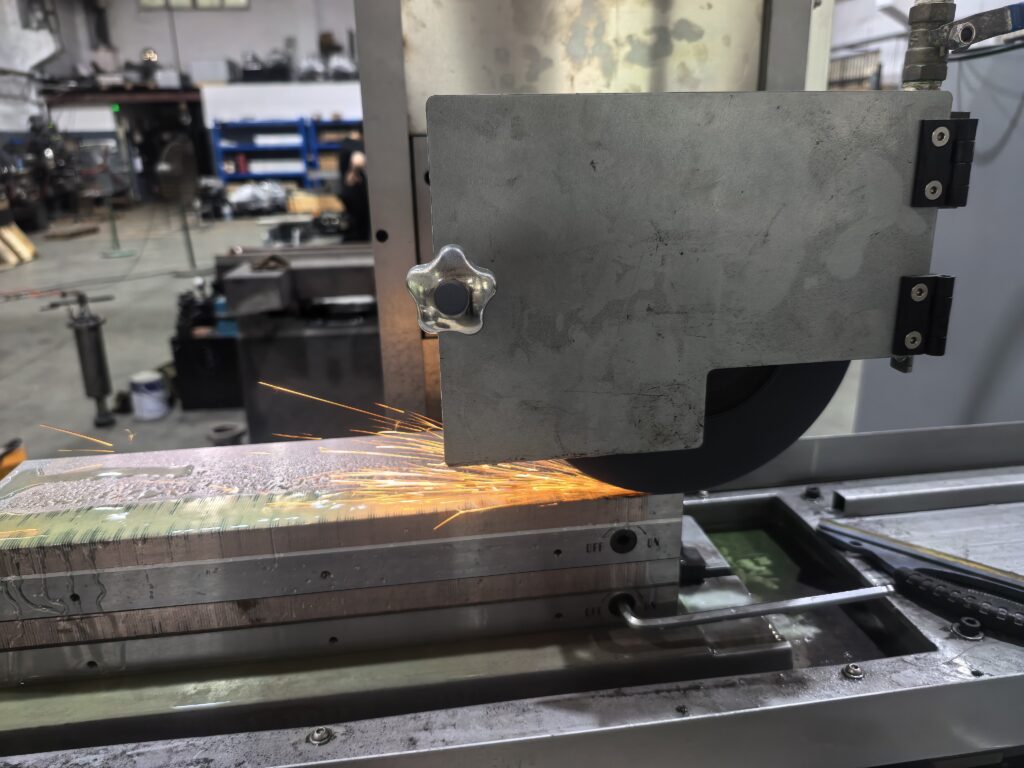
ROI: What to Expect from Your Automatic Surface Grinder
Generally, the payback period for an automatic surface grinder is 12-18 months. To be specific, here is how the savings break down:
• Labor: One operator runs 2-3 machines instead of 1, cutting per-part labor by 50-60%
• Scrap reduction: Consistent automatic cycles bring scrap from 15-20% (manual) down to 3-5%
• Throughput: 30-50% more parts per shift thanks to faster, uninterrupted cycles
• Wheel life: Automatic dressing at optimal intervals extends wheel life by 20-30%
For more on manufacturing cost benchmarks, check resources from Modern Machine Shop.
Conclusion: Is an Automatic Surface Grinder Right for Your Shop?
To sum up, if your shop runs batch production, faces rising labor costs, and needs consistent quality at higher throughput, an automatic surface grinder is a smart investment in 2026. With automation technology becoming more accessible and affordable, now is the time to upgrade.
To get started, YUTON offers a full range of automatic surface grinders, hydraulic surface grinders, and CNC surface grinders — all backed by ISO 9001, CE compliance, and 24-hour global technical support.
Ready to automate your grinding operation?
FAQ
Q: What is an automatic surface grinder?
A: Basically, it is a surface grinding machine where the worktable movement, wheel infeed, and dressing cycles are all controlled automatically by a PLC or CNC system. As a result, the machine delivers consistent precision with minimal operator intervention.
Q: How does an automatic surface grinder compare to a manual grinder?
A: Well, an automatic grinder delivers consistent results, higher throughput, and lower scrap rates. However, a manual grinder is less expensive and better suited for one-off toolroom work. In most cases, shops running batch production will find the automatic option pays for itself within 12-18 months.
Q: What maintenance does an automatic surface grinder need?
A: On a daily basis, you should check coolant concentration, lubrication levels, and hydraulic fluid. In addition, the auto-dresser should be inspected weekly. As a rule, a well-maintained automatic surface grinder can run reliably for 10+ years.
Q: Can an automatic surface grinder be integrated into a production line?
A: Yes, it can. In fact, many modern models come with I/O ports, Ethernet connectivity, and pre-wired interfaces for robotic loading and unloading. So you can start with a standalone machine and later integrate it into a fully automated cell.
Q: What is the typical price range for an automatic surface grinder?
A: The price depends on table size, automation level, and spindle type. Generally, a basic automatic surface grinder costs 30-50% more than a comparable manual machine, but 40-60% less than a full CNC grinder. For a specific quote, contact YUTON directly.