
If you still rely on manual grinding operations, you are leaving money on the table every single day. In fact, the global grinding industry is moving fast toward lights-out manufacturing, and shops that automate grinding process early gain a massive advantage in cost, quality, and throughput. Therefore, the question is no longer “should I automate?” but “how do I do it right?”
In this guide, we walk you through everything you need to know: why automation matters, what equipment options exist, how to calculate ROI, and the step-by-step path to automate grinding process in your shop — whether you run 100 parts a month or 10,000.
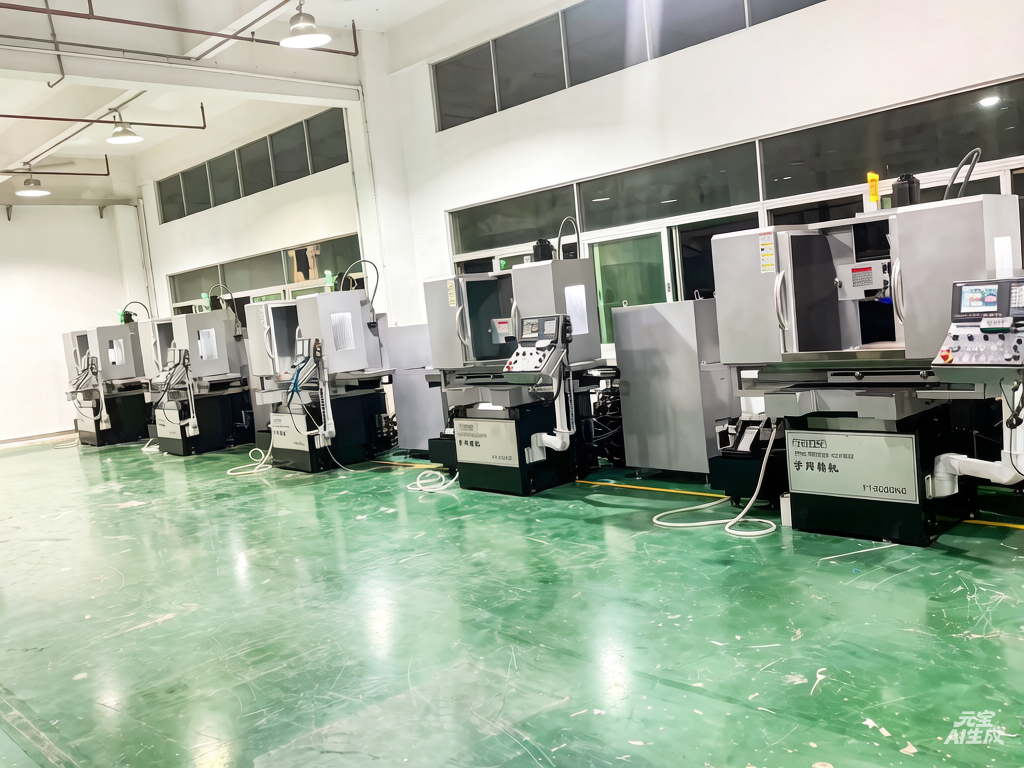
Why Automate Grinding Process? The Business Case
Before diving into equipment and implementation, let’s look at why more shops are choosing to automate grinding process. The reasons are compelling:
1. Labor Shortage Is Getting Worse
Skilled grinder operators are hard to find and expensive to keep. In most markets, a trained operator costs $25 to $45 per hour — and that is before benefits, overtime, and training. Moreover, younger workers increasingly avoid repetitive, noisy manufacturing jobs. As a result, labor availability is shrinking while costs keep rising.
2. Consistency and Quality Improve Dramatically
Human operators get tired, distracted, and inconsistent. An automated system, on the other hand, produces the same result every time — shift after shift, day after day. Specifically, shops that automate grinding process typically see scrap rates drop from 3–5% to below 1%.
3. Throughput Increases Significantly
An automatic surface grinder can run 24 hours a day with minimal supervision. In fact, it can produce the output of two to three manual operators. Furthermore, it does not take breaks, call in sick, or slow down at the end of a shift.
4. Automation Penetration Is Still Below 5%
Despite these advantages, fewer than 5% of grinding operations worldwide are fully automated. This means early adopters still have a major competitive edge. Therefore, the time to act is now — before your competitors get there first.
Manual vs. Automated Grinding: Key Differences
To understand what changes when you automate grinding process, let’s compare the two approaches side by side.
Manual Grinding
- Operator controls every parameter (feed rate, depth of cut, wheel speed)
- Quality depends heavily on operator skill and attention
- Typical scrap rate: 3–5%
- Production limited by human endurance (8–10 hours per shift)
- Best for: low-volume, one-off, or highly complex parts
Automated Grinding
- CNC or PLC system controls all parameters
- Consistent quality regardless of shift or operator
- Typical scrap rate: <1%
- Production runs 24/7 with minimal supervision
- Best for: medium to high-volume production, repeat parts
However, automation does not mean you need to replace all your manual surface grinders. Many shops keep manual machines for prototyping and one-off work while using automated systems for production runs. In fact, this hybrid approach is often the most cost-effective strategy.
How to Automate Grinding Process: Step-by-Step
Transitioning from manual to automated grinding does not happen overnight. Here is a proven step-by-step approach:
Step 1: Audit Your Current Production
First, analyze which parts you run most frequently and in what volumes. Specifically, identify:
- Parts with repeat orders (high candidates for automation)
- Parts with tight tolerances (automation improves consistency)
- Parts with long cycle times (automation increases throughput)
Step 2: Define Your Automation Goals
Next, set clear targets. For example:
- Reduce labor cost per part by 50%
- Cut scrap rate from 4% to 1%
- Increase daily output by 100%
- Enable lights-out (unattended) operation for 8+ hours
Step 3: Choose the Right Equipment
Select equipment that matches your production volume, part complexity, and budget. We cover equipment options in the next section.
Step 4: Plan the Integration
Automation is not just about the machine — it also includes workholding, part loading/unloading, coolant management, and quality inspection. Therefore, plan the entire cell, not just the grinder.
Step 5: Train Your Team
Your operators need new skills to run automated equipment. Specifically, they must learn CNC programming, in-process gauging, and basic maintenance of automated systems. Additionally, invest in training for troubleshooting and process optimization.
Step 6: Start with a Pilot Run
Before full deployment, run a pilot with one machine and a limited part family. This allows you to fine-tune parameters, validate quality, and calculate actual ROI before scaling up.
Equipment Options for Automation
When you automate grinding process, the equipment you choose determines your success. Here are the main options:
CNC Surface Grinders
CNC grinders offer the highest level of automation. They feature programmable logic controllers (PLC), automatic wheel dressing, in-process gauging, and the ability to store and recall programs for different parts. Therefore, they are ideal for shops that run multiple part families and need quick changeover. For more details, explore our CNC surface grinder options.
Automatic Surface Grinders
Automatic grinders provide a middle ground between manual and full CNC. They feature automated cycles (rough, semi-finish, finish), automatic wheel dressing, and spark-out. Moreover, they are often more affordable than full CNC machines while still delivering significant labor savings. Check out our automatic surface grinder series.
Hydraulic Surface Grinders
Hydraulic grinders use hydraulic systems for table movement, which provides smooth, vibration-free operation. As a result, they deliver excellent surface finish. Additionally, many hydraulic models offer semi-automatic cycles that make them a good entry point for automation. Learn more about our hydraulic surface grinder line.
Robotic Part Loading
For shops that want to go further, robotic part loading and unloading can enable true lights-out operation. A robot loads raw parts, the grinder processes them, and the robot removes finished parts — all without human intervention. Furthermore, robotic systems can handle multiple machines, maximizing throughput.
Automate Grinding Process with the Right Technology
Beyond the machine itself, several technologies help you automate grinding process more effectively:
In-Process Gauging
In-process gauging systems measure the workpiece during the grinding cycle and automatically compensate for dimensional drift. As a result, you maintain tight tolerances without manual intervention. Moreover, these systems can detect trends (such as wheel wear) and trigger compensation before parts go out of spec.
Automatic Wheel Dressing
Automatic wheel dressing ensures the grinding wheel is always sharp and true. Specifically, the system dresses the wheel at programmed intervals or based on cutting time. Therefore, you maintain consistent surface finish and dimensional accuracy throughout the production run.
Adaptive Control
Advanced systems use sensors to monitor grinding force, temperature, and vibration in real time. Then, they automatically adjust parameters to optimize the process. For instance, if the wheel starts to dull, the system reduces feed rate to maintain quality. On the other hand, if conditions are favorable, it increases feed rate to boost productivity.
Data Collection and Monitoring
Modern CNC grinders can collect and transmit data about cycle times, wheel life, scrap rates, and machine utilization. Furthermore, this data helps you identify bottlenecks, optimize processes, and make informed decisions about maintenance and replacement.
Calculate Your ROI Before You Automate
Before you invest, calculate the return on investment (ROI) to ensure automation makes financial sense. Here is a simple framework:
Costs to Consider
- Machine purchase price
- Installation and commissioning
- Tooling and workholding
- Training costs
- Maintenance and service contracts
Savings to Expect
- Labor cost reduction (typically 50–80%)
- Scrap cost reduction (from 3–5% to <1%)
- Throughput increase (often 100–200%)
- Reduced rework and warranty costs
Typical ROI Timeline
For most shops, the investment payback period is 12 to 18 months. After that, the savings go directly to your bottom line. For more detailed ROI analysis and case studies, refer to resources from Modern Machine Shop.
Example Calculation
Consider a shop that currently runs two manual grinders with four operators:
- Current labor cost: 4 × $35/hour × 2,000 hours = $280,000/year
- Current scrap cost: $20,000/year
- Total current cost: $300,000/year
After automation with one automatic surface grinder:
- New labor cost: 1 operator × $35/hour × 2,000 hours = $70,000/year
- New scrap cost: $5,000/year
- Machine cost (amortized over 5 years): $30,000/year
- Total new cost: $105,000/year
Annual savings: $195,000. If the machine costs $150,000, payback is less than 10 months.
Common Challenges When You Automate Grinding Process
Automation is not without challenges. Here are the most common issues and how to overcome them:
Challenge 1: High Upfront Investment
Automated equipment costs more than manual machines. However, when you consider total cost of ownership (including labor, scrap, and throughput), automation almost always wins in the long run. Therefore, focus on ROI, not just purchase price.
Challenge 2: Process Variability
If your current process is inconsistent, automation will not fix it. Therefore, stabilize your manual process first — optimize wheel selection, coolant flow, and dressing procedures — before automating.
Challenge 3: Skill Gap
Your team may lack the skills to program and maintain automated equipment. As a result, invest in training before or during installation. Additionally, work with your machine supplier to get ongoing technical support.
Challenge 4: Integration Complexity
Automation involves more than just the machine — it includes part handling, coolant systems, gauging, and data collection. Therefore, plan the entire cell carefully and work with experienced integrators.
Future Trends in Grinding Automation
The automation landscape is evolving rapidly. Here are key trends to watch:
1. Collaborative Robots (Cobots)
Cobots work alongside human operators without safety cages. Therefore, they are ideal for smaller shops that want to add automation without major facility changes. Moreover, cobots are easy to program and reprogram for different tasks.
2. Artificial Intelligence and Machine Learning
AI systems can optimize grinding parameters in real time based on sensor data. For instance, they can predict wheel wear and adjust dressing intervals automatically. As a result, you get better quality and longer wheel life.
3. Digital Twin Technology
Digital twins create a virtual model of your grinding process. Furthermore, you can simulate changes, test new parameters, and predict outcomes before making physical changes. Therefore, you reduce setup time and avoid costly mistakes.
4. IoT and Remote Monitoring
Internet of Things (IoT) connectivity allows you to monitor machine performance remotely. Additionally, you can receive alerts about maintenance needs, track utilization, and optimize production scheduling. For more on IoT in manufacturing, explore resources from AMT – The Association For Advancing Manufacturing.
5. Flexible Manufacturing Cells
Future automation will be more flexible, allowing quick changeover between different parts and processes. Specifically, CNC surface grinders with advanced software will enable shops to run small batches efficiently — even down to lot size one.
FAQ
How long does it take to automate grinding process?
Typical implementation takes 3 to 6 months: 1 month for planning, 1–2 months for equipment delivery and installation, 1 month for training and pilot run, and 1–2 months for full production ramp-up.
What is the minimum production volume to justify automation?
In most cases, if you run the same part family for more than 50 hours per month, automation makes financial sense. However, even lower volumes can benefit if the parts require tight tolerances or if labor costs are high.
Can I automate my existing manual grinder?
In some cases, yes. You can add automatic wheel dressers, in-process gauging, and power feeds to existing machines. However, for full automation, it is usually more cost-effective to invest in a purpose-built automatic or CNC grinder.
What is the biggest mistake shops make when automating?
The biggest mistake is automating a bad process. Therefore, stabilize and optimize your manual process first — fix wheel selection, coolant flow, and dressing procedures — before investing in automation. Otherwise, you will just produce scrap faster.
Automating your grinding process is one of the most impactful investments you can make in 2026. With the right equipment, planning, and execution, you can cut costs, improve quality, and scale production — all while your competitors are still doing things the old way.
For manufacturers ready to take the next step, YUTON offers a complete range of automatic, CNC, and hydraulic surface grinders designed for easy automation. With ISO 9001 certification, 3,100+ units delivered to 50+ countries, and Japanese/Taiwanese/American core components, YUTON machines are built to hold precision in automated production environments.
For quality management standards, refer to ISO guidelines. For additional automation insights, explore resources from SME and industry publications.