
Secure workholding is the foundation of precision surface grinding. If the part moves even a few microns during a grinding pass, flatness and finish suffer. Therefore, this surface grinder workholding guide covers every method used on surface grinders — from magnetic chucks to specialty fixtures — so you can hold parts right and grind them right.
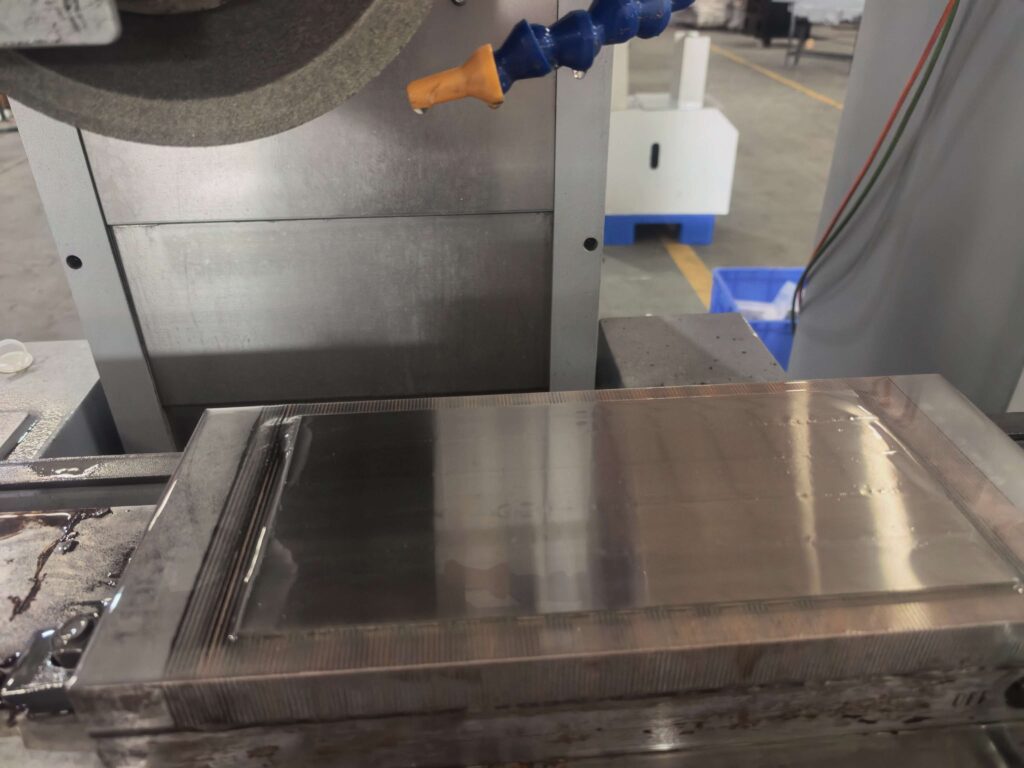
Why Workholding Matters in Surface Grinding
Surface grinding applies forces in multiple directions. The grinding wheel pushes down on the workpiece while the reciprocating table drags it back and forth. Moreover, without secure holding, the part can shift, vibrate or lift off the chuck surface.
Consequences of poor workholding include:
- Loss of flatness and parallelism tolerance
- Uneven material removal across the part
- Chatter marks and poor surface finish
- Part ejection in extreme cases — a serious safety hazard
Furthermore, the workholding method also affects setup time, which directly influences shop productivity. Therefore, choosing the right approach balances security, speed and accessibility for your specific grinding job.
Magnetic Chucks: The Standard Workholding Method
Magnetic chucks are the most common workholding device on surface grinders. They hold ferromagnetic workpieces — steel and iron — without mechanical clamps, leaving the entire top surface accessible for grinding.
Permanent Magnetic Chucks
Permanent magnetic chucks use alternating north-south pole pieces activated by a lever. When the lever is in the ON position, the magnetic circuit channels flux through the workpiece, holding it firmly against the chuck face.
- Advantages: No electrical power required — simple and reliable; no heat generation; low maintenance with no coils to fail; economical initial cost.
- Limitations: Moderate holding force (60-100 N/cm²); not suitable for very thin parts; force cannot be adjusted; requires physical effort to operate the lever.
- Best for: Toolroom surface grinders and general-purpose grinding of medium-thickness steel parts. Manual surface grinders like the https://surfacegrindermfg.com/manual-surface-grinder/ often come equipped with permanent magnetic chucks.
Electromagnetic Chucks
Electromagnetic chucks generate holding force through electrically energized coils. A DC power supply creates a magnetic field that holds the workpiece against the pole face.
- Advantages: Higher holding force (100-160 N/cm²); variable force on some models; easy ON/OFF with switch control; suitable for automated grinding cycles.
- Limitations: Generates heat causing thermal expansion; requires DC power supply; residual magnetism after demagnetization; higher initial cost.
- Best for: Production surface grinding where holding force and automation compatibility matter. Automatic and hydraulic grinders like the https://surfacegrindermfg.com/hydraulic-surface-grinder/ and https://surfacegrindermfg.com/automatic-surface-grinder/ commonly use electromagnetic chucks.
Fine-Pole vs Coarse-Pole Chucks
The pole pitch — spacing between magnetic poles — affects holding performance on different part sizes. Fine-pole chucks (1.5-3mm pitch) hold small and thin parts more effectively. However, coarse-pole chucks (6-12mm pitch) provide higher total holding force for large, thick parts. Therefore, many shops keep both types available. YUTON surface grinders at https://surfacegrindermfg.com/ accommodate both chuck types across the product range.
Vacuum Chucks for Non-Magnetic Materials
Vacuum chucks hold workpieces by atmospheric pressure against a sealed surface. A vacuum pump creates low pressure under the part, and atmospheric pressure above holds it down.
What vacuum chucks can hold:
- Aluminum and copper alloys
- Stainless steel (non-magnetic grades like 304 and 316)
- Plastics, composites and ceramics
- Glass and semiconductor wafers
Key considerations:
- The workpiece bottom must be flat enough to seal against the vacuum grid
- Holding force is limited — typically 8-10 N/cm² at full vacuum
- Not suitable for heavy grinding cuts where forces exceed vacuum holding
- Edge clamping or mechanical stops prevent lateral movement
Furthermore, vacuum chucks are a standard accessory for CNC surface grinders that grind non-ferrous and non-magnetic materials. The https://surfacegrindermfg.com/cnc-surface-grinder/ can be configured with vacuum workholding for these applications.
Mechanical Clamps and Vise Fixtures
When magnetic or vacuum holding is insufficient, mechanical clamps provide the force needed for challenging parts.
Vise Fixtures
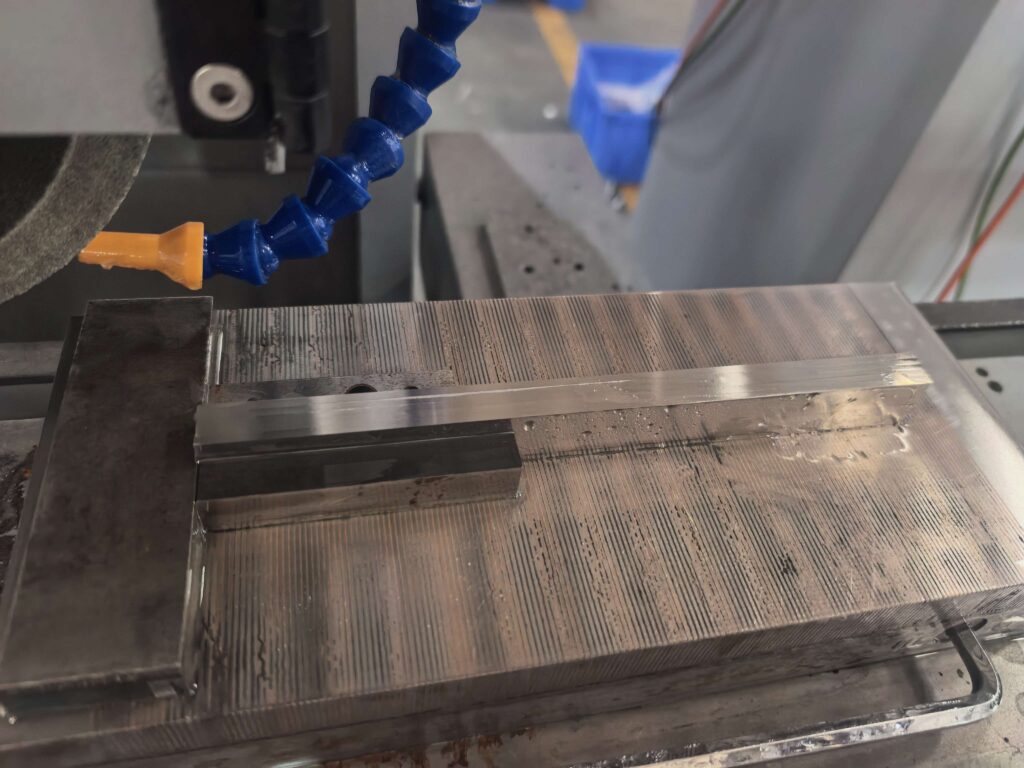
Precision grinding vises hold small blocks and irregular parts that cannot sit flat on a magnetic chuck. Moreover, the vise clamps the part, then the entire vise sits on the magnetic chuck. This method works well for parts needing side surfaces ground or parts too small to bridge chuck poles.
Step Blocks and Toe Clamps
These modular clamping components hold large or irregular parts directly on the chuck or table. Step blocks provide adjustable-height support, while toe clamps engage the part edge. Therefore, use step blocks on both sides of the part to prevent tilting during grinding.
Parallel Bars and Double-Sided Tape
Precision-ground parallel bars raise the workpiece above the chuck surface, providing clearance for through-grinding. However, double-sided tape or adhesive sheets hold thin parts without magnetic force for light finish grinding only — material removal rates must be low enough that cutting forces do not overcome the adhesive bond.
Specialty Workholding for Complex Parts
Some grinding jobs require custom or semi-custom workholding solutions.
- Angle plates hold parts at 90 degrees to the chuck surface for grinding perpendicular faces. Ground angle plates maintain tight squareness tolerances.
- Sine plates and sine bars set precise angles using gauge blocks. Set the angle using: gauge block height = center distance × sin(angle).
- Indexing fixtures rotate parts to precise angular positions for grinding cutting tools, form punches and multi-face dies.
- Custom fixtures locate and clamp the workpiece in the exact position for high-volume production, minimizing setup time and ensuring part-to-part consistency.
Workholding Setup Best Practices
Follow these steps for reliable surface grinder workholding:
- Clean the chuck surface. Remove all chips, oil and debris from both the chuck face and the workpiece bottom. Even a small chip creates a high spot that affects flatness across the entire ground surface.
- Check part bearing surface. The bottom must sit flat on the chuck. If warped, grind it first as a reference surface, then flip to grind the working surface.
- Verify holding force. Ensure the part spans enough poles to generate adequate holding force. Use a thin steel spacer plate under small parts to bridge more poles.
- Position for accessibility. Place the part so the wheel can access the entire surface without interference from clamps or stops.
- Add mechanical stops. Even with strong magnetic holding, stops on the downfeed side prevent sliding during reciprocating grinding.
- Check for pull-off. Start with a light pass and observe whether the part shifts. If movement occurs, increase holding force or reduce infeed. The American Society of Mechanical Engineers publishes workholding standards — see https://www.asme.org/.
Workholding for Different Grinding Operations
- Roughing passes: Heavy removal requires maximum holding force. Use electromagnetic chucks at full power and add mechanical stops. Hydraulic surface grinders deliver consistent force for roughing — see https://surfacegrindermfg.com/hydraulic-surface-grinder/.
- Finishing passes: Light cuts work well with permanent magnetic chucks or reduced-force electromagnetic chucks. Lower force reduces part distortion on thin parts.
- Form grinding: CNC grinders need workholding that provides full clearance for the wheel path. Vacuum chucks or well-placed clamps outside the wheel envelope work best. See https://surfacegrindermfg.com/cnc-surface-grinder/.
- Thin part grinding: Parts under 3mm thick require fine-pole chucks, double-sided tape or vacuum chucks without the magnetic distortion that coarse-pole chucks cause.
Common Workholding Mistakes
- Placing parts on chips. A chip under the workpiece acts as a pivot point. The part rocks during grinding, producing a locally flat but globally tilted surface. Always wipe the chuck clean.
- Assuming magnetic force is sufficient. Large, thin parts with small contact area may not be held securely alone. Test by trying to slide the part after activating the chuck. Furthermore, if the part moves, add stops or clamps.
- Ignoring thermal effects from electromagnetic chucks. After 1-2 hours of continuous use, chuck temperature can rise 5-10°C, affecting grinding accuracy. Therefore, for precision work, allow thermal equilibrium or use permanent magnetic chucks. The Society of Manufacturing Engineers covers thermal management — see https://www.sme.org/.
- Over-clamping thin parts. Excessive force causes elastic distortion. The part is held flat under clamp force but springs back when released. Therefore, use the minimum holding force that keeps the part secure.
YUTON Surface Grinders: Designed for Versatile Workholding
YUTON builds surface grinders that accommodate the full range of workholding methods. Moreover, our machines feature flat, precision-ground table surfaces that provide an accurate reference for magnetic chucks, vacuum chucks and fixture setups.
With Meehanite cast iron construction and core components from leading Japanese, Taiwanese and American suppliers, YUTON grinders deliver the structural rigidity that secure workholding demands. Furthermore, a rigid machine does not deflect under grinding forces, so the workholding system only needs to hold the part — not resist machine movement.
YUTON produced 3,100 surface grinders in 2025 across 7 buildings and 15,000 square meters in Dongguan, ranking among China’s top three by volume. Moreover, ISO 9001 and CE certifications verify that every machine meets quality standards before shipment.
Our range includes manual models for toolroom flexibility, hydraulic models for stable production, automatic models for batch processing and CNC models for complex form grinding — each compatible with magnetic, vacuum and mechanical workholding. Visit https://surfacegrindermfg.com/ to explore the complete lineup. The Association for Manufacturing Technology provides workholding resources — see https://www.amtonline.org/. Modern Machine Shop covers techniques in detail — see https://www.mmsonline.com/.
FAQ: Surface Grinder Workholding
Can I grind non-magnetic parts on a magnetic chuck?
Yes, but you need a secondary holding method. Place the part in a precision vise that sits on the magnetic chuck, or use vacuum chucks, double-sided tape or mechanical clamps.
How thin a part can a magnetic chuck hold?
Fine-pole chucks hold parts as thin as 3mm reliably. Below 3mm, consider vacuum chucks or double-sided tape. However, very thin parts may distort under magnetic pull — reduce holding force if possible.
Should I re-grind my chuck surface?
Yes, periodically. The chuck face develops wear and scratches over time. Re-grind with a coarse-dressed wheel and light passes. YUTON machines provide the spindle rigidity for accurate chuck re-grinding — see https://surfacegrindermfg.com/.
What is the difference between permanent and electromagnetic chucks?
Permanent chucks use magnets activated by a lever — no power, no heat, lower cost. Electromagnetic chucks use electric coils — higher force, adjustable, compatible with automation, but generate heat.
How do I hold a part at an angle?
Use a sine plate or sine bar set with gauge blocks to the required angle. The sine plate sits on the magnetic chuck while holding the workpiece at the precise angle.
Conclusion
Surface grinder workholding is not just about holding the part down — it is about holding it flat, secure and accessible. Magnetic chucks serve most ferrous parts. However, vacuum chucks handle non-magnetic materials. Furthermore, mechanical clamps and fixtures secure irregular and complex shapes. Therefore, the right method depends on your part material, geometry, grinding forces and production volume. Match the workholding to the job, follow setup best practices, and your surface grinder will deliver the precision your parts require. For surface grinders built to work with every workholding method, explore YUTON at https://surfacegrindermfg.com/.