
The right surface grinder coolant keeps your wheel clean, your part cool and your tolerances tight. Therefore, choosing the wrong fluid leads to grinding burn, poor finish and wheel loading that wastes time and money. Moreover, this surface grinder coolant guide covers fluid types, selection criteria, application methods and maintenance so you can get the best results from every grinding pass.
Why Coolant Matters in Surface Grinding
Surface grinding generates high temperatures at the wheel-workpiece contact zone. Without effective cooling, the workpiece surface can overheat within seconds, causing thermal damage that ruins parts and shortens wheel life. Consequently, coolant serves four critical functions:
- Temperature control. The fluid absorbs and carries away heat from the grinding zone, keeping the workpiece below critical temperatures. For hardened steel grinding, surface temperatures above 200°C can cause grinding burn that softens the surface layer.
- Lubrication. A thin film between the wheel and workpiece reduces friction, lowering grinding forces and power consumption. Furthermore, this translates directly to better surface finish and longer wheel life between dressings.
- Chip flushing. The coolant stream sweeps away metal chips and wheel debris from the contact zone. Without effective flushing, chips recirculate and score the workpiece surface, degrading finish quality.
- Wheel cleaning. Proper coolant flow prevents wheel loading — the buildup of metal particles embedded in the wheel face. A loaded wheel cuts poorly, generates excess heat and produces inconsistent results.
For shops running production surface grinding, coolant choice affects part quality, wheel cost, machine maintenance and operator safety. Therefore, the right decision pays for itself quickly.
Types of Surface Grinder Coolant
Three main fluid categories serve surface grinding applications. Each has distinct advantages and trade-offs.
Water-Soluble (Emulsifiable) Oils
Water-soluble oils, also called soluble oils or emulsifiable cutting fluids, are the most widely used coolant type in surface grinding. The concentrate mixes with water at dilution ratios typically between 1:20 and 1:40.
- Advantages: Excellent cooling capacity from high water content; good lubrication with extreme pressure (EP) additives; cost-effective for general-purpose grinding; available in synthetic, semi-synthetic and mineral-based formulations.
- Limitations: Requires regular concentration monitoring; susceptible to bacterial growth without proper maintenance; can leave residue on machine surfaces if concentration runs too high; may cause staining on some non-ferrous materials.
- Best for: General surface grinding of mild steel, tool steel and cast iron at moderate removal rates. Most surface grinders from https://surfacegrindermfg.com/ ship configured for water-soluble oil use.
Straight Oils
Straight grinding oils contain no water. They provide superior lubrication but limited cooling compared to water-based fluids.
- Advantages: Superior lubrication for fine-finish grinding; no bacterial growth or concentration maintenance; clean operation without foam or mist in enclosed machines; excellent for grinding hard and brittle materials.
- Limitations: Lower heat capacity than water-based fluids; higher cost per liter; fire risk at elevated temperatures — requires fire suppression systems; limited chip flushing due to lower flow rates.
- Best for: High-precision finish passes, grinding of hardened steels requiring very fine Ra values, and applications where surface integrity is critical such as aerospace and medical components.
Synthetic Fluids
Synthetic coolants contain no mineral oil. They use chemical lubricants dissolved in water for a clear, clean solution.
- Advantages: Excellent cooling and moderate lubrication; clear fluid allows operators to see the grinding zone; resistant to rancidity and bacterial growth; low residue and easy cleanup.
- Limitations: Higher cost than conventional soluble oils; may not provide enough lubrication for heavy grinding; some formulations can be aggressive on machine paint and seals; requires compatibility check with machine components.
- Best for: CNC surface grinding operations where visibility matters, and shops that prioritize clean conditions. CNC models like the https://surfacegrindermfg.com/cnc-surface-grinder/ benefit from synthetics in enclosed environments.
How to Select the Right Coolant
Match your coolant to these factors:
- Workpiece material. Hardened tool steels (HRC 50-65) benefit from oils or high-lubricity soluble oils with sulfur or chlorine EP additives. Moreover, softer steels and cast iron perform well with standard soluble oils at 1:30 dilution. Stainless steels need coolants with good anti-weld properties to prevent chip welding. Non-ferrous materials like aluminum and copper require coolants formulated to prevent staining.
- Grinding intensity. Heavy stock removal generates more heat and needs high-cooling-capacity fluids — water-soluble oils at leaner dilutions (1:20 to 1:25). Conversely, light finish grinding benefits from higher lubrication — richer dilutions (1:40 to 1:50) or straight oils for the finest finishes.
- Wheel specification. Aluminum oxide wheels work well with all coolant types. However, silicon carbide wheels for cast iron pair best with soluble oils. Diamond and CBN wheels for hard materials often perform best with straight oils or specialized synthetics. The Grinding Wheel Institute publishes fluid-wheel compatibility guidelines — see https://www.grindingwheelinstitute.com/.
- Surface finish requirement. For roughing passes targeting Ra 0.8 μm or coarser, cooling capacity dominates. For finish passes targeting Ra 0.1 μm or finer, lubrication quality becomes more important. Therefore, many shops use a two-fluid strategy: water-soluble oil for roughing and straight oil or richer emulsion for finishing.
Coolant Application Methods
How you apply coolant matters as much as which fluid you choose.
Flood Coolant
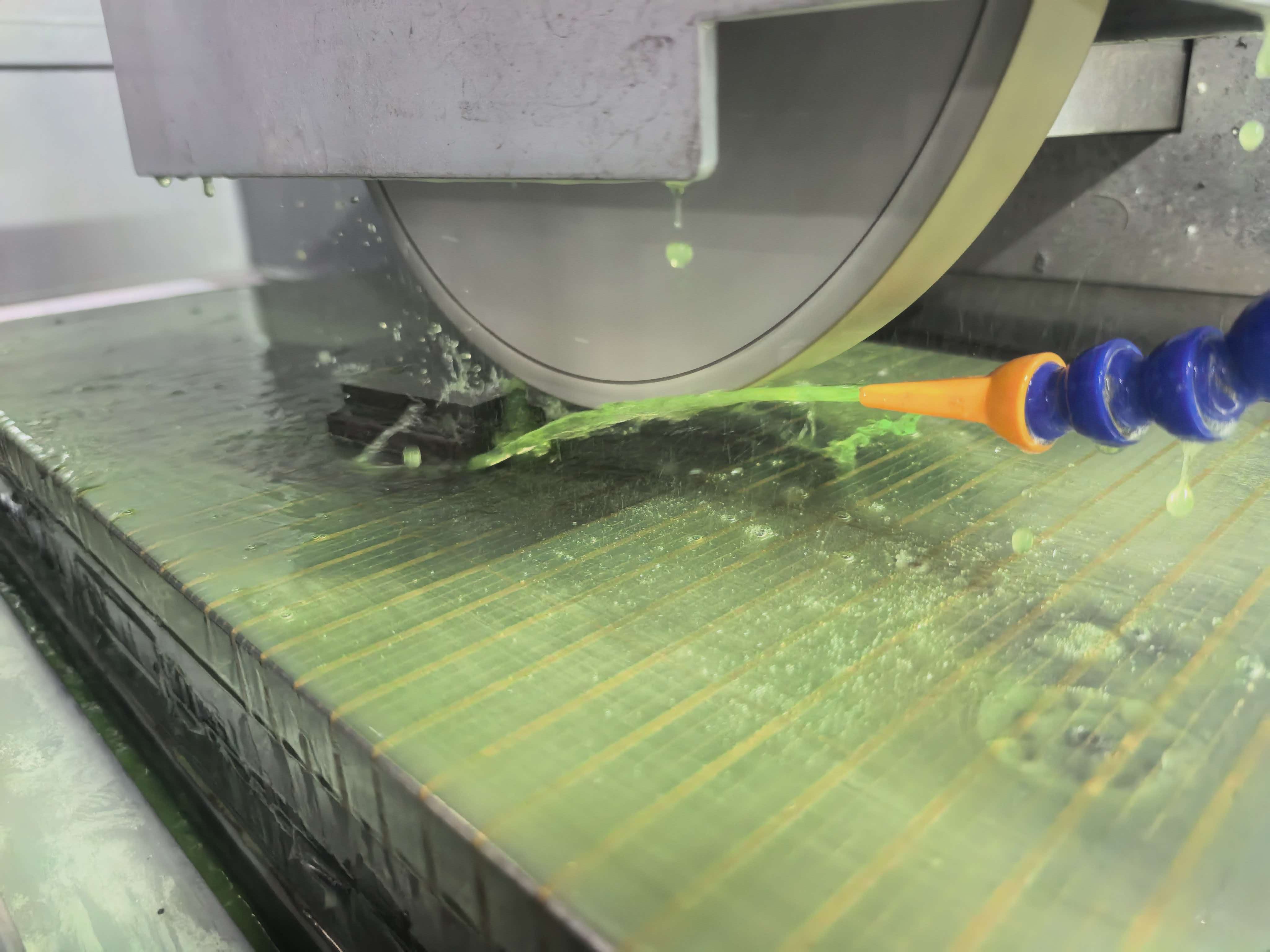
The standard method for most surface grinders. Nozzles direct a steady stream at the wheel-workpiece contact point from above and sometimes from the side. Flow rates of 20-40 liters per minute are typical for medium-size surface grinders. Furthermore, flood cooling provides good temperature control and chip flushing for most applications.
Shoe Nozzle
A specially shaped nozzle that wraps around the wheel near the contact point, delivering coolant at wheel speed to penetrate the air barrier around the rotating wheel. Shoe nozzles improve cooling effectiveness by 30-50% compared to standard flood nozzles, especially at high wheel speeds. Consequently, this method is particularly effective for CNC surface grinders running at peripheral speeds above 35 m/s.
MQL (Minimum Quantity Lubrication)
A small, precisely controlled amount of lubricant applied as an aerosol near the grinding zone. MQL reduces fluid consumption by 90-99% compared to flood cooling but provides limited cooling. Therefore, it is best for light-intensity grinding or operations where environmental regulations restrict coolant use.
For hydraulic surface grinders performing heavy-duty grinding, flood coolant with a well-positioned nozzle is the standard and most effective approach. The https://surfacegrindermfg.com/hydraulic-surface-grinder/ is designed for optimal flood coolant integration.
Coolant System Maintenance
Proper maintenance keeps your coolant effective and extends its service life. Moreover, neglect leads to poor grinding results, machine damage and health hazards.
- Daily: Verify concentration with a refractometer; check coolant level; inspect nozzles for clogs; skim tramp oil.
- Weekly: Clean or replace filter elements; remove sludge from the tank bottom; test pH (healthy range: 8.5-9.5); check for odor indicating bacterial growth.
- Monthly: Send coolant sample for lab analysis; inspect machine ways and seals; review consumption trends; evaluate grinding results — if finish degrades, coolant may need replacement.
Full coolant change intervals vary by fluid type and usage intensity. Typical ranges are 3-6 months for soluble oils and 6-12 months for synthetics. The American Society of Mechanical Engineers publishes coolant management standards — see https://www.asme.org/.
Common Coolant Problems and Solutions
- Grinding burn: Coolant not reaching the grinding zone effectively. Check nozzle position, flow rate and pressure. Consider a shoe nozzle for high-speed grinding. Verify concentration has not dropped below the effective level.
- Poor finish with wheel loading: Insufficient lubrication or chip flushing. Increase concentration, add EP additives, or switch to a higher-lubricity fluid. Ensure nozzle directs flow to flush chips away from the contact zone.
- Foaming: Caused by high flow rates, small tank size, or fluid formulation issues. Add anti-foam agents or switch to a low-foam synthetic coolant. Soft water can worsen foaming — consider treated water.
- Rancid smell: Bacterial growth in soluble oil coolant. Increase concentration, add biocide, improve aeration, and clean the tank thoroughly. Operator skin contact with rancid coolant can cause dermatitis — address the root cause promptly.
- Corrosion: Low pH or insufficient rust inhibitors. Check pH weekly and add inhibitor concentrate if pH drops below 8.5. The National Institute for Occupational Safety and Health provides metalworking fluid safety guidelines — see https://www.cdc.gov/niosh/.
YUTON Surface Grinders: Built for Optimal Coolant Performance
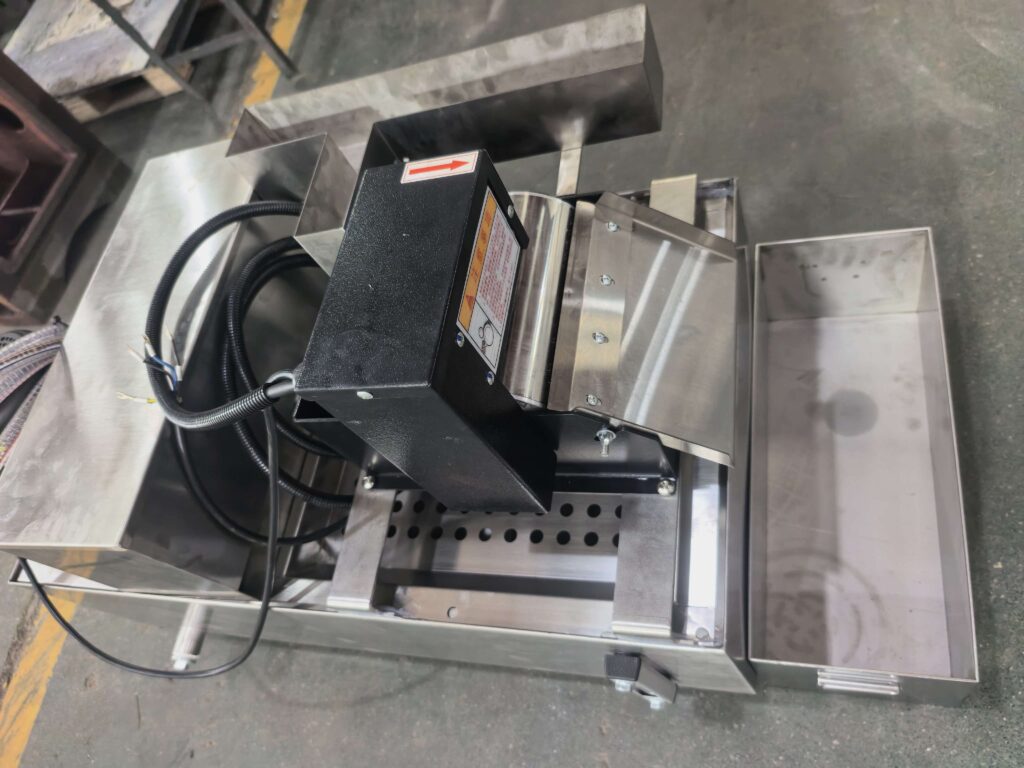
YUTON surface grinders feature integrated coolant systems designed for reliable, continuous operation. Furthermore, our machines use generous tank capacities, effective filtration and well-positioned nozzles that deliver coolant precisely to the grinding zone.
Every YUTON grinder is built with Meehanite cast iron construction, spindle bearings and core components from leading Japanese, Taiwanese and American suppliers. Therefore, this build quality ensures that the machine structure, spindle and slides work together to deliver consistent grinding results — with the coolant system supporting precision throughout.
From manual models for flexible toolroom work to hydraulic models for heavy-duty production and CNC models for complex contour grinding, every YUTON surface grinder works effectively with standard water-soluble coolants. Moreover, machines can be configured for synthetic fluids or straight oils to match your application. Visit https://surfacegrindermfg.com/ to explore the full product range.
With ISO 9001 and CE certifications, 150 employees and 15,000 square meters of production space across 7 buildings in Dongguan, YUTON produced 3,100 surface grinders in 2025, ranking among China’s top three by volume. Learn more about automatic models at https://surfacegrindermfg.com/automatic-surface-grinder/ and manual models at https://surfacegrindermfg.com/manual-surface-grinder/.
FAQ: Surface Grinder Coolant
Can I use water instead of coolant?
No. Plain water provides no lubrication, promotes rust and supports bacterial growth. Always use a properly formulated grinding coolant.
How often should I check coolant concentration?
Daily. Use a refractometer to verify the ratio matches the target. Evaporation and carry-off change concentration over time.
What dilution ratio should I start with?
For general surface grinding of mild steel, start at 1:30 (one part concentrate to 30 parts water). Adjust based on results — richer for better lubrication, leaner for better cooling.
Can I mix different coolant brands?
Generally no. Different formulations may be incompatible, causing separation, foaming or reduced performance. Stick with one brand and formulation per machine.
When should I change the coolant entirely?
When concentration adjustment cannot restore performance, when bacterial growth persists despite biocide treatment, or when grinding results consistently degrade despite proper parameters and wheel condition.
Conclusion
Choosing the right surface grinder coolant is a practical decision that affects part quality, wheel life, machine maintenance and operating costs. Water-soluble oils serve most general grinding applications. However, straight oils excel at high-precision finish work. Furthermore, synthetics offer clean operation and good visibility. Therefore, match your fluid to your material, grinding intensity and finish requirements, maintain your coolant system diligently, and your surface grinder will deliver consistent results year after year. For reliable surface grinders with effective coolant systems, explore the YUTON range at https://surfacegrindermfg.com/.