
Lights-out grinding technology allows surface grinders to operate without human intervention during overnight shifts, weekends, and holidays. The machines run in the dark—literally—with automated part loading, wheel dressing, quality checks, and error recovery all handled by integrated systems. For machine shops struggling with labor shortages and rising overtime costs, lights-out grinding delivers more output from the same equipment without adding headcount. This guide explains how it works, what you need to implement it, and the real results shops are achieving.
What Is Lights-Out Grinding?
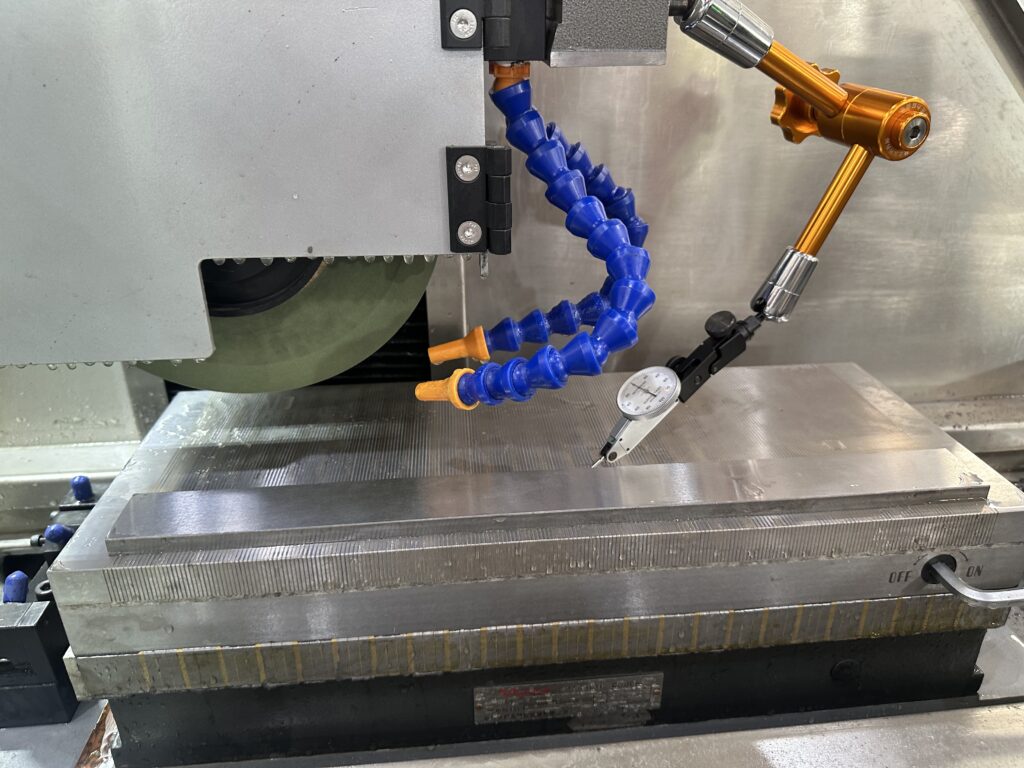
The term “lights-out” comes from the idea that the factory can turn off the lights and leave—because no operators are needed on the floor. In grinding, this means a surface grinder runs complete production cycles autonomously, from loading the raw workpiece to unloading the finished part.
A true lights-out grinding cell includes:
- Automated workpiece loading and unloading (robot, gantry, or magazine loader)
- In-process gauging that measures parts during the grinding cycle
- Automatic wheel dressing and compensation based on wear data
- Error detection and safe shutdown if anomalies occur
- Part sorting and staging for post-grinding inspection
According to ISO’s automation standards for manufacturing, lights-out capability represents the highest level of manufacturing automation, requiring both mechanical reliability and intelligent control systems working together seamlessly.
Core Components of a Lights-Out Grinding System
Automated Workpiece Handling
The most critical element is a reliable part loading system. Options include:
- Robotic arms: 6-axis robots that pick parts from a conveyor or pallet, place them on the magnetic chuck, and remove finished parts. Flexible for multiple part families.
- Gantry loaders: Overhead systems that move parts in and out of the grinding zone. Compact footprint, ideal for single-machine cells.
- Magazine loaders: Stacked part magazines that feed workpieces sequentially. Simple, cost-effective, and well-suited for high-volume single-part production.
The choice depends on part size, weight, geometry variety, and production volume.
In-Process Gauging and Compensation
Without an operator checking dimensions between parts, the grinding machine must measure its own output. In-process gauging probes touch the workpiece between grinding passes to verify dimensions. If the part approaches tolerance limits, the system automatically adjusts depth of cut or triggers a dress cycle.
This closed-loop control is what makes unattended grinding possible. Without it, wheel wear would gradually push parts out of tolerance with no one to notice.
YUTON’s CNC surface grinders support in-process gauging interfaces and automatic compensation, enabling extended unattended operation on suitable workpieces.
Automatic Wheel Dressing and Conditioning
Grinding wheels wear continuously during production. In a manned shift, operators dress wheels based on visual inspection or scheduled intervals. In lights-out mode, the machine must dress automatically.
Modern CNC grinders dress based on real-time data: cumulative material removed, power consumption trends, or surface finish measurements from the in-process gauge. This ensures the wheel stays in optimal cutting condition throughout the entire unattended run.
Error Detection and Recovery
Things can go wrong during unattended operation—a part slips on the chuck, coolant flow drops, or a wheel fragments. Lights-out systems must detect these events and respond safely.
Typical safeguards include:
- Coolant flow sensors that halt the machine if flow drops below threshold
- Power monitoring that detects abnormal spindle loads (indicating a crash or wheel failure)
- Part presence sensors that confirm the workpiece is properly seated before grinding begins
- Automatic shutdown protocols that stop the machine and send alerts to remote monitoring systems
According to manufacturing safety research, well-designed error detection systems reduce unattended grinding incidents by over 95%, making lights-out operation as safe as manned shifts.
Business Benefits of Lights-Out Grinding
Increased Machine Utilization
Most surface grinders run 8–10 hours per day in a single-shift operation. Lights-out grinding extends runtime to 16–24 hours without adding operators. A machine that previously produced 80 parts per day can deliver 160–240 parts with the same capital investment.
Lower Labor Cost Per Part
Labor typically represents 25–35% of grinding cost. By shifting production to unattended shifts, shops reduce the labor component significantly. Overtime premiums disappear, and headcount pressure eases in tight labor markets.
Consistent Quality Across Shifts
Human performance varies—operators get tired, distracted, or inconsistent between shifts. Automated grinding produces the same result at 3 AM as it does at 3 PM. In-process gauging ensures every part meets specification regardless of when it was produced.
Faster Delivery Times
Additional unattended capacity shortens lead times without expediting costs. Jobs that previously queued for the next available shift can be completed overnight, enabling faster quoting and more reliable delivery commitments.
What You Need to Implement Lights-Out Grinding
Machine Readiness
Not every surface grinder can run unattended. Key requirements include:
- CNC control with program storage and automatic cycle execution
- Integrated automatic dressing capability
- Work-holding that does not require manual adjustment (magnetic chucks with automatic demagnetization, hydraulic clamps, or fixture systems)
- Reliable coolant system with level monitoring and automatic refill
Automatic surface grinders from YUTON are designed with these features as standard, providing a solid foundation for lights-out implementation.
Workpiece Suitability
Lights-out grinding works best for:
- Medium-to-high volume parts (50+ pieces per setup)
- Consistent raw material dimensions and hardness
- Tolerances achievable with in-process gauging (typically ±0.01 mm or looser)
- Parts that clamp reliably on magnetic chucks or simple fixtures
Very low-volume, complex-geometry, or ultra-precision work (tolerances under ±0.002 mm) usually requires operator attention and is better suited for manned shifts.
Process Validation
Before running unattended, validate the entire process in manned mode first. Confirm that wheel life, dressing intervals, and part quality remain stable across at least 50 consecutive parts. Document the grinding program, dressing schedule, and quality parameters so the automated system replicates proven results.
Remote Monitoring
Even in lights-out mode, someone needs to know if the machine stops. Remote monitoring platforms send alerts via email or mobile app when the machine encounters an error, completes a batch, or requires attention. According to manufacturing technology reports, shops that add remote monitoring to their lights-out cells resolve 80% of stoppages remotely, reducing the need for emergency floor visits.
Common Challenges and Solutions
Part Loading Reliability
Problem: Parts occasionally misalign on the chuck, causing out-of-tolerance grinding or crashes.
Solution: Use part presence sensors and location verification probes that confirm correct positioning before each grinding cycle begins. If a part is misaligned, the system rejects it and loads the next one.
Wheel Life Variability
Problem: Grinding wheels wear at different rates depending on material hardness and batch variations, making fixed dress intervals unreliable.
Solution: Implement condition-based dressing triggered by power consumption or force sensor data rather than fixed part counts. This adapts automatically to varying conditions.
Coolant Degradation
Problem: Coolant quality degrades over long unattended runs, affecting surface finish and wheel life.
Solution: Install coolant concentration monitors and automatic mixers that maintain proper dilution ratios. Magnetic separators and paper filters keep coolant clean throughout extended runs.
First-Part Qualification
Problem: Without an operator to measure the first part, how do you know the setup is correct before running a full batch?
Solution: Program the CNC to grind a single part, measure it with the in-process gauge, and compare results against nominal values. Only proceed with the full batch if the first part passes.
Real Results: What Shops Achieve with Lights-Out Grinding
According to the Association for Manufacturing Technology, machine shops that implement lights-out grinding report:
- 50–150% increase in output per machine
- 25–40% reduction in labor cost per part
- 15–25% reduction in total lead time
- ROI on automation investment within 12–18 months
These results assume proper process validation, suitable workpieces, and adequate error detection systems—lights-out grinding is not a plug-and-play upgrade, but the returns are substantial for shops that implement it correctly.
Getting Started with Lights-Out Grinding
If you are considering lights-out grinding technology for your shop, follow this roadmap:
- Evaluate your parts: Identify workpieces with sufficient volume and consistency for unattended production.
- Assess your machines: Determine which grinders have the control, dressing, and clamping features needed for automation. YUTON surface grinders offer CNC and automatic models with built-in lights-out readiness.
- Start with one cell: Implement lights-out on a single machine first. Validate the process, train your team, and measure results before expanding.
- Add remote monitoring: Install a monitoring platform so you receive alerts and can track production from anywhere.
- Scale gradually: Once the first cell runs reliably unattended, replicate the approach on additional machines.
For shops that need both precision and automation capability, YUTON’s hydraulic surface grinders deliver the mechanical stability required for consistent unattended operation, while CNC models provide the intelligent control needed for adaptive grinding and automatic compensation.
Final Thoughts
Lights-out grinding technology is no longer experimental—it is a proven production strategy that machine shops around the world are using to increase output, reduce labor costs, and improve delivery times. The key requirements are suitable workpieces, properly equipped machines, validated processes, and reliable error detection.
As labor costs continue to rise and skilled operators become harder to find, the ability to run grinding machines unattended will shift from a competitive advantage to a competitive necessity. Shops that invest in lights-out capability now will be positioned to win more business, quote shorter lead times, and operate more profitably in an increasingly demanding market.