
Why Grinding Wheel Dressing Techniques Matter
A grinding wheel wears during every pass. The abrasive grains become dull, chips fill the pores between grains, and the wheel shape changes. If you skip dressing, the consequences are serious: poor surface finish, grinding burn, dimensional errors and even workpiece rejection. Therefore, grinding wheel dressing techniques are not optional — they are essential for consistent quality.
On a precision surface grinder, even a small change in wheel geometry affects tolerance. Shops that invest in high-quality machines from https://surfacegrindermfg.com/ need matching wheel maintenance discipline to get the best results.
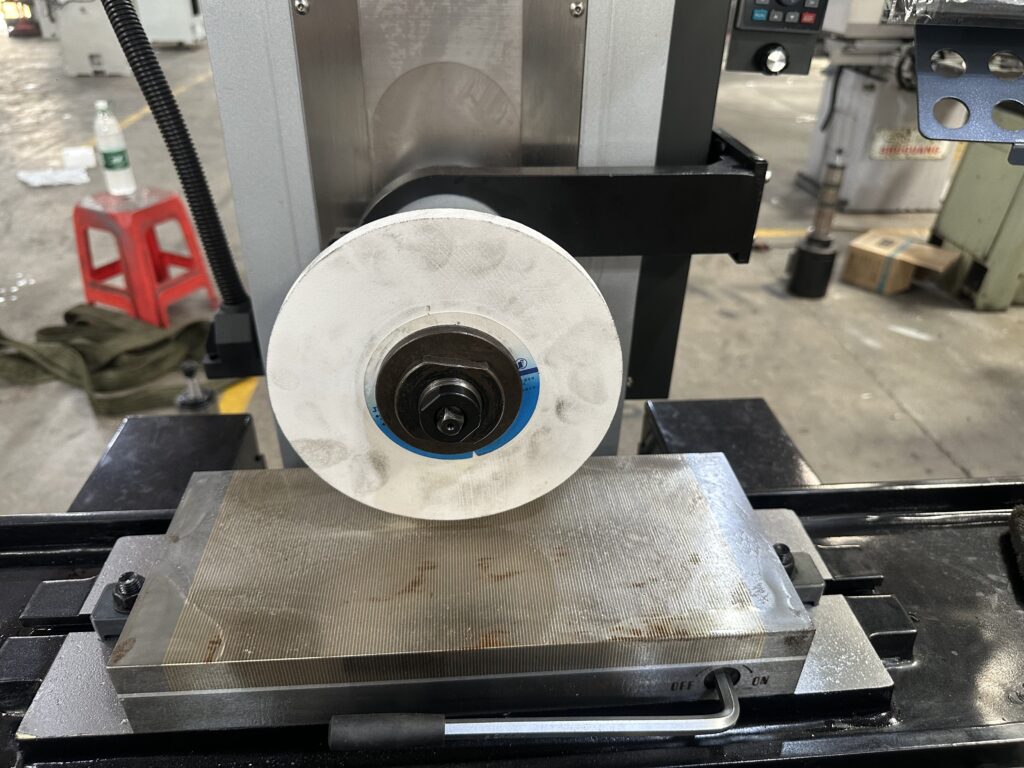
When Your Wheel Needs Dressing
Knowing the right moment to dress saves time and extends wheel life. Here are clear signs that your wheel needs attention:
- Visible loading: The wheel surface looks shiny or glazed because metal chips fill the pores between grains.
- Poor surface finish: Your workpiece Ra value increases even though you have not changed any parameters.
- Burning or discoloration: Dull grains generate more heat, which leads to grinding burn on the part.
- Unusual sound: A high-pitched squeal often means the wheel is glazed and needs dressing.
- Loss of form: If you grind profiles or angles and the shape drifts, the wheel has lost its geometry.
As a general rule, dress before every precision job. For roughing operations, dress when you notice any of the signs above. The ISO 8473 standard provides useful guidance on grinding wheel inspection intervals — see https://www.iso.org/.
Grinding Wheel Dressing Techniques: Tool Selection
Choosing the right dressing tool is the first step in effective grinding wheel dressing techniques. The main options are:
Single-Point Diamond Dresser
The most common tool for small to medium wheels. A single diamond tip traverses the wheel face to restore sharpness and form. It is affordable and easy to use. However, the diamond wears over time and needs rotation to maintain a sharp point.
Cluster or Multi-Point Dresser
Several diamonds are set in a pattern. This type covers more wheel surface per pass and lasts longer than a single-point dresser. It is a good choice for medium production volumes where consistency matters.
Rotary Diamond Dresser (Roll Dresser)
A roll with embedded diamonds rotates against the grinding wheel. This is the most precise and productive method. It is often used on CNC surface grinders that need complex wheel profiles — see https://surfacegrindermfg.com/cnc-surface-grinder/ for machines that support this approach.
The Society of Manufacturing Engineers offers detailed comparisons of dressing tool types — see https://www.sme.org/.
Step-by-Step Dressing Procedure
Follow this proven procedure for reliable results every time:
- Secure the dresser: Mount the single-point or cluster dresser firmly in the magnetic chuck or a dedicated holder. Any vibration will create uneven dressing.
- Set the traverse speed: For a single-point diamond, use 0.3 to 0.5 m/min. Slower speeds give a smoother wheel surface, while faster speeds create a more open, free-cutting wheel.
- Set the depth of cut: Start with 0.01 to 0.02 mm per pass. Remove only the minimum material needed to expose fresh grains.
- Make several light passes: Three to five passes are typical. The final pass should be a spark-out pass with zero infeed to clean up the wheel face.
- Check the wheel: After dressing, inspect the wheel for roundness and surface uniformity. Run a test part to verify finish and tolerance.
Modern Manufacturing magazine provides additional procedural tips for dressing on production grinders — see https://www.mmsonline.com/.
Common Mistakes in Grinding Wheel Dressing Techniques
Even experienced operators make errors with grinding wheel dressing techniques. Here are the most frequent ones:
- Too deep a cut: Aggressive dressing removes too much wheel material, shortens wheel life and can damage the dresser. Always use light cuts.
- Too fast a traverse: Rushing the dressing pass creates a glazed wheel surface that cuts poorly and generates heat.
- Dull dresser: A worn diamond tip does not fracture the grains properly. The result is a smooth, glazed wheel. Rotate or replace the dresser regularly.
- No spark-out pass: Skipping the final zero-infeed pass leaves the wheel slightly out of round, which shows up as chatter marks on the workpiece.
- Ignoring coolant during dressing: Dressing generates heat. Apply coolant to protect both the dresser and the wheel bond.
These mistakes are especially costly on hydraulic surface grinders and automatic surface grinders where cycle times are tight. Find reliable grinding equipment at https://surfacegrindermfg.com/hydraulic-surface-grinder/ and https://surfacegrindermfg.com/automatic-surface-grinder/.
How Dressing Quality Affects Performance
The quality of your dressing directly controls three outcomes:
- Surface finish: A well-dressed wheel produces consistent Ra values. A poorly dressed wheel gives uneven roughness across the part.
- Tolerance control: If the wheel is not round after dressing, dimensional accuracy suffers. This is critical for precision parts that require tight tolerances.
- Wheel life: Proper dressing removes only the worn layer, so the wheel lasts longer between replacements and you spend less on abrasives.
The Association for Manufacturing Technology publishes data linking dressing quality to grinding efficiency — see https://www.amtonline.org/. Shops that follow structured dressing procedures report up to 30 percent longer wheel life.
Grinding Wheel Dressing Techniques by Machine Type
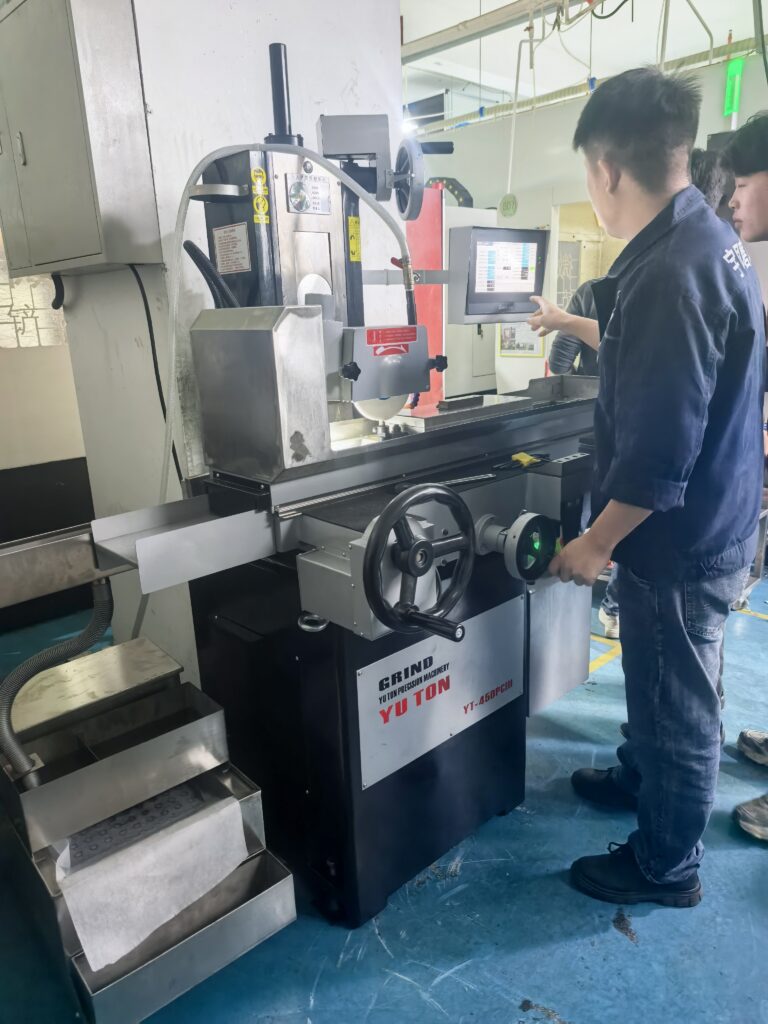
Your machine type shapes your dressing approach. Manual surface grinders require careful hand-controlled dressing with a single-point tool. PLC-controlled grinders offer semi-automatic dressing cycles that improve consistency. Full CNC grinders support programmable dressing with rotary dressers for complex profiles — learn more at https://surfacegrindermfg.com/cnc-surface-grinder/.
For manual and semi-automatic machines, see the options at https://surfacegrindermfg.com/manual-surface-grinder/ and https://surfacegrindermfg.com/hydraulic-surface-grinder/.
CE-certified machines follow strict safety standards for dressing operations. The European Commission provides guidelines on machine safety that include dressing procedures — see https://ec.europa.eu/.
Conclusion
Grinding wheel dressing techniques are not just maintenance — they are a core process that determines your grinding quality. Dress at the right time, choose the right tool, follow the correct procedure and avoid common mistakes. Your surface finish, tolerance and wheel life will all improve. For grinders designed for consistent precision, visit https://surfacegrindermfg.com/.