
Surface grinder Vietnam demand is rising fast as the country’s manufacturing sector expands into precision metalworking. Therefore, Vietnamese buyers need clear guidance on machine selection, import regulations, and supplier evaluation to make the right investment.
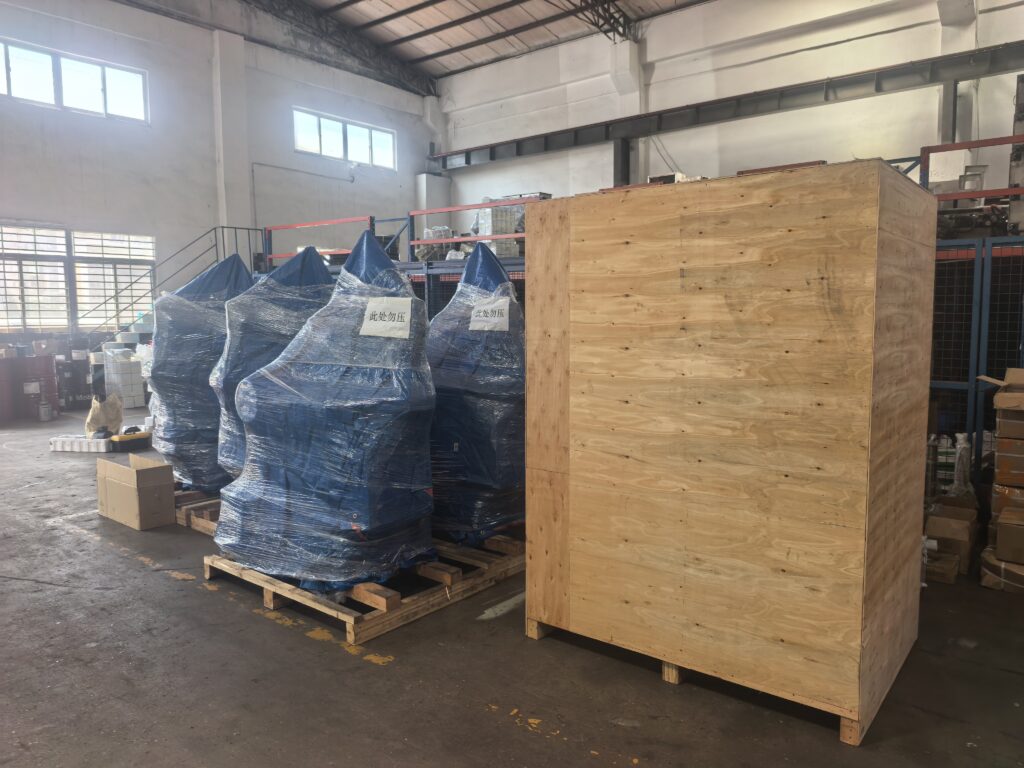
Why Surface Grinder Vietnam Demand Is Accelerating
Vietnam’s manufacturing output has grown at an average of 8–10% per year since 2020, driven by foreign direct investment, electronics assembly, and automotive component production. Moreover, the country’s electronics manufacturing sector alone now exceeds $150 billion in annual output, with major operations from Samsung, LG, Foxconn, and VinFast concentrated in industrial zones across Bac Ninh, Thai Nguyen, and Hai Phong in the north, and Binh Duong and Dong Nai in the south.
Consequently, the need for precision grinding equipment — from toolroom surface grinders for die maintenance to CNC surface grinders for production flatness — has expanded well beyond the traditional mold and die shops. Therefore, surface grinder Vietnam buyers now include electronics fixture manufacturers, automotive parts suppliers, medical device makers, and steel structure fabricators.
Key Industries Driving Surface Grinder Vietnam Demand
The following sectors represent the strongest growth areas for surface grinder Vietnam procurement in 2026:
- Mold and die making — Vietnam’s injection mold industry serves domestic electronics and automotive assembly. Furthermore, mold cavities, core inserts, and stripper plates all require surface grinding for flatness and parallelism.
- Automotive components — With VinFast producing electric vehicles and multinational tier-1 suppliers establishing local plants, precision-ground parts such as brake caliper brackets, transmission housings, and fixture plates are in growing demand.
- Electronics tooling — Connector molds, lead-frame dies, and assembly fixtures require grinding tolerances of ±0.005 mm or tighter.
- Steel structure and heavy fabrication — Precision-machined base plates, mounting surfaces, and guide rails need surface grinding for dimensional accuracy.
- Medical devices — Surgical instrument blanks and implant trial components require fine-surface grinding with controlled Ra values, often on CNC models like those at https://surfacegrindermfg.com/cnc-surface-grinder/.
Vietnam Import Regulations for Surface Grinders: 2026 Update
Understanding the regulatory landscape is essential for any surface grinder Vietnam purchase. Moreover, 2026 brought significant changes that directly affect how Vietnamese buyers import grinding machines.
HS Code Classification
Surface grinders fall under HS heading 8460 (machine tools for deburring, sharpening, grinding, honing, lapping, polishing). Furthermore, the exact 8-digit HS code depends on whether the machine is numerically controlled (CNC) or conventional, the type of grinding operation (surface, cylindrical, tool), and the workpiece material. Therefore, buyers must provide the supplier’s catalogue, datasheet, and model number to their customs broker for accurate classification.
Import Duties and VAT
For new surface grinders classified under HS 8460, the MFN (Most Favored Nation) duty rate may be 0% if the machine type is not domestically produced in Vietnam. However, if a domestic equivalent exists, the applicable rate must be confirmed against the current tariff schedule. Moreover, import VAT is generally 10%, though a reduced rate of 8% may apply during VAT reduction periods for qualifying HS lines (https://www.mmsonline.com/).
New 2026 Rules for Used Machine Tools
Effective June 1, 2026, Vietnam’s Ministry of Industry and Trade implemented new regulations under the Hanoi Consensus framework. Furthermore, the key provisions directly affect surface grinder Vietnam imports:
- Used machine tools older than 10 years are prohibited from import. Therefore, buyers seeking second-hand surface grinders must verify the manufacturing date before ordering.
- Limited exceptions allow imports of equipment aged 15–20 years for specific industries, subject to mandatory third-party technical and environmental appraisal certified by Vietnamese authorities.
- Mandatory post-arrival inspection must be completed within 15 days of the machine reaching port. Moreover, failure to comply results in rejection and re-export at the importer’s expense.
Consequently, these regulations strongly favor new equipment purchases. In addition, as of May 15, 2026, Vietnam, Indonesia, Thailand, and Malaysia simultaneously tightened used machine tool import controls, making new machine procurement the lower-risk path across the ASEAN region.
Labeling Requirements
When surface grinders are circulated in Vietnam, both the original manufacturer label and a Vietnamese supplementary label may be required. Furthermore, the label must include model, serial number, country of origin, year of manufacture, manufacturer name, and key specifications. Therefore, confirm labeling compliance with your customs broker before shipment.
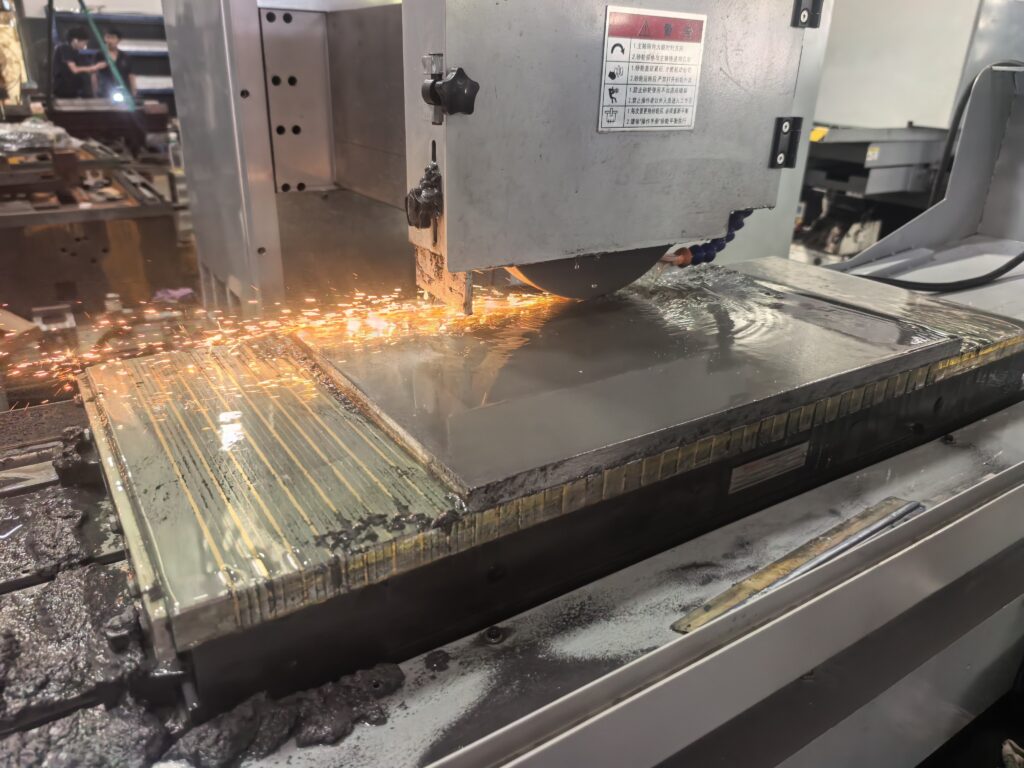
Choosing the Right Surface Grinder for Vietnam Conditions
Beyond regulations, surface grinder Vietnam buyers must consider local operating conditions and support requirements.
Machine Rigidity for Tropical Environments
Vietnam’s tropical climate — with ambient temperatures of 30–38°C and relative humidity of 70–95% — affects machine performance. Moreover, thermal expansion of the workpiece and machine structure can shift grinding accuracy by 0.01–0.03 mm over an 8-hour shift if the machine lacks adequate thermal stability. Therefore, Meehanite cast iron construction, which provides superior vibration damping and thermal inertia compared to welded steel frames, is a significant advantage in this environment (https://surfacegrindermfg.com/hydraulic-surface-grinder/).
Control Type Selection
Vietnamese shops vary widely in CNC programming skill. Therefore, choosing the right control architecture matters for any surface grinder Vietnam investment:
- CNC surface grinders suit production environments with repeatable part families and skilled programmers. Furthermore, they offer automatic grinding cycles, programmable feed rates, and data logging for traceability (https://surfacegrindermfg.com/cnc-surface-grinder/).
- PLC hybrid (manual + automatic) grinders provide both conventional hand-wheel operation and stored automatic cycles. Moreover, they are ideal for shops transitioning from manual to automated grinding — a common situation in Vietnam’s rapidly upgrading manufacturing sector.
- Manual surface grinders remain practical for toolrooms, maintenance shops, and small-batch job shops where setup flexibility matters more than cycle automation (https://surfacegrindermfg.com/manual-surface-grinder/).
Coolant and Corrosion Considerations
High humidity accelerates corrosion on exposed machine surfaces and workpieces. Furthermore, using water-soluble coolant in Vietnam’s climate requires diligent rust prevention practices — including proper coolant concentration management and post-grinding rust inhibitor application. Therefore, machines with enclosed coolant systems and corrosion-resistant component coatings offer practical advantages.
Evaluating Surface Grinder Suppliers for the Vietnam Market
Selecting the right supplier is as important as choosing the right machine. Moreover, surface grinder Vietnam buyers should evaluate the following criteria.
ISO 9001 Certification
ISO 9001 certification demonstrates that the manufacturer maintains a documented quality management system with traceability from raw material to finished product. Furthermore, this is especially relevant for Vietnamese buyers who must verify equipment quality against import documentation requirements (https://www.iso.org/).
CE Compliance
While CE marking is a European requirement, it also demonstrates that the machine meets internationally recognized safety and electromagnetic compatibility standards. In addition, Vietnamese import regulations increasingly reference international safety norms, making CE-compliant equipment a lower-risk choice for customs clearance and workplace safety compliance (https://ec.europa.eu/).
Core Component Quality
The spindle bearings, ball screws, servo motors, and CNC controller determine long-term grinding accuracy and reliability. Moreover, machines built with Japanese, Taiwanese, or American core components consistently outperform those using unbranded alternatives in both precision retention and service life. Therefore, verify component origins before purchasing.
Local Service and Parts Availability
Downtime is costly in Vietnam’s fast-paced manufacturing environment. Furthermore, a supplier with regional service capability — whether through a local agent or direct factory support — can mean the difference between a one-day repair and a two-week parts shipment. Consequently, evaluate the supplier’s track record for after-sales support in Vietnam and Southeast Asia.
MTA Vietnam 2026: What the Show Revealed
MTA Vietnam 2026, held July 1–4 at the Saigon Exhibition and Convention Center (SECC) in Ho Chi Minh City, confirmed several trends relevant to surface grinder Vietnam buyers. Moreover, the exhibition attracted manufacturers and distributors from across the ASEAN region.
- Strong demand for precision CNC equipment — Exhibitors reported high interest in CNC lathes, grinding machines, and multi-axis machining centers from Vietnamese manufacturers upgrading their capabilities. Furthermore, the Society of Manufacturing Engineers identifies Southeast Asia as the fastest-growing region for precision machine tool adoption (https://www.sme.org/).
- Chinese machine tool brands expanding rapidly — Manufacturers from China demonstrated growing product quality and cost-effectiveness, with prices typically 30–60% below European and Japanese equivalents while maintaining acceptable precision levels. Moreover, the Association for Manufacturing Technology notes that Chinese-built machine tools now account for a growing share of ASEAN imports (https://www.amtonline.org/).
- Automation and Industry 4.0 interest — Vietnamese factory managers increasingly ask about IoT monitoring, data logging, and lights-out capability, indicating a shift from purely manual operations toward connected manufacturing.
Therefore, the market is clearly moving toward higher precision and greater automation — and surface grinder Vietnam buyers should factor this trajectory into their investment decisions.
Why YUTON Serves the Surface Grinder Vietnam Market
YUTON surface grinders are well-positioned for the Vietnam market for several practical reasons. Furthermore, our manufacturing scale and export experience align with Vietnamese buyer priorities:
- Meehanite cast iron construction across seven factory buildings ensures the thermal stability and vibration damping that Vietnam’s tropical conditions demand — reducing thermal drift and maintaining accuracy over long shifts.
- Japanese, Taiwanese, and American core components deliver the precision retention and service life that Vietnamese manufacturers need to minimize downtime and protect their investment (https://surfacegrindermfg.com/automatic-surface-grinder/).
- ISO 9001 + CE certification means every machine ships with full quality documentation — simplifying the import clearance process under Vietnam’s 2026 regulatory framework.
- 3,100 units sold in 2025, ranking YUTON among China’s top three surface grinder manufacturers. Moreover, this production volume ensures consistent quality, competitive pricing, and available inventory for export orders.
- 150 employees and 15,000 m² of factory space in Dongguan provide the manufacturing depth to support custom specifications and timely delivery to Vietnamese buyers. Discover our full product line at https://surfacegrindermfg.com/.
FAQ: Surface Grinder Vietnam
What is the import duty for a surface grinder in Vietnam?
The MFN duty for new surface grinders under HS 8460 may be 0% if the machine type is not domestically produced in Vietnam. Furthermore, import VAT is generally 10%, with possible reduction to 8% during VAT reduction periods. However, always confirm the exact rate for your machine’s 8-digit HS code with a licensed customs broker.
Can I import a used surface grinder into Vietnam?
As of June 2026, used machine tools older than 10 years are prohibited from import into Vietnam. Moreover, limited exceptions for 15–20 year old equipment require third-party technical certification and post-arrival inspection within 15 days. Therefore, purchasing a new machine is the simpler and lower-risk option.
What HS code applies to a surface grinder?
Surface grinders are classified under HS heading 8460. Furthermore, the exact 8-digit code depends on whether the machine is CNC or conventional, the grinding operation type, and the workpiece material. Therefore, provide the full catalogue and datasheet to your customs broker for accurate classification.
Which surface grinder type is best for Vietnam?
The best type depends on your application. However, CNC surface grinders suit high-volume production, PLC hybrid models are ideal for shops transitioning from manual to automated grinding, and manual grinders remain practical for toolrooms and small batches. Moreover, all types should feature Meehanite cast iron construction for thermal stability in Vietnam’s tropical climate.
How do I ensure my surface grinder passes Vietnam customs?
Prepare accurate documentation including the commercial invoice, packing list, catalogue with model and specifications, certificate of origin, and ISO/CE certificates. Furthermore, ensure the machine label includes all required information (model, serial number, origin, year of manufacture) and that the declared HS code matches the machine’s actual function.
Conclusion
Surface grinder Vietnam demand is growing steadily as the country’s manufacturing sector upgrades from basic fabrication to precision metalworking. Therefore, understanding import regulations, machine selection criteria, and supplier evaluation factors is essential for making a sound investment. The 2026 regulatory changes — particularly the ban on used machine tools older than 10 years — make new equipment the clear choice for compliance and reliability.
YUTON’s Meehanite-cast surface grinders, built with Japanese, Taiwanese, and American core components and certified to ISO 9001 + CE standards, are designed for the precision and durability that Vietnamese manufacturers require. Furthermore, our position among China’s top three surface grinder manufacturers ensures the quality consistency and export support that Vietnam buyers demand.
Explore the full range of YUTON surface grinders at https://surfacegrindermfg.com/ — CNC, automatic, hydraulic, and manual models all available, backed by 150 people, 15,000 m² of production capacity, and 3,100 units delivered in 2025.