
Stainless steel is one of the most challenging materials to surface grind, and mastering surface grinding for stainless steel requires a clear understanding of wheel selection, feed rates, and coolant strategy. Therefore, this guide walks you through every critical parameter so you can achieve tight tolerances and mirror-like finishes on austenitic, martensitic, and duplex grades. Moreover, we share real-shop-floor tips from YUTON’s 150-person engineering team in Dongguan, who grind over 3,100 machines’ worth of components every year using Japanese, Taiwanese, and American core components.
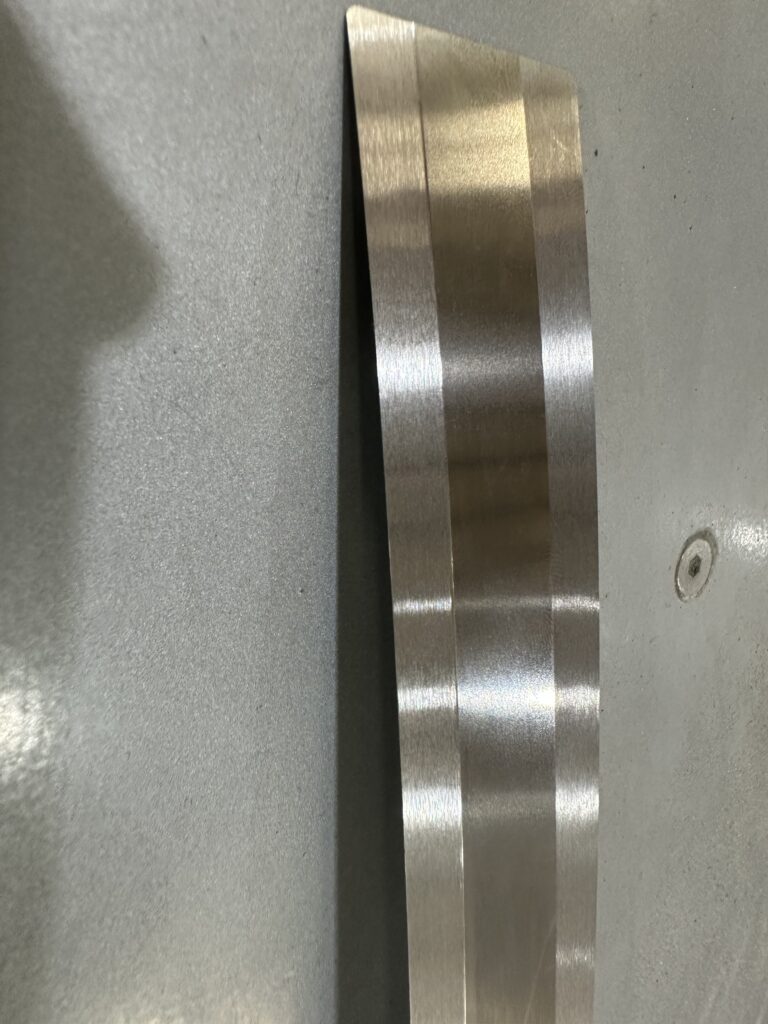
Why Stainless Steel Is Difficult to Surface Grind
Stainless steel combines high toughness with low thermal conductivity, which creates several grinding challenges. Therefore, heat builds up rapidly at the wheel-workpiece interface, increasing the risk of grinding burn and work hardening. Furthermore, the material’s tendency to gall means the wheel can load quickly if you choose the wrong abrasive or run too fine a feed.
Work Hardening and Thermal Damage
Austenitic grades like 304 and 316 work-harden significantly during grinding. Consequently, the surface hardness can increase by 30–50 HRC in the affected zone, making subsequent passes even harder. Moreover, if coolant flow is insufficient, the heat-affected zone (HAZ) deepens, potentially causing micro-cracks that compromise part integrity.
Wheel Loading and Galling
The chromium oxide layer on stainless steel makes it sticky. However, selecting the right wheel bond and structure minimizes loading. As a result, open-structure wheels with grain sizes 46–60 and J-grade hardness tend to perform best for roughing, while 80–120 grit handles finishing passes on YUTON’s CNC surface grinders.
Selecting the Right Grinding Wheel
Wheel choice determines 70% of your grinding outcome on stainless steel. Therefore, you must match the abrasive type, grit size, bond, and structure to the specific stainless grade and operation.
Abrasive Type: Aluminum Oxide vs CBN
For most austenitic and ferritic stainless steels, premium aluminum oxide (Al₂O₃) wheels work well and cost less. However, for martensitic grades above HRC 50 — such as 440C — CBN (cubic boron nitride) wheels deliver significantly longer life and cooler cuts. Furthermore, the Society of Manufacturing Engineers recommends CBN for any batch job exceeding 200 parts on hardened stainless.
Grit, Bond, and Structure Guidelines
表格
| Operation | Grit Size | Hardness | Structure | Bond |
|---|---|---|---|---|
| Roughing 304/316 | 46–54 | I–J | 7–8 (open) | Vitrified |
| Finishing 304/316 | 80–120 | H–I | 5–6 | Vitrified |
| Roughing 440C | 60–80 | J–K | 6–7 | Vitrified |
| Finishing 440C (CBN) | 100–150 | J | 5 | Vitrified |
Therefore, start with these baselines and adjust based on your specific machine rigidity and part geometry. Moreover, always dress the wheel before grinding stainless to expose sharp grains and reduce loading, as detailed in the grinding wheel dressing guide from MMS Online.
Coolant Strategy for Stainless Steel Grinding
Coolant is not optional when surface grinding for stainless steel — it is critical. Therefore, you need both the right fluid type and adequate delivery volume to prevent thermal damage.
Coolant Types and Flow Rates
- Soluble oil (5–8% concentration): Best general-purpose choice. Moreover, it provides both lubrication and cooling, reducing wheel wear by 20–30% compared to straight water.
- Synthetic fluid: Superior cooling but less lubricity. However, it works well for high-speed finishing on hydraulic surface grinders.
- Semi-synthetic: Balanced option for shops grinding both stainless and carbon steel.
Furthermore, aim for a minimum flow rate of 20 liters per minute per 100 mm of wheel width. Consequently, flood coolant from both sides of the wheel — nozzle positioning matters as much as volume.
Nozzle Positioning and Filtration
Position the primary nozzle at 30° to the wheel tangent, directing fluid into the nip. Moreover, a secondary nozzle at 120° cleans the wheel face and prevents loading. In addition, maintain filtration to 10 microns or better; stainless steel swarf is fine and abrasive, and it can score your machine ways if recirculated. YUTON’s production grinders all ship with integrated coolant filtration rated to ISO 9001 standards — learn more at the ISO official site.
Grinding Parameters: Feeds, Speeds, and Depths
Getting the parameters right is the final piece of the puzzle. Therefore, here are proven starting points for common stainless grades on a well-maintained automatic surface grinder.
Recommended Parameters
| Parameter | 304/316 Roughing | 304/316 Finishing | 440C Roughing | 440C Finishing |
|---|---|---|---|---|
| Wheel speed (m/s) | 25–30 | 28–32 | 20–25 | 25–30 |
| Table speed (m/min) | 15–25 | 10–18 | 12–20 | 8–15 |
| Downfeed (mm/pass) | 0.02–0.05 | 0.005–0.01 | 0.01–0.03 | 0.003–0.008 |
| Crossfeed (mm/pass) | 1–2 | 0.5–1 | 0.8–1.5 | 0.3–0.8 |
Therefore, reduce wheel speed for harder grades and increase coolant flow proportionally. Furthermore, never exceed 0.05 mm downfeed on austenitic stainless — the risk of burn increases exponentially above this threshold.
Avoiding Common Defects
- Grinding burn: Look for yellow-blue discoloration. However, if caught early, a light spark-out pass with full coolant can salvage the surface.
- Chatter marks: Usually caused by wheel imbalance or excessive downfeed. Therefore, balance the wheel to within 0.002 mm and reduce depth of cut.
- Surface roughness > Ra 0.4: Switch to a finer grit and add a spark-out pass. Moreover, ensure the manual surface grinder ways are properly lubricated for smooth table movement.
How YUTON Machines Help You Grind Stainless Better
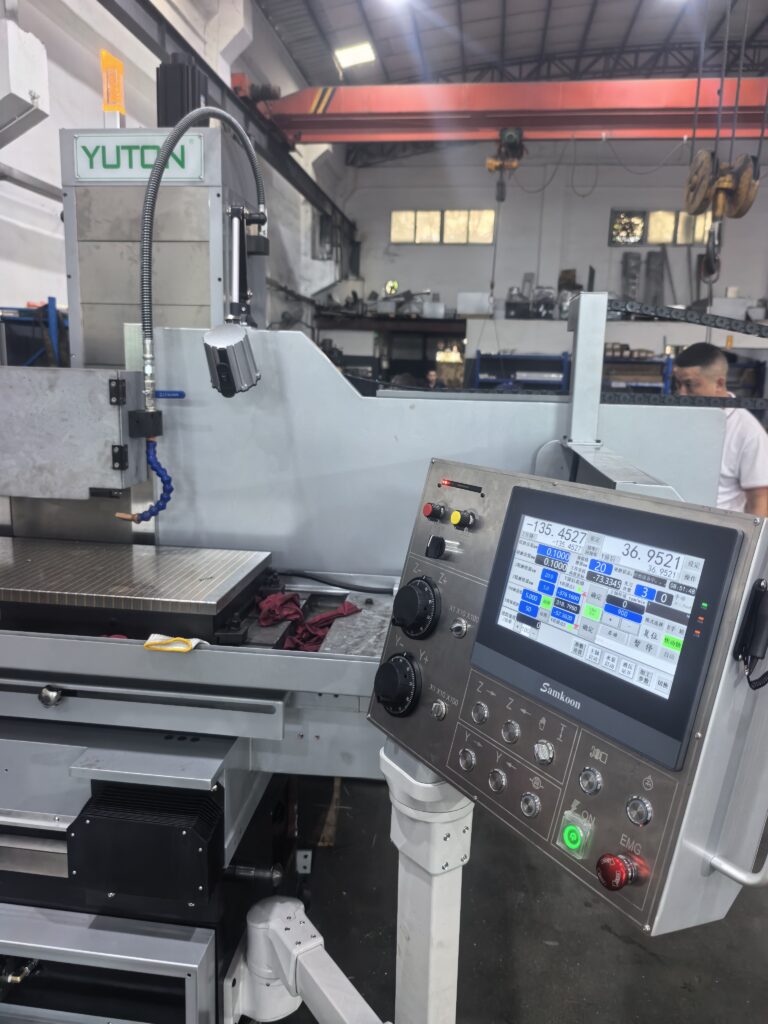
YUTON surface grinders are built from the ground up for demanding materials like stainless steel. Therefore, every machine uses Japanese NSK or NTN spindle bearings, Taiwanese hydraulic systems, and American-grade electromagnetic chucks — all proven under continuous stainless grinding loads. Furthermore, our 15,000 m² factory in Dongguan with 7 dedicated production buildings ensures consistent machine quality backed by ISO 9001 and CE certification. Consequently, with 3,100 units sold in 2025 — ranking top three in China — YUTON has the scale and experience that stainless steel grinders demand. Learn more at the YUTON homepage.
Machine Recommendations by Stainless Grade
- 304/316 (soft austenitic): M618 manual surface grinder for small batches; M7130 hydraulic for production.
- 410/420 (martensitic): CNC surface grinder with CBN wheel adapter for best results.
- 440C (high-carbon martensitic): CNC with full enclosure and high-pressure coolant — 10 bar minimum.
Moreover, every YUTON grinder includes a precision-ground table flat to 0.005 mm/m, which is essential for thin stainless parts that tend to warp. The European Commission’s machinery standards require such precision for CE-marked grinding equipment.
FAQ: Surface Grinding for Stainless Steel
Can you surface grind 304 stainless steel?
Yes, 304 stainless steel can be surface ground successfully. However, use a 46–60 grit aluminum oxide wheel, keep downfeed below 0.05 mm per pass, and flood with soluble oil coolant at 5–8% concentration. Therefore, watch for work hardening and dress the wheel frequently.
What wheel is best for grinding 440C stainless?
For 440C at HRC 55–62, a CBN wheel in 80–150 grit with vitrified bond delivers the best results. Furthermore, CBN lasts 5–10 times longer than aluminum oxide on hardened martensitic stainless. Consequently, the higher upfront cost pays off in batch production.
Why does my stainless steel burn when grinding?
Grinding burn on stainless steel is caused by excessive heat at the contact zone. Therefore, reduce downfeed, increase coolant flow, and use a sharper (softer-grade) wheel. Moreover, ensure the wheel is properly dressed — a loaded wheel generates far more friction and heat.
How much coolant do I need for stainless grinding?
Minimum 20 liters per minute per 100 mm of wheel width, delivered from both sides of the wheel. However, for high-carbon martensitic grades, increase to 30 L/min and consider high-pressure coolant at 7–10 bar. In addition, maintain filtration to 10 microns.
What surface finish can I achieve on stainless steel?
On austenitic grades like 304, expect Ra 0.2–0.4 μm with proper finishing parameters. Furthermore, on hardened 440C with a CBN wheel, Ra 0.1–0.2 μm is achievable. Consequently, the finish depends heavily on grit size, wheel condition, and machine rigidity — as confirmed by the Association for Manufacturing Technology.
Conclusion
Surface grinding for stainless steel is demanding but entirely manageable when you follow the right wheel selection, coolant strategy, and parameter choices. Therefore, match your abrasive to the grade, flood the zone with clean soluble-oil coolant, and keep downfeeds conservative. Moreover, a well-built grinder with rigid spindles, precision ways, and effective filtration makes all the difference — which is exactly what YUTON’s ISO 9001-certified, CE-marked surface grinders deliver. Furthermore, with 150 engineers, 15,000 m² of production space, and 3,100 units sold in 2025 using Japanese, Taiwanese, and American core components, YUTON has the expertise and scale to support your stainless grinding applications worldwide. Consequently, choose the right parameters, invest in the right machine, and stainless steel becomes a material you grind with confidence, not frustration.