
Why a Diamond Wheel Grinding Guide Matters
Standard abrasive wheels cannot cut materials above 45 HRC effectively. Diamond wheels solve this problem, but choosing the wrong specification causes rapid wheel wear, poor finish or workpiece cracking. A proper diamond wheel grinding guide prevents costly trial and error.
Materials that require diamond wheels include:
- Tungsten carbide: Indexable inserts, dies and wear parts
- Ceramics: Alumina, zirconia and silicon nitride components
- Glass and quartz: Optical lenses, display substrates and prisms
- Semiconductor materials: Silicon, SiC and sapphire wafers
- PCD and CBN tools: Polycrystalline diamond and cubic boron nitride cutting tools
For machines that handle these materials, see https://surfacegrindermfg.com/cnc-surface-grinder/. Automatic grinders from https://surfacegrindermfg.com/automatic-surface-grinder/ also support diamond wheel grinding for carbide fixture and die work.
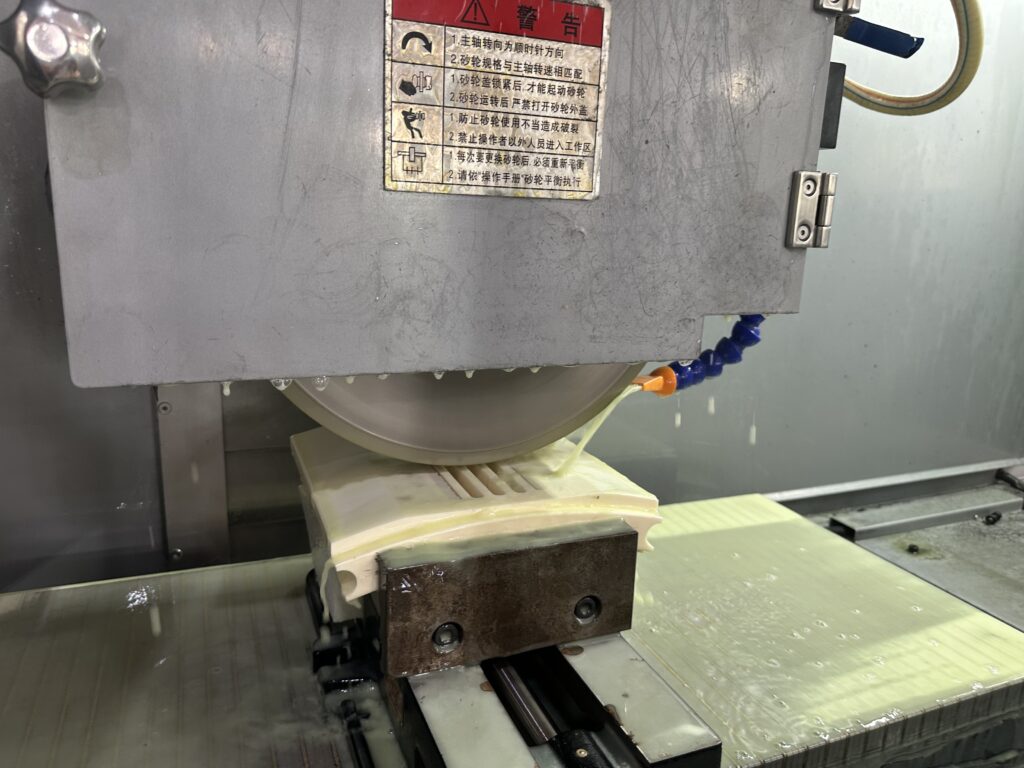
Diamond Wheel Bond Types
Bond type is the most important choice in any diamond wheel grinding guide:
Metal Bond
Sintered metal powder holds the diamond grains firmly. Metal bond wheels are extremely durable and hold their shape well. They are the top choice for profile grinding and high-material-removal applications on carbide and ceramics. However, they are harder to dress and require rotary diamond dressers.
Resin Bond
Phenolic or polyimide resin bonds hold the diamonds with moderate strength. Resin bond wheels cut freely, produce fine finishes and are easy to dress. They are the most versatile choice for surface grinding of hard materials. Most surface grinder operators prefer resin bond for general work — see https://surfacegrindermfg.com/.
Vitrified Bond
Glass-ceramic bonds create a porous wheel structure similar to conventional vitrified wheels. Vitrified diamond wheels offer excellent chip clearance, easy dressing and consistent performance. They are growing in popularity for high-production ceramic and carbide grinding.
Electroplated Bond
A single layer of diamond is nickel-plated onto a steel core. Electroplated wheels cut aggressively without dressing, but they have limited life because only one layer of diamond exists. They suit short-run or form grinding where dressing is impractical.
The Society of Manufacturing Engineers provides detailed bond selection references — see https://www.sme.org/.
Grit Size Selection
Grit size directly controls surface finish and cutting rate. A diamond wheel grinding guide must cover this clearly:
表格
| Application | Recommended Grit | Typical Ra (μm) |
|---|---|---|
| Roughing carbide | 80 – 120 | 1.6 – 3.2 |
| Semi-finish carbide | 150 – 220 | 0.4 – 1.6 |
| Finish grinding | 320 – 600 | 0.1 – 0.4 |
| Mirror polishing | 800 – 1200 | 0.02 – 0.1 |
Coarse grits remove material faster but leave rougher surfaces. Fine grits produce better finish but cut slower and generate more heat. Match your grit to the finish your part requires.
Diamond Concentration
Concentration refers to the volume of diamond in the wheel, expressed as a percentage of the theoretical maximum:
- Low concentration (50–75) : Fewer diamonds per unit volume. Each diamond carries more load but cuts more freely. Best for soft, gummy materials or when fast cutting matters more than wheel life.
- Medium concentration (100) : The standard balance between cutting speed and wheel life. Most general-purpose wheels use 100 concentration.
- High concentration (125–150) : More diamonds share the cutting load. Wheel life is longer and finish is finer, but cutting rate drops. Best for hard, brittle materials where finish and wheel life are priorities.
For precision grinding of ceramics and carbide, medium to high concentration is usually the right choice. The ISO 6106 standard defines diamond grit designations — see https://www.iso.org/.
Wheel Speed and Safety
Diamond wheel grinding guide safety is critical:
- Follow the speed rating: Every wheel has a maximum RPM marked on the label. Never exceed it. Overspeed causes wheel breakage, which is extremely dangerous.
- Use proper guards: Ensure the wheel guard covers at least 180 degrees of the wheel. Guards protect operators if a wheel fails.
- Mount correctly: Flanges must be clean, flat and the correct size for the wheel bore. Uneven mounting creates vibration and stress.
- Dress before use: New wheels may be slightly out of balance. Light dressing before the first grind improves safety and performance.
CE-marked machines meet strict safety requirements for wheel guarding and speed control. The European Commission publishes machinery safety directives — see https://ec.europa.eu/. Hydraulic and manual grinders from https://surfacegrindermfg.com/hydraulic-surface-grinder/ and https://surfacegrindermfg.com/manual-surface-grinder/ comply with these standards.
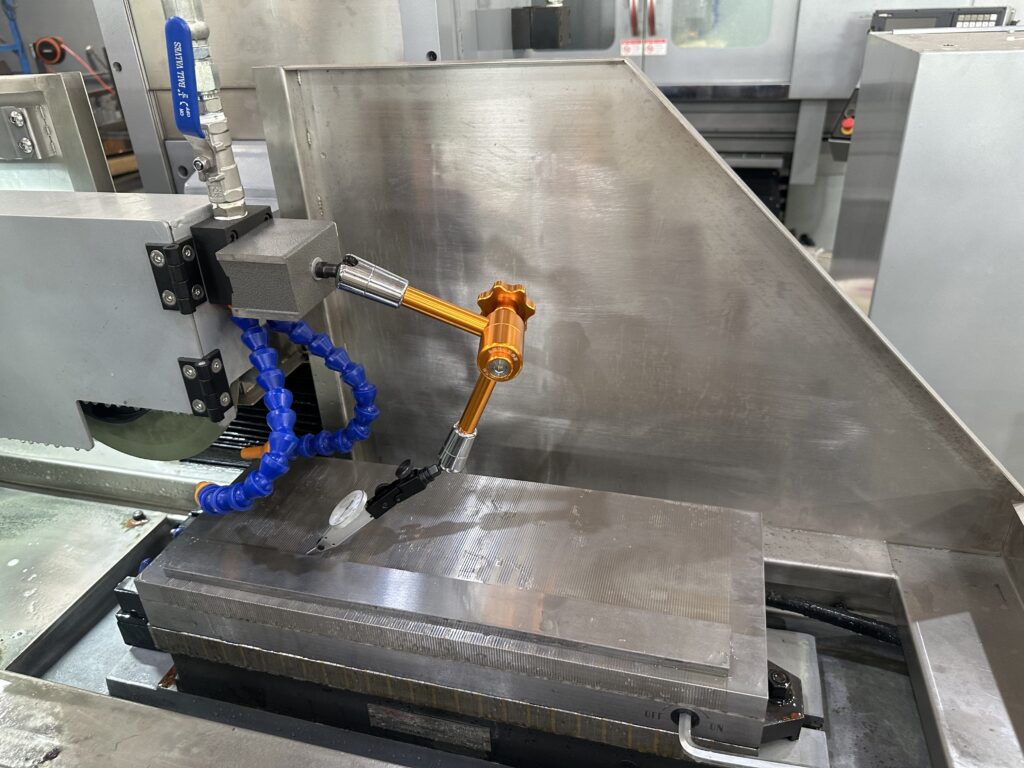
Common Mistakes in Diamond Wheel Grinding Guide Practice
Avoid these errors that a good diamond wheel grinding guide should warn against:
- Wrong bond for the material: Using a metal bond on a soft material causes loading and burning. Using a resin bond on very hard ceramics causes rapid wheel wear.
- Too coarse a grit for finish work: Switch to finer grit instead of reducing feed to achieve better finish.
- Insufficient coolant: Diamond grinding generates high heat. Flood coolant with proper nozzle placement is essential. Dry grinding with diamond wheels destroys the bond.
- Ignoring wheel balance: Unbalanced diamond wheels create chatter and poor finish. Balance before mounting and recheck after dressing.
- Over-dressing: Excessive dressing removes diamond particles and shortens wheel life. Dress just enough to restore sharpness.
Modern Manufacturing covers diamond wheel troubleshooting in detail — see https://www.mmsonline.com/. The Association for Manufacturing Technology also publishes grinding wheel application guides — see https://www.amtonline.org/.
Conclusion
This diamond wheel grinding guide covers the key choices: bond type, grit size, concentration, speed and common mistakes. Match your wheel specification to your material and application, follow safety rules and maintain proper coolant. The right diamond wheel on the right machine delivers superior finish and wheel life. For grinders designed for hard-material precision work, visit https://surfacegrindermfg.com/.