
Why a Surface Grinder for Semiconductor Work Matters
Semiconductor fabrication relies on ultra-flat surfaces at multiple stages. Wafer preparation, substrate thinning, ceramic package finishing and heat sink flattening all require precision grinding. Even minor flatness errors cause yield loss in downstream lithography and bonding processes. Therefore, selecting the right surface grinder for semiconductor production directly impacts your yield and cost per die.
ISO 14644 cleanroom standards affect grinding operations in semiconductor fabs — see https://www.iso.org/. Machines must minimize particle generation while maintaining precision.
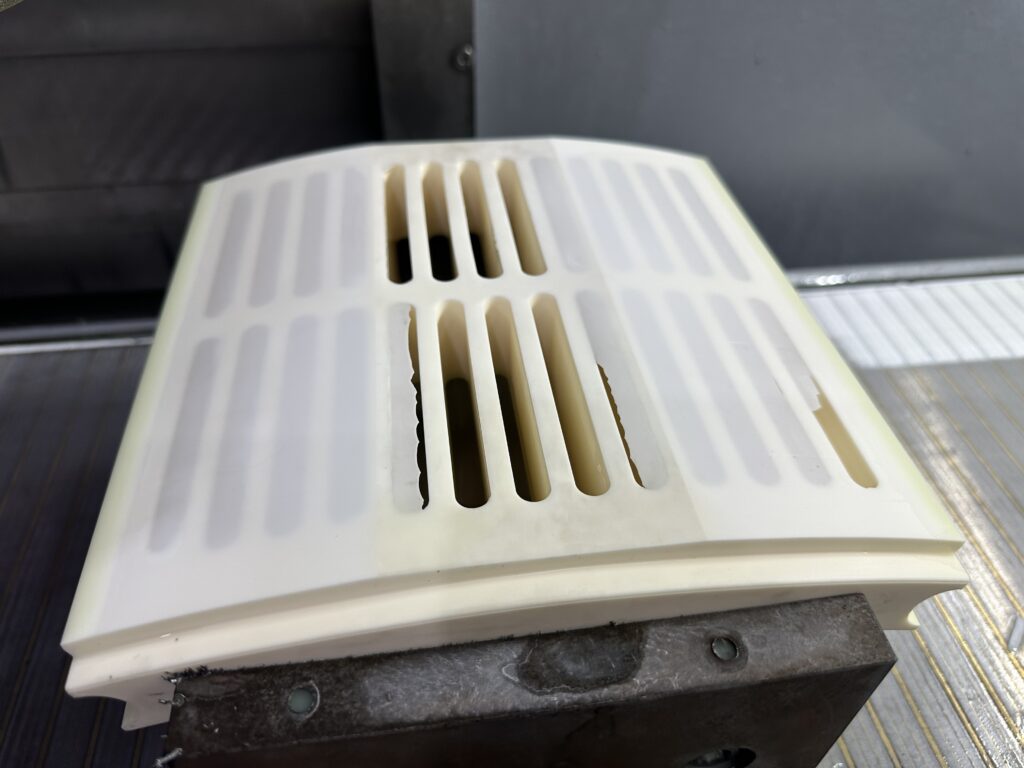
Key Semiconductor Grinding Applications
A surface grinder for semiconductor work handles several critical tasks:
Wafer and Substrate Processing
Silicon wafers, SiC wafers and sapphire substrates require extremely flat surfaces before epitaxial growth or device fabrication. Typical flatness requirements range from 0.5 to 2 micrometers across a 200 mm wafer. CNC grinders with fine infeed resolution are essential — see https://surfacegrindermfg.com/cnc-surface-grinder/.
Ceramic Package Finishing
Alumina and aluminum nitride ceramic packages protect IC chips. These packages need flat sealing surfaces for hermetic lid attachment. Grinding tolerances typically fall within ±5 micrometers.
Heat Sink and Lid Flattening
Copper, copper-tungsten and copper-molybdenum heat sinks require flat contact surfaces for thermal interface material application. Poor flatness creates air gaps that reduce thermal conductivity and cause device overheating.
Lead Frame and Substrate Flattening
Metal lead frames and organic substrates used in IC packaging need precise flatness for wire bonding and die attach. Surface grinding ensures uniform thickness across the frame.
Material Challenges in Semiconductor Grinding
A surface grinder for semiconductor applications faces unique material challenges:
- Brittle materials: Silicon, SiC and ceramics are extremely hard and brittle. They crack easily if grinding parameters are wrong. Diamond wheels with fine grit and low infeed rates are mandatory.
- Thermal sensitivity: Silicon wafers warp under thermal stress. Coolant delivery must be precise and consistent to prevent thermal damage.
- Contamination control: Cross-contamination between material types can ruin semiconductor processes. Dedicated wheels and thorough cleaning between jobs are essential.
- Sub-micron tolerances: Standard grinding tolerances are insufficient. Machines must support infeed increments of 0.001 mm or finer.
These challenges require machines built for precision and stability. For manual grinding of less critical semiconductor fixture parts, see https://surfacegrindermfg.com/manual-surface-grinder/. Explore all options at https://surfacegrindermfg.com/.
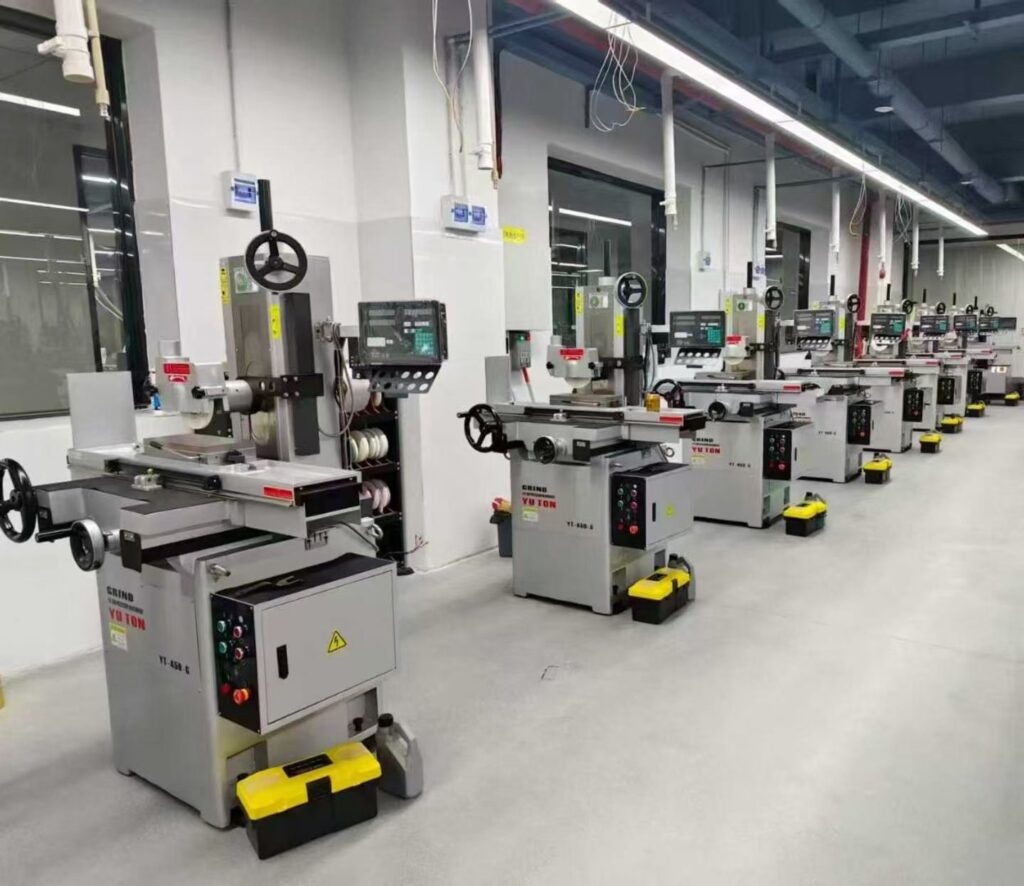
Choosing a Surface Grinder for Semiconductor Work
When selecting a surface grinder for semiconductor applications, prioritize these features:
- CNC control: Programmable infeed with sub-micron resolution ensures consistent results across batches. Manual machines cannot match this repeatability.
- Granite or composite base: Vibration-dampening base materials reduce chatter, which is critical for brittle materials. Cast iron bases with vibration isolation are also effective.
- Diamond wheel compatibility: The spindle and dresser must support diamond and CBN wheels at appropriate speeds.
- Precision coolant system: Filtered coolant with controlled flow and temperature prevents thermal distortion and contamination.
- Automatic dressing: Integrated diamond wheel dressing maintains wheel geometry without operator intervention, improving consistency.
CNC surface grinders from https://surfacegrindermfg.com/cnc-surface-grinder/ offer these capabilities. For smaller semiconductor shops, hydraulic grinders from https://surfacegrindermfg.com/hydraulic-surface-grinder/ can handle less critical ceramic and metal parts. Automatic models at https://surfacegrindermfg.com/automatic-surface-grinder/ also suit mid-volume semiconductor fixture production.
The Association for Manufacturing Technology covers semiconductor equipment specifications — see https://www.amtonline.org/.
Surface Grinder for Semiconductor: Cleanroom Considerations
Semiconductor grinding often occurs near or within cleanroom environments. Key considerations include:
- Particle containment: Grinding generates particles. Enclosed machine designs with integrated mist collectors reduce contamination risk.
- Cleanroom-compatible fluids: Standard grinding coolant may not meet cleanroom requirements. Use deionized water-based coolants or specialized low-residue fluids where necessary.
- Machine placement: Many facilities position grinding equipment in gray rooms adjacent to cleanrooms, with controlled transfer protocols between areas.
The European Commission publishes standards for equipment in controlled environments — see https://ec.europa.eu/.
Process Tips for Semiconductor Grinding
Follow these practices to maximize yield when using a surface grinder for semiconductor work:
- Start with light infeed: Use 0.002 to 0.005 mm per pass for brittle materials. Increase only after confirming no cracking.
- Monitor wheel condition closely: Dress diamond wheels frequently to prevent loading and maintain sharpness.
- Control coolant temperature: Keep coolant within ±2°C of ambient to minimize thermal distortion.
- Measure after every pass: Use non-contact measurement for brittle wafers. Contact probes can damage delicate surfaces.
- Clean between material changes: Thoroughly clean the chuck, wheel guard and coolant system when switching between silicon, ceramic and metal parts.
Modern Manufacturing provides process optimization guides for precision grinding — see https://www.mmsonline.com/. The Society of Manufacturing Engineers also covers advanced grinding techniques for electronics manufacturing — see https://www.sme.org/.
Conclusion
A surface grinder for semiconductor work must meet exceptional demands: sub-micron tolerances, brittle material handling, contamination control and cleanroom compatibility. CNC machines with diamond wheel support, fine infeed resolution and precision coolant systems are the right choice for most semiconductor grinding tasks. For reliable machines engineered for precision, visit https://surfacegrindermfg.com/.