
Common Sources of Surface Grinder Vibration
Vibration in a surface grinder can come from several places. Understanding each source is the first step in surface grinder vibration troubleshooting:
- Wheel imbalance: The most frequent cause. A new wheel is rarely perfectly balanced. As it wears unevenly, imbalance grows.
- Spindle bearing wear: Worn bearings create vibration that increases with spindle speed. This is a serious issue that worsens over time.
- Workpiece or fixture looseness: If the part is not secured properly on the magnetic chuck, it vibrates during grinding.
- Resonance from the floor: Machines mounted on weak foundations or near other heavy equipment pick up external vibration.
- Wheel dressing issues: A poorly dressed wheel runs out of round and creates chatter. Review your dressing procedure if you have not already seen our grinding wheel dressing guide.
Each of these sources produces different vibration patterns. Therefore, proper diagnosis is essential before you attempt any fix.
Surface Grinder Vibration Troubleshooting: Diagnosis Steps
Follow this diagnostic sequence for effective surface grinder vibration troubleshooting:
- Run the spindle without the wheel: If vibration persists, the spindle bearings are likely the cause. If it runs smooth, the problem is wheel-related.
- Check wheel balance: Mount the wheel and use a balancing stand. Spin it slowly and watch where it stops. The heavy side always goes to the bottom.
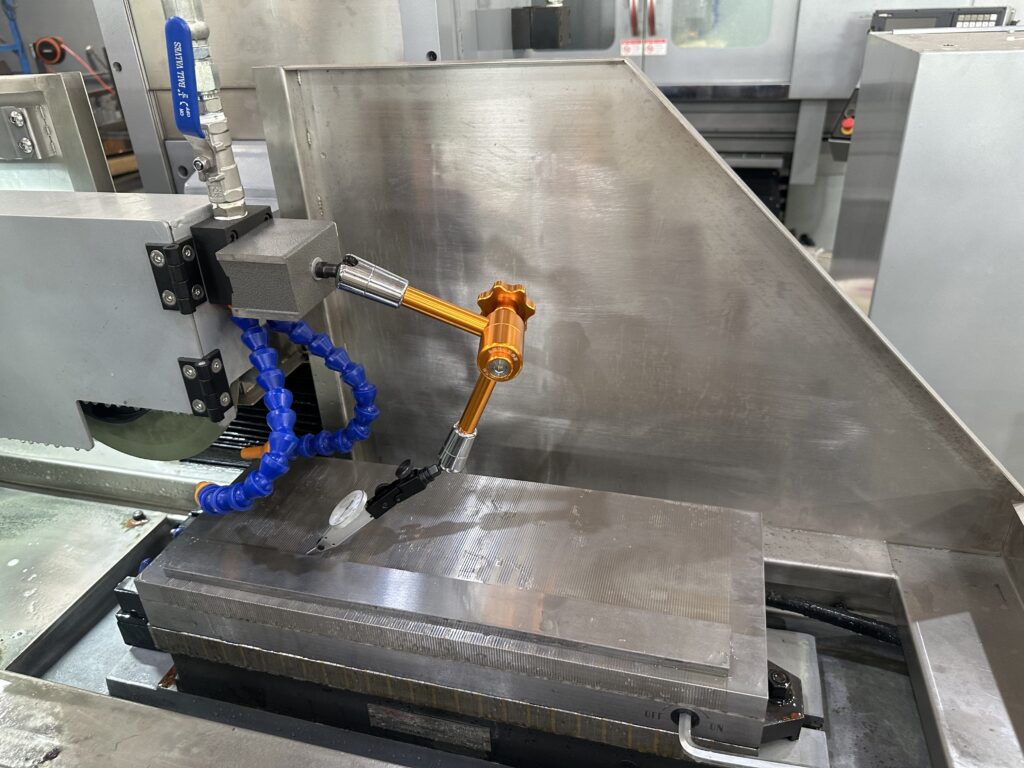
- Inspect the magnetic chuck: Place a dial indicator on the chuck surface. Run the machine and watch for any movement above 0.002 mm.
- Check the foundation: Place a glass of water on the machine table while nearby equipment runs. Ripples in the water indicate external vibration.
- Test after dressing: Dress the wheel and run a test part. If the chatter marks change or disappear, the root cause was the wheel condition.
This systematic approach saves time. ISO 10816 provides vibration measurement standards for rotating machinery — see https://www.iso.org/ for details.
Fixing Wheel Imbalance
Wheel imbalance is the most common finding in surface grinder vibration troubleshooting. Here is how to fix it:
- Balance the wheel before mounting: Use a balancing stand with two parallel bars. Add balance weights to the flange until the wheel stays in any rotational position.
- Rebalance after dressing: Dressing changes the wheel geometry. Recheck balance after the first dressing on a new wheel.
- Use pre-balanced wheel adapters: Some modern grinders come with balanced flanges that reduce setup time. Machines like those at https://surfacegrindermfg.com/cnc-surface-grinder/ are designed for precision balance requirements.
For shops running hydraulic or automatic grinders at high production rates, wheel balance directly affects part consistency. See https://surfacegrindermfg.com/hydraulic-surface-grinder/ and https://surfacegrindermfg.com/automatic-surface-grinder/ for grinders built for stable operation.
Addressing Spindle Bearing Problems
Spindle bearing wear is the second most serious cause of vibration. Signs include:
- Vibration that increases with spindle RPM
- A rough or growling sound during operation
- Excessive heat at the spindle housing
- Visible runout when you check with a dial indicator
If you confirm bearing wear, the fix is replacement. This is not a DIY job for most shops — it requires precision reassembly and runout verification. However, you can slow bearing wear by following proper maintenance. Clean coolant filters, avoid crashing the wheel into the workpiece, and follow the spindle break-in procedure for new machines. The Association for Manufacturing Technology publishes bearing maintenance guidelines — see https://www.amtonline.org/.
Fixing Workpiece and Fixture Issues
Sometimes the vibration source is simple:
- Clean the magnetic chuck: Debris between the chuck and the workpiece creates gaps that allow the part to vibrate. Wipe the chuck before every setup.
- Use enough holding force: Thin or tall parts may need additional clamps beyond the magnetic hold. If the part rocks or lifts, add mechanical clamps.
- Check parallelism: If the workpiece is not flat on the chuck, only part of the surface makes contact. The unsupported area vibrates during grinding.
These are the easiest fixes in surface grinder vibration troubleshooting, so always check them first before moving to more complex diagnosis.
Foundation and Environmental Vibration
External vibration often goes overlooked. If your grinder sits on a weak or shared foundation, vibration from nearby presses, compressors or forklifts can travel through the floor into your machine. Solutions include:
- Isolation pads: Rubber or pneumatic pads under the machine feet absorb external vibration.
- Independent foundation: For the highest precision, pour a dedicated concrete block separated from the main floor by vibration isolation material.
- Relocate the grinder: Move the machine away from heavy impact equipment if possible.
Precision grinders from https://surfacegrindermfg.com/ deliver excellent results when properly installed. The European Commission publishes machine installation standards that include foundation requirements — see https://ec.europa.eu/.
Surface Grinder Vibration Troubleshooting: Prevention Tips
Prevention is always cheaper than repair. Here are habits that reduce vibration problems:
- Balance every new wheel before use — never skip this step.
- Dress the wheel regularly to maintain geometry and sharpness.
- Check spindle temperature daily — unusual heat signals bearing trouble early.
- Clean the magnetic chuck after every job to ensure solid workpiece contact.
- Schedule bearing inspection at manufacturer-recommended intervals.
The Society of Manufacturing Engineers recommends building vibration checks into your preventive maintenance routine — see https://www.sme.org/. Modern Manufacturing also covers predictive approaches to spindle health — see https://www.mmsonline.com/.
Surface Grinder Vibration Troubleshooting by Machine Type
Your machine type affects how vibration appears and what you can adjust. Manual surface grinders give the operator direct feel for chatter through the handwheel. PLC and hydraulic grinders may mask early vibration because the feed is automated. CNC grinders often include vibration sensors and monitoring software that alert operators before quality suffers. For more on machine types, visit https://surfacegrindermfg.com/ and see https://surfacegrindermfg.com/manual-surface-grinder/.
Conclusion
Surface grinder vibration troubleshooting starts with systematic diagnosis: isolate the source, then apply the right fix. Wheel imbalance, bearing wear, loose fixtures and foundation issues account for most vibration problems. Balance your wheels, maintain your spindle, clean your chuck and isolate your foundation. These steps keep your grinding smooth, your parts precise and your machine running longer. For grinders engineered for stable precision, visit https://surfacegrindermfg.com/.