
Smart manufacturing is transforming every corner of the machine shop, and surface grinding is no exception. A smart manufacturing surface grinder connects sensors, software, and automation to deliver real-time visibility, predictive maintenance, and data-driven process control. This guide explains the core technologies, measurable benefits, and practical steps to bring smart grinding into your shop in 2026.
What Is a Smart Manufacturing Surface Grinder?
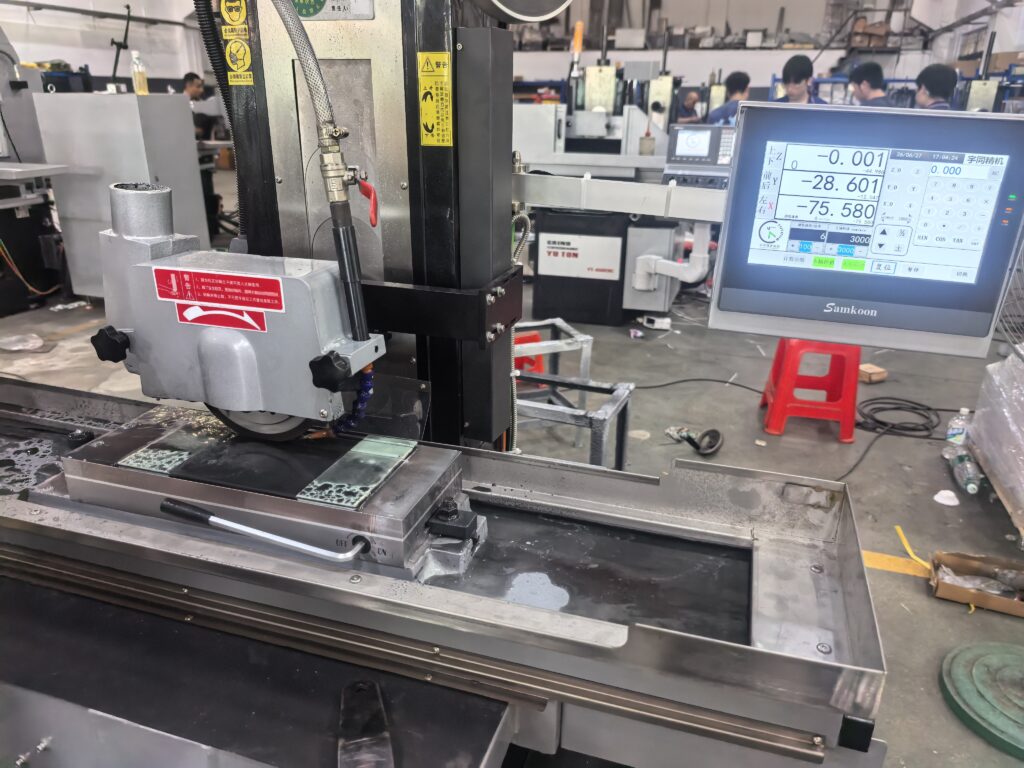
A smart manufacturing surface grinder integrates digital technologies into every stage of the grinding process. Unlike traditional machines that operate independently, a smart grinder communicates with other equipment, collects real-time data, and uses that data to optimize performance automatically.
According to ISO’s smart manufacturing framework (https://www.iso.org/), a smart factory connects physical assets with digital systems to enable real-time monitoring, remote diagnostics, and autonomous decision-making. In surface grinding, this means the machine tracks its own condition, adjusts parameters on the fly, and alerts operators before problems occur.
Key characteristics of a smart surface grinder include:
- Networked connectivity (IIoT protocols like OPC-UA or MQTT)
- Real-time sensor monitoring (vibration, temperature, force, power)
- Automated process control with adaptive feedback
- Predictive maintenance based on actual machine condition
- Integration with Manufacturing Execution Systems (MES) and ERP platforms
Core Technologies Behind Smart Grinding
Several technologies work together to make a surface grinder “smart.”
IoT Sensors and Connectivity
Modern CNC surface grinders are equipped with arrays of sensors that monitor spindle vibration, wheel wear, coolant temperature, cutting force, and motor current. These sensors feed data to edge computing units or cloud platforms where analytics software detects patterns and anomalies.
With IIoT connectivity, shop managers can monitor machine status from anywhere—on the shop floor, in the office, or even remotely from another facility. This level of visibility was impossible just a decade ago.
Automated Process Control
Smart grinders use closed-loop control systems that adjust grinding parameters in real time. If the sensor detects increasing cutting forces (indicating wheel wear), the system compensates by adjusting feed rate or triggering an automatic dress cycle. This keeps part quality consistent throughout the wheel’s life without operator intervention.
YUTON’s CNC surface grinders (https://surfacegrindermfg.com/cnc-surface-grinder/) feature advanced control systems that support adaptive grinding workflows, reducing variability and improving first-pass yield.
Predictive Maintenance
Rather than following fixed maintenance intervals, smart machines predict when maintenance is actually needed. By analyzing trends in vibration, temperature, and power consumption, the system can forecast bearing wear, ball screw degradation, or hydraulic pump failure weeks before a breakdown occurs.
This approach reduces unplanned downtime and extends component life. According to the Society of Manufacturing Engineers (https://www.sme.org/), predictive maintenance programs in grinding operations have reduced unplanned downtime by up to 40% and maintenance costs by 25%.
Data Analytics and Digital Twins
Advanced smart manufacturing surface grinders feed operational data into analytics platforms that generate actionable insights. Dashboards display Overall Equipment Effectiveness (OEE), cycle time trends, wheel consumption rates, and energy usage per part.
Some facilities go further by creating digital twins—virtual replicas of the grinding process that simulate how parameter changes affect quality and productivity. This allows engineers to test new strategies offline before applying them on the shop floor.
Business Benefits of Smart Grinding
Investing in smart manufacturing technology delivers returns across multiple dimensions.
Higher Quality and Consistency
Real-time monitoring and closed-loop control eliminate the variation that causes scrap. Parts stay within tolerance throughout long production runs, and the system flags any drift before it produces defective components. Shops that adopt smart grinding typically see scrap reduction of 30–50%.
Increased Productivity
Automated dressing, adaptive feed control, and reduced setup times all contribute to higher throughput. Smart automatic surface grinders (https://surfacegrindermfg.com/automatic-surface-grinder/) can run untended for extended periods, enabling lights-out production on suitable parts. OEE improvements of 15–30% are common after implementation.
Lower Operating Costs
Predictive maintenance prevents expensive emergency repairs. Energy monitoring identifies machines that consume excess power. Wheel life optimization reduces consumable spending. Together, these savings often deliver payback within 12–18 months.
Better Decision-Making
Data-driven insights replace guesswork. Instead of relying on operator experience alone, managers can see exactly how each machine performs, where bottlenecks occur, and which processes deliver the best margins. According to manufacturing intelligence research (https://www.mmsonline.com/), shops that use real-time production data improve delivery performance by 20% and reduce quoting errors by 15%.
How to Implement Smart Grinding in Your Shop
Transitioning to smart manufacturing does not require replacing every machine overnight. Follow these practical steps:
Step 1: Assess Current Capabilities
Audit your existing surface grinders. Identify which machines already have digital interfaces or sensor ports. Even older machines can often be retrofitted with external sensors and edge gateways to begin collecting data.
Step 2: Start with Visibility
Before implementing automation, focus on visibility. Install sensors on your most critical machines and connect them to a monitoring platform. Simply seeing real-time data on spindle load, cycle counts, and downtime events reveals opportunities you may not have noticed.
Step 3: Upgrade to Connected Equipment
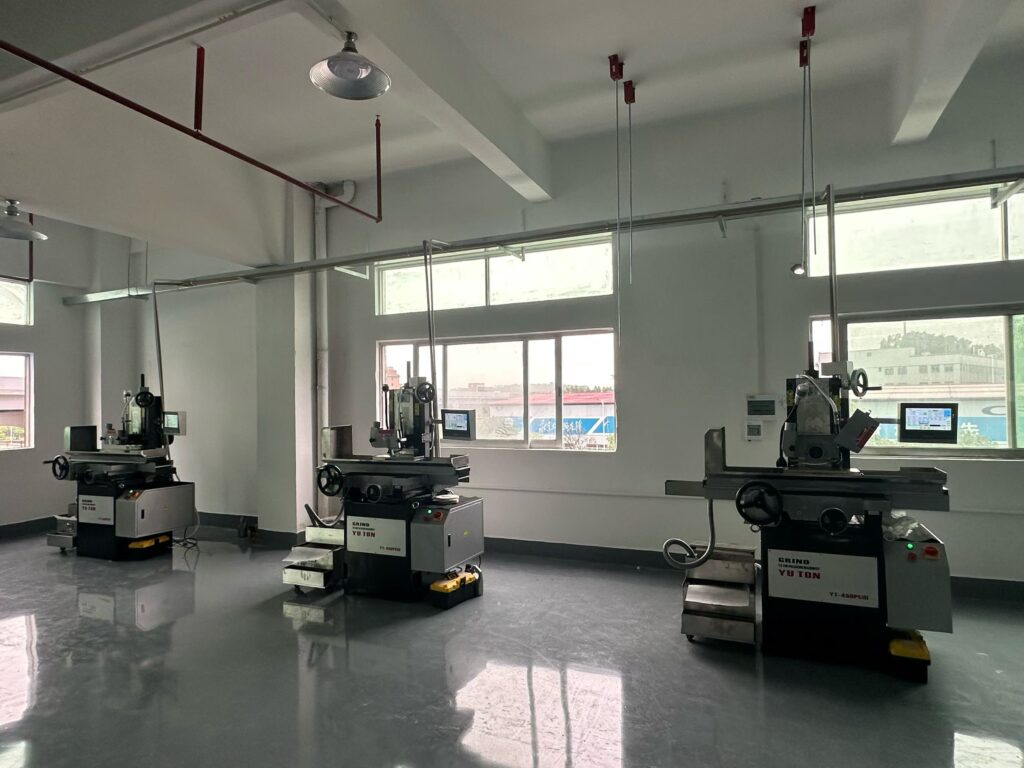
When it is time to replace or add machines, choose models with built-in IIoT connectivity and open communication protocols. YUTON’s automatic surface grinders (https://surfacegrindermfg.com/automatic-surface-grinder/) are designed with modern connectivity standards, making integration into existing smart factory infrastructure straightforward.
Step 4: Integrate with Existing Systems
Connect your grinding data to your MES, ERP, or quality management system. This integration allows production schedules to account for actual machine availability, quality data to flow automatically into inspection reports, and maintenance alerts to generate work orders without manual input.
Step 5: Train Your Team
Technology alone does not deliver results. Train operators to interpret dashboard data, respond to predictive alerts, and use digital work instructions. According to industry training standards from AMT (https://www.amtonline.org/), shops that invest in workforce training alongside technology adoption see 2–3 times faster return on investment.
Smart Grinding Trends to Watch in 2026 and Beyond
The smart manufacturing landscape for surface grinding continues to evolve rapidly.
AI-Powered Process Optimization
Artificial intelligence and machine learning algorithms are moving beyond simple pattern recognition. Modern AI systems can analyze thousands of grinding cycles to identify optimal parameters for new materials or part geometries, reducing the trial-and-error that traditionally slows process development.
According to the European Commission’s digital manufacturing initiative (https://ec.europa.eu/), AI-driven process optimization in European precision manufacturing facilities has already demonstrated 10–20% improvements in cycle time and 25% reductions in energy consumption per part.
Cloud-Based Grinding Intelligence
Cloud platforms aggregate data from multiple machines and facilities, enabling benchmarking across shops and continents. A shop in Germany can compare its wheel consumption rates with industry averages, while a facility in the USA receives software updates and new analytics features delivered over the air.
Collaborative Robotics Integration
Smart surface grinders increasingly work alongside collaborative robots (cobots) that handle part loading, unloading, and inspection. This combination enables flexible automation cells that can switch between part families with minimal changeover time.
Digital Thread and Traceability
Full digital thread integration connects every data point from raw material to finished part. In regulated industries like aerospace and medical devices, this traceability simplifies compliance documentation and enables rapid root-cause analysis if quality issues arise.
Choosing the Right Smart Manufacturing Surface Grinder
When evaluating smart surface grinding solutions, consider these criteria:
表格
| Criterion | What to Look For |
|---|---|
| Connectivity | Open protocols (OPC-UA, MQTT, MTConnect) |
| Sensor suite | Vibration, force, temperature, power monitoring |
| Control system | Adaptive control, automated dressing, recipe management |
| Data output | API access, dashboard availability, MES integration |
| Scalability | Modular architecture that grows with your needs |
| Support | Supplier with smart manufacturing expertise and remote support capability |
For manufacturers exploring their first smart grinding investment, YUTON provides CNC and automatic surface grinders (https://surfacegrindermfg.com/) built with Industry 4.0 readiness. Their machines combine Japanese, Taiwanese, and American core components with modern digital interfaces, delivering both precision and connectivity.
For shops still operating manual equipment, understanding the gap between current capabilities and smart manufacturing goals is the first step. Manual surface grinders (https://surfacegrindermfg.com/manual-surface-grinder/) remain essential for toolroom work, but planning a phased upgrade path toward connected, automated equipment positions your shop for long-term competitiveness.
Final Thoughts
A smart manufacturing surface grinder is more than a machine—it is a connected, data-driven production asset that improves quality, reduces cost, and increases flexibility. The technology is mature, the return on investment is proven, and the competitive pressure to adopt is growing.
Whether you start with sensor retrofits on existing machines or invest in new connected CNC grinders, the key is to begin. Every piece of data you collect and every process you optimize moves your shop closer to the smart factory of the future.