
The surface grinder vs milling machine debate is one of the most common questions in metalworking. Both machines remove material to shape workpieces, but they do so in fundamentally different ways. Understanding these differences is crucial for choosing the right equipment for your manufacturing needs.
Surface grinders use abrasive wheels to remove material, achieving exceptional surface finishes and tight tolerances. Milling machines, on the other hand, use rotary cutters with defined cutting edges to remove material. Consequently, each machine excels in different applications and offers distinct advantages.
Moreover, many manufacturers wonder whether they need one machine or both. The answer depends on your specific requirements: precision needs, surface finish demands, production volume, and budget. In this comprehensive guide, we’ll compare surface grinders and milling machines across all critical factors to help you make an informed decision.
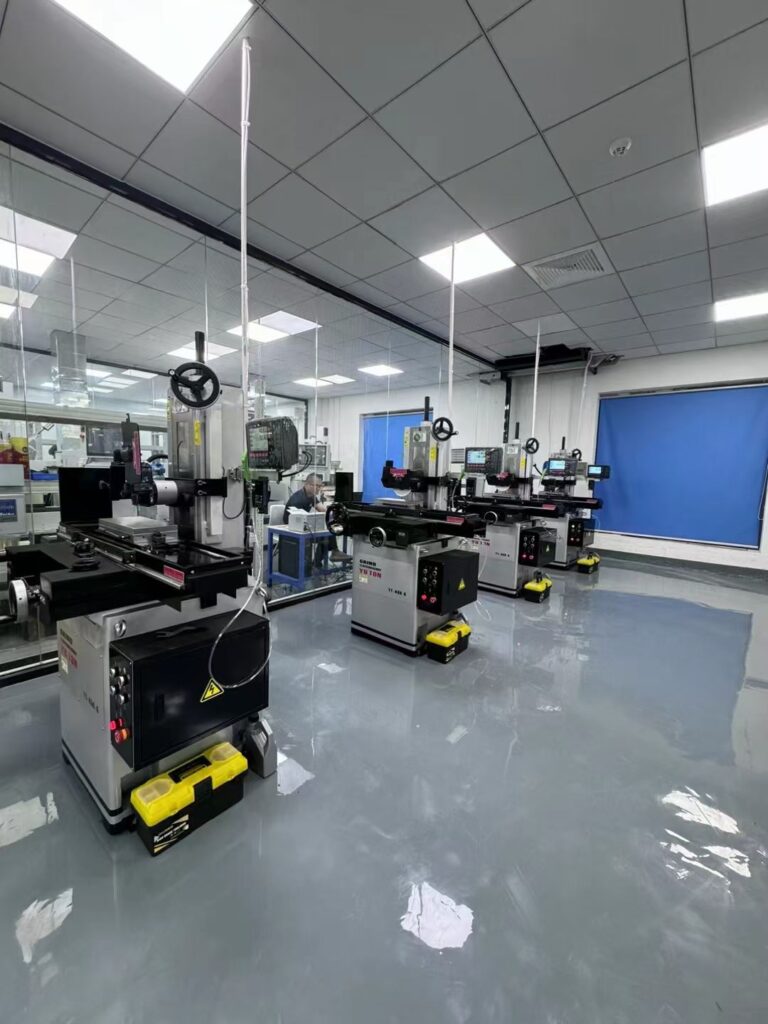
At YUTON, we manufacture precision surface grinders for demanding applications worldwide. With 15 years of grinding expertise and over 3,100 units sold annually, we understand when grinding is the right choice—and when other processes might be more appropriate.
Understanding the Fundamental Differences
The surface grinder vs milling machine debate is one of the most common questions in metalworking. Both machines remove material to shape workpieces, but they do so in fundamentally different ways. Understanding these differences is crucial for choosing the right equipment for your manufacturing needs.
Surface grinders use abrasive wheels to remove material, achieving exceptional surface finishes and tight tolerances. Milling machines, on the other hand, use rotary cutters with defined cutting edges to remove material. Consequently, each machine excels in different applications and offers distinct advantages.
Moreover, many manufacturers wonder whether they need one machine or both. The answer depends on your specific requirements: precision needs, surface finish demands, production volume, and budget. In this comprehensive guide, we’ll compare surface grinders and milling machines across all critical factors to help you make an informed decision.
At YUTON, we manufacture precision surface grinders for demanding applications worldwide. With 15 years of grinding expertise and over 3,100 units sold annually, we understand when grinding is the right choice—and when other processes might be more appropriate.
How Surface Grinders Work
The Grinding Process
Surface grinding uses a rotating abrasive wheel to remove material from a workpiece surface. The wheel consists of thousands of hard, sharp abrasive grains bonded together. As the wheel rotates at high speed (typically 2,000–3,500 RPM), these grains cut tiny chips from the workpiece.
The workpiece is mounted on a reciprocating table that moves back and forth beneath the grinding wheel. After each pass, the wheel feeds down slightly (depth of cut typically 0.01–0.05mm) to remove more material. This process continues until the desired dimensions and surface finish are achieved.
Types of Surface Grinders
Surface grinders come in several configurations:
Manual Surface Grinders: Operator controls all movements. Ideal for toolrooms, prototype work, and low-volume production. Manual surface grinders offer flexibility and lower cost.
Automatic Surface Grinders: Programmable controls automate table movement and wheel feed. These machines deliver consistent quality at higher production rates. Automatic surface grinders are ideal for volume production.
CNC Surface Grinders: Computer-controlled multi-axis machines handle complex geometries and multiple operations. CNC surface grinders offer maximum flexibility and precision.
Hydraulic Surface Grinders: Use hydraulic drives for smooth, powerful operation. Hydraulic surface grinders excel at heavy-duty grinding and large workpieces.
Key Characteristics
Surface grinders are characterized by:
- Exceptional surface finish capability (Ra 0.1–0.8μm typical)
- Tight tolerance achievement (2–10μm standard)
- Lower material removal rates than milling
- Excellent for flat surfaces and precise dimensions
- Ability to grind hardened materials
How Milling Machines Work
The Milling Process
Milling uses a rotating cutter with multiple cutting edges (teeth) to remove material. The cutter spins at high speed while the workpiece is fed into it, either manually or automatically. Each cutting edge removes a chip of material as it contacts the workpiece.
Milling machines can move the workpiece in multiple axes (X, Y, Z), enabling complex shapes, slots, pockets, holes, and contours. This versatility makes milling one of the most widely used machining processes.
Types of Milling Machines
Milling machines come in various configurations:
Vertical Milling Machines: Spindle axis is vertical. Common for general-purpose milling, drilling, and boring operations.
Horizontal Milling Machines: Spindle axis is horizontal. Ideal for heavy cutting, slotting, and gear cutting.
CNC Milling Machines: Computer-controlled machines offer programmable multi-axis movement. CNC mills handle complex parts with high repeatability.
Bed Mills and Turret Mills: Different structural configurations for various applications and workpiece sizes.
Key Characteristics
Milling machines are characterized by:
- High material removal rates
- Versatility in creating complex shapes
- Good surface finish (Ra 1.6–6.3μm typical)
- Moderate tolerance capability (10–50μm standard)
- Ability to machine a wide range of materials
- Multiple operations in single setup
Surface Grinder vs Milling Machine: Precision Comparison
Tolerance Capability
When comparing surface grinder vs milling machine precision, grinders clearly win. Surface grinders routinely achieve tolerances of 2–10μm (0.0001–0.0004″), with high-end machines reaching sub-micron accuracy. This makes grinders essential for applications demanding extreme precision.
Milling machines typically hold tolerances of 10–50μm (0.0005–0.002″). While CNC mills can achieve tighter tolerances under optimal conditions, they generally cannot match grinding precision consistently.
For example, if you’re manufacturing gauge blocks, die components, or precision shafts requiring 5μm tolerance, a surface grinder is your only choice. However, for general machined parts with 25μm tolerance requirements, a milling machine may be sufficient and more economical.
Dimensional Accuracy
Surface grinders excel in dimensional accuracy due to their rigid construction, precise feed mechanisms, and the nature of abrasive cutting. The grinding process removes minimal material per pass, allowing fine control over final dimensions.
Milling machines, while accurate, experience more deflection and vibration due to higher cutting forces. This can affect dimensional accuracy, particularly in heavy cuts or long overhangs.
Geometric Accuracy
For flatness, parallelism, and squareness, surface grinders outperform milling machines. The grinding wheel’s fine abrasive action produces exceptionally flat surfaces. This is why precision surface plates, machine ways, and fixture surfaces are ground rather than milled.
Milling machines can produce flat surfaces, but achieving the same geometric accuracy requires multiple passes, careful setup, and often isn’t as consistent as grinding.
Surface Finish Quality: Grinding vs Milling
Surface Finish Values
Surface finish is where surface grinders truly shine. Typical grinding produces Ra values of 0.1–0.8μm (4–32 RMS). Fine grinding can achieve Ra 0.05μm (2 RMS) or better. These mirror-like finishes are essential for sealing surfaces, bearing interfaces, and fatigue-critical components.
Milling typically produces Ra values of 1.6–6.3μm (63–250 RMS). While this is acceptable for many applications, it’s significantly rougher than grinding. Finish milling with sharp tools and light cuts can achieve Ra 0.8–1.6μm, but still falls short of grinding quality.
Applications Requiring Superior Finish
Applications demanding superior surface finish include:
- Hydraulic cylinder rods and valve bodies
- Bearing races and shafts
- Sealing surfaces and gasket faces
- Optical mounts and precision fixtures
- Mold and die cavity surfaces
- Medical implants and surgical instruments
For these applications, surface grinding is not just preferred—it’s often mandatory. Milling simply cannot achieve the required finish quality.
Post-Milling Grinding
Many manufacturers use a combination: milling for rapid material removal and rough shaping, followed by grinding for final finish and precision. This approach leverages the strengths of both processes while minimizing their weaknesses.
Material Removal Rates and Productivity
Milling Advantages
When comparing surface grinder vs milling machine productivity, milling wins decisively. Milling machines remove material 5–20 times faster than surface grinders. A milling cutter might remove 100–500 cm³/hour, while a surface grinder removes only 5–50 cm³/hour.
This dramatic difference means milling is preferred for:
- Roughing operations
- Removing large amounts of material
- Initial part shaping
- High-volume production of non-critical features
Grinding Limitations
Surface grinding’s slower material removal stems from the abrasive process. Each abrasive grain removes only a tiny chip. While modern grinding wheels and high-speed grinders have improved removal rates, they still cannot match milling productivity.
However, grinding’s slower rate is offset by:
- Less setup time for precision work
- No need for multiple finishing operations
- Ability to grind hardened materials (eliminating pre-hardening machining)
Production Considerations
For high-volume production of simple shapes, milling is typically faster and more economical. For high-precision components requiring tight tolerances and fine finishes, grinding may actually be faster overall because it eliminates secondary finishing operations.
When to Choose a Surface Grinder
Precision Applications
Choose surface grinding when your application demands:
- Tolerances tighter than ±10μm
- Surface finishes better than Ra 1.6μm
- Exceptional flatness, parallelism, or squareness
- Dimensional stability in hardened materials
Specific Use Cases
Surface grinders are ideal for:
- Die and mold work: Cavity surfaces, parting lines, core pins
- Gauge and fixture manufacturing: Precision reference surfaces
- Shaft and bearing work: Journal surfaces, bearing races
- Hydraulic components: Valve bodies, cylinder rods, pump parts
- Medical devices: Surgical instruments, implant surfaces
- Aerospace components: Turbine blades, landing gear parts
Material Considerations
Surface grinding excels with:
- Hardened steels (HRC 50+)
- Carbides and ceramics
- Materials difficult to mill due to hardness
- Materials requiring stress-free finishing
When Grinding is Mandatory
Some applications simply require grinding:
- Hardened tool steel dies and molds
- Precision gauge blocks and masters
- Hydraulic spools and valves
- Bearing races and balls
- Seal faces and gasket surfaces
For these applications, milling cannot achieve the required precision or finish.
When to Choose a Milling Machine
Versatility and Speed
Choose milling when your application involves:
- Complex 3D shapes and contours
- Multiple features (holes, slots, pockets)
- High material removal requirements
- General-purpose machining
Specific Use Cases
Milling machines are ideal for:
- Prototype development: Quick part creation
- Structural components: Frames, brackets, housings
- Gear manufacturing: Gear cutting and hobbing
- Pattern making: Complex contours and shapes
- Production machining: High-volume part features
- Roughing operations: Initial material removal before grinding
Material Considerations
Milling works well with:
- Soft to medium-hard steels
- Aluminum and non-ferrous metals
- Plastics and composites
- Materials in annealed or pre-hardened condition
When Milling is Sufficient
Milling is adequate when:
- Tolerances of ±25μm are acceptable
- Surface finish Ra 3.2μm or rougher is acceptable
- Complex 3D shapes are required
- Multiple operations in one setup are needed
- Production speed is critical
Cost Comparison: Initial Investment and Operating Costs
Machine Purchase Price
Surface grinders and milling machines vary widely in price based on size, features, and quality:
Surface Grinders:
- Manual grinders: $15,000–$50,000
- Automatic grinders: $40,000–$150,000
- CNC grinders: $100,000–$500,000+
Milling Machines:
- Manual mills: $10,000–$40,000
- CNC mills: $50,000–$300,000
- High-end 5-axis CNC: $200,000–$1,000,000+
Generally, comparable-size surface grinders cost slightly more than manual mills but less than CNC mills. However, high-end CNC grinders can exceed CNC mill prices.
Operating Costs
Grinding Operating Costs:
- Grinding wheels: $50–$500 each, lasting weeks to months
- Coolant: Moderate consumption
- Power: Moderate (10–50 kW typical)
- Maintenance: Low (fewer moving parts)
Milling Operating Costs:
- Cutting tools: $20–$200 each, lasting hours to weeks
- Coolant: Higher consumption
- Power: Higher (15–100 kW typical)
- Maintenance: Moderate (more moving parts, tool changes)
Total Cost of Ownership
For precision work, surface grinders often have lower total cost because they eliminate secondary finishing operations. For general machining, milling machines provide better value due to versatility and speed.
Can You Use Both Machines Together?
Complementary Processes
Many shops operate both surface grinders and milling machines because they complement each other perfectly. A typical workflow might be:
- Milling: Rough shape, remove bulk material, create features
- Heat treatment: Harden the part if required
- Grinding: Final precision dimensions and surface finish
This approach leverages milling’s speed for roughing and grinding’s precision for finishing.
Shop Configuration
Ideal shop configuration depends on your work:
- Tool and die shops: Need both for mold/die work
- Production shops: May need both, depending on part requirements
- Maintenance shops: Milling often sufficient
- Aerospace/medical: Both typically required
Investment Strategy
If budget allows, starting with a versatile milling machine and adding a surface grinder later is a common strategy. This approach builds capability gradually while generating revenue.
Making the Right Choice for Your Shop
Evaluate Your Requirements
Ask these questions:
- What tolerances do your parts require?
- What surface finishes are needed?
- What materials will you machine?
- What part geometries are common?
- What production volumes do you run?
- What’s your budget?
Decision Framework
Choose Surface Grinder If:
- Tolerances < ±10μm required
- Surface finish < Ra 1.6μm required
- Working with hardened materials
- Flatness and parallelism are critical
- Producing dies, molds, gauges, or precision components
Choose Milling Machine If:
- Complex 3D shapes needed
- Multiple features (holes, slots, pockets)
- High material removal rates required
- General-purpose machining dominates
- Budget is limited
Choose Both If:
- You manufacture precision tooling or components
- You work with hardened materials
- You need both speed and precision
- Your customers demand tight specifications
YUTON’s Recommendation
For most precision manufacturing applications, we recommend starting with a quality surface grinder. While milling machines are versatile, they cannot achieve the precision and finish that grinding provides. If you need both capabilities, add a milling machine as your budget allows.
YUTON offers a range of surface grinders suitable for various applications and budgets. Our automatic surface grinders provide excellent value for production environments, while our manual grinders serve toolrooms and prototype shops.
Conclusion
The surface grinder vs milling machine comparison reveals two complementary but distinct manufacturing processes. Surface grinders excel in precision, surface finish, and geometric accuracy—essential for demanding applications in tooling, aerospace, medical, and automotive industries. Milling machines offer versatility, speed, and the ability to create complex shapes—ideal for general machining and production work.
Your choice depends entirely on your specific requirements. If you need tight tolerances (< ±10μm), fine surface finishes (< Ra 1.6μm), or work with hardened materials, surface grinding is your answer. If you need complex 3D shapes, multiple features, or high material removal rates, milling is the way to go.
Many successful shops operate both machines, using milling for roughing and feature creation, then grinding for final precision and finish. This combination provides maximum capability and flexibility.
Ready to add precision grinding capability to your shop? Visit YUTON’s website to explore our range of surface grinders, from manual toolroom models to fully automatic production machines. With ISO 9001 certification, CE compliance, and 15 years of manufacturing excellence, YUTON delivers the quality and reliability your shop deserves.