
Aerospace manufacturing operates at the absolute pinnacle of precision engineering. Every component—from turbine blades to landing gear parts—must meet extraordinarily tight tolerances, often within single-digit microns. This is exactly why a surface grinder for aerospace components has become essential in modern aviation production.
Unlike many other industries, aerospace components face extreme operating conditions: temperatures exceeding 1,000°C in jet engines, cyclic stress over millions of flight hours, and zero tolerance for failure. Consequently, surface finish quality directly impacts component fatigue life, aerodynamic efficiency, and ultimately passenger safety.
Moreover, the aerospace sector continues growing rapidly. With over 40,000 commercial aircraft in service worldwide and thousands more on order, the demand for precision-ground aerospace parts shows no sign of slowing down. In fact, the rise of next-generation aircraft like the Boeing 787 and Airbus A350 has introduced even more stringent surface finish requirements, particularly for composite-to-metal interfaces and engine components.
At YUTON, we understand what aerospace suppliers need. Our precision CNC surface grinders and automatic surface grinders deliver the accuracy and repeatability that aerospace manufacturing demands. With ISO 9001 and CE certifications, 15 years of grinding expertise, and annual sales exceeding 3,100 units, we’re a trusted partner for aerospace component manufacturers worldwide.
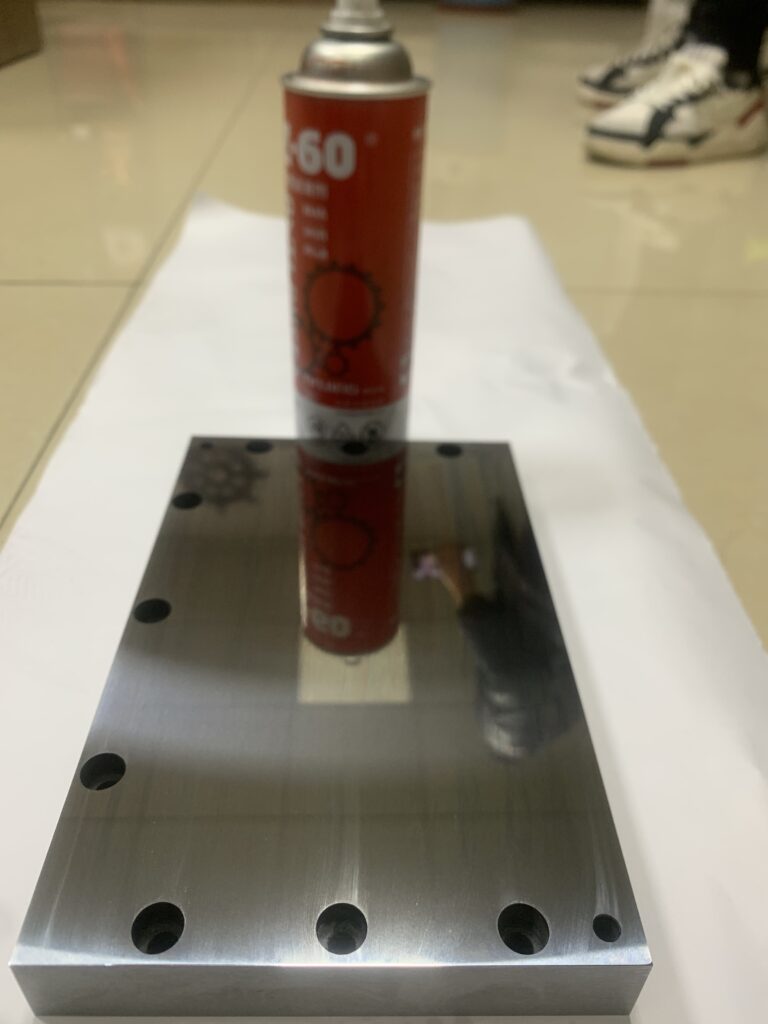
Why Aerospace Manufacturing Demands Precision Surface Grinding
Aerospace manufacturing operates at the absolute pinnacle of precision engineering. Every component—from turbine blades to landing gear parts—must meet extraordinarily tight tolerances, often within single-digit microns. This is exactly why a surface grinder for aerospace components has become essential in modern aviation production.
Unlike many other industries, aerospace components face extreme operating conditions: temperatures exceeding 1,000°C in jet engines, cyclic stress over millions of flight hours, and zero tolerance for failure. Consequently, surface finish quality directly impacts component fatigue life, aerodynamic efficiency, and ultimately passenger safety.
Moreover, the aerospace sector continues growing rapidly. With over 40,000 commercial aircraft in service worldwide and thousands more on order, the demand for precision-ground aerospace parts shows no sign of slowing down. In fact, the rise of next-generation aircraft like the Boeing 787 and Airbus A350 has introduced even more stringent surface finish requirements, particularly for composite-to-metal interfaces and engine components.
At YUTON, we understand what aerospace suppliers need. Our precision CNC surface grinders and automatic surface grinders deliver the accuracy and repeatability that aerospace manufacturing demands. With ISO 9001 and CE certifications, 15 years of grinding expertise, and annual sales exceeding 3,100 units, we’re a trusted partner for aerospace component manufacturers worldwide.
Critical Aerospace Components That Require Surface Grinding
Turbine Engine Components
Jet engines represent the most demanding application for aerospace grinding. Turbine blade roots, disk faces, and compressor case mating surfaces all require precision grinding to ensure proper assembly and performance. Specifically, turbine blade fir-tree roots must be ground to tolerances within 3–5μm to prevent vibration-induced failures at operating speeds exceeding 10,000 RPM.
In addition, combustor liners and nozzle guide vanes require flat, smooth surfaces for proper sealing and thermal management. Without precision grinding, these components would suffer from hot gas leakage, reduced efficiency, and premature failure. Therefore, a reliable surface grinder for aerospace components is indispensable for any engine manufacturer.
Landing Gear Parts
Landing gear systems absorb tremendous impact forces during touchdown. Critical components like axle journals, piston rods, and cylinder faces must be ground to mirror-finish quality to prevent stress concentrations that could lead to catastrophic fatigue failure. For instance, main landing gear pistons often require surface finishes better than Ra 0.4μm.
Furthermore, landing gear trunnions and torque links also depend on precision grinding for proper fit and function. These components experience millions of load cycles over their service life, making surface quality absolutely critical.
Flight Control System Components
Flight control actuators, servo valves, and hydraulic manifolds all require precision-ground surfaces. Specifically, servo valve spools and bodies must achieve flatness within 2–3μm to ensure precise hydraulic flow control. Additionally, actuator mounting surfaces and piston faces require grinding to maintain proper sealing under high pressures.
As a result, any surface imperfection in flight control components can lead to sluggish response, hydraulic leaks, or even complete system failure—unacceptable risks in aviation.
Structural Airframe Components
Even structural components benefit from surface grinding. Wing spar faces, bulkhead mating surfaces, and gear attachment points all require precise flatness for proper assembly and load transfer. Moreover, composite-to-metal bonding surfaces often need controlled roughness values achieved through grinding.
Avionics and Sensor Housings
Finally, avionics enclosures and sensor mounts require precision grinding for proper fit and thermal management. Electronic components generate heat, and mating surfaces must be flat to ensure effective thermal interface material contact. Therefore, even seemingly simple housings benefit from aerospace-grade grinding.
Types of Surface Grinders Used in Aerospace Production
CNC Surface Grinders
At the top tier of aerospace grinding, CNC surface grinders offer unmatched precision and flexibility. These machines handle complex geometries, multiple operations in single setups, and integration with automated inspection systems. Specifically, CNC surface grinders are essential for turbine blade roots, disk faces, and other complex aerospace geometries.
Additionally, CNC grinders support programmable wheel dressing, adaptive control, and real-time process monitoring—features that aerospace quality systems demand. For high-mix, low-volume aerospace production, CNC flexibility is invaluable.
Automatic Surface Grinders
For high-volume aerospace component production, automatic surface grinders deliver consistent quality at production rates. These machines feature programmable cycles, automatic compensation, and integrated gauging. In particular, YUTON’s automatic surface grinders maintain tolerances within 5μm across continuous production runs.
Moreover, automatic grinders reduce operator dependency and ensure every part meets specification—critical for aerospace quality requirements. Many aerospace Tier 2 suppliers rely on automatic grinders for their high-volume components.
Hydraulic Surface Grinders
Heavy-duty aerospace components like landing gear forgings and large structural parts often require the power and stability of hydraulic surface grinders. Their smooth, vibration-free operation is essential for achieving the surface finishes that aerospace applications demand. In particular, hydraulic surface grinders excel at grinding large aerospace forgings and die blocks.
Manual Surface Grinders
For aerospace toolrooms, prototype shops, and repair facilities, manual manual surface grinders remain valuable. They offer the flexibility needed for one-off repairs, experimental work, and situations where operator judgment is critical. However, for production aerospace components, automatic or CNC grinders are preferred.
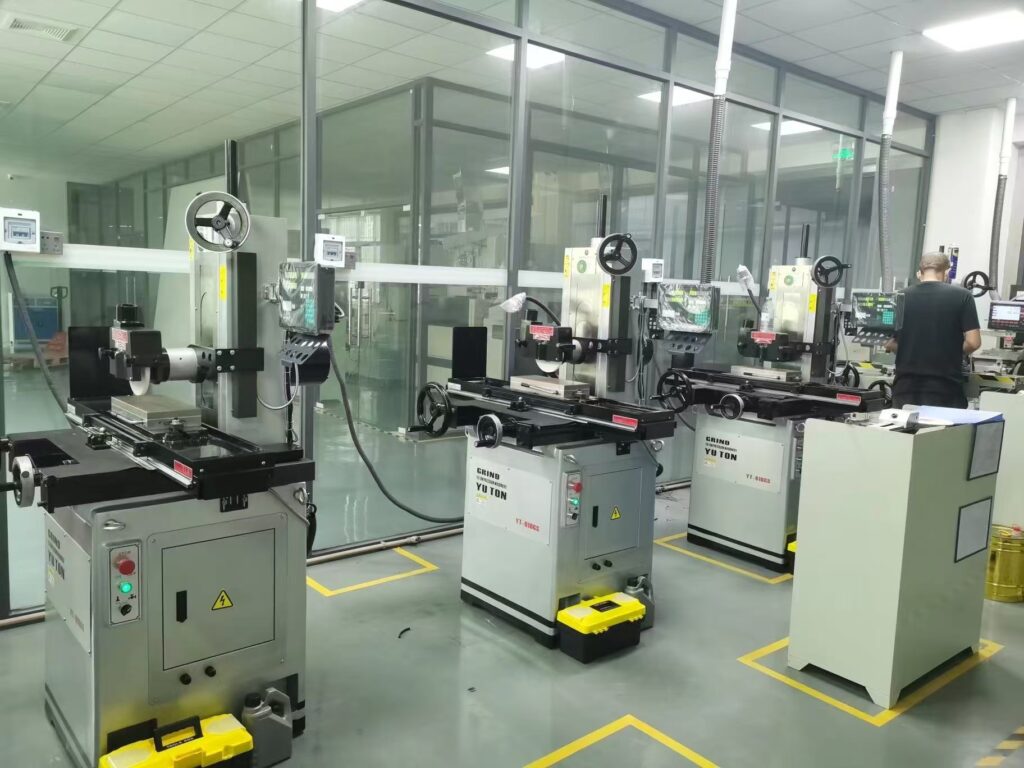
How to Choose a Surface Grinder for Aerospace Components
Evaluate Precision Capability
Aerospace components often require tolerances tighter than 5μm and surface finishes better than Ra 0.4μm. Therefore, your grinder must deliver these capabilities consistently—not just occasionally. Look for machines with proven track records in aerospace applications and documented precision specifications.
Assess Material Compatibility
Aerospace components use exotic materials: Inconel, titanium alloys, hardened steels, and metal matrix composites. These materials present unique grinding challenges, including work hardening, thermal sensitivity, and abrasive wear. Consequently, your grinder must handle these materials effectively, with appropriate coolant systems, wheel speeds, and dressing capabilities.
Check for Process Control Features
Aerospace quality systems like AS9100 require documented process control. Look for grinders with data logging, SPC output, adaptive control, and traceability features. Specifically, machines that record grinding parameters for every part enable full traceability—a key aerospace requirement.
Verify Automation Readiness
Modern aerospace manufacturing increasingly incorporates automation. Look for grinders that support robotic loading, in-process gauging, and integration with manufacturing execution systems (MES). This capability becomes essential as aerospace suppliers scale production for next-generation aircraft programs.
Confirm Supplier Credentials
Aerospace suppliers must demonstrate rigorous quality management. When selecting a grinder manufacturer, verify their certifications, aerospace customer references, and after-sales support. For instance, YUTON holds ISO 9001 and CE certifications, operates a 15,000㎡ facility with 150 employees, and exports to over 50 countries—including aerospace suppliers in Europe and Asia.
Material Challenges in Aerospace Grinding
Nickel-Based Superalloys (Inconel, Waspaloy)
Nickel-based superalloys dominate hot-section engine components due to their exceptional high-temperature strength. However, these materials are notoriously difficult to grind. They work-harden rapidly, generate high grinding temperatures, and cause accelerated wheel wear. Therefore, grinding these materials requires specialized wheels, generous coolant flow, and careful parameter selection.
Titanium Alloys
Titanium alloys offer excellent strength-to-weight ratios, making them popular for airframe and engine components. Unfortunately, titanium’s low thermal conductivity causes heat concentration in the grinding zone, leading to surface damage and residual stresses. As a result, grinding titanium requires lower speeds, high coolant volumes, and sharp, friable abrasive grains.
Hardened Steels (M50, 4340, 300M)
Landing gear and bearing components often use hardened steels with hardness exceeding HRC 55. These materials demand high material removal rates while maintaining surface integrity. Specifically, grinding hardened steels requires appropriate wheel hardness, aggressive dressing, and thermal monitoring to prevent grinding burns.
Metal Matrix Composites
Emerging aerospace applications increasingly use metal matrix composites (MMCs) and ceramic matrix composites (CMCs). These materials combine metals or ceramics with reinforcing fibers or particles. Grinding them requires diamond or CBN wheels, specialized coolant strategies, and careful process control to avoid fiber pullout or matrix damage.
Quality Standards and Certifications for Aerospace Grinding Equipment
AS9100 (Aerospace Quality Management)
AS9100 is the aerospace industry’s quality management standard, based on ISO 9001 but with additional aerospace-specific requirements. While AS9100 certifies organizations rather than individual machines, your grinding equipment must support the process capabilities that AS9100 demands. This includes full traceability, documented calibration, SPC data output, and validated processes.
ISO 9001:2015
ISO 9001 forms the foundation for most aerospace quality systems. Machines from ISO 9001-certified manufacturers like YUTON come with documented quality processes, traceable components, and consistent build quality. For more information on ISO standards, visit ISO’s official website.
Nadcap Certification Support
Nadcap (National Aerospace and Diagnostic Accreditation Program) accredits special processes used in aerospace manufacturing. While grinding itself isn’t typically Nadcap-accredited, your grinding equipment must support Nadcap-accredited processes like heat treatment and material testing. This means providing documented process parameters, material traceability, and validation data.
CE Marking (European Aerospace Market)
For aerospace suppliers serving European OEMs like Airbus, CE marking confirms compliance with EU safety requirements. The European Commission oversees CE marking requirements. YUTON grinders carry CE certification, enabling free sale and operation throughout Europe.
Industry Resources
The Society of Manufacturing Engineers (SME) provides valuable resources on aerospace manufacturing, including grinding process optimization and quality management guidance for aerospace applications.
Benefits of Investing in High-Quality Aerospace Grinding Machines
Uncompromising Precision
High-quality aerospace grinders deliver consistent tolerances within 3–5μm and surface finishes better than Ra 0.2μm. This level of precision is non-negotiable in aerospace, where component failure can have catastrophic consequences. Consequently, investing in proven grinding capability is essential.
Full Traceability and Documentation
Aerospace-grade grinders provide comprehensive data logging and documentation. Every parameter—wheel speed, feed rate, depth of cut, coolant temperature—can be recorded and traced back to individual parts. This traceability satisfies aerospace quality requirements and enables continuous process improvement.
Reduced Scrap and Rework Costs
Precision aerospace materials like Inconel and titanium are expensive. Therefore, minimizing scrap directly impacts profitability. High-quality grinders with consistent performance reduce scrap rates from 5–10% (typical with older machines) to 1–2%, generating substantial cost savings.
Compliance with Aerospace Customer Requirements
Aerospace OEMs and Tier 1 suppliers impose strict requirements on their supply chain. They audit supplier equipment, review process capabilities, and demand documented quality systems. Investing in high-quality grinding equipment demonstrates your commitment to meeting these requirements and helps you win aerospace contracts.
Enhanced Competitiveness
As aerospace production rates increase to meet global demand, suppliers with high-quality, high-capacity grinding equipment gain competitive advantages. They can quote more aggressively, deliver faster, and handle complex programs that less-equipped competitors cannot. Therefore, grinding capability becomes a strategic differentiator.
Long-Term Reliability
Aerospace programs often span 20–30 years. Your grinding equipment must remain accurate and productive throughout this timeframe. High-quality machines from established manufacturers like YUTON are built for decades of service, protecting your investment over the long term.
Future Trends in Aerospace Surface Grinding
Adaptive Grinding with AI
Artificial intelligence is transforming aerospace grinding. AI systems monitor grinding forces, acoustic emissions, and thermal data in real time, automatically adjusting parameters to maintain optimal conditions. As a result, surface integrity improves, scrap rates drop, and process capability increases continuously.
Digital Twin Technology
Digital twins—virtual replicas of physical grinding processes—enable simulation and optimization before actual grinding begins. Engineers can test different parameters, predict outcomes, and optimize processes virtually, reducing physical trials and accelerating process development.
Additive Manufacturing Post-Processing
As aerospace manufacturers adopt metal additive manufacturing (3D printing), post-processing becomes critical. Additively manufactured parts often require precision grinding to achieve final dimensions and surface finishes. Therefore, surface grinders will play increasingly important roles in aerospace additive manufacturing workflows.
Sustainable Aerospace Grinding
Environmental concerns are driving innovations in aerospace grinding fluid management, energy consumption, and waste reduction. Minimum quantity lubrication (MQL) systems, energy-efficient drives, and recyclable abrasives all contribute to greener aerospace manufacturing. In addition, these practices help suppliers meet increasingly strict environmental regulations.
Advanced Monitoring and Industry 4.0
IoT connectivity enables remote monitoring of aerospace grinding operations. Manufacturers can track machine utilization, predict maintenance needs, and optimize production scheduling across multiple facilities. Furthermore, connected grinders feed data into manufacturing execution systems, enabling real-time quality control and process optimization.
Conclusion
A surface grinder for aerospace components represents far more than a machine purchase—it’s a strategic investment in precision, quality, and competitiveness. Whether you manufacture turbine engine parts, landing gear components, flight control systems, or structural airframe elements, the right grinding machine directly impacts your ability to meet aerospace industry demands.
From CNC grinders for complex geometries to automatic systems for high-volume production, YUTON offers precision grinding solutions designed for aerospace applications. With ISO 9001 and CE certifications, 15 years of manufacturing excellence, and proven capability in grinding exotic aerospace materials, we deliver the quality and reliability that aerospace suppliers require.
Ready to upgrade your aerospace component production? Visit YUTON’s website to explore our full range of surface grinders, or contact our team for a personalized consultation.