
The automotive industry demands precision at every level. From engine blocks to transmission gears, each component must meet exacting tolerances to ensure safety, performance, and longevity. This is precisely why a surface grinder for automotive parts has become indispensable in modern vehicle manufacturing.
In fact, surface grinding is one of the most widely used finishing processes in automotive production. It removes small amounts of material from a workpiece surface to achieve a flat, smooth, and dimensionally accurate finish. As a result, automotive manufacturers rely heavily on this process to bring critical components within tight specification ranges.
Moreover, with the global automotive sector producing over 90 million vehicles annually in 2025, the demand for precision-ground components continues to grow. Specifically, the rise of electric vehicles (EVs) has introduced even tighter tolerance requirements, particularly for battery housings, motor shafts, and rotor components. Therefore, choosing the right grinding equipment directly impacts production quality and profitability.
At YUTON, with over 15 years of experience and annual sales exceeding 3,100 units—ranking among the top three nationally—we understand what automotive manufacturers need from their grinding machines. Our automatic surface grinders are widely deployed in automotive parts production worldwide.
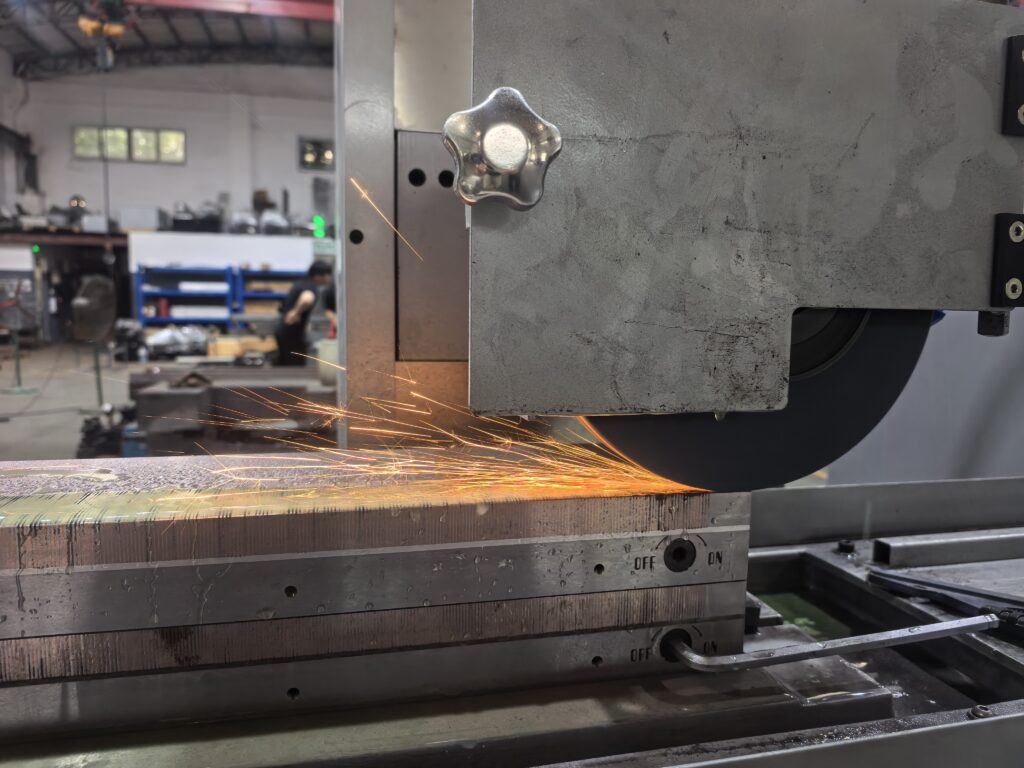
Why Surface Grinding Plays a Critical Role in Automotive Manufacturing
The automotive industry demands precision at every level. From engine blocks to transmission gears, each component must meet exacting tolerances to ensure safety, performance, and longevity. This is precisely why a surface grinder for automotive parts has become indispensable in modern vehicle manufacturing.
In fact, surface grinding is one of the most widely used finishing processes in automotive production. It removes small amounts of material from a workpiece surface to achieve a flat, smooth, and dimensionally accurate finish. As a result, automotive manufacturers rely heavily on this process to bring critical components within tight specification ranges.
Moreover, with the global automotive sector producing over 90 million vehicles annually in 2025, the demand for precision-ground components continues to grow. Specifically, the rise of electric vehicles (EVs) has introduced even tighter tolerance requirements, particularly for battery housings, motor shafts, and rotor components. Therefore, choosing the right grinding equipment directly impacts production quality and profitability.
At YUTON, with over 15 years of experience and annual sales exceeding 3,100 units—ranking among the top three nationally—we understand what automotive manufacturers need from their grinding machines. Our automatic surface grinders are widely deployed in automotive parts production worldwide.
Key Automotive Components That Require Precision Surface Grinding
Engine Components
The engine is the heart of any vehicle, and its internal components demand exceptional surface finish quality. For instance, cylinder heads, engine blocks, and crankshaft surfaces all require precision grinding to ensure proper sealing and combustion efficiency. In addition, connecting rod faces and valve lifter surfaces must be ground to flatness within microns to prevent oil leaks and maintain compression.
Consequently, a reliable surface grinder for automotive parts is essential for any engine rebuild or OEM production facility. Without proper surface finish, engines suffer from reduced efficiency, higher emissions, and premature wear.
Transmission and Drivetrain Parts
Moving to the drivetrain, gears, shafts, and clutch plates all depend on surface grinding for optimal performance. Specifically, gear faces must be ground to precise parallelism to ensure smooth meshing and noise-free operation. Meanwhile, transmission housings require flat mating surfaces to prevent fluid leaks and maintain structural integrity.
Furthermore, differential carriers and axle flanges also benefit from precision surface grinding. In most cases, these components operate under high torque and load conditions, so any surface imperfection can lead to stress concentration and eventual failure.
Brake System Components
Safety-critical brake parts represent another major application area. Brake caliper faces, rotor mounting surfaces, and master cylinder bodies all require flat, smooth finishes achieved through surface grinding. Additionally, ABS sensor mounting surfaces must be ground to exact specifications to ensure accurate signal readings.
Steering and Suspension Parts
Finally, steering and suspension systems include numerous ground components. Power steering valve bodies, strut mounts, and control arm bushing surfaces all depend on precision grinding for proper fit and function. As a result, vehicle handling, ride comfort, and safety all benefit directly from high-quality surface grinding operations.
Types of Surface Grinders Used in Automotive Parts Production
Manual Surface Grinders
For small shops and prototype work, manual surface grinders remain a practical choice. They offer flexibility, lower cost, and simplicity. In particular, manual manual surface grinders are ideal for low-volume production, toolroom work, and repair operations where operators need hands-on control.
However, for high-volume automotive manufacturing, manual machines may not provide the consistency and throughput required. Therefore, most large-scale automotive parts suppliers opt for automated solutions.
Automatic Surface Grinders
On the other hand, automatic surface grinders deliver repeatable precision at high production speeds. These machines feature programmable controls, automatic wheel dressing, and integrated gauging systems. For example, YUTON’s automatic surface grinders can maintain tolerances within 5μm across continuous production runs—exactly what automotive suppliers need.
Moreover, automatic grinders reduce operator dependency, minimize human error, and increase throughput by 30–50% compared to manual operations. In fact, many Tier 1 and Tier 2 automotive suppliers have fully transitioned to automatic grinding for their high-volume components.
CNC Surface Grinders
At the highest level of precision and flexibility, CNC surface grinders offer programmable multi-axis control. These machines can handle complex part geometries, multiple grinding operations in a single setup, and integration with robotic loading systems. Specifically, CNC surface grinders are essential for EV component manufacturing, where tight tolerances and complex shapes are the norm.
Additionally, CNC grinders support Industry 4.0 connectivity, enabling real-time monitoring, predictive maintenance, and data-driven quality control. As the automotive industry continues its digital transformation, CNC grinding capability becomes increasingly important.
Hydraulic Surface Grinders
For heavy-duty automotive applications, hydraulic surface grinders provide exceptional power and stability. Their hydraulic drive systems deliver smooth, vibration-free grinding action, which is critical for achieving mirror-finish surfaces on hardened steel components. In particular, hydraulic surface grinders excel at grinding large automotive dies, molds, and fixture plates used in vehicle assembly lines.
How to Choose the Right Surface Grinder for Automotive Parts
Assess Your Production Volume
The first step in selecting a surface grinder is understanding your production requirements. For low-volume or job-shop environments, a manual or semi-automatic machine may suffice. However, for continuous high-volume automotive parts production, investing in a fully automatic or CNC grinder pays for itself quickly through higher throughput and consistent quality.
Evaluate Tolerance Requirements
Different automotive components demand different precision levels. Engine block surfaces may require flatness within 10–15μm, while fuel injector components might need tolerances as tight as 2–3μm. Therefore, match your machine’s capability to your tightest tolerance requirement—not your average one.
Consider Workpiece Size and Weight
Automotive parts vary dramatically in size, from small valve lifters to large transmission housings. Make sure the machine’s table size, spindle clearance, and load capacity can accommodate your full range of workpieces. In addition, consider future product expansion when evaluating machine capacity.
Check for Automation Compatibility
Modern automotive manufacturing increasingly relies on automation. Look for grinders that support robotic part loading, in-process gauging, and data output for SPC (Statistical Process Control) systems. Specifically, machines with PLC controls and servo-driven axes offer the best integration potential.
Verify Supplier Credentials
When sourcing from international suppliers, verify their manufacturing capabilities, quality certifications, and after-sales support. For instance, YUTON holds ISO 9001 and CE certifications, operates a 15,000㎡ facility with 150 employees, and exports to over 50 countries. Each machine undergoes 48 hours of continuous testing before shipment—critical assurance for automotive-grade equipment.
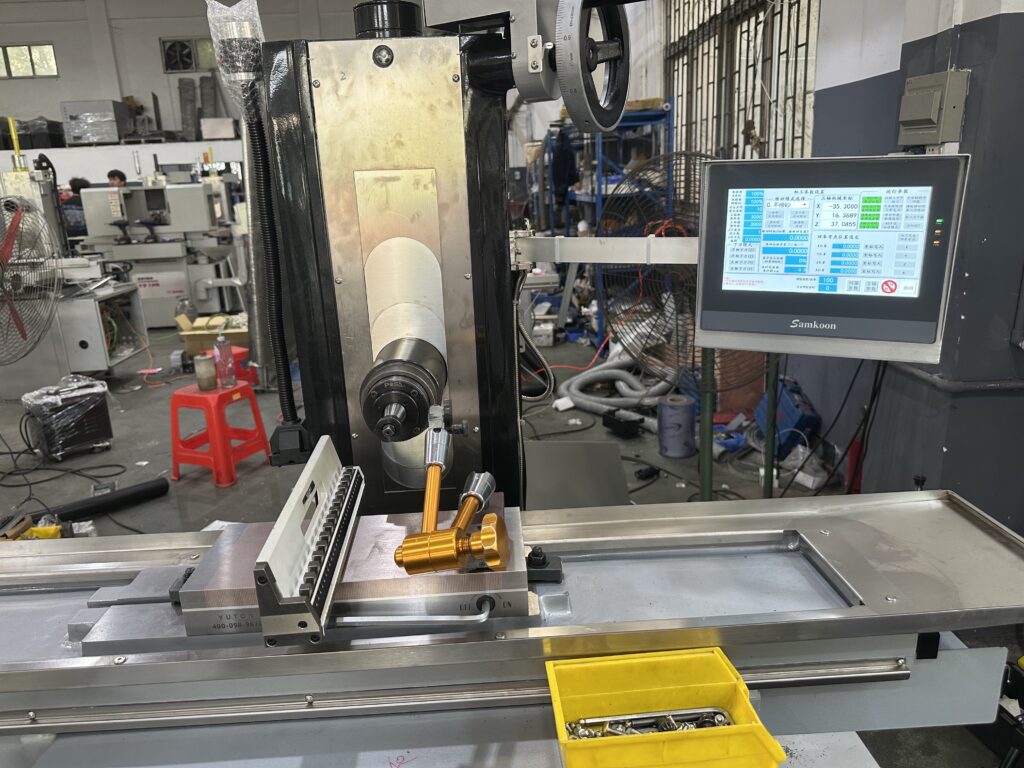
Quality Standards and Certifications for Automotive Grinding Machines
The automotive industry operates under strict quality management frameworks. Therefore, your grinding equipment must support compliance with relevant standards.
ISO 9001:2015
This international quality management standard forms the baseline for most automotive suppliers. Machines from ISO 9001-certified manufacturers like YUTON come with documented quality processes, traceable components, and consistent build quality. For more information on ISO standards, visit ISO’s official website.
CE Marking (European Market)
For automotive suppliers serving European OEMs, CE marking is mandatory. It confirms that the machine meets EU safety, health, and environmental protection requirements. As noted by the European Commission, CE-marked equipment can be freely sold and operated throughout the European Economic Area.
IATF 16949 Compatibility
While IATF 16949 certifies automotive quality management systems rather than individual machines, your grinding equipment must support the process capabilities that IATF 16949 demands. This includes repeatable precision, documented calibration, SPC data output, and traceability—features that YUTON grinders provide as standard.
Industry Association Resources
The Society of Manufacturing Engineers (SME) offers valuable resources on automotive manufacturing best practices, including grinding process optimization and quality management guidance.
Top Benefits of Investing in a High-Quality Surface Grinder for Automotive Parts
Improved Production Efficiency
A high-quality surface grinder completes operations faster and more consistently than older or lower-specification machines. As a result, you can increase daily output while reducing per-part costs. In fact, YUTON customers report 30–50% throughput improvements after upgrading to our automatic models.
Tighter and More Consistent Tolerances
Precision-ground automotive components directly translate to better vehicle performance. With YUTON grinders maintaining 5μm accuracy across production runs, you can consistently meet even the most demanding automotive specifications. Moreover, this consistency reduces scrap rates and rework costs significantly.
Reduced Labor Costs
Automatic and CNC grinders minimize the need for skilled operators. One operator can often manage multiple machines simultaneously, reducing labor costs per part. Additionally, programmable settings eliminate the trial-and-error approach that slows down manual grinding operations.
Enhanced Workplace Safety
Modern surface grinders come equipped with enclosed work areas, automatic coolant systems, and safety interlocks. These features protect operators from grinding debris, coolant splash, and wheel breakage—critical considerations in any automotive manufacturing environment.
Better Surface Finish Quality
A premium surface grinder delivers Ra values as low as 0.2μm or better. This level of finish is essential for automotive sealing surfaces, bearing interfaces, and friction-critical components. Consequently, better surface finish directly improves component life and vehicle reliability.
Long-Term Return on Investment
While a high-quality surface grinder represents a significant upfront investment, the total cost of ownership is often lower than cheaper alternatives. Reduced maintenance, longer service life, higher throughput, and lower scrap rates all contribute to a compelling ROI within 12–24 months.
Real-World Applications Across the Automotive Supply Chain
Tier 1 Suppliers
Large Tier 1 automotive suppliers such as Bosch, Denso, and Magna use precision surface grinders extensively. They grind transmission components, engine parts, and electronic housings at volumes of thousands of pieces per day. For these operations, automatic and CNC grinders are the standard choice.
Tier 2 and Tier 3 Suppliers
Smaller suppliers that produce specialized components—such as gaskets, seals, brackets, and shafts—also rely on surface grinders. In many cases, these companies start with automatic grinders and upgrade to CNC as their product complexity grows. YUTON offers models suitable for every stage of this growth path.
Aftermarket and Remanufacturing
The automotive aftermarket represents another significant application area. Remanufacturers rebuild engines, transmissions, and steering components to OEM specifications. A surface grinder for automotive parts is essential for resurfacing cylinder heads, flywheels, brake rotors, and other wear components.
Electric Vehicle Manufacturing
The EV revolution has created new grinding demands. Battery tray surfaces, electric motor housings, rotor shafts, and inverter components all require precision grinding. Since EVs operate at higher RPMs and require maximum efficiency, the tolerance requirements are often tighter than traditional vehicles. Therefore, CNC and automatic grinders are particularly well-suited for EV production.
Motorsport and Performance Applications
Finally, motorsport teams and performance part manufacturers push grinding precision to the extreme. Engine components for racing applications often require tolerances below 3μm and surface finishes better than Ra 0.1μm. These demanding applications showcase the upper limits of what modern surface grinders can achieve. For more insights on precision grinding applications, check MM Online.
Future Trends in Automotive Surface Grinding Technology
AI-Driven Process Optimization
Artificial intelligence is beginning to transform grinding operations. AI systems can now monitor grinding forces, vibration, and acoustic emissions in real time, automatically adjusting parameters to maintain optimal conditions. As a result, scrap rates drop further and process capability improves continuously.
IoT and Connected Manufacturing
Internet of Things (IoT) connectivity enables remote monitoring of grinding machines. Fleet managers can track machine utilization, predict maintenance needs, and optimize production scheduling across multiple facilities. YUTON is actively developing IoT-compatible features for upcoming machine models.
Hybrid and Multi-Process Machines
The trend toward combining grinding with other processes—such as milling, turning, and measuring—on a single machine platform continues to grow. These hybrid machines reduce part handling, shorten lead times, and improve overall accuracy by maintaining a single setup through multiple operations.
Sustainable Grinding Practices
Environmental concerns are driving innovations in grinding fluid management, energy consumption, and abrasive recycling. Minimum quantity lubrication (MQL) systems, energy-efficient spindle motors, and recyclable abrasive materials all contribute to greener automotive manufacturing. In addition, these practices help manufacturers meet increasingly strict environmental regulations.
Advanced Abrasive Materials
New abrasive materials, including nanostructured ceramics and superabrasives like CBN (cubic boron nitride) and diamond, are enabling faster material removal rates and longer wheel life. These advances are particularly valuable for grinding hardened automotive steels and exotic alloys used in high-performance engines.
Conclusion
A surface grinder for automotive parts is far more than just a machine—it is a strategic investment in production quality, efficiency, and competitiveness. Whether you manufacture engine components, transmission parts, brake systems, or EV-specific hardware, the right grinding machine directly impacts your ability to meet automotive industry demands.
From manual grinders for small workshops to fully automatic and CNC systems for high-volume production, YUTON offers a comprehensive range of surface grinders designed for automotive applications. With ISO 9001 and CE certifications, 15 years of manufacturing excellence, and over 3,100 units sold annually, we deliver the quality and reliability that automotive suppliers require.
Ready to upgrade your automotive parts production? Visit YUTON’s website to explore our full range of surface grinders, or contact our team for a personalized consultation.