
Finding a reliable CNC grinder Europe supplier is one of the most important decisions for machine shops, distributors, and OEMs across the continent. As European manufacturers modernize their production lines and face growing pressure from global competitors, the demand for high-precision grinding equipment continues to rise. In fact, the European grinding machine market has shown steady growth through 2025 and into 2026, driven by automotive, aerospace, medical, and energy sectors.
However, Europe is not a single uniform market. Each country has distinct industrial strengths, regulatory requirements, and purchasing behaviors. This guide walks you through the key European markets, what buyers should look for in a CNC grinder Europe supplier, compliance requirements like CE marking, and why Chinese manufacturers like YUTON are becoming a serious option for European buyers.
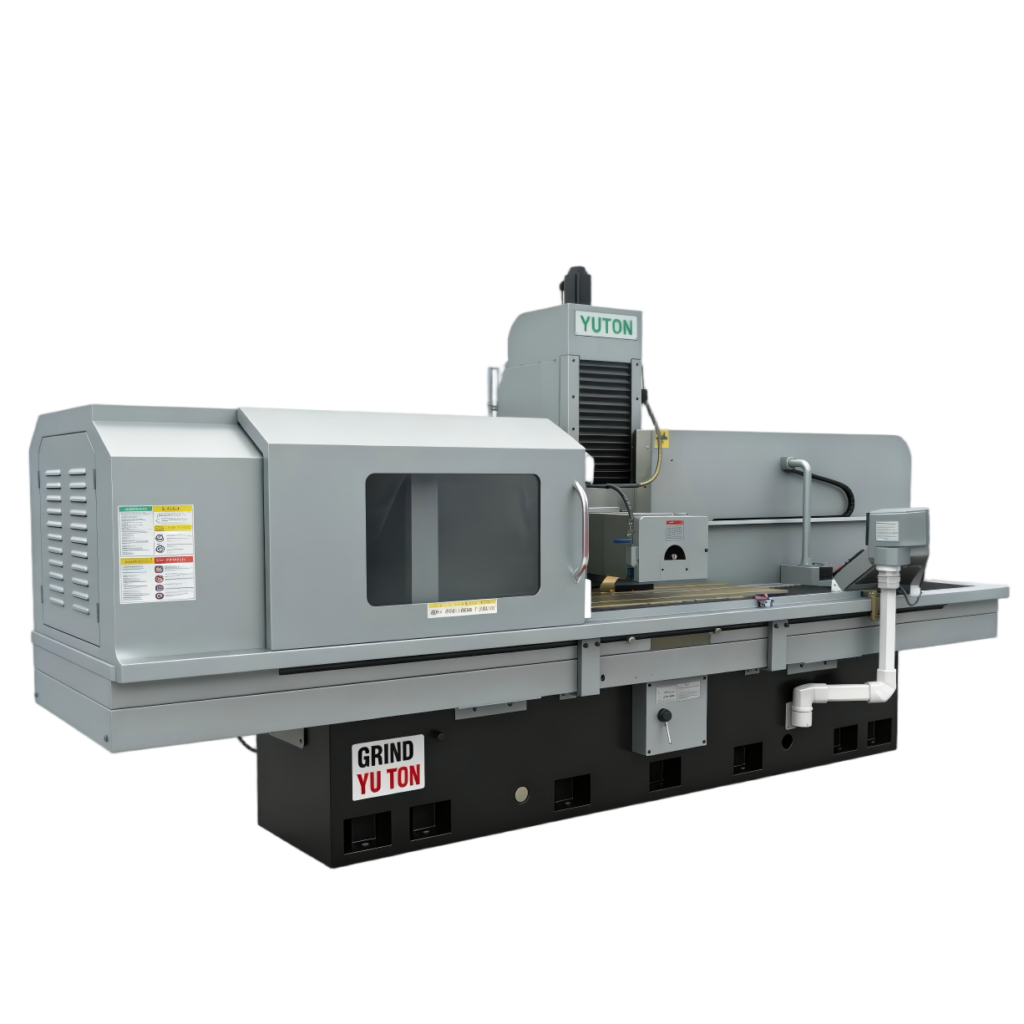
Key Markets for CNC Grinders Across Europe
Europe’s demand for CNC grinding machines is concentrated in several major industrial hubs, each with unique characteristics and requirements.
Germany: The Precision Manufacturing Powerhouse
Germany remains the largest market for precision grinding equipment in Europe. Specifically, the automotive industry — led by companies like BMW, Mercedes-Benz, and Volkswagen — requires massive volumes of precision-ground components for engines, transmissions, and EV drivetrains. Moreover, Germany’s famous Mittelstand (small and medium-sized enterprises) sector includes thousands of specialized machining shops that regularly invest in new grinding technology.
For buyers in Germany, quality and precision are non-negotiable. Therefore, any CNC grinder Europe supplier targeting this market must demonstrate exceptional machine accuracy, long-term stability, and full compliance with German industrial standards.
Italy: Automotive and Packaging Machinery
Italy has a strong manufacturing base focused on automotive components, packaging machinery, and industrial equipment. In particular, the Emilia-Romagna region — often called Italy’s “Motor Valley” — is home to Ferrari, Lamborghini, and Ducati, all of which require ultra-precise grinding for engine and transmission parts. As a result, the demand for high-performance CNC surface grinders is especially strong in northern Italy.
France: Aerospace and Nuclear Energy
France’s aerospace sector — anchored by Airbus, Safran, and Dassault — creates significant demand for precision grinding machines. Additionally, France’s nuclear energy industry requires specialized ground components for reactors and turbines. Consequently, French buyers often prioritize suppliers with proven track records in high-reliability applications.
Eastern Europe: Poland, Czech Republic, and Beyond
Eastern Europe has emerged as a fast-growing region for manufacturing investment. Poland, in particular, has attracted major automotive and electronics manufacturers looking for cost-effective production bases. In addition, the Czech Republic and Romania are seeing increased demand for grinding equipment as new factories come online. For these markets, a CNC grinder Europe supplier that offers strong value — balancing quality with competitive pricing — has a clear advantage. Whether you need a manual surface grinder for tool room work or a full CNC production system, Chinese manufacturers offer options across the entire product range.
CE Compliance and Quality Standards for the European Market
One critical factor that distinguishes the European market from other regions is its strict regulatory environment. Any CNC grinder Europe supplier must fully understand and comply with European Union directives and standards.
CE Marking: All machinery sold in the EU must carry the CE mark, which certifies compliance with health, safety, and environmental protection directives. Specifically, grinding machines must meet the Machinery Directive (2006/42/EC) and relevant harmonized standards. Without CE marking, a machine cannot legally be placed on the European market. For detailed information on CE requirements, visit the European Commission’s official portal.
ISO 9001 Certification: Beyond CE marking, European buyers strongly prefer suppliers with ISO 9001 quality management certification. This demonstrates that the manufacturer follows consistent, documented processes for design, production, testing, and after-sales service.
Environmental Compliance: The EU’s Green Deal and related regulations increasingly require machines to meet energy efficiency and emission standards. Therefore, forward-thinking CNC grinder Europe suppliers are investing in energy-efficient designs, such as regenerative braking systems and low-emission coolants.
Buyers should always request documentation — including CE certificates, ISO 9001 records, and test reports — before placing an order. A reputable supplier will provide these without hesitation.
What European Buyers Look for in a CNC Grinder Supplier
European procurement managers and shop owners evaluate suppliers based on several key criteria. Understanding these factors helps both buyers make better decisions and suppliers improve their offerings.
Machine Precision and Repeatability: European shops often work to tolerances of ±0.002mm or tighter. Therefore, the CNC grinder must deliver consistent accuracy over long production runs, not just in initial setup. This is where machine rigidity, thermal stability, and vibration damping become critical.
Automation Capability: With labor costs among the highest in the world, European manufacturers are actively seeking automated grinding solutions. In fact, demand for automatic surface grinders with pallet changers, robotic loaders, and in-process measurement has surged across the continent.
After-Sales Support: European buyers expect responsive technical support, spare parts availability, and — ideally — a local service partner. A CNC grinder Europe supplier without European service infrastructure will struggle to win repeat business.
Total Cost of Ownership: While purchase price matters, sophisticated European buyers evaluate the full lifecycle cost, including energy consumption, wheel costs, maintenance requirements, and expected machine lifespan. A slightly more expensive machine that offers lower operating costs often wins in the long run.
Why Chinese CNC Grinder Suppliers Are Winning European Customers
Chinese CNC grinder manufacturers have significantly strengthened their position in the European market over the past five years. Several factors explain this trend.
First, the quality of Chinese-built grinding machines has improved dramatically. Leading manufacturers now integrate core components from Japan, Taiwan, and Germany — including linear guides, ball screws, spindle bearings, and CNC controls. As a result, the performance gap between Chinese machines and their European or Japanese counterparts has narrowed considerably.
Second, Chinese suppliers offer a compelling price advantage. In most cases, a Chinese CNC surface grinder delivers 85-95% of the performance of a premium European machine at 50-70% of the cost. For small and medium-sized shops — which form the backbone of European manufacturing — this value proposition is hard to ignore.
Third, Chinese manufacturers have invested in European compliance and certification. Companies like YUTON, for example, hold CE certification and ISO 9001 registration, and they provide documentation in English and other European languages. YUTON operates a 15,000-square-meter facility with 150 employees in Dongguan, China, and sold 3,100 units in 2025, ranking among the top three national manufacturers.
Furthermore, many Chinese suppliers have established partnerships with European distributors and service agents. This means buyers can get local support, spare parts, and technical assistance without waiting for help from overseas. According to industry observers at Manufacturing Engineering, the growing professionalism of Chinese machine tool exporters has been one of the most notable shifts in the global grinding market.
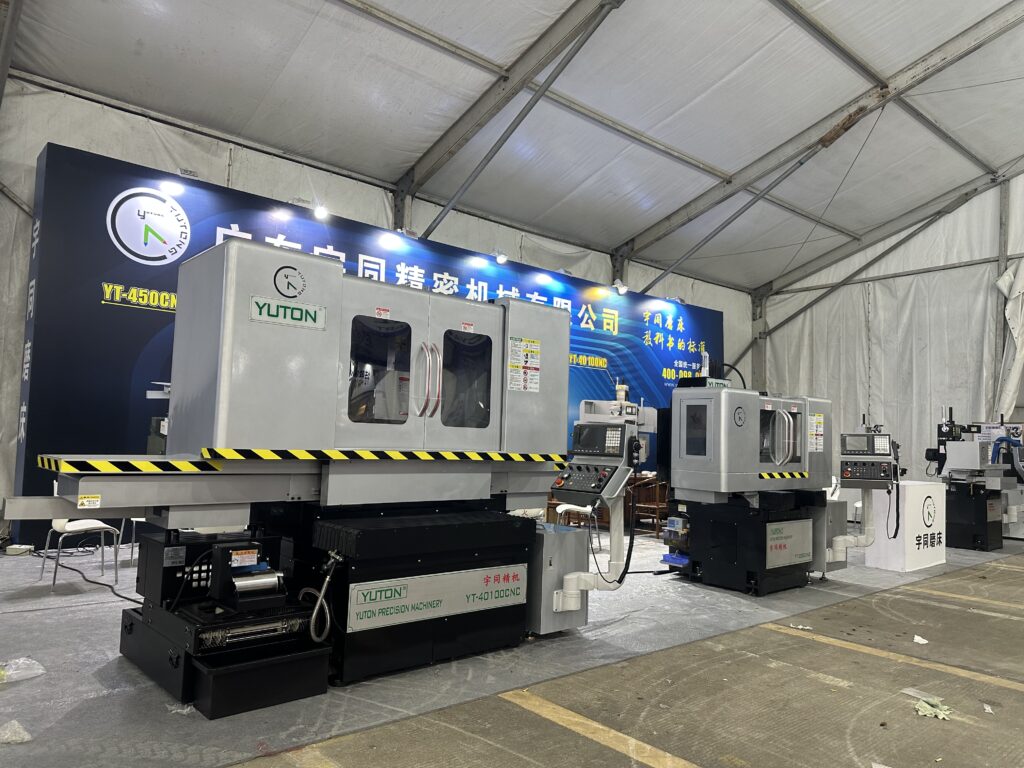
Choosing the Right CNC Grinder Europe Supplier: A Practical Checklist
To help you evaluate potential suppliers, here is a practical checklist that European buyers can use during the sourcing process.
- Verify CE marking — Request the original CE certificate and confirm it covers your specific machine model.
- Check ISO 9001 status — Confirm the supplier’s quality management system is certified by an accredited body.
- Review component sources — Ask where critical parts (spindle, bearings, CNC system, linear guides) come from.
- Request test reports — Reputable manufacturers provide detailed accuracy and performance test data. For instance, YUTON tests every machine for 48 hours of continuous operation before shipment.
- Assess European support — Confirm whether the supplier has a local distributor, service agent, or spare parts warehouse in Europe.
- Compare total cost — Look beyond the purchase price to energy consumption, maintenance costs, and expected lifespan.
- Ask for references — Request contact information for existing European customers who can share their experience.
For more detailed guidance on selecting the right machine type, see our guide on how to choose a surface grinder.
Looking Ahead: The European Grinding Machine Market in 2026 and Beyond
The outlook for the CNC grinder Europe supplier market remains positive through 2026 and beyond. Several long-term trends will continue to drive demand.
The transition to electric vehicles is creating new demand for precision-ground battery housings, motor shafts, and gearbox components across Germany, France, and Italy. Meanwhile, the aerospace sector’s recovery post-pandemic has renewed demand for turbine and structural part grinding. In addition, Eastern Europe’s continued industrialization will bring new buyers into the market for years to come.
For European manufacturers evaluating their options, the message is clear: do not limit your search to traditional European brands. Chinese CNC grinder suppliers have proven they can deliver the quality, compliance, and support that European buyers require — at a price point that makes excellent business sense.
To explore YUTON’s CNC grinding solutions for the European market, visit surfacegrindermfg.com or contact the sales team directly.
FAQ
Q1: What certifications does a CNC grinder Europe supplier need?
At minimum, the supplier must provide CE marking (covering the Machinery Directive 2006/42/EC) and ISO 9001 quality management certification. These are essential for legally selling machinery in the EU and demonstrating quality commitment.
Q2: Which European countries buy the most CNC grinding machines?
Germany is the largest market, followed by Italy, France, and the UK. However, Eastern European countries like Poland, the Czech Republic, and Romania are growing rapidly as new manufacturing facilities are established.
Q3: Can Chinese CNC grinders meet European quality standards?
Yes. Leading Chinese manufacturers integrate Japanese and German core components, hold CE and ISO 9001 certifications, and provide full documentation. Many European shops and distributors are already sourcing from China successfully.
Q4: Is after-sales support available for Chinese grinders in Europe?
Reputable Chinese suppliers partner with European distributors and service agents to provide local support, spare parts, and technical assistance. Always verify the supplier’s European service network before purchasing.
Q5: How do Chinese CNC grinders compare in price to European brands?
Chinese CNC surface grinders typically cost 30-50% less than comparable European or Japanese models, while delivering 85-95% of the performance. For many small and medium shops, this represents an excellent return on investment.