
Improve Grinding Precision: 8 Proven Tips for Tighter Tolerances
Achieving tight tolerances in surface grinding requires more than just a good machine. In fact, even the best equipment will produce inconsistent results without the right setup, tooling, and process control. Therefore, if you want to improve grinding precision, you need to look at the entire system — from machine calibration to coolant management.
In this guide, we share eight expert-proven methods to help you achieve tighter tolerances, better surface finish, and more consistent part quality — regardless of your machine type or production volume.
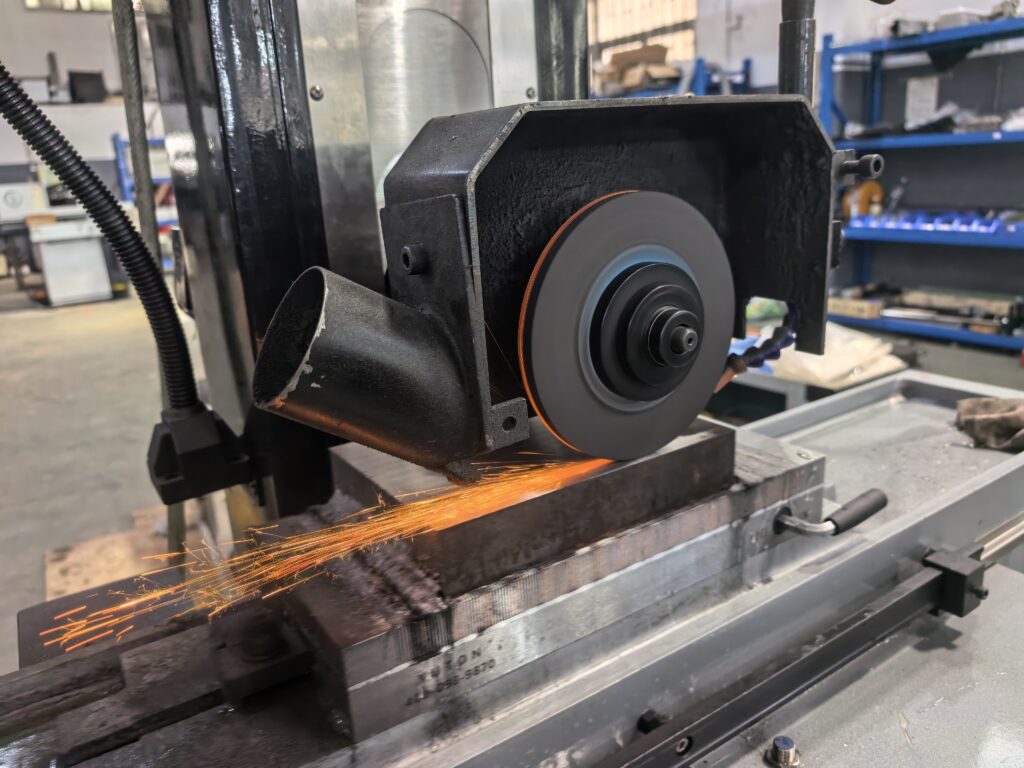
What Does Grinding Precision Really Mean?
Before diving into solutions, it helps to define what precision means in grinding. Specifically, grinding precision refers to the ability of a grinding process to consistently produce parts within specified dimensional and geometric tolerances. This includes:
- Dimensional accuracy: How close the part size is to the target dimension (e.g., ±0.005mm)
- Geometric accuracy: Flatness, parallelism, squareness, and roundness
- Surface finish quality: Measured as Ra value (e.g., Ra 0.2μm or better)
- Repeatability: The ability to produce the same result part after part
Moreover, these four aspects are interconnected. For instance, poor surface finish often indicates a problem with dimensional accuracy. As a result, improving grinding precision means addressing all four areas together, not just one.
Machine Setup: The Foundation of Precision
No amount of process optimization can compensate for a poorly set up machine. Therefore, proper machine setup is the non-negotiable foundation of grinding precision.
Leveling and Foundation
First, ensure the machine is properly leveled on a stable foundation. Even small amounts of floor vibration or thermal expansion can affect precision. For high-precision work, consider installing the machine on an isolated foundation with anti-vibration mounts.
Spindle Inspection
Second, check the spindle for runout. A spindle with excessive radial runout (above 0.005mm) will produce inconsistent surface finish and dimensional errors. If you find runout beyond specifications, the spindle bearings may need replacement.
Table Straightness and Parallelism
Third, verify that the worktable moves in a perfectly straight line and is parallel to the wheel head. Any deviation here directly transfers to the workpiece. At YUTON, every CNC surface grinder undergoes 48 hours of continuous testing before shipment to ensure table accuracy and long-term precision stability.
How to Improve Grinding Precision: 8 Expert Methods
Now let’s cover the eight most effective methods to improve grinding precision in your shop.
Method 1: Select the Right Grinding Wheel
The grinding wheel is the single most important variable in precision grinding. Specifically, you need to match the wheel type, grit size, hardness grade, and bond type to your workpiece material and desired finish.
For example:
- Aluminum oxide wheels: Best for general-purpose grinding of carbon steel and alloy steel
- Silicon carbide wheels: Ideal for cast iron, non-ferrous metals, and ceramics
- CBN wheels: Best for hardened steels and high-volume production
Moreover, the grit size matters. Finer grits (100–180) produce smoother finishes but remove material more slowly. Coarser grits (36–80) remove material faster but leave a rougher surface. Therefore, choose the grit based on your tolerance requirements.
Method 2: Optimize Wheel Dressing
Regular wheel dressing keeps the grinding wheel sharp and true. A dull or loaded wheel generates more heat, produces poor surface finish, and loses dimensional accuracy. Specifically, dress the wheel:
- Before each new operation
- When you notice increased grinding force or chatter
- When surface finish begins to deteriorate
Additionally, use the correct dressing tool and parameters. A single-point diamond dresser works well for most applications, while a rotary diamond dresser provides better consistency for high-precision work.
Method 3: Control Coolant Flow and Quality
Coolant plays a critical role in grinding precision. In fact, improper coolant application is one of the most common causes of precision loss. Specifically, coolant serves three functions:
- Heat removal: Prevents thermal expansion of the workpiece
- Lubrication: Reduces friction between wheel and workpiece
- Flushing: Removes swarf and debris from the cutting zone
To maximize precision, ensure that coolant is delivered directly to the grinding zone at adequate pressure (minimum 3 bar), concentration is maintained at 5–8%, coolant is filtered regularly, and temperature stays stable (±2°C). For more coolant best practices, see resources from Modern Machine Shop.
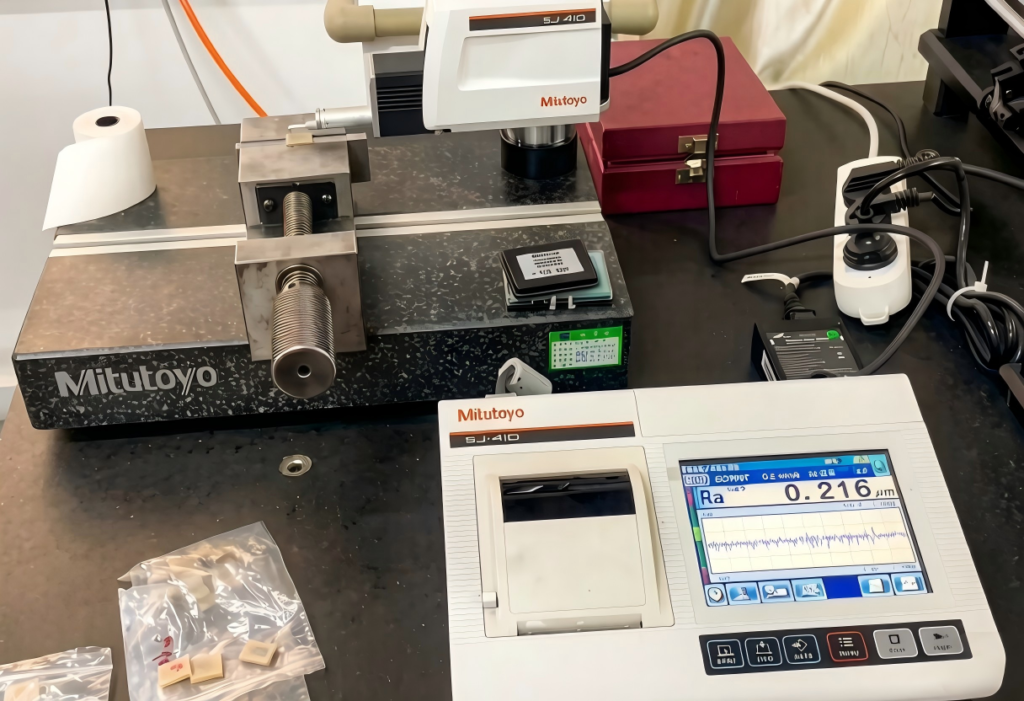
Improve Grinding Precision by Choosing the Right Wheel
Wheel selection deserves deeper discussion because it has the biggest direct impact on what tolerances you can hold. The right wheel makes the difference between Ra 0.4μm and Ra 0.1μm.
Grit Size and Precision
Finer grits produce better finishes and hold tighter tolerances. However, they also remove material more slowly. Therefore, for roughing operations, use a coarser grit (36–60), and for finishing, switch to a finer grit (100–180).
Hardness Grade
The wheel hardness grade determines how quickly the abrasive grains are released. A wheel that is too hard will glaze over and generate excessive heat. On the other hand, a wheel that is too soft will wear too quickly and lose its shape. Therefore, match the hardness grade to your workpiece: harder materials need a softer wheel grade, and vice versa.
Bond Type
Vitrified bonds are the most common for precision grinding because they offer good dimensional stability and free-cutting action. Resinoid bonds are used for high-speed applications where flexibility is needed. In most cases, a vitrified bond wheel delivers the best precision for surface grinding.
Improve Grinding Precision Through Coolant Control
Coolant management deserves its own section because it affects precision in ways that many shops overlook. First, inadequate coolant causes thermal expansion, which directly affects dimensional accuracy. Second, poor coolant quality leads to wheel loading, which reduces cutting efficiency.
Therefore, follow these coolant best practices to improve grinding precision:
- Monitor concentration daily with a refractometer
- Check pH level weekly (ideal range: 8.5–9.5)
- Replace coolant when it shows signs of bacterial growth or excessive contamination
- Use a high-pressure coolant system (minimum 20 bar) for deep grinding operations
Additionally, consider using a coolant temperature controller. A stable coolant temperature prevents thermal drift in the workpiece, which is especially critical when grinding to tolerances below 0.005mm.
Parameter Optimization for Consistent Results
The combination of wheel speed, worktable speed, and depth of cut directly affects precision. Specifically:
- Wheel speed: Higher speeds generally produce better surface finish but increase heat generation
- Worktable speed: Slower speeds improve finish but reduce productivity
- Depth of cut: Smaller depths improve accuracy but require more passes
For best results, start with conservative parameters and gradually optimize. Therefore, always refer to the wheel manufacturer’s recommendations as a starting point, then fine-tune based on your specific setup.
Moreover, different machine types respond differently to parameter changes. A hydraulic surface grinder with smooth hydraulic table movement often delivers better finish at higher table speeds compared to manual machines. On the other hand, CNC grinders allow you to program and save optimal parameters for each operation, ensuring consistent results across production runs.
In-Process Measurement and Compensation
In-process gauging measures the workpiece during the grinding cycle, allowing the machine to compensate for dimensional drift in real time. As a result, you achieve tighter tolerances without manual intervention.
Modern CNC surface grinders often come equipped with contact or non-contact gauging systems. These systems measure the part after each pass and automatically adjust the wheel position. Moreover, they can detect trends such as wheel wear and trigger compensation before the part goes out of tolerance.
Furthermore, even if your machine does not have built-in gauging, you can add an external probe system. This is a cost-effective way to improve grinding precision on existing equipment.
Maintenance Habits That Protect Precision
Precision is not just about setup and parameters — it also depends on consistent maintenance. Specifically, these maintenance habits protect your grinding precision over the long term:
Daily Checks
- Clean the worktable and verify surface condition
- Check coolant level and concentration
- Inspect the wheel for cracks or uneven wear
- Listen for unusual sounds during warm-up
Weekly Checks
- Verify table straightness and parallelism
- Inspect way lubrication system
- Check spindle bearing temperature
- Clean or replace coolant filters
Monthly Checks
- Measure spindle runout
- Inspect ball screws for backlash
- Check electrical connections and servo performance
- Calibrate gauging systems
In fact, most precision problems start as small issues that grow over time. Therefore, a disciplined maintenance schedule is essential to improve grinding precision and keep it there.
At YUTON, every machine is designed for easy maintenance access, with centralized lubrication points and quick-check calibration procedures. This is one reason why YUTON machines — with Japanese spindle bearings and Taiwanese linear guides — maintain precision over a 15+ year service life.
FAQ
How can I improve grinding precision on an older machine?
Start with the basics: level the machine, check spindle bearings, dress the wheel properly, and optimize your coolant system. These four steps alone can improve precision by 30% to 50%. Additionally, consider upgrading to an automatic surface grinder with in-process gauging for the best long-term results.
What is the most common cause of poor grinding precision?
In our experience, the top three causes are: (1) improper wheel selection, (2) inadequate coolant flow, and (3) thermal expansion. Address these three areas first, and you will see immediate improvement.
How often should I dress the grinding wheel for precision work?
For high-precision work, dress the wheel at the start of each shift and whenever you notice a change in surface finish or grinding sound. However, avoid over-dressing, as this wastes wheel life and reduces wheel diameter.
Can automation improve grinding precision?
Yes. Automation reduces human error and provides consistent, repeatable results. An automatic surface grinder with CNC control and in-process gauging can maintain tolerances of ±0.002mm consistently — something that is difficult to achieve with manual surface grinder operation alone.
For manufacturers seeking consistent, high-precision results, partnering with an experienced surface grinder manufacturer makes all the difference. YUTON, with ISO 9001 certification and 3,100+ units delivered to 50+ countries, combines Japanese, Taiwanese, and American core components with rigorous 48-hour testing to deliver machines that hold precision from day one.
For quality management standards, refer to ISO guidelines. For additional machining precision tips, explore resources from SME and AMT – The Association For Advancing Manufacturing.