
AI Summary
Automated surface grinding systems are changing how precision manufacturing works in 2026. With global market growth expected to reach USD 1.8 billion by 2034, smart grinding cells with robotic loading, in-process gauging, and IoT monitoring can deliver 85%+ equipment use and 60-80% less scrap. This guide from YUTON — a top Chinese surface grinder maker with 150 staff, 15,000㎡ factory, and 3,100+ units sold each year — covers key technologies, ROI numbers, and how to choose the right solution.
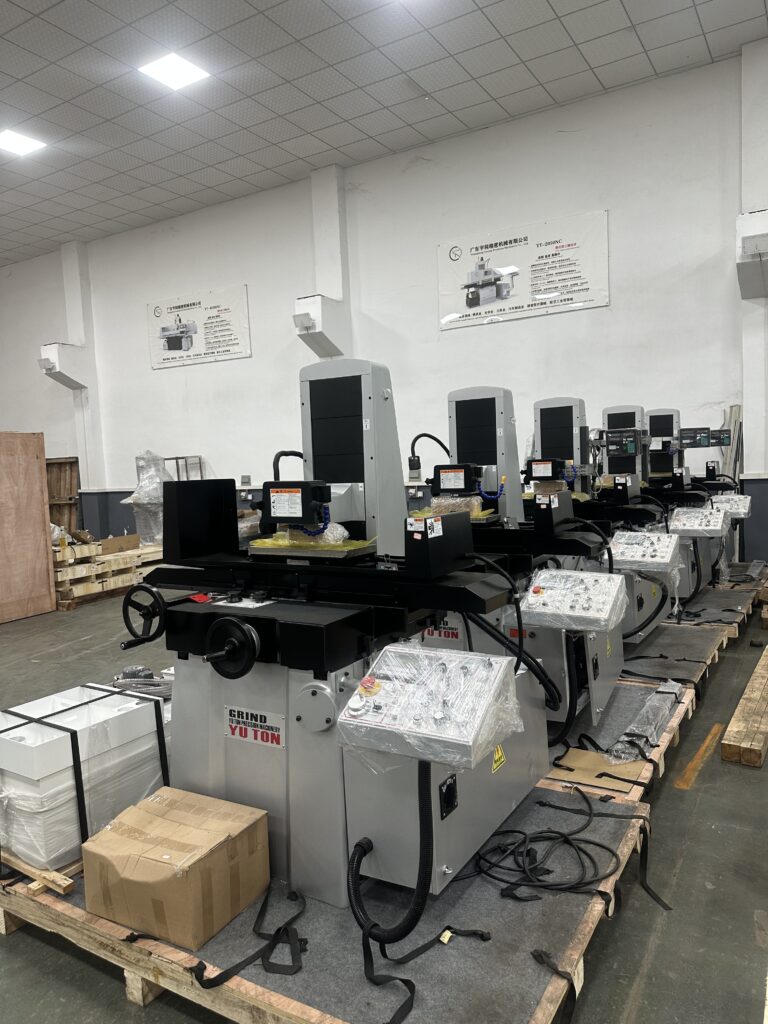
Why Automated Surface Grinding Is Reshaping Manufacturing in 2026
Automated surface grinding is now one of the fastest-growing segments in precision manufacturing. In fact, STUDER introduced its full lineup of unmanned grinding solutions in June 2026, which shows that more and more shops are moving toward this technology to stay competitive.
According to Modern Machine Shop, the CNC rotary surface grinder market alone will reach USD 1.8 billion by 2034, growing at 5.2% CAGR. In addition, the broader grinding machine market was valued at USD 5.7 billion in 2023. So the opportunity here is very clear.
But what does this mean for your shop floor? And how do you make the right investment? Let’s break it down.
Surface Grinding Machines Enter the Industry 4.0 Era
Today, modern grinding cells bring together robotic part handling, adaptive wheel dressing, and real-time process monitoring into one connected system. As a result, the goal is to reduce human work to zero while still keeping micron-level precision.
As noted by the Society of Manufacturing Engineers, smart manufacturing is now critical for any shop that wants to stay ahead in precision machining.
IoT-Connected Spindles Enable Predictive Maintenance
For instance, today’s spindles come with built-in vibration, temperature, and load sensors that send data to cloud systems. In 2023, over 40% of new grinding machines included these sensors. This means shops can catch problems before they cause scrap.
AI-Driven Control Improves Grinding Quality
Moreover, machine learning now looks at grinding forces, sound signals, and surface finish data in real time. Because of this, automated surface grinding systems can adjust feed rates, dressing timing, and coolant flow on their own — which keeps Ra values consistent across thousands of parts.
Modular Robots Cut Setup Time
Unlike older systems that took months to set up, new robotic loading cells like STUDER’s insertLoad can be ready in under 15 minutes. Specifically, dual-gripper tool changers swap parts in 8 seconds and handle workpieces up to 350mm — which makes them great for high-mix production.
Key Components for Grinding Automation
When you’re looking at automatic surface grinding equipment, there are five core parts to focus on:
• Robotic Part Loading: In most cases, gantry or articulated-arm robots feed blanks and remove finished parts so the machine can run without stopping.
• In-Process Gauging: Meanwhile, contact or non-contact probes measure sizes during grinding. This allows automatic fixes without taking the part off the machine.
• Automatic Wheel Dressing: On top of that, programmed cycles fix wheel shape at set times, which keeps the finish steady through every production run.
• Smart Coolant Delivery: These systems cut water use by 40% and energy use by 50%, while also making the surface better.
• MES Integration: Finally, OPC UA links send production data to manufacturing systems so you can track scheduling and OEE in real time.
For quality standards, you can also check ISO 9001 requirements that most grinding machine makers follow.
ROI: What to Expect from Your Investment
Now, the business case for this kind of automation becomes clear when you look at the full cost picture.
Lower Labor Costs
To start with, one automated surface grinding cell can replace 2-3 shifts that need operators. In the USA, where skilled workers cost $25-$35/hour, the labor savings pay back the machine in 18-24 months. On the other hand, in Germany and Poland where workers are even harder to find, payback happens faster.
Less Scrap and Better Quality
In addition, systems with in-process gauging cut scrap rates by 60-80%. For medical or aerospace makers where one bad part can fail a whole batch, the quality gains are often bigger than the labor savings.
Higher Output from Lights-Out Grinding
What’s more, lights-out cells run 20+ hours a day compared to just 6-8 hours by hand. Therefore, equipment use jumps from 35-45% to 85-95% — that’s three times more output without taking up extra floor space.
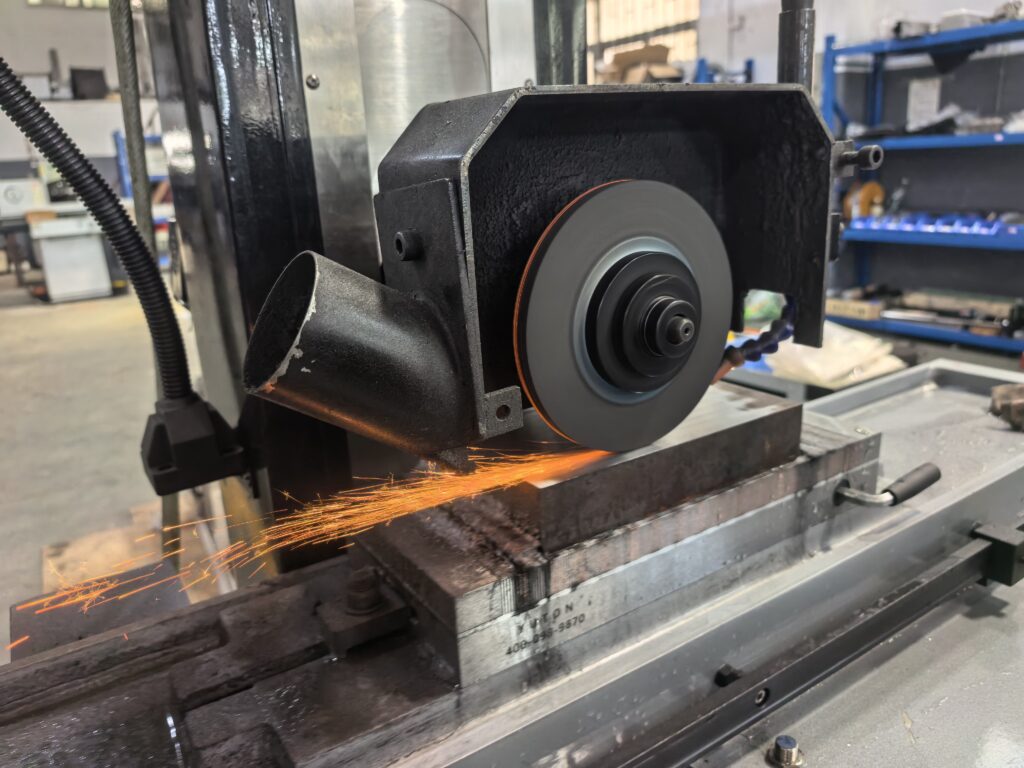
How to Choose the Right CNC Grinder
However, not every surface grinder works well for automation. So when you’re picking a machine, make sure to check these points:
• Strong Machine Body: Mineral cast or heavy cast iron beds keep their shape under heat and force. Also, pre-loaded linear guideways and hydrostatic spindles are a must.
• Open CNC System: The control needs to work with outside signals for robot connections, probe setups, and data exchange. Otherwise, closed systems create problems.
• Ready for Automation: Look for pre-made mounting points, power and air connections, and standard protocols like OPC UA and MTConnect. As a result, setup time drops a lot.
• Proven Maker: It’s important to pick a surface grinder manufacturer with real installations in your industry.
According to AMT – The Association For Advancing Technology, being ready for automation is now a must for modern shops.
YUTON CNC Series for Smart Factories
YUTON’s CNC surface grinders — including YT-450CNC, YT-40100CNC, and YT-7015NC — are built for easy automation. Each machine comes with:
• Full closed-loop control (±0.002mm precision)
• Automatic grinding and dressing cycles
• Pre-set robotic connections
• ISO 9001 quality management
• CE marking for European markets
• 150 skilled workers and 15,000㎡ factory
In fact, with 3,100+ units sold in 2025 (top 3 in China) and exports to 50+ countries, YUTON brings together Japanese, Taiwanese, and American core parts with strict quality checks. That’s why manufacturers around the world trust these machines.
Common Questions About Grinding Automation
“Will this work with my current production line?”
YUTON’s automatic surface grinders come with standard OPC UA connections and pre-wired ports. So integration goes from months down to weeks.
“Is it too expensive for our production volume?”
Actually, modular approaches change the math. You can start with basic features — PLC-controlled cycles and auto dressing — then add robots later. Specifically, YUTON’s hydraulic surface grinders let you grow step by step.
“Can automated surface grinding hold tight tolerances?”
Yes — and often better than hand work. With in-process gauging, thermal drift and human errors go away. As a result, YUTON’s CNC series holds ±0.002mm across full production batches, all backed by ISO 9001 checks.
For European compliance details, check EU machinery directives.
“Who handles after-sales support?”
YUTON offers 24-hour technical help with engineers in the USA, Europe, and Southeast Asia. Also, every manual surface grinder and CNC machine comes with full docs and a global spare parts stock.
Conclusion: What’s Next for Precision Grinding
To sum up, automated surface grinding is no longer a future idea — it’s here now. With markets growing fast toward USD 1.8 billion by 2034 and Industry 4.0 becoming the new normal, shops that wait risk losing ground to competitors already running lights-out cells with 90%+ use rates.
YUTON brings 15+ years of precision grinding know-how together with automation-ready design. Our CNC grinders, hydraulic surface grinders, and automatic large grinders are ready to fit into your smart factory — with ISO 9001, CE marking, and service across USA, Germany, Poland, Turkey, and Southeast Asia.
Ready to upgrade your shop?
FAQ
Q: What is automated surface grinding?
A: In short, it combines robotic part handling, in-process measurement, automatic wheel dressing, and smart controls with a CNC surface grinding machine. The goal is lights-out production that runs 20+ hours every day.
Q: How much does automated surface grinding cost?
A: Basic PLC-controlled features come at a small price increase. Full robotic setup with gauging adds $50,000-$150,000. However, most shops see payback in 18-24 months from labor savings and less scrap.
Q: Can older manual grinders be upgraded for automation?
A: Usually not. Older machines often lack the rigidity and precision needed. Instead, purpose-built CNC grinders give much better value over time.
Q: What precision can these systems hold?
A: Modern machines keep flatness within 0.002mm and surface finish below Ra 0.2μm. Plus, in-process gauging keeps these numbers steady across thousands of parts.
Q: Which industries get the most from automation?
A: Aerospace, automotive, medical devices, mold and die making, and precision tool shops all see strong returns.