
Surface grinding parameters determine whether a production run yields mirror-like precision or costly scrap. Therefore, understanding how wheel speed, feed rate, depth of cut, and crossfeed interact is essential for every machinist and production engineer. Moreover, optimizing these variables directly impacts cycle time, wheel life, and dimensional consistency. This guide explains the core parameters, material-specific settings, and common mistakes to avoid. Furthermore, it shows how YUTON surface grinders help shops lock in the right settings from the first pass. Consequently, readers gain a practical framework for improving both quality and throughput.
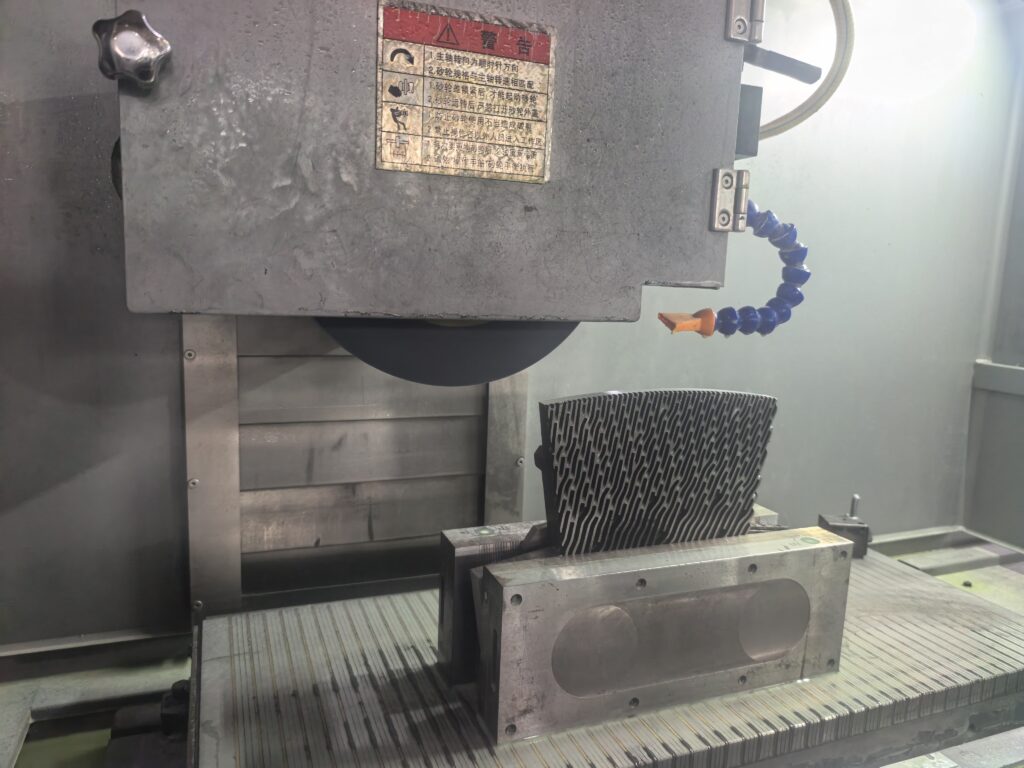
Why Surface Grinding Parameters Matter for Precision Work
Precision grinding leaves little margin for error. Specifically, a parameter mismatch of just a few percent can cause thermal damage, dimensional drift, or unacceptable surface finish. Consequently, shops that treat setup as a one-time exercise often struggle with repeatability across batches.
The Hidden Cost of Poor Parameter Setup
Incorrect settings create cascading problems throughout the process. For example, excessive wheel speed generates heat that can lead to grinding burn and micro-cracking. Meanwhile, overly aggressive depth of cut causes wheel loading, accelerated wear, and loss of geometric accuracy. As a result, operators face more frequent dressing cycles and higher consumable costs. In addition, scrapped parts and rework quietly erode profit margins.
The Direct Link Between Parameters and Productivity
Optimal settings balance speed against quality. Indeed, the right combination maximizes material removal rate while holding required tolerances and surface roughness values. Furthermore, documented and repeatable settings reduce variability between operators and shifts. Thus, well-maintained parameter sheets become a valuable process asset rather than a forgotten reference.
Core Surface Grinding Parameters Explained
Every surface grinding operation revolves around four primary variables. Additionally, secondary factors such as wheel specification, coolant delivery, and dressing frequency influence the outcome. In particular, understanding each variable’s role is the foundation of effective process optimization.
Wheel Speed
Wheel speed refers to the peripheral velocity of the grinding wheel, measured in meters per second (m/s) or surface feet per minute (SFPM). Specifically, higher speeds generally produce finer finishes but generate more heat at the contact zone. Conversely, lower speeds reduce thermal load but may leave a rougher texture. Most conventional surface grinding operations run between 20 and 35 m/s. Moreover, superabrasive wheels such as CBN often require different speed ranges. Therefore, always consult the wheel manufacturer’s recommendations before setting spindle speed. For deeper insight, see our CBN grinding wheel selection guide.
Table Speed (Longitudinal Feed)
Table speed controls how fast the workpiece travels beneath the wheel during each stroke. Specifically, faster table speeds reduce heat exposure per grit but can accelerate wheel wear. Alternatively, slower speeds allow each abrasive grain to take a deeper cut, improving finish at the cost of cycle time. Typical table speeds range from 5 to 25 m/min. In addition, the optimal speed depends on wheel grade, workpiece hardness, and desired surface roughness. For more on achieving tight tolerances, read our surface grinding tolerance guide.
Depth of Cut (Downfeed)
Depth of cut is the material removed per vertical pass, measured in micrometers or thousandths of an inch. Consequently, it serves as the most direct lever for controlling material removal rate. Roughing passes typically use 10 to 30 µm, while finishing passes range from 2 to 10 µm. Moreover, taking too deep a cut is a leading cause of grinding burn and cracking. Thus, incremental step-overs combined with spark-out passes represent standard precision practice. In addition, machine rigidity determines how deep a cut can go without inducing chatter. For burn prevention, see our grinding burn prevention article.
Crossfeed
Crossfeed determines how far the wheel indexes sideways after each longitudinal table stroke. Specifically, it is usually expressed as a percentage of the wheel’s active face width. Typical crossfeed values range from one-quarter to three-quarters of the wheel width per pass. In particular, narrower crossfeeds produce better surface finishes but increase total cycle time. Conversely, wider crossfeeds speed up stock removal but may leave visible feed marks on the finished surface. Additionally, crossfeed interacts directly with depth of cut, so adjusting one often requires recalibrating the other. Therefore, operators should treat these four variables as an interconnected system rather than independent dials.
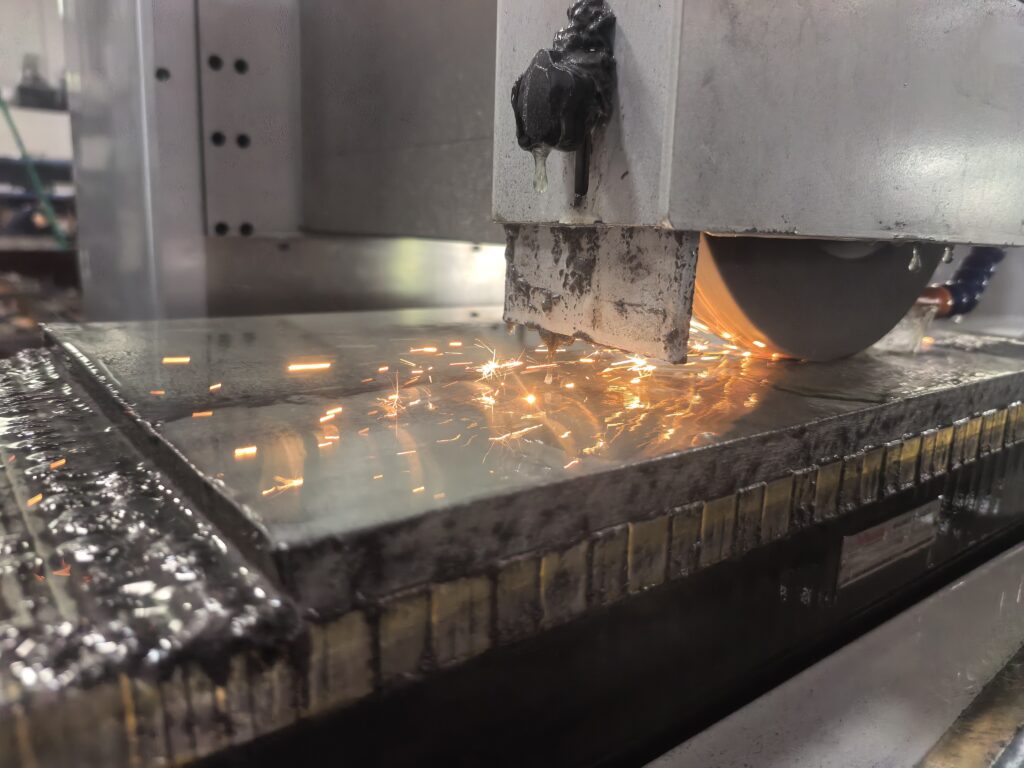
Setting Surface Grinding Parameters by Workpiece Material
Different workpiece materials respond very differently to the grinding process. Therefore, these settings must be tailored to the specific material being machined. Moreover, the ISO 9001 quality management standard emphasizes process control based on material characteristics and application requirements. The following subsections cover the most common workpiece materials. For additional material-specific guidance, the Society of Manufacturing Engineers offers extensive technical resources.
Hardened Steel
Hardened steel above HRC 50 demands conservative machine settings. Specifically, use a soft-grade, friable aluminum oxide or CBN wheel that self-sharpens effectively. A wheel speed around 25 to 30 m/s works well for most hardened steel applications. Furthermore, keep depth of cut between 5 and 15 µm per pass to avoid thermal damage and surface cracking. In addition, a steady, well-directed coolant flow is critical for dissipating heat. For complete guidance on this challenging material, see our surface grinding for hardened steel page.
Tool Steel
Tool steel contains alloying elements such as tungsten, molybdenum, and vanadium that complicate grinding. Consequently, wheel selection becomes as important as parameter tuning. Use a medium-hard aluminum oxide wheel with moderate porosity. Specifically, a table speed of 8 to 15 m/min and depth of cut of 5 to 12 µm provide a reliable starting point. Moreover, frequent dressing prevents glazing when grinding high-alloy tool steels.
Stainless Steel
Stainless steel is notorious for work hardening and rapid heat buildup. Therefore, use a softer wheel with an open structure to minimize loading and maximize chip clearance. A wheel speed of 20 to 28 m/s, table speed of 10 to 20 m/min, and shallow cuts of 5 to 10 µm are recommended. Additionally, high-pressure coolant delivery helps flush chips and reduce thermal distortion.
Cast Iron
Cast iron grinds relatively easily but produces fine, abrasive dust that can damage machine components. Specifically, a silicon carbide or coarse-grit aluminum oxide wheel with an open structure works best. A wheel speed of 25 to 33 m/s and depth of cut up to 25 µm are common. In addition, adequate coolant filtration prevents iron particles from recirculating and abrading machine ways.
Balancing Material Removal Rate and Surface Finish in Surface Grinding
Every grinding operation involves an inherent trade-off between productivity and surface quality. Specifically, high material removal rate and fine surface finish pull these variables in opposite directions. However, a systematic approach helps operators find the optimal sweet spot for each job.
Calculating Material Removal Rate
Material removal rate depends on three of the four core variables. Specifically, MRR equals depth of cut multiplied by crossfeed multiplied by table speed. Thus, increasing any of these raises productivity but may degrade finish or cause metallurgical damage. Moreover, the practical upper limit is set by machine rigidity, wheel specification, and coolant capacity. Therefore, increase settings incrementally and monitor results at each step.
The Critical Role of Spark-Out Passes
Spark-out passes are final strokes taken with zero or near-zero depth of cut. Furthermore, they allow the wheel to remove residual material caused by machine deflection and elastic recovery in the workpiece. Indeed, one to three spark-out passes can significantly improve both dimensional accuracy and surface finish. However, running too many spark-out passes wastes valuable cycle time without meaningful improvement. Therefore, operators should measure the actual gain after each pass and stop when results plateau. For more on achieving the desired surface texture and roughness values, see our surface grinding finish guide.
Optimizing Parameters for Lower Operating Cost
Thoughtful optimization also reduces operating cost. Specifically, correct settings extend wheel life, reduce dressing frequency, and minimize scrap. In addition, energy consumption drops when grinding cycles are efficient. Moreover, less rework frees capacity for additional jobs. For a structured approach, read our reduce grinding cost article.
Common Surface Grinding Parameter Mistakes and Corrections
Even experienced operators make parameter errors. However, recognizing these mistakes quickly prevents wasted time and material. The following issues appear most frequently in production. Modern Machine Shop regularly publishes grinding optimization case studies that reinforce these practices.
Running the Wrong Wheel Speed
Using a wheel speed outside the recommended range causes multiple problems. Specifically, excessive speed glazes the wheel and burns the workpiece. Conversely, insufficient speed leaves the wheel dull and produces chatter marks. Therefore, verify the wheel’s maximum safe speed before every setup. In addition, confirm the spindle reaches the selected speed under load.
Ignoring Crossfeed-to-Wheel-Width Ratio
Many operators set crossfeed by habit rather than calculation. As a result, they either waste time with narrow stepovers or create poor finishes with wide ones. Specifically, start with one-half wheel width for roughing and one-quarter for finishing. Additionally, keep crossfeed synchronized with table speed to avoid uneven wheel wear. Thus, a small crossfeed adjustment often improves finish significantly.
Neglecting Coolant Flow and Positioning
Coolant effectiveness depends on more than flooding the work zone. Specifically, concentration, flow rate, nozzle position, and temperature all influence grinding performance. Moreover, improper delivery is a leading cause of thermal damage. Therefore, position nozzles to deliver coolant directly into the grinding arc. For a complete setup guide, see our surface grinder coolant guide.
Forgetting Wheel Dressing and Balancing
A loaded, glazed, or imbalanced wheel undermines even the most carefully chosen settings. Furthermore, dressing restores sharpness and exposes fresh abrasive grains. In addition, proper balancing prevents chatter and extends spindle bearing life. Thus, dress and balance wheels on a regular schedule rather than waiting for visible problems.
How YUTON Grinders Support Optimal Parameter Setup
Choosing the right machine is half the battle. YUTON (Guangdong Yutong Precision Machinery Co., Ltd.) designs surface grinders that make parameter setup reliable and repeatable. Specifically, the company operates a 15,000 m² facility in Dongguan with seven production buildings and 150 skilled employees. Moreover, YUTON holds both ISO 9001 and CE certifications. In 2025, YUTON sold 3,100 grinding machines, ranking among China’s top three manufacturers. Additionally, core components come from leading suppliers in Japan, Taiwan, and the United States.
A Machine Model for Every Application
YUTON offers a comprehensive product line. Specifically, the range includes manual hand-crank surface grinders, automatic large-surface grinders, CNC form grinders, PLC auto-manual combination grinders, and milling machines. Furthermore, each model features stable spindle performance, rigid construction, and precise downfeed control. Therefore, operators can dial in wheel speed, table speed, depth of cut, and crossfeed with confidence. For high-volume production, explore our CNC surface grinder lineup. The Association for Manufacturing Technology also provides resources on grinding equipment standards.
Built-In Stability for Consistent Results
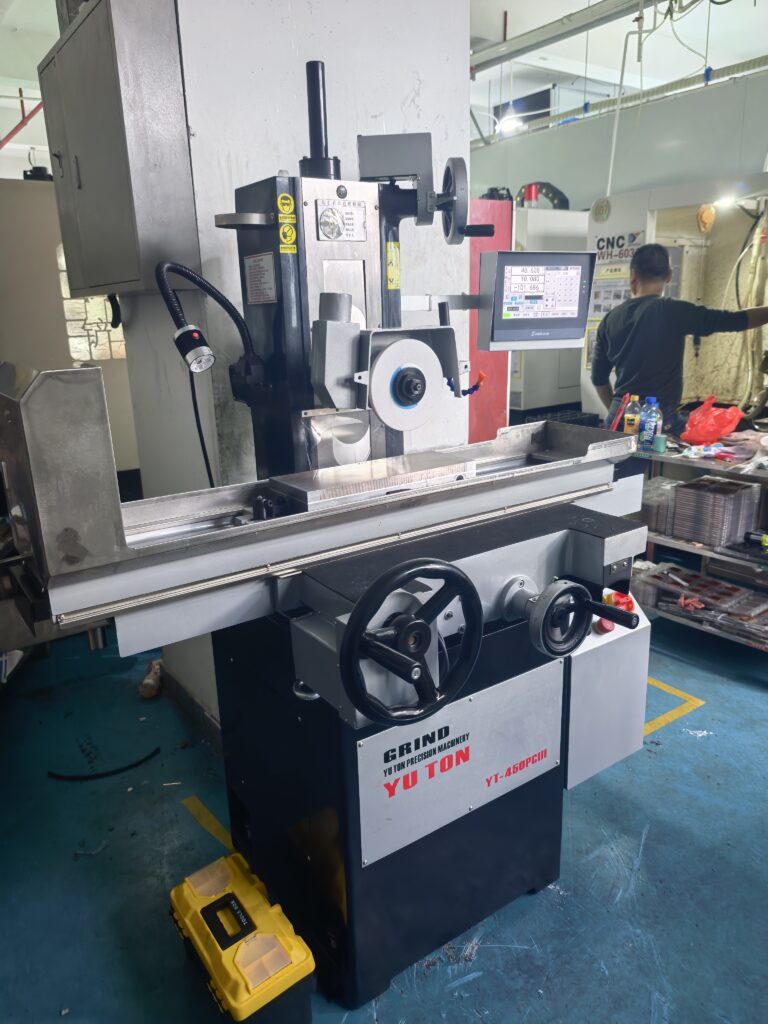
YUTON grinders feature precise digital readouts and programmable feed systems that reduce operator-induced variation. Moreover, the machine’s rigidity ensures that selected settings translate into consistent results. Indeed, premium imported components and robust construction mean less vibration and fewer process variables. As a result, shops achieve tighter tolerances and better finishes on every batch. Furthermore, YUTON’s engineering team recommends starting parameters for specific applications.
FAQ: Surface Grinding Parameters
What are the four main surface grinding parameters?
The four primary variables are wheel speed, table speed, depth of cut, and crossfeed. Specifically, these directly control material removal rate, surface finish, and heat generation. Moreover, they must be adjusted as an interconnected system rather than in isolation. In addition, wheel specification, coolant delivery, and dressing play supporting roles. Therefore, a holistic approach yields the most consistent results.
How do I select the correct wheel speed?
Wheel speed depends on wheel type, workpiece material, and desired finish. Specifically, most conventional wheels operate between 20 and 35 m/s. However, CBN and diamond superabrasive wheels may require different ranges. Furthermore, always observe the wheel manufacturer’s maximum safe speed. Consequently, excessive speed causes glazing and burn, while insufficient speed produces chatter. Thus, start within the recommended range and fine-tune from there.
What depth of cut is recommended for surface grinding?
Depth of cut varies by operation and material. Specifically, roughing passes typically use 10 to 30 µm, while finishing passes range from 2 to 10 µm. Moreover, hardened and stainless steels require shallower cuts to prevent thermal damage. In addition, always end with one to three spark-out passes for improved accuracy. Therefore, start conservatively and increase incrementally while monitoring results.
How does crossfeed affect the finished surface?
Crossfeed controls how far the wheel steps sideways after each table stroke. Specifically, narrower crossfeeds overlap more of the wheel width, producing finer surface finishes. However, they also increase total cycle time and reduce throughput. Conversely, wider crossfeeds remove material faster but may leave visible feed marks. Furthermore, the crossfeed-to-wheel-width ratio interacts with depth of cut and table speed. Therefore, adjust all three variables together when optimizing a new application.
Can optimized parameters actually reduce grinding costs?
Yes, well-tuned settings deliver measurable savings. Specifically, optimal parameters extend wheel life, reduce dressing frequency, lower scrap rates, and shorten cycles. Moreover, efficient grinding reduces energy consumption per part. In addition, documented parameters minimize setup time between jobs. As a result, shops save on consumables, labor, and machine utilization.
Conclusion
Surface grinding parameters are the foundation of precision and productivity. Specifically, wheel speed, table speed, depth of cut, and crossfeed must be balanced by material and desired outcome. Moreover, avoiding common mistakes such as incorrect speeds, poor coolant setup, and neglected wheel maintenance prevents costly rework. Furthermore, a well-built, rigid grinder makes it easier to lock in optimal settings.
Therefore, investing in a reliable machine is as important as mastering the parameters. YUTON grinders combine ISO 9001 and CE-certified quality with premium components from Japan, Taiwan, and the United States. With 150 employees across a 15,000 m² Dongguan facility and 3,100 units sold in 2025, YUTON supports grinding operations worldwide. Moreover, the full product line—from manual grinders and milling machines to CNC and PLC models—ensures a solution for every shop. Thus, YUTON helps you achieve consistent, high-quality results from the first pass to the last.