
Surface grinding for tool steel demands precision, expertise, and the right equipment to achieve optimal results. Tool steels are engineered alloys specifically designed for hardness, wear resistance, and edge retention—properties that make them essential for cutting tools, dies, and molds. However, these same characteristics present significant challenges during the grinding process. Therefore, understanding the intricacies of grinding tool steel is crucial for manufacturers seeking high-quality surface finishes and dimensional accuracy.
In this comprehensive guide, we explore the technical aspects of surface grinding hardened tool steels, from selecting appropriate grinding wheels to implementing effective cooling strategies. Furthermore, we examine common defects and their prevention, as well as how modern PLC-controlled grinding machines from YUTON can enhance productivity and precision in tool steel applications.
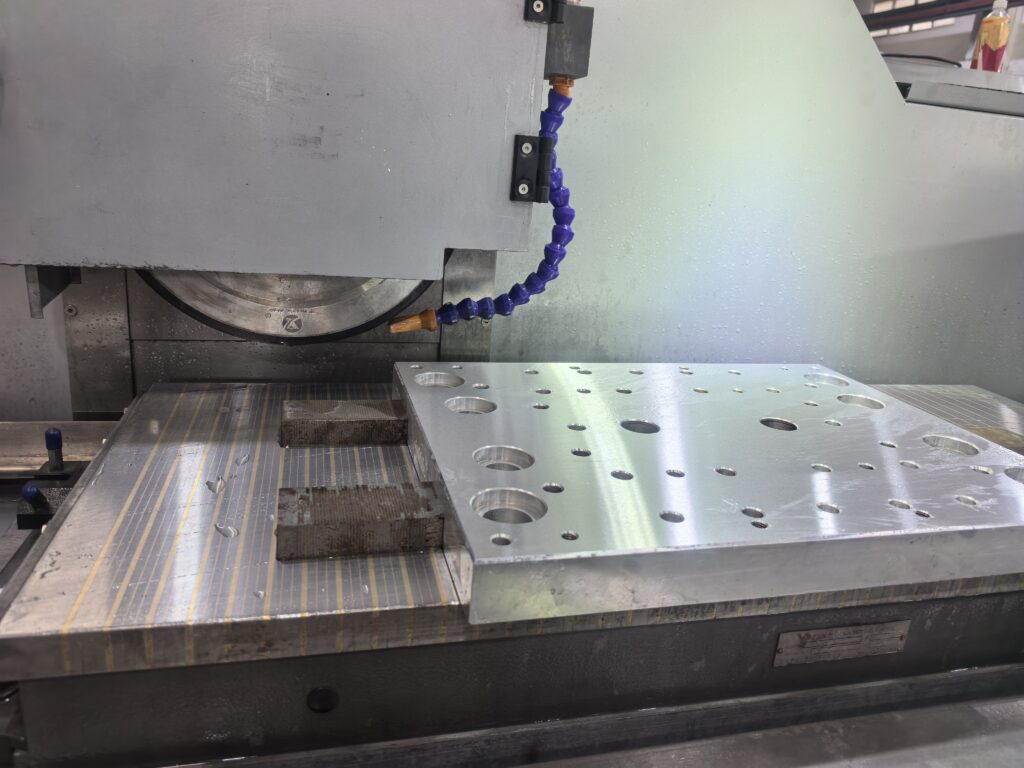
Types of Tool Steels and Their Grinding Characteristics
Tool steels encompass a wide range of alloys, each with unique properties that influence grinding behavior. As a result, identifying the specific tool steel grade is the first step in developing an effective grinding strategy.
High-Carbon, High-Chromium Steels (D-Series)
D2 steel is one of the most widely used cold work tool steels, containing approximately 1.5% carbon and 12% chromium. This alloy achieves hardness levels of HRC 58-62 after heat treatment, making it exceptionally wear-resistant but challenging to grind. Consequently, D2 requires careful wheel selection and controlled parameters to prevent thermal damage.
Air-Hardening Steels (A-Series)
A2 tool steel offers excellent dimensional stability during heat treatment and reaches hardness of HRC 58-62. The air-hardening characteristic reduces cracking risks during quenching, yet grinding A2 still demands attention to wheel grit and feed rates. Moreover, A2’s balanced hardness and toughness make it popular for blanking and forming dies.
Oil-Hardening Steels (O-Series)
O1 and O2 oils-hardening tool steels are traditional choices for hand tools and machine parts requiring good wear resistance. These grades respond well to conventional aluminum oxide wheels, and therefore, are often considered more forgiving during grinding operations compared to highly alloyed tool steels.
Hot-Work Steels (H-Series)
H13 is a chromium-molybdenum-vanadium hot work tool steel primarily used for die casting and extrusion applications. Operating at elevated temperatures requires H13 to maintain hardness up to 500°C. Grinding H13 demands thermal management, as the alloy is sensitive to overheating. Furthermore, the chromium and vanadium carbides present in H13 structure cause accelerated wheel wear.
High-Speed Steels (M-Series and T-Series)
M2 and M42 are molybdenum-type high-speed steels used for cutting tools that must retain hardness at high temperatures generated during machining. These tool steels contain significant amounts of tungsten, molybdenum, and cobalt, creating abrasive carbides that challenge conventional grinding wheels. However, CBN wheels prove highly effective for high-speed steel grinding applications.
Shock-Resistant Steels (S-Series)
S7 tool steel offers excellent impact resistance combined with moderate wear resistance. This combination makes S7 suitable for tools subjected to sudden loads, such as chisels and pneumatic hammer dies. Grinding S7 is relatively straightforward, as the alloy’s lower carbon content reduces hardness compared to D2 or M2 grades.
Challenges of Grinding Hardened Tool Steels
Hardened tool steels present unique challenges that distinguish them from softer carbon steels. Therefore, manufacturers must understand these challenges to implement appropriate solutions.
Achieving High Hardness (HRC 55-62)
After heat treatment, tool steels develop their characteristic hardness through martensitic transformation. This same hardened microstructure that provides wear resistance also makes the material extremely difficult to machine. Consequently, grinding becomes the primary method for achieving final dimensions and surface finishes on hardened tool steel components.
Carbide-Induced Abrasive Wear
The vanadium, chromium, and tungsten carbides that enhance tool steel performance accelerate wheel wear during grinding. These hard particles cause rapid dulling of conventional aluminum oxide wheels. As a result, wheel consumption increases, and grinding forces rise, potentially causing workpiece damage.
Thermal Damage Risks
Grinding generates substantial heat at the contact zone. Excessive temperatures can cause surface softening (tempering), residual tensile stresses, or even micro-cracks in the hardened layer. However, proper cooling and parameter control can effectively manage thermal effects.
Geometric Complexity
Many tool steel components feature complex geometries, including small radii, deep pockets, and precise angles. Maintaining these features during grinding requires rigid setup, appropriate wheel profiles, and careful handling. Moreover, fixture design must ensure consistent clamping force throughout the operation.
Selecting the Right Grinding Wheel
Wheel selection fundamentally impacts surface grinding success, particularly for abrasive tool steels. Therefore, matching wheel specifications to the workpiece material is essential.
Aluminum Oxide Wheels
White aluminum oxide (WA) wheels are suitable for grinding annealed or low-hardness tool steels. These wheels offer good thermal resistance and sharp cutting action. Furthermore, they are cost-effective for roughing operations on softer tool steel grades.
For hardened tool steels, sintered aluminum oxide (SG) wheels provide superior performance. The ceramic grain structure offers self-sharpening characteristics and extended wheel life. Consequently, SG wheels reduce dressing frequency and improve consistency.
CBN Wheels
Cubic Boron Nitride wheels excel at grinding hardened tool steels, particularly high-speed steels and highly alloyed grades. CBN’s extreme hardness exceeds that of most tool steel carbides, resulting in minimal wheel wear and consistent cutting action.
CBN wheels require proper bonding systems—resin, vitrified, or electroplated—to suit specific applications. Vitrified CBN wheels offer excellent form retention for precision work, while resin bonds provide shock resistance for heavy stock removal. Therefore, selecting the appropriate bond type depends on the operation requirements.
Wheel Grit Selection
Wheel grit size determines surface finish and material removal rate. Coarser grits (46-60) remove material quickly but produce rougher surfaces. Finer grits (80-120) achieve superior finishes but cut more slowly and risk burning.
For rough grinding hardened tool steel, 46-60 grit wheels are appropriate. Finish grinding typically requires 80-120 grit for Ra values below 0.8μm. Transitioning from rough to finish grits without intermediate dressing ensures consistent results.
Wheel Hardness
Wheel hardness (grade) must balance grain retention against cutting sharpness. Too hard, and the wheel glazes, generating heat. Too soft, and grains fracture prematurely, wasting material.
For grinding tool steel, medium-to-hard grades (K-N) work well with aluminum oxide wheels. CBN wheels typically use medium grades (J-K) with resin bonds. As a result, proper grade selection minimizes thermal damage while maintaining productive material removal.
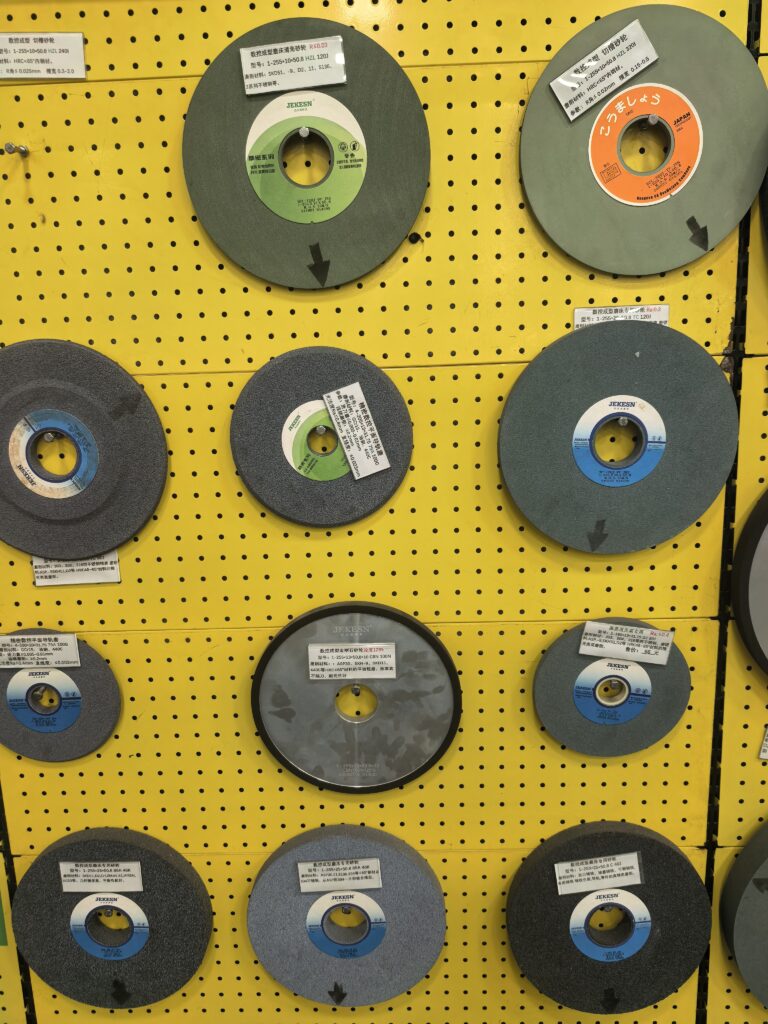
Optimal Grinding Parameters for Tool Steel
Setting correct parameters prevents damage while maximizing productivity. The relationship between speed, feed, and depth of cut requires careful balance.
Wheel Speed
Surface grinder spindle speeds typically range from 1,400 to 3,000 RPM, corresponding to wheel peripheral speeds of 5,000-7,000 SFPM for conventional wheels. CBN wheels tolerate higher speeds (5,000-9,000 SFPM) due to their thermal stability. However, wheel manufacturer specifications should always govern speed selection.
Table Speed
Table traverse speeds between 40-80 FPM work well for most tool steel grinding. Slower speeds improve finish quality but reduce productivity. Faster speeds risk chatter marks and inadequate wheel-workpiece engagement. Furthermore, table speed interacts with wheel grit and depth of cut to determine overall effectiveness.
Depth of Cut
Light cuts (0.001-0.003″ per pass) are recommended for finish grinding hardened tool steel. Rough grinding may use 0.005-0.010″ passes with appropriate wheel specifications. However, excessive depth of cut generates excessive heat and forces, potentially causing workpiece damage.
Cross-Feed
Lateral step-over between table traverses typically equals 1/3 to 1/5 of the wheel width. This provides overlap ensuring uniform material removal. Consequently, proper cross-feed prevents terrace patterns and achieves consistent surface texture.
Spark-Out Time
Allowing the wheel to continue traversing without additional depth of cut eliminates elastic deflection effects. Typically, 5-10 seconds of spark-out produces dimensionally accurate parts with improved surface finish. However, excessive spark-out wastes time without benefit.
Preventing Common Grinding Defects
Understanding defect causes enables proactive prevention. Therefore, implementing preventive measures is more effective than correcting finished parts.
Thermal Damage (Burn)
Grinding burn appears as discoloration ranging from light straw to dark blue, indicating temperature-induced phase changes. Severe burn compromises hardness and fatigue resistance, rendering components unusable.
Preventing burn requires adequate cooling, appropriate wheel selection, and parameter control. Furthermore, reducing depth of cut, lowering table speed, and increasing wheel dressing frequency all help manage heat generation.
The American Society of Mechanical Engineers (ASME) provides detailed guidelines for evaluating grinding burn in tool steel components through magnetic particle inspection and hardness testing.
Surface Cracks
Cracks in ground tool steel result from excessive tensile stresses, often induced by thermal gradients or excessive material removal rates. Radial cracks emanating from grinding contact zones indicate thermal shock, while parallel cracks suggest tensile stress exceeding material strength.
Using CBN wheels with controlled parameters reduces thermal damage risks. Additionally, sequential grinding with progressively finer wheels allows stress relief between operations.
Surface Softening (Rehardening Burn)
When temperatures exceed the tempering temperature but remain below the austenitizing temperature, surface softening occurs. This condition reduces hardness in the surface layer while maintaining hardness below. The resulting gradient compromises wear resistance and dimensional stability.
Preventing softening requires maintaining workpiece temperatures below the tempering range (typically 200-300°C for most tool steels). Consequently, effective cooling and reduced material removal rates are essential.
Chatter Marks
Regular waviness on ground surfaces indicates dynamic instability during grinding. Chatter results from wheel imbalance, spindle deflection, workpiece vibration, or insufficient rigidity. Furthermore, chatter marks compromise surface finish and may indicate impending machine problems.
Balancing grinding wheels, maintaining spindle bearings, and ensuring rigid workpiece fixturing prevent chatter. Additionally, modifying table speed can help avoid resonant frequencies.
Geometric Errors
Taper, concavity, and other shape errors stem from wheel wear, machine deflection, or improper setup. As a result, regular machine maintenance and wheel dressing maintain geometric accuracy.
Cooling Strategies and Temperature Control
Effective cooling prevents thermal damage while maintaining dimensional precision. Therefore, implementing comprehensive cooling strategies is critical for tool steel grinding success.
Flood Cooling Systems
Continuous flood cooling using water-soluble oils or synthetics provides the most effective heat removal. Flow rates of 5-10 GPM directed at the grinding zone carry heat away rapidly. Moreover, flood cooling flushes swarf from the contact zone, preventing wheel loading.
The Society of Manufacturing Engineers (SME) publishes comprehensive guidelines on cutting fluid selection and application for grinding operations.
Nozzle Design
Coolant nozzle configuration significantly impacts cooling effectiveness. Wide, flat nozzles produce consistent flow across the wheel width. Furthermore, positioning nozzles for direct impingement on the workpiece behind the wheel heel maximizes heat removal.
Multiple nozzles or directed nozzles ensure coverage across wide wheels. Nozzle blockage or misalignment creates localized overheating and potential burn zones.
Temperature Monitoring
Infrared thermometers and thermal cameras enable real-time temperature monitoring during grinding. Temperatures exceeding 150°C (302°F) indicate potential thermal damage risk. Therefore, establishing temperature limits and monitoring procedures prevents defect formation.
Dry Grinding Considerations
While flood cooling is preferred, dry grinding may be necessary for certain materials or operations. In these cases, lighter cuts, slower table speeds, and frequent dressing help manage heat. However, dry grinding should be limited to roughing operations or softer tool steel grades.
Workholding Solutions for Tool Steel Grinding
Secure, accurate workholding enables effective material removal while maintaining precision. Consequently, selecting appropriate fixtures is essential for tool steel grinding applications.
Electromagnetic Chucks
Permanent magnetic chucks provide secure holding for ferromagnetic tool steels without heat introduction from electrical sources. However, magnetic strength may reduce as magnets age or surface contamination occurs.
Electro-permanent magnetic chucks offer precise on/off control with consistent holding force. These units are particularly suitable for CNC grinding centers requiring automated workholding.
Precision Vises
Precision grinding vises with parallel jaw sets hold workpieces at known locations for sequential operations. Hardened tool steel jaws maintain parallelism over extended use. Furthermore, indexing capabilities enable rotating workpieces for multi-sided grinding without repositioning errors.
Vacuum Chucks
Vacuum workholding suits non-ferromagnetic tool steels and complex geometries where mechanical clamping proves impractical. Vacuum chucks generate holding forces through atmospheric pressure, typically providing adequate grip for light grinding operations.
Custom Fixtures
Complex tool steel components often require custom-designed fixtures. Therefore, working with experienced fixture designers ensures proper access, clamping force distribution, and thermal stability throughout the grinding operation.
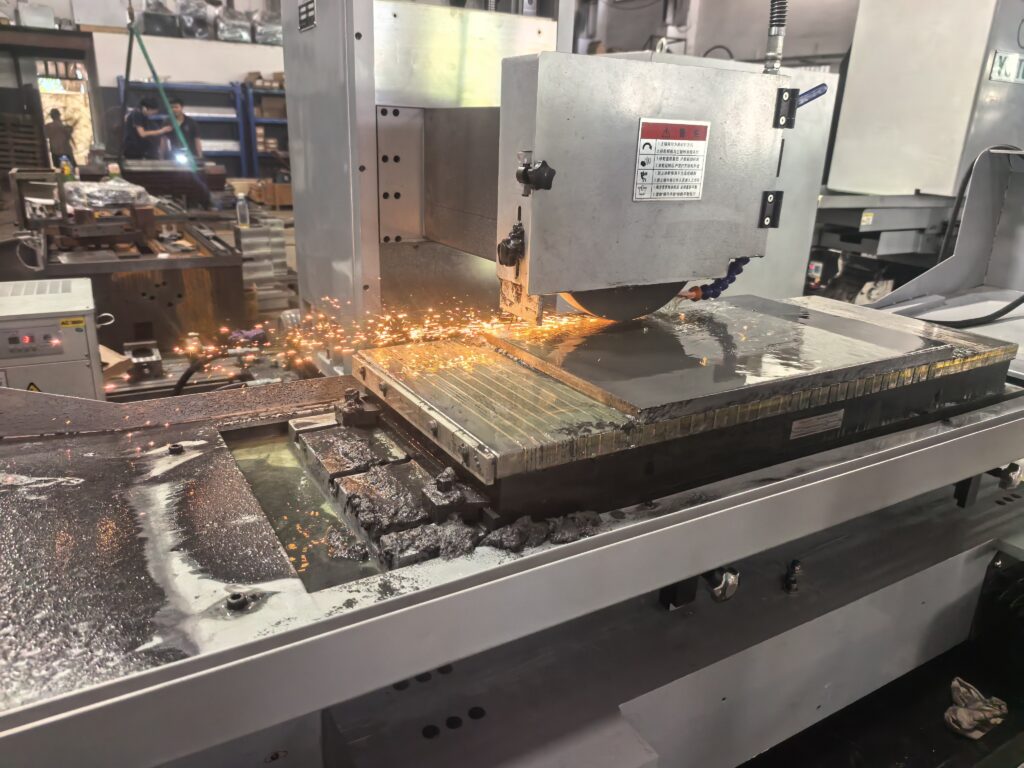
Advanced Technology: YUTON PLC-Integrated Surface Grinders
Modern surface grinding machines incorporate programmable logic controllers (PLCs) to enhance precision, flexibility, and productivity. YUTON, a leading surface grinding machine manufacturer based in Dongguan, China, integrates PLC technology with robust mechanical systems for demanding tool steel applications.
PLC Automation Benefits
PLC-controlled surface grinders enable automated cycle sequences, precise positioning control, and adaptive grinding parameters. The system stores multiple grinding programs, allowing quick changeovers between different tool steel components. Furthermore, PLC integration enables in-process gauging and closed-loop compensation for enhanced accuracy.
YUTON’s Manufacturing Excellence
YUTON operates a 15,000㎡ manufacturing facility with 7 production buildings and 150 employees, producing over 3,100 surface grinders annually. The company’s 2025 sales volume ranks among the top three in China, demonstrating market confidence in YUTON’s quality and reliability. Moreover, YUTON’s ISO 9001 and CE certifications ensure consistent quality management and international compliance.
Core Component Quality
YUTON surface grinders incorporate premium components from Japanese, Taiwanese, and American manufacturers. These high-quality parts ensure long-term precision, minimal maintenance requirements, and consistent performance in demanding production environments. Consequently, YUTON’s surface grinder solutions deliver the reliability tool steel manufacturers require.
PLC Hand-Automatic Integration
YUTON’s PLC hand-automatic surface grinders combine manual operation flexibility with automated precision. Operators can switch between manual handwheel control for setup and intricate work, and automatic cycles for high-volume production. This versatility proves particularly valuable for tool steel applications requiring both flexibility and productivity.
Precision and Stability
YUTON surface grinders achieve tight tolerances essential for tool steel components. High-rigidity cast iron beds dampen vibration, while precision-ground linear guides ensure smooth, accurate table movement. As a result, these machines maintain surface finish quality and dimensional accuracy throughout extended grinding operations.
For manufacturers seeking reliable precision surface grinding machines, YUTON’s combination of quality construction, premium components, and advanced PLC integration offers compelling value.
Applications of Surface Ground Tool Steel Components
Surface ground tool steels serve critical functions across numerous manufacturing sectors. Therefore, understanding common applications helps contextualize grinding requirements.
Injection Molds
Injection mold tooling requires extremely precise cavity surfaces to produce dimensionally accurate plastic parts. Surface grinding establishes flatness and surface finish before polishing and texturing operations. D2 and H13 tool steels are popular choices for injection mold components due to their wear resistance and thermal stability.
Stamping and Forming Dies
Sheet metal forming dies endure repetitive high-load contacts requiring excellent wear resistance. Surface grinding establishes critical die surfaces, while EDM and CNC machining create complex geometries. The European Committee for Standardization (CEN) publishes standards governing die steel specifications for industrial applications.
Cutting Tools
End mills, drills, and other cutting tools benefit from surface grinding to achieve precise geometry and surface finish. High-speed steel tools ground with CBN wheels maintain sharp edges and extended tool life. Consequently, cutting tool manufacturers rely on precision grinding for competitive performance.
Jigs and Fixtures
Tooling components including jigs, fixtures, and gages require dimensional stability and wear resistance. Ground tool steel surfaces provide reference planes and guiding elements essential for manufacturing accuracy. Furthermore, these components often serve as master references for quality control operations.
Gauge Blocks and Master Standards
Precision measurement standards demand exceptional flatness and stability. Surface ground tool steel serves as the foundation for gauge blocks, surface plates, and other metrology reference surfaces. The hardness and stability of hardened tool steel ensure these standards maintain accuracy over extended periods.
FAQ: Surface Grinding for Tool Steel
What is the best wheel for grinding hardened tool steel?
CBN (cubic boron nitride) wheels are generally considered the best choice for grinding hardened tool steel, particularly for high-speed steels and highly alloyed grades. CBN’s extreme hardness exceeds that of tool steel carbides, providing consistent cutting action and minimal wheel wear. For conventional aluminum oxide, sintered (SG) wheels offer improved performance over standard white aluminum oxide. Therefore, selecting wheels based on the specific tool steel grade and operation requirements ensures optimal results.
What RPM should a surface grinder run for tool steel?
Surface grinder spindle speeds typically range from 1,400 to 3,000 RPM, corresponding to peripheral speeds of 5,000-7,000 surface feet per minute (SFPM) for conventional wheels. CBN wheels can operate at higher speeds (5,000-9,000 SFPM) due to their thermal stability. However, always consult wheel manufacturer specifications for recommended operating speeds, as excessive RPM creates safety hazards and potential thermal damage.
How do you prevent burning when grinding tool steel?
Preventing grinding burn requires comprehensive thermal management through proper cooling, appropriate wheel selection, and controlled parameters. Use flood cooling with adequate flow rates directed at the grinding zone. Select wheels with appropriate grit and hardness for the specific tool steel grade. Reduce depth of cut, lower table speeds, and increase wheel dressing frequency when burn appears. Furthermore, implement temperature monitoring to detect thermal damage before visible discoloration occurs.
Can you grind tool steel without coolant?
While flood cooling is strongly recommended for grinding hardened tool steel, limited dry grinding may be possible for roughing operations on softer grades. Dry grinding requires significantly lighter cuts (0.001″ or less), slower table speeds, and frequent wheel dressing. However, dry grinding risks thermal damage and should be limited to non-critical stock removal operations. For precision work, coolant is essential.
What causes soft spots in ground tool steel?
Soft spots result from local overheating during grinding that exceeds the tempering temperature while remaining below the austenitizing temperature. This causes partial softening of the hardened surface layer while deeper material maintains full hardness. The resulting hardness gradient compromises wear resistance. Preventing soft spots requires effective cooling, appropriate material removal rates, and wheel specifications suited to the specific tool steel grade.
Conclusion
Surface grinding for tool steel presents technical challenges requiring careful attention to wheel selection, grinding parameters, cooling strategies, and equipment capabilities. Understanding the specific tool steel grade—whether D2, A2, H13, M2, or another variant—enables appropriate approach selection for each application.
Successful tool steel grinding depends on preventing thermal damage through proper cooling and controlled parameters. CBN wheels offer superior performance for hardened tool steels, while aluminum oxide wheels with appropriate specifications work well for many applications. Furthermore, PLC-integrated grinding machines from manufacturers like YUTON provide the precision, flexibility, and reliability demanded by modern tool steel applications.
YUTON’s commitment to quality—evident in their ISO 9001 and CE certifications, premium Japanese/Taiwanese/American components, and comprehensive manufacturing capabilities—makes their surface grinding solutions suitable for tool steel manufacturers seeking consistent results. With over 3,100 machines sold annually and ranked among China’s top three manufacturers, YUTON delivers the quality and support the tool steel grinding industry demands.
Implementing the techniques outlined in this guide enables manufacturers to achieve optimal surface grinding results for tool steel components, improving productivity, quality, and competitiveness in demanding manufacturing environments.