
Surface grinding for Inconel represents one of the most demanding challenges in precision machining. As a nickel-based superalloy with exceptional strength at high temperatures, Inconel resists deformation and work hardening, which makes it notoriously difficult to grind. Consequently, manufacturers require specialized knowledge, proper equipment, and optimized parameters to achieve the tight tolerances aerospace and industrial applications demand. This comprehensive guide covers everything from CBN wheel selection to cooling strategies, equipping you with the expertise needed for successful Inconel surface grinding operations. Therefore, understanding these fundamentals is essential for any precision machining professional.
Understanding Inconel Alloys and Their Grinding Challenges
Inconel is a family of nickel-chromium-based superalloys renowned for their outstanding corrosion resistance, high tensile strength, and thermal stability. Therefore, understanding the specific characteristics of Inconel is essential before attempting any surface grinding operation. The alloy’s unique properties create several machining challenges that differ significantly from conventional steel or aluminum. Moreover, these challenges require specialized approaches and equipment. For more information on precision surface grinder techniques, visit our surface grinding techniques guide.
Common Inconel Grades for Industrial Applications
Different Inconel grades offer varying properties suited to specific applications. Moreover, selecting the appropriate grade understanding helps determine grinding parameters. Consequently, matching your grinding strategy to the specific Inconel grade is critical for achieving optimal results. Furthermore, each grade has unique characteristics that influence machining behavior.
- Inconel 718: The most widely used grade, offering excellent tensile and fatigue strength up to 700°C. It is prevalent in aerospace engine components, gas turbine blades, and nuclear reactor parts. Therefore, this grade receives significant attention in aerospace manufacturing.
- Inconel 625: Features superior corrosion resistance and high strength at elevated temperatures. It is commonly found in marine environments, chemical processing equipment, and aerospace exhaust systems. As a result, it requires specialized cooling strategies.
- Inconel 825: Designed for extreme corrosive environments, it serves the oil and gas industry, acid production, and pollution control systems. However, this grade presents unique machining challenges due to its composition.
Key Challenges in Grinding Inconel
Inconel’s metallurgical properties create significant obstacles during surface grinding. However, with proper understanding and technique, these challenges can be overcome. Therefore, machinists must recognize these fundamental issues before proceeding. Consequently, addressing each challenge systematically leads to successful outcomes.
- Severe Work Hardening: Inconel rapidly work-hardens when subjected to mechanical stress. As a result, the surface becomes increasingly difficult to cut, requiring sharper wheels and precise control. Moreover, this work hardening occurs rapidly during grinding operations.
- High Thermal Sensitivity: The alloy retains strength at elevated temperatures but is extremely sensitive to thermal damage. Consequently, heat management is critical. Therefore, cooling strategies must be comprehensive and effective.
- Chemical Reactivity: At high temperatures, Inconel can react with wheel materials, causing wheel wear and surface contamination. However, proper wheel selection can minimize these reactions. Furthermore, compatible wheel materials are essential.
- Low Thermal Conductivity: Heat generated during grinding remains concentrated at the surface, increasing the risk of thermal damage and residual stresses. Therefore, thermal management becomes paramount.
CBN Wheel Selection for Surface Grinding Inconel
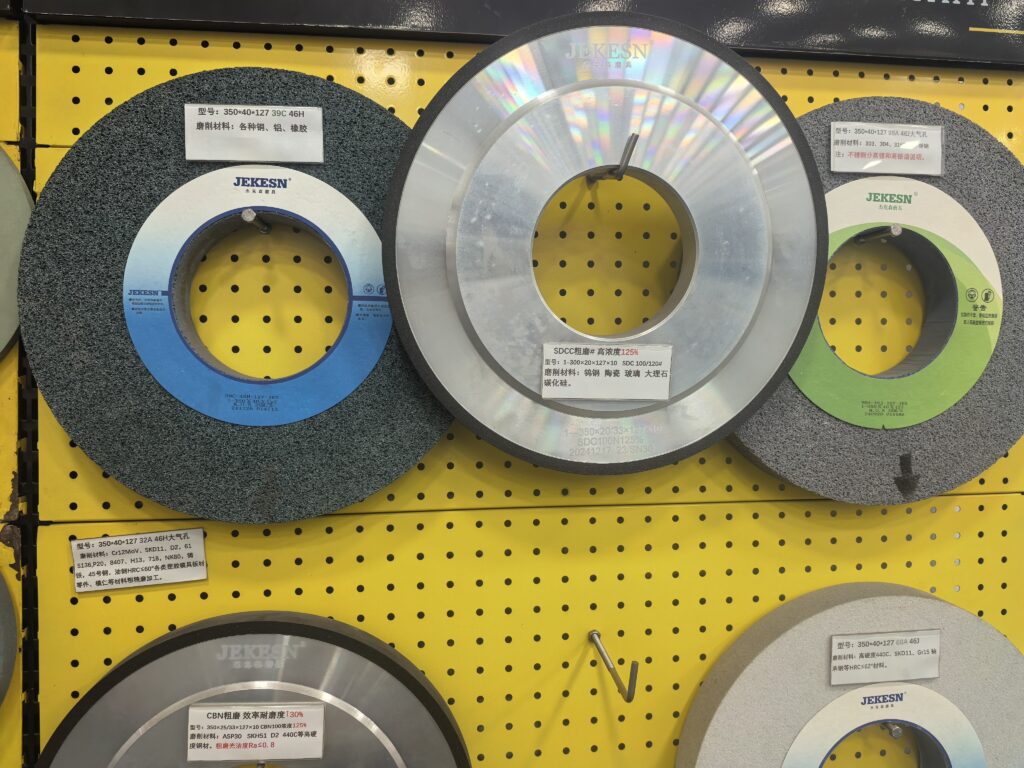
Selecting the appropriate grinding wheel is perhaps the most critical decision in surface grinding for Inconel. Furthermore, the wrong wheel can lead to rapid wear, poor surface finish, thermal damage, and excessive costs. Consequently, wheel selection deserves careful attention. Cubic Boron Nitride (CBN) wheels have become the industry standard for Inconel grinding due to their superior performance characteristics. Therefore, understanding CBN wheel advantages is essential. For detailed wheel selection guidance, see our surface grinding wheel selection guide.
Why CBN Wheels Outperform Conventional Abrasives
CBN wheels offer distinct advantages over traditional aluminum oxide or silicon carbide wheels when grinding nickel-based superalloys. In addition, these benefits directly impact productivity and quality. Moreover, the superior performance justifies the higher initial investment. Therefore, most professional operations choose CBN for Inconel applications.
- Superior Hardness: CBN ranks second only to diamond in hardness, enabling efficient cutting of work-hardened surfaces. Consequently, it maintains cutting efficiency throughout extended operations.
- Thermal Conductivity: CBN conducts heat away from the workpiece, reducing thermal damage risk. Therefore, this property is critical for heat-sensitive Inconel alloys.
- Chemical Inertness: CBN remains stable at high temperatures, preventing unwanted chemical reactions with Inconel. Moreover, this stability ensures consistent wheel performance.
- Wheel Life: CBN wheels maintain sharp cutting edges longer, reducing dressing frequency and downtime. Consequently, total cost of ownership often favors CBN despite higher initial costs.
Wheel Specification Recommendations
When specifying CBN wheels for Inconel surface grinding, several parameters require careful consideration. As a result, optimal wheel selection depends on the specific application requirements. Therefore, these specifications serve as starting points for optimization. Furthermore, consultation with wheel manufacturers is recommended.
| Parameter | Recommended Specification |
|---|---|
| Abrasive | CBN (concentration 75-150) |
| Grit Size | 80-120 for roughing, 120-220 for finishing |
| Bond Type | Ceramic or vitrified bond preferred |
| Wheel Grade | Medium hardness (J-L) |
| Structure | Dense structure for form retention |
Moreover, ceramic-bonded CBN wheels offer the best performance for most Inconel grinding applications. They provide consistent wheel wear, excellent form retention, and superior coolant penetration. However, for specific high-volume production scenarios, resin-bonded CBN may offer economic advantages. Consequently, application-specific evaluation is warranted.
Optimized Grinding Parameters for Inconel
Establishing correct grinding parameters is essential for achieving quality results while maintaining reasonable productivity. Therefore, parameter optimization requires balancing multiple factors including material removal rate, surface integrity, and wheel life. Moreover, each parameter influences the others significantly. Our CNC surface grinder specifications provide detailed parameter guidance for various applications.
Recommended Parameter Ranges
The following parameters represent established starting points for surface grinding for Inconel. However, optimization for specific applications may require adjustment based on equipment capabilities and quality requirements. Consequently, these values should be treated as guidelines rather than rigid rules. Furthermore, process development through systematic experimentation is recommended.
Wheel Speed: 5,500-6,500 surface feet per minute (sfpm) provides optimal cutting action without excessive heat generation. Higher speeds can improve productivity but increase thermal risk. Therefore, speed selection requires balancing productivity against quality requirements.
Work Speed: 40-60 feet per minute (fpm) for conventional operations. Slower speeds promote cooler cutting but reduce productivity. Consequently, finding the optimal work speed involves trade-off analysis. Moreover, work speed affects surface finish characteristics.
Infeed Rate: 0.0005-0.002 inches per pass for roughing, 0.0001-0.0005 inches for finishing. Furthermore, multiple light passes typically yield better results than single heavy cuts. Therefore, aggressive infeed should be avoided for heat-sensitive materials.
Cross Feed: 0.020-0.050 inches per revolution, depending on wheel width and finish requirements. Consequently, cross feed adjustment affects both productivity and surface quality.
Depth of Cut Strategies
Managing depth of cut is critical for thermal management in Inconel grinding. Consequently, these strategies help minimize heat input while maximizing material removal. Therefore, strategic depth management is essential for successful operations. Moreover, these approaches apply across various equipment configurations.
- Constant Depth Approach: Maintain consistent depth across the workpiece to ensure uniform heat distribution. Consequently, this consistency prevents localized thermal damage.
- Step Grinding: Use multiple lighter passes rather than single aggressive cuts. Therefore, this approach reduces peak temperatures significantly.
- Spark-Out Periods: Allow brief periods of zero infeed to reduce surface stress before wheel liftoff. Moreover, spark-out improves surface finish and reduces residual stress.
- Climb Milling Principle: When possible, employ climb grinding to push chips away from the work-hardened surface. However, this technique requires rigid machine setups.
Cooling Strategies and Fluid Selection
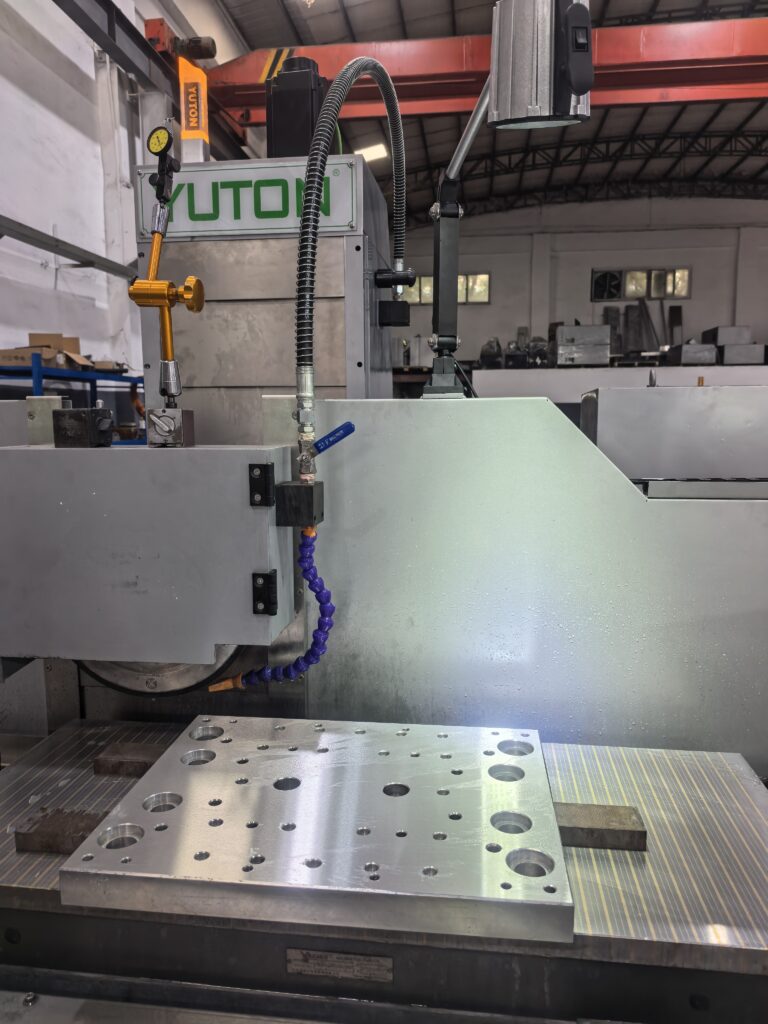
Effective cooling is perhaps the most critical factor in preventing thermal damage during surface grinding for Inconel. Moreover, improper cooling can lead to surface burns, residual tensile stresses, white layer formation, and premature component failure. Therefore, cooling systems require careful design and maintenance. According to SME’s grinding guidelines, proper coolant application is essential for aerospace material processing.
Coolant Requirements and Application Methods
The cooling system must deliver sufficient volume and pressure to flush chips and remove heat from the grinding zone. Therefore, consider these essential requirements for optimal cooling performance. Consequently, inadequate cooling leads to quality and productivity issues.
Flow Rate: Maintain high-volume flood cooling with minimum 20 GPM flow to the contact zone. Insufficient flow leads to heat accumulation and thermal damage. Therefore, flow rate monitoring is essential for consistent quality.
Nozzle Design: Use directed nozzles positioned to supply coolant directly into the grinding zone. Furthermore, multiple nozzles can address different aspects of the contact zone. Consequently, nozzle positioning affects cooling efficiency significantly.
Pressure: Moderate pressure (60-100 psi) helps penetrate the grinding zone and flush chips effectively. Excessive pressure can cause wheel washout. However, pressure optimization requires balancing multiple factors.
Temperature: Maintain coolant temperature between 68-77°F (20-25°C) for optimal heat absorption capacity. Moreover, temperature control prevents thermal shock to the workpiece.
Coolant Selection for Inconel
Selecting the appropriate coolant chemistry is essential for Inconel surface grinding. Additionally, the wrong coolant can accelerate tool wear or cause chemical attack on the workpiece. Therefore, coolant selection deserves careful attention. Furthermore, compatibility testing is recommended for critical applications.
- Semi-Synthetic Coolants: Offer good heat removal and chip settling properties. Consequently, they represent a popular choice for many operations.
- Neat Oils: Provide excellent lubricity and heat capacity, suitable for high-precision operations. However, they require careful fire safety precautions.
- Water-Soluble Oils: Balance cooling performance with lubricity requirements. Therefore, they offer versatile performance across applications.
However, avoid chlorinated oils as they can cause stress corrosion cracking in certain Inconel grades. Consequently, material-specific coolant selection is critical.
Workholding and Fixturing for Inconel Grinding
Proper workholding ensures workpiece stability, accuracy, and safety during surface grinding operations. Consequently, inadequate fixturing can cause vibration, positional errors, and potential workpiece damage. Therefore, workholding design is a critical engineering consideration. For precision surface grinder equipment recommendations, explore our precision surface grinder lineup.
Fixturing Principles
Effective workholding for Inconel grinding requires attention to several key factors. Therefore, these principles should guide fixture design and selection. Moreover, proper fixturing improves both quality and productivity.
- Rigid Support: Inconel grinding forces require robust clamping to prevent workpiece movement. Consequently, fixture rigidity is essential for dimensional accuracy.
- Magnetic Chuck Considerations: Use fine-pole magnetic chucks for thin workpieces, ensuring proper pole density. However, magnetic chucks may not suit all workpiece geometries.
- Soft Jaws and Vises: For irregular workpieces, precision-ground soft jaws provide accurate location and support. Therefore, custom fixturing may be necessary for complex parts.
- Parallel Placement: Always use precision-ground parallels to ensure workpiece flatness and alignment. Moreover, parallel verification ensures consistent results.
Specialized Fixturing for Aerospace Components
Aerospace Inconel components often require specialized holding solutions. Moreover, these fixtures must accommodate complex geometries while maintaining strict tolerances. Consequently, aerospace manufacturers invest significantly in custom fixturing. Furthermore, these investments improve quality and reduce scrap rates.
- Vacuum Chucks: Provide uniform clamping pressure for thin-walled components. Therefore, they enable grinding of delicate aerospace parts.
- Custom Mandrels: Locate and support bore features during face grinding operations. Consequently, mandrel design requires engineering expertise.
- Angle Plate Fixturing: Enable precise angular positioning for complex part geometries. Moreover, angle plates must maintain precision under grinding loads.
Common Problems and Solutions in Inconel Surface Grinding
Despite best practices, problems can arise during surface grinding for Inconel. Consequently, recognizing these issues and implementing corrective actions is essential for maintaining quality production. Therefore, operators must understand common failure modes and remediation strategies. The American Machine Tools Industry Association provides additional troubleshooting resources for precision machining operations.
Surface Burning and Thermal Damage
Surface burns indicate excessive heat input during grinding. As a result, burns lead to re-hardened zones, tensile residual stresses, and potential part rejection. Therefore, burn prevention is critical for aerospace components. Moreover, burn detection requires careful inspection protocols.
Identification: Discoloration (golden, blue, or black), altered microstructure visible under magnification
Solutions:
- Reduce infeed rates and increase number of passes. Consequently, this approach reduces heat generation.
- Increase coolant flow and improve nozzle positioning. Therefore, cooling optimization addresses burn causes.
- Reduce wheel speed slightly. However, speed reduction affects productivity.
- Check wheel for loading or dulling. Moreover, wheel condition directly affects heat generation.
White Layer Formation
White layers are brittle, re-melted surface zones caused by extreme localized heating. Therefore, they compromise fatigue performance and must be avoided. Consequently, white layer prevention requires comprehensive process control.
Identification: Bright, etched-resistant layer visible in metallurgical cross-section
Solutions:
- Implement aggressive cooling strategies. Therefore, cooling improvements prevent white layer formation.
- Use sharper, finer-grit CBN wheels. Moreover, wheel condition is critical for surface integrity.
- Reduce material removal rate per pass. Consequently, lighter cuts reduce thermal impact.
- Increase spark-out time. Furthermore, extended spark-out allows thermal equilibrium.
Excessive Wheel Wear
Rapid CBN wheel wear indicates improper wheel selection or operating parameters. However, some wear is expected and acceptable. Therefore, distinguishing normal from excessive wear is important for process optimization.
Identification: Increased power consumption, poor surface finish, dimensional drift
Solutions:
- Verify CBN concentration and grit size. Consequently, specification review identifies potential issues.
- Adjust wheel grade (try harder grade). Therefore, harder grades may improve wear resistance.
- Optimize coolant chemistry and flow. Moreover, coolant affects wheel wear significantly.
- Review grinding parameter compatibility. Furthermore, parameter optimization may reduce unnecessary wear.
Quality Control and Inspection
Implementing comprehensive quality control ensures consistent results in Inconel surface grinding. Furthermore, inspection protocols should address both dimensional accuracy and surface integrity requirements. Therefore, quality control investment pays dividends in reduced scrap and improved customer satisfaction. Review our surface grinding machine maintenance guide for equipment care best practices.
Dimensional Verification
Precision measurement verifies conformance to tolerance specifications. Therefore, establish appropriate measurement methods and frequency. Moreover, measurement capability affects achievable tolerances.
- Surface Roughness: Target Ra 0.8-1.6 μm for typical aerospace applications. Consequently, surface texture affects functional performance.
- Flatness: Use precision straight edges and feeler gauges. Therefore, flatness verification ensures part flatness.
- Parallelism: Precision height gauges and surface plates enable accurate verification. Moreover, parallelism affects assembly and function.
- Surface Texture: Profilometers assess surface finish parameters. Furthermore, detailed texture analysis reveals process conditions.
Surface Integrity Assessment
For critical applications, surface integrity testing verifies the absence of thermal damage. Moreover, these methods provide confidence in part performance. Consequently, surface integrity assessment is essential for aerospace and nuclear applications.
- Destructive Testing: Metallurgical sectioning and etching reveals microstructure alterations. Therefore, metallurgical analysis confirms process quality.
- XRD Analysis: Measures residual stress profiles and identifies harmful phases. Moreover, stress measurement affects fatigue life predictions.
- Eddy Current Testing: Detects surface and near-surface cracks or damage. Consequently, this non-destructive method enables 100% inspection.
YUTON: Your Partner in Precision Inconel Grinding
When selecting equipment for surface grinding for Inconel, YUTON (Guangdong YUTON Precision Machinery Co., Ltd.) offers manufacturing solutions trusted by precision machining operations worldwide. Located in Dongguan, our ISO 9001 and CE-certified facility spans 15,000 square meters across 7 production buildings, employing 150 skilled professionals dedicated to precision manufacturing. Therefore, YUTON combines scale with precision expertise. Learn more about YUTON’s grinding machine manufacturer capabilities on our website.
YUTON’s CNC forming grinders incorporate Japanese, Taiwanese, and American core components, ensuring exceptional quality stability and machining accuracy. Consequently, our equipment delivers reliable performance for demanding applications. In 2025, YUTON delivered 3,100 grinding machines, ranking among the top three manufacturers in China. Moreover, this volume demonstrates market confidence in our products.
Our product lineup includes manual surface grinders, automatic large-surface grinders, CNC forming grinders, and PLC-controlled semi-automatic grinders, as well as precision milling machines. Therefore, we offer solutions for various production requirements and budget levels.
Our CNC forming grinders are specifically designed to handle challenging materials like Inconel, featuring rigid machine construction, precision linear guides, and advanced control systems that enable optimal parameter control for superalloy grinding applications. Consequently, YUTON’s combination of Japanese/Taiwanese/American quality components, rigorous quality control, and competitive surface grinder price points makes us an ideal partner for precision grinding equipment needs.
FAQ: Surface Grinding for Inconel
What is the best wheel for surface grinding Inconel?
CBN (cubic boron nitride) wheels are the best choice for surface grinding Inconel. Ceramic-bonded CBN wheels with grit sizes of 80-120 for roughing and 120-220 for finishing provide optimal performance. CBN offers superior hardness, thermal conductivity, and chemical inertness compared to conventional abrasives, resulting in better wheel life and surface integrity. Therefore, most professional operations choose CBN for Inconel applications. The International Organization for Standardization (ISO) provides grinding wheel standards that can guide your selection process.
How do you prevent thermal damage when grinding Inconel?
Preventing thermal damage requires comprehensive heat management strategies. Consequently, multiple factors must be addressed simultaneously. Use high-volume flood cooling with directed nozzles, implement multiple light passes rather than single aggressive cuts, maintain proper wheel sharpness, and ensure adequate spark-out periods. Therefore, these practices collectively prevent thermal damage. Coolant temperature should be controlled between 20-25°C, and flow rates should exceed 20 GPM to the grinding zone.
What parameters should I use for grinding Inconel 718?
For Inconel 718 surface grinding, use wheel speeds of 5,500-6,500 sfpm, work speeds of 40-60 fpm, and infeed rates of 0.0005-0.002 inches per pass for roughing. Therefore, these parameters provide reliable starting points. Finish passes should use 0.0001-0.0005 inches. Consequently, lighter finish passes achieve superior surface integrity. Always use CBN wheels with ceramic or vitrified bonds, and ensure consistent, abundant cooling throughout the operation.
Why does Inconel work-harden during grinding?
Inconel undergoes severe plastic deformation during grinding, which increases its surface hardness through a phenomenon called work hardening. Consequently, this hardening makes subsequent cuts more difficult. As the grinding wheel cuts the material, the affected layer becomes progressively harder, requiring sharper wheels and more precise control. Therefore, wheel selection must account for work hardening effects. This characteristic makes CBN wheels essential as they maintain cutting edge sharpness better than conventional abrasives.
Can surface grinding cause residual stress in Inconel components?
Yes, surface grinding can introduce both tensile and compressive residual stresses in Inconel. Consequently, stress management is critical for fatigue-critical components. Improper parameters or inadequate cooling can create tensile stresses near the surface, which are harmful for fatigue-critical applications. However, proper techniques can create beneficial compressive stresses. According to the European Commission’s machinery directives, proper process control is essential for aerospace component manufacturing. Therefore, process optimization affects component service life significantly. Employing proper cooling, appropriate wheel selection, and optimized parameters helps achieve beneficial compressive residual stresses that improve component fatigue life.
Conclusion
Surface grinding for Inconel demands specialized knowledge, proper equipment selection, and precise parameter control to achieve acceptable results. Therefore, comprehensive understanding of these factors is essential for success. The unique properties of nickel-based superalloys—including severe work hardening, high temperature strength, and thermal sensitivity—require CBN wheels, optimized grinding parameters, and effective cooling strategies to prevent thermal damage and ensure surface integrity.
Successful Inconel grinding operations depend on selecting appropriate wheel specifications, implementing aggressive cooling practices, establishing correct workholding, and maintaining rigorous quality control throughout production. Consequently, manufacturers who invest in understanding these requirements achieve superior results with reduced scrap rates and improved productivity. Moreover, these investments deliver long-term economic benefits.
For precision grinding equipment capable of handling Inconel and other challenging materials, YUTON offers CNC forming grinders built with Japanese, Taiwanese, and American core components. Therefore, our equipment combines quality components with precision engineering. Our ISO 9001 and CE-certified manufacturing, combined with over 3,100 machines delivered in 2025, demonstrates our commitment to quality and customer success. Consequently, YUTON has earned recognition as a leading grinding machine manufacturer in China.
Therefore, partner with YUTON for your precision surface grinding needs and experience the difference that professional-grade equipment makes in machining superalloys. Moreover, our team of 150 professionals across our 15,000 square meter Dongguan facility stands ready to support your manufacturing success.