
Surface grinder automation is transforming precision manufacturing in 2026. By combining CNC control, automatic wheel dressing, robotic workpiece handling, and intelligent process monitoring, manufacturers can achieve higher accuracy, lower labor costs, and improved production efficiency. This guide explains how automation solves common grinding challenges while helping buyers evaluate ROI and long-term value.
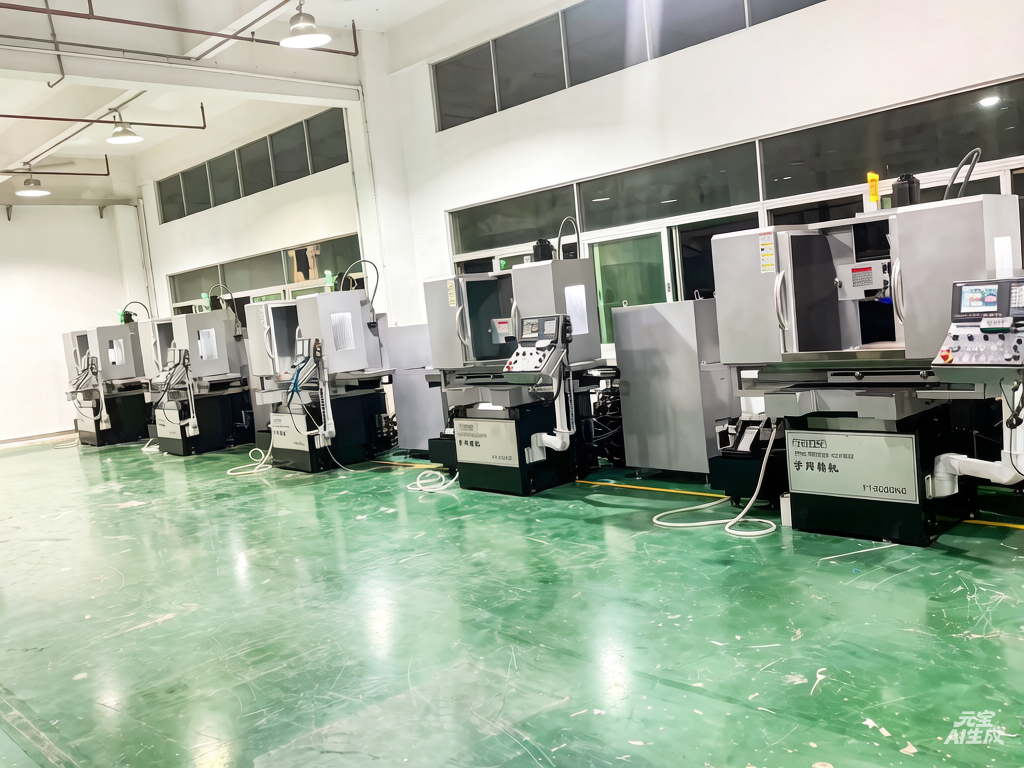
Why Surface Grinder Automation Matters in 2026
Manufacturers worldwide are facing the same challenges:
- Skilled grinding operators are increasingly difficult to recruit.
- Labor costs continue to rise.
- Customers demand tighter tolerances.
- Production schedules are becoming more demanding.
As a result, more factories are investing in surface grinder automation to maintain competitiveness.
At YUTON, automation readiness has become one of the most frequently requested requirements from overseas buyers. During 2025–2026, over 60% of inquiries included questions about automatic grinding cycles, robotic loading systems, or Industry 4.0 integration.
The market is clearly moving toward automated grinding solutions.
What Is Surface Grinder Automation?
Surface grinder automation refers to the use of CNC control systems and intelligent auxiliary technologies that reduce operator involvement while improving machining consistency.
Modern automated grinding systems combine:
- CNC-controlled grinding cycles
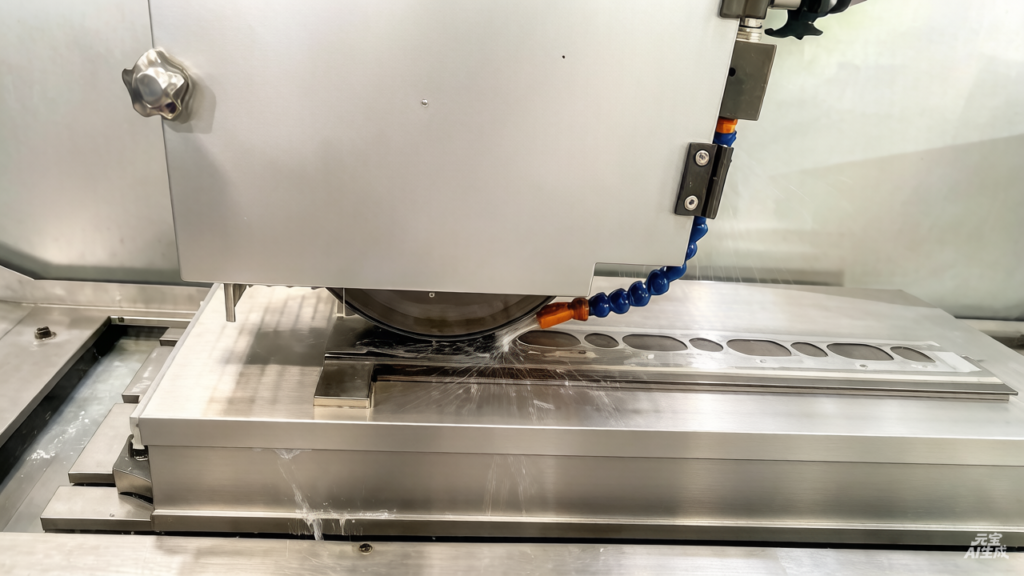
- Automatic wheel dressing
- Servo-driven positioning
- Robotic loading and unloading
- In-process measurement systems
- Remote monitoring and diagnostics
Unlike traditional manual grinders, automated machines continuously monitor process conditions and automatically compensate for wear, thermal changes, and dimensional variations.
Core Technologies Behind Surface Grinder Automation
CNC Motion Control
The CNC controller manages wheel movement, feed rates, spark-out cycles, and grinding parameters with high repeatability.
This eliminates operator variation and ensures consistent results across large production batches.
Automatic Wheel Dressing
Grinding wheel condition directly affects surface finish and dimensional accuracy.
Automated dressing systems:
- Maintain wheel geometry
- Reduce burn marks
- Improve surface finish consistency
- Extend wheel life
For manufacturers targeting Ra 0.2 μm or better, automatic dressing is often essential.
Robotic Part Handling
Robotic loading systems support:
- Lights-out manufacturing
- Unattended night shifts
- Multi-machine operation
- Reduced labor requirements
This technology is becoming increasingly common in automotive, aerospace, and mold manufacturing facilities.
Closed-Loop Measurement
Integrated gauging systems continuously monitor part dimensions.
When deviations are detected, the machine automatically adjusts grinding parameters.
As a result, precision remains stable even during long production runs.
How Surface Grinder Automation Improves Precision
Consistent Repeatability
One of the biggest advantages of automation is repeatability.
Modern CNC surface grinders equipped with linear scales can achieve positioning repeatability of ±0.001 mm or better.
Because the machine follows the same programmed process every cycle, the thousandth part can match the first part with minimal variation.
Better Surface Finish
Surface quality depends heavily on wheel condition.
Automatic dressing systems maintain sharp wheel profiles throughout production.
Benefits include:
- Reduced chatter marks
- Lower thermal damage
- Improved surface roughness
- Better dimensional stability
Consequently, manufacturers experience fewer rejected parts and lower rework costs.
Labor Savings and Productivity Improvements
Addressing the Skilled Labor Shortage
Many factories struggle to hire experienced grinding operators.
Surface grinder automation allows one operator to oversee multiple machines simultaneously.
Typical benefits include:
- Reduced direct labor costs
- Easier workforce management
- Faster operator training
- Improved production flexibility
In many cases, one operator can manage three to five automated grinders at the same time.
Increased Machine Utilization
Manual machines often sit idle during:
- Operator breaks
- Shift changes
- Setup adjustments
Automated equipment minimizes these interruptions.
As a result, spindle utilization and overall equipment effectiveness increase significantly.
Understanding Automation ROI
Many buyers focus only on machine purchase price.
However, the true investment evaluation should consider total cost of ownership.
Surface grinder automation typically generates savings through:
Lower Labor Costs
Factories often report:
- 60–70% reduction in direct labor hours
- Reduced overtime expenses
- Lower recruitment costs
Reduced Scrap and Rework
Closed-loop process control can significantly reduce dimensional errors.
Benefits include:
- Improved first-pass yield
- Fewer rejected parts
- Better customer satisfaction
Longer Wheel Life
Optimized dressing cycles reduce unnecessary wheel consumption.
Many users report wheel savings of 20–35%.
Reduced Downtime
Modern machines support predictive maintenance and remote diagnostics.
Potential issues can be identified before production is affected.
For many manufacturers, automation investments achieve payback within 12–18 months.
Industry Trends Driving Surface Grinder Automation
AI-Powered Grinding Optimization
Recent industry exhibitions have demonstrated how artificial intelligence can improve grinding performance.
AI systems analyze:
- Spindle load
- Temperature
- Acoustic emission signals
- Wheel wear conditions
The machine can then automatically optimize:
- Feed rates
- Wheel speeds
- Dressing intervals
This reduces operator intervention while maintaining optimal grinding conditions.
Industry 4.0 Integration
Today’s manufacturers increasingly require connectivity between machine tools and factory management systems.
Modern automated grinders support:
- OPC UA
- MTConnect
- Modbus TCP
These protocols enable communication with MES and ERP platforms.
Lights-Out Manufacturing
Lights-out production is becoming a realistic option for many precision machining facilities.
By combining:
- CNC automation
- Robotic handling
- Automatic measurement
manufacturers can continue production even when operators are not present.
Maintenance and After-Sales Support
Automation success depends not only on equipment quality but also on supplier support.
Remote Diagnostics
Many modern grinding machines now offer remote service capabilities.
YUTON’s automation-ready grinders allow technicians to:
- Access machine data remotely
- Diagnose faults quickly
- Reduce service response times
This minimizes downtime and improves equipment availability.
Operator Training
A user-friendly interface is critical.
Modern touchscreen HMIs simplify operation and reduce training requirements.
Most operators can become productive within only a few days of training.
How to Evaluate Surface Grinder Automation
Before investing, buyers should evaluate several factors.
Production Volume
Automation delivers the highest ROI when producing medium- to high-volume batches.
Precision Requirements
If parts require tolerances tighter than ±0.005 mm, automation often becomes economically justified.
Labor Availability
Factories facing labor shortages usually realize faster ROI from automation.
Integration Requirements
Ensure machine communication protocols are compatible with your existing manufacturing systems.
Recommended Resources
For additional information about industrial automation and machine compliance, review:
- EU Machinery Regulation 2023/1230
- ISO 13374 Condition Monitoring Standards
- Manufacturing Engineering (SME)
- Modern Machine Shop
Frequently Asked Questions
What batch size justifies surface grinder automation?
For basic CNC automation, batches of 10–20 parts may justify the investment. Robotic automation typically becomes more economical with batches of 50 or more parts.
Does automatic wheel dressing extend wheel life?
Yes. Most users experience 20–35% longer wheel life because automated systems remove only the minimum material necessary during dressing.
Can a manual surface grinder be upgraded?
Some retrofits are possible. However, replacing older machines often provides better long-term value and performance.
What surface finish can automated grinders achieve?
With proper wheel selection and coolant management, automated surface grinders commonly achieve Ra 0.1–0.2 μm. Finer finishes may require additional superfinishing processes.
How does YUTON support overseas customers?
YUTON provides:
- Remote diagnostics
- Technical support
- Spare parts assistance
- Multi-language documentation
- On-site service when required
Why Choose YUTON for Surface Grinder Automation?
YUTON has more than 15 years of experience manufacturing precision grinding machines for global markets.
Our advantages include:
- ISO 9001 quality management
- CE-compliant machine designs
- Automation-ready solutions
- Export experience in 50+ countries
- Comprehensive after-sales support
Whether you need a PLC-controlled grinder, a CNC automatic surface grinder, or a fully integrated robotic grinding cell, our engineering team can recommend the right solution for your application.
Request a Surface Grinder Automation Consultation
Selecting the correct automation level can significantly improve productivity and profitability.
Send us your part drawings and production requirements.
Our engineering team will provide:
- Machine recommendations
- Automation level suggestions
- Cycle time estimates
- ROI analysis
- Competitive quotations
Contact YUTON today to explore the most cost-effective surface grinder automation solution for your manufacturing operation.