
AI Summary
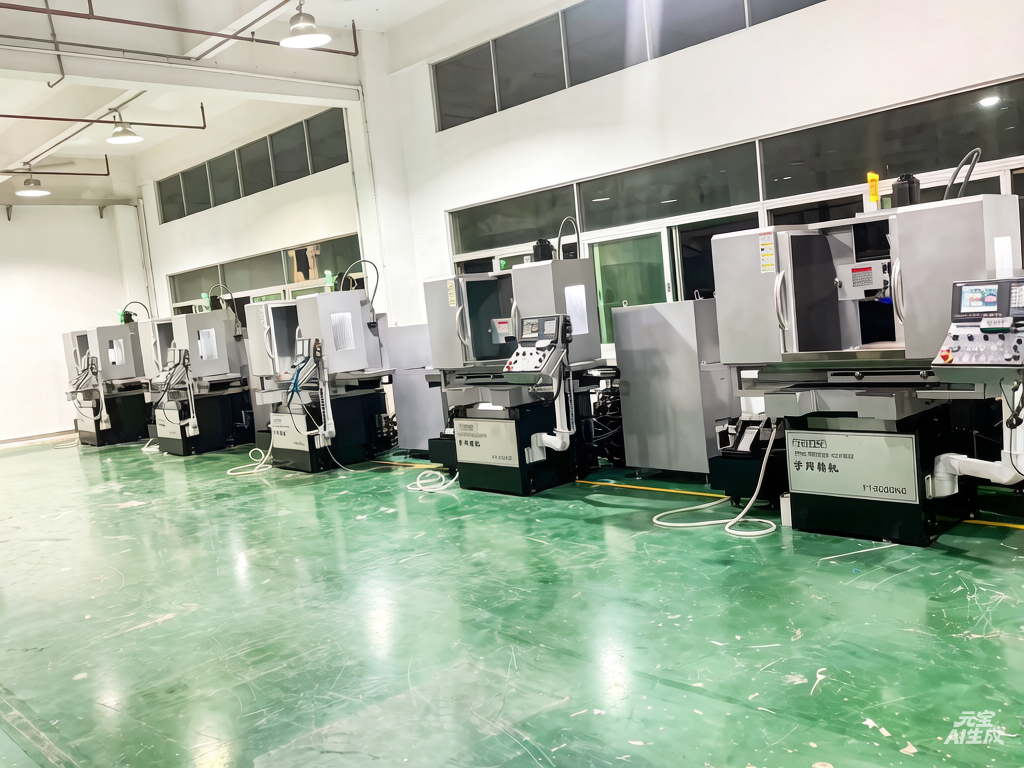
This comprehensive guide covers everything manufacturers need to know about precision surface grinding—from selecting the right machine type (manual, PLC, CNC) to optimizing grinding parameters for superior surface finish. You will learn critical evaluation criteria for machine procurement, cost-of-ownership analysis, common grinding defects and their solutions, and how ISO 9001 and CE compliance ensure quality in global supply chains. Whether you serve mold making, aerospace, automotive, or medical device industries, this guide provides actionable insights for achieving ±0.002mm precision with stable, repeatable results.
Precision Surface Grinding: The Complete Guide to Machine Selection and Process Optimization
1. Why Precision Surface Grinding Matters in Modern Manufacturing
First and foremost, precision surface grinding is the backbone of high-tolerance component manufacturing. From mold cavities requiring mirror finishes to aerospace turbine components demanding micron-level flatness, the surface grinding process directly determines part quality, assembly fit, and end-product reliability. In fact, the global grinding machinery market is projected to surpass USD 11.12 billion by 2036, driven by automation adoption and demand for tighter tolerances across industries (Future Market Insights, 2026).
For procurement managers and production engineers, however, selecting the right surface grinding machine is a strategic decision that impacts throughput, quality consistency, and total cost of ownership. This guide distills 17+ years of precision grinding expertise into a practical framework for machine evaluation, process control, and long-term operational excellence.
2. Surface Grinding Machine Types: Matching Equipment to Application
To begin with, understanding the capabilities and limitations of each machine type is essential for making an informed procurement decision. Likewise, understanding your own production requirements before evaluating specifications prevents costly mismatches. Below is a structured comparison based on YUTON’s product range and industry benchmarks.
2.1 Manual Surface Grinders: Entry-Level Precision
Manual surface grinders like the YT-450G deliver micron-level accuracy through smooth hand-operated controls. Key advantages include low initial investment, simple operator training, and suitability for small-batch, high-mix production environments. With Meehanite cast iron construction and Taiwan-imported spindles, manual grinders can achieve surface finishes of Ra 0.2μm or better when operated by skilled technicians.
2.2 PLC Automatic Surface Grinders: Semi-Automated Productivity
Meanwhile, PLC-controlled models like the YT-450PCIII bridge the gap between manual operation and full CNC automation. With programmable grinding cycles, automatic wheel dressing, and multi-groove capability, one operator can manage multiple machines simultaneously. This configuration is ideal for medium-volume production where labor cost reduction and process repeatability are priorities. In practice, this configuration has proven especially effective for automotive component suppliers running 3-shift operations.
2.3 CNC Surface Grinders: Full Automation for High-Volume Precision
Furthermore, CNC surface grinders represent the apex of grinding automation. Models such as the YT-40100CNC feature closed-loop feedback systems, multi-stage automatic grinding cycles, and precision levels of ±0.002mm. These machines excel in high-volume production environments where consistency, minimal operator intervention, and integration with Industry 4.0 frameworks are required. In other words, CNC grinders are the future-proof choice for manufacturers planning long-term automation roadmaps.
2.4 Automatic Large Surface Grinders: Heavy-Duty Applications
For large workpieces exceeding 600mm in length—common in mold base manufacturing and structural component finishing—automatic large surface grinders provide the necessary table size, spindle power, and rigidity to maintain flatness tolerances across extended surfaces. For this reason, large-frame machines remain indispensable in heavy equipment and energy sector manufacturing.
3. Critical Factors for Surface Grinder Procurement
In addition, procurement decisions in precision grinding involve balancing four interconnected factors that directly affect your bottom line.
3.1 Precision and Tolerance Requirements
As a starting point, define your target tolerance range before evaluating machines. Standard precision grinders achieve ±0.005mm, while high-end models deliver ±0.002mm or better. Verify that the manufacturer’s claimed accuracy is backed by ISO 9001 certified quality management systems and documented inspection protocols; after all, certification is only meaningful when backed by rigorous daily practice. For reference, consult ISO 841: Industrial automation systems for positioning accuracy standards.
3.2 Total Cost of Ownership (TCO)
Moreover, beyond the purchase price, TCO includes spindle replacement intervals, grinding wheel consumption, energy efficiency, coolant management, and operator training. For example, a machine with a 15% higher initial price but 30% lower maintenance costs can deliver superior ROI within 18-24 months. To illustrate, a mid-range CNC grinder with proactive maintenance typically achieves full payback through reduced scrap and higher throughput within two years. Chinese manufacturers offering direct factory pricing with CE certification provide a compelling value proposition for global buyers seeking to optimize procurement costs without sacrificing quality. Put differently, smart procurement balances upfront cost against lifetime value.
3.3 After-Sales Support and Spare Parts Availability
Equally important, downtime in precision grinding operations costs manufacturers thousands of dollars per hour. Accordingly, prioritize suppliers with dedicated technical support teams, documented spare parts catalogs, and service response commitments. As an illustration, suppliers maintaining regional spare parts warehouses can reduce lead times from weeks to days. YUTON’s global export network ensures spare parts availability across 50+ countries, with technical consultation available within 24 hours.
3.4 Compliance and Certification
Additionally, for manufacturers exporting to the European Union, CE marking is mandatory under the EU Machinery Directive 2006/42/EC. Verify that your supplier holds valid CE certificates and that the machine’s electrical systems, safety guards, and emergency stop mechanisms comply with applicable harmonized standards. In short, certification is not optional — it is a prerequisite for market access.
4. Surface Grinding Process Optimization: Achieving Consistent Quality
In practice, process optimization transforms a capable machine into a consistently high-performing production asset. The following strategies are validated through real-world application across mold, aerospace, and medical device manufacturing environments.
4.1 Grinding Parameter Selection
Specifically, optimizing wheel speed, feed rate, and depth of cut requires requires balancing material removal rate against surface finish and thermal damage risk. For hardened tool steel (HRC 58-62), typical parameters include wheel speed of 25-30 m/s, table feed of 15-25 m/min, and depth of cut of 0.005-0.02mm per pass. Documenting parameter-performance relationships builds an institutional knowledge base that reduces trial-and-error during new product introduction.
4.2 Wheel Selection and Dressing
In addition, grinding wheel specification—abrasive type (Al2O3, CBN, diamond), grit size, grade, and structure—must match—abrasive type (Al2O3, CBN, diamond), grit size, grade, and structure—must match the workpiece material and desired surface finish. Regular wheel dressing maintains cutting efficiency and prevents glazing, burning, or chatter marks. Automatic dressing cycles on CNC and PLC grinders ensure consistent wheel geometry without operator variability. As a consequence, PLC and CNC grinders deliver substantially higher batch-to-batch consistency compared to purely manual operations.
4.3 Coolant Management and Thermal Control
Furthermore, effective coolant application removes heat from the grinding zone, preventing thermal expansion that compromises dimensional accuracy. Modern coolant systems with filtration down to 10μm extend fluid life, improve surface finish, and — most importantly — reduce environmental impact, and reduce environmental impact. Monitoring coolant concentration and pH levels should be part of daily preventive maintenance routines. In turn, consistent coolant management extends spindle bearing life and maintains thermal stability throughout long production runs.
5. Precision Grinding Across Key Industries
Consequently, different industries impose unique requirements on surface grinding processes, from material-specific challenges to regulatory compliance obligations; consequently, each sector warrants a tailored grinding strategy.
5.1 Mold and Die Manufacturing
Mold makers demand exceptional surface finishes (Ra 0.1μm or better) on cavity surfaces to ensure proper part ejection and aesthetic quality. Precision surface grinding of mold bases, inserts, and slides requires rigorous flatness and parallelism control, as cumulative errors compound across multi-cavity tools. The SME Manufacturing Engineering resource center offers additional technical references for mold grinding best practices.
5.2 Aerospace Component Grinding
In contrast, aerospace applications demand absolute process reliability. Specifically, turbine blade root grinding and landing gear component finishing must meet stringent NADCAP and AS9100 requirements. Turbine blade root grinding, landing gear component finishing, and structural part surface preparation must meet stringent NADCAP and AS9100 requirements. Material challenges include high-temperature alloys (Inconel, titanium) that require CBN or diamond wheels and carefully controlled grinding parameters — hence, process validation and documentation are non-negotiable — to avoid surface integrity degradation.
5.3 Medical Device Precision Grinding
Similarly, medical instruments, implant components, and surgical tool manufacturing require manufacturing require ISO 13485 compliance and FDA material traceability. Surface grinding of stainless steel medical parts demands burr-free edges, contamination control, and documented process validation. Moreover, cleanroom-compatible grinding setups with HEPA-filtered coolant systems are increasingly specified for Class II and Class III medical devices. Cleanroom-compatible grinding setups with HEPA-filtered coolant systems are increasingly specified for Class II and Class III medical devices. As such, medical grinding represents one of the most demanding — and rewarding — application verticals.
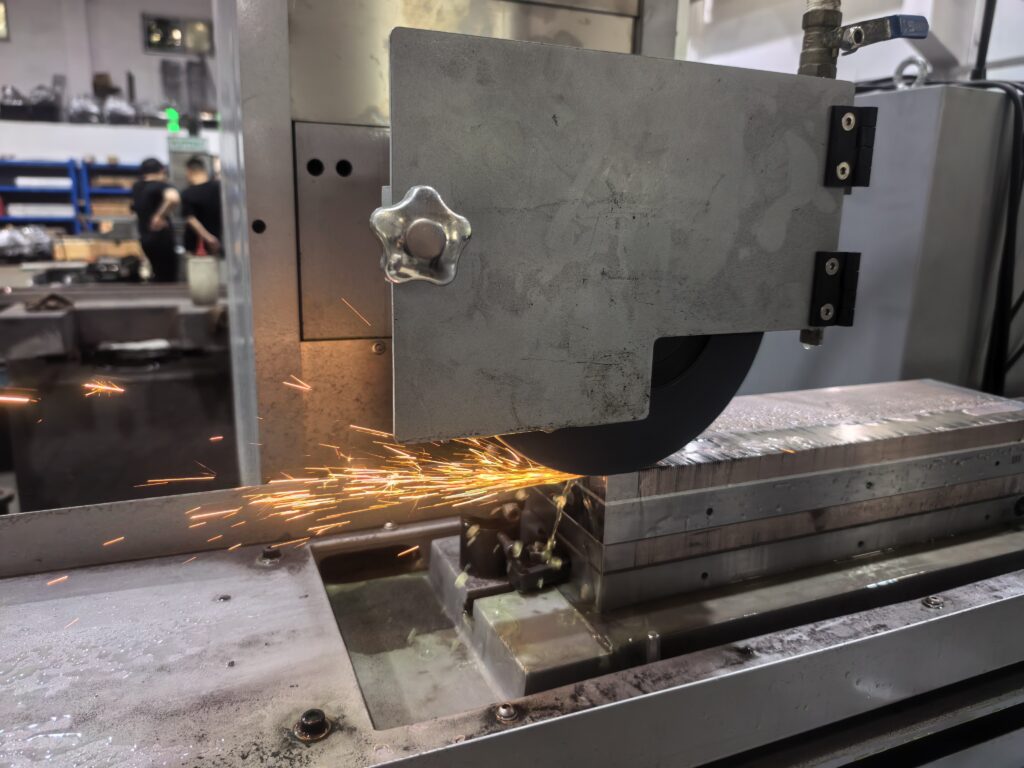
6. The Future of Surface Grinding: Smart Automation and Industry 4.0 Integration
As a result, the grinding industry is experiencing a technological transformation driven by three converging trends, as identified at AMT – The Association for Manufacturing Technology and GrindingHub 2026.
6.1 AI-Powered Adaptive Grinding
Notably, artificial intelligence is moving grinding from pre-programmed cycles to adaptive, self-optimizing processes. AI systems analyze real-time sensor data—spindle load, vibration, acoustic emission—to dynamically adjust feed rates, detect wheel wear, and predict optimal dressing intervals. This technology, showcased at GrindingHub 2026 by multiple exhibitors, promises to reduce scrap rates by up to 40% while extending wheel life by 25-30%. In other words, smart grinding systems pay for themselves through reduced consumable costs and higher throughput.
6.2 Digital Twin and Predictive Maintenance
In the same vein, digital twin technology creates a virtual replica of the grinding machine and process, enabling simulation-based optimization without interrupting production. In essence, digital twins allow manufacturers to test parameter changes virtually before committing to physical trials. Coupled with IoT sensors monitoring bearing temperature, motor current, and hydraulic pressure, predictive maintenance algorithms alert operators to potential failures before they cause unplanned downtime. As a result, maintenance shifts from reactive to proactive, dramatically improving overall equipment effectiveness (OEE).
6.3 Collaborative Robotics in Surface Finishing
Finally, the emergence of collaborative surface finishing workstations—such as ABB’s OmniVance system—demonstrates the industry’s push toward flexible, accessible automation for small and medium manufacturers. These plug-and-play solutions reduce programming time by up to 90%, making robotic grinding economically viable for batches as small as 50 pieces. In the long run, this democratization of automation stands to reshape the competitive landscape of precision manufacturing.
7. Surface Grinder Maintenance: Maximizing Machine Life and Performance
Ultimately, a well-maintained surface grinder delivers consistent precision for 15-20 years or more. The following maintenance framework, refined through 17+ years of grinding machine manufacturing experience, ensures sustained accuracy and minimal downtime. Indeed, the difference between a 10-year and a 20-year machine lifespan often comes down to maintenance discipline.
7.1 Daily Preventive Maintenance Checklist
- Check and refill way oil and hydraulic oil levels
- Inspect grinding wheel for cracks, glazing, or uneven wear
- Verify coolant concentration (refractometer reading) and filter condition
- Clean magnetic chuck surface and T-slot areas
- Run warm-up cycle for 10-15 minutes before precision work
7.2 Weekly and Monthly Maintenance Tasks
- Inspect hydraulic hoses and fittings for leakage
- Check spindle runout with dial indicator (should remain within 0.002mm TIR)
- Clean coolant tank and replace filters if needed
- Verify axis straightness and parallelism using precision square and dial indicator
- Lubricate leadscrews, guideways, and all grease fittings per manufacturer schedule. Finally, document all maintenance activities in a logbook for traceability and trend analysis.
Frequently Asked Questions About Precision Surface Grinding
What is the typical precision tolerance of a surface grinding machine?
Generally speaking, standard surface grinders achieve flatness and parallelism within ±0.005mm, while high-precision CNC models deliver ±0.002mm or better. and parallelism within ±0.005mm, while high-precision CNC models deliver ±0.002mm or better. Actual accuracy depends on machine construction quality, spindle condition, operator skill, and environmental temperature control. In practice, a 1°C temperature swing can cause measurable dimensional drift on large workpieces.
How do I choose between a manual and CNC surface grinder?
On one hand, choose a manual grinder for small-batch, high-mix production where flexibility matters most., high-mix production where flexibility and low capital investment are priorities. Select a CNC grinder when you need high-volume consistency, unattended operation capability, multi-step grinding cycles, and integration with automated production lines.
What grinding wheel should I use for hardened tool steel?
As a rule of thumb, for hardened tool steel (HRC 58-65), aluminum oxide (Al2O3) wheels with ceramic grain deliver the best balance of cost and performance., aluminum oxide (Al2O3) wheels with ceramic grain, 46-80 grit, medium grade (J-K), and vitrified bond are recommended for general-purpose grinding. For ultra-precision applications, CBN wheels offer superior wear resistance and thermal conductivity.
How often should I dress my grinding wheel?
Dress the wheel when you observe surface finish degradation, increased grinding forces, burning marks on the workpiece, or audible chatter. For precision grinding, single-point diamond dressing every 20-30 workpieces (or every 2-4 hours of continuous grinding) maintains optimal cutting performance; nevertheless, always verify surface quality after dressing before resuming production.
What are the key CE requirements for importing a surface grinder into the EU?
Under current regulations, CE compliance requires the machine to meet the EU Machinery Directive (2006/42/EC) and EMC Directive (2014/30/EU). the EU Machinery Directive (2006/42/EC), EMC Directive (2014/30/EU), and applicable harmonized standards (EN ISO 12100 for risk assessment, EN 60204-1 for electrical safety). The manufacturer must provide a Declaration of Conformity, technical file, and user manual in the local language.
What is the difference between surface grinding and Blanchard grinding?
By comparison, surface grinding uses a rotating abrasive wheel on a horizontal or vertical spindle, achieving tighter tolerances and finer finishes than Blanchard grinding. on a horizontal or vertical spindle to produce flat surfaces with tight tolerances and fine finishes. Blanchard grinding (rotary surface grinding) uses a segmented grinding wheel on a vertical spindle with a rotating magnetic table, optimized for rapid stock removal on large workpieces with slightly lower precision requirements.
Conclusion: Building a Precision Grinding Strategy for Long-Term Success
In conclusion, precision surface grinding is not merely a machining operation—it is a strategic manufacturing capability that differentiates competitive suppliers from commodity producers. By selecting the right machine type for your application, optimizing grinding parameters based on material-specific requirements, and implementing a rigorous maintenance program, you can achieve consistent consistent ±0.002mm precision with minimal scrap and maximum throughput.
Furthermore, as the industry evolves toward AI-driven adaptive grinding, digital twin simulation, and collaborative robotic finishing, forward-thinking manufacturers are investing in upgradeable CNC platforms that can integrate with emerging Industry 4.0 frameworks. The convergence of ISO 9001 quality systems, CE compliance, and global export capability ensures that your precision grinding investment delivers value across international markets. In summary, a well-planned grinding strategy is the foundation of sustainable manufacturing excellence.
Take the Next Step in Precision Grinding
Above all, if you are ready to optimize your surface grinding operations, YUTON offers factory-direct pricing, CE-certified machines, and technical support across 50+ countries.
- Request a Quote – Get direct factory pricing within 24 hours
- Contact YUTON – Speak with a precision grinding specialist
- Get Technical Support – Troubleshooting, spare parts, and maintenance guidance