
In modern manufacturing, achieving tight tolerances and superior surface finish is essential. Precision grinding plays a critical role in producing high-quality components across industries such as aerospace, automotive, and tooling.
Whether you are selecting a precision grinder or optimizing your precision surface grinding process, understanding the fundamentals is key to improving both efficiency and accuracy.
This guide covers everything from grinding principles to machine selection, helping manufacturers make informed decisions.
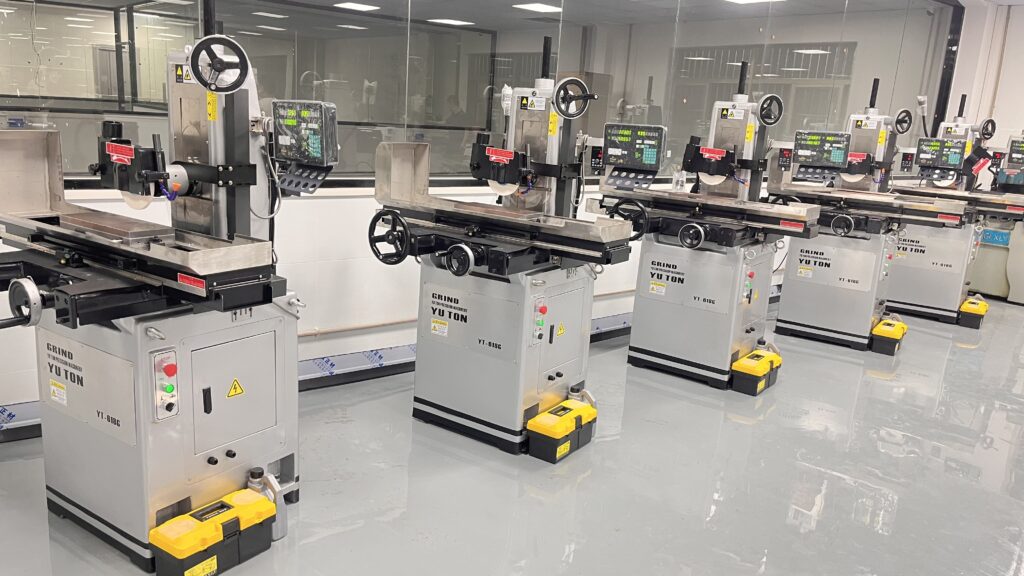
1. What Is Precision Grinding?
Precision grinding is a machining process that removes material from a workpiece using an abrasive grinding wheel to achieve extremely fine tolerances and smooth surface finishes.
Typical characteristics include:
- High dimensional accuracy (±2–5μm)
- Excellent surface finish
- Tight flatness control
- Consistent repeatability
It is widely used in applications where traditional machining cannot achieve the required precision.
2. What Is a Precision Grinder?
A precision grinder is a machine tool designed specifically for high-accuracy grinding operations.
Common types include:
- Surface grinders
- Cylindrical grinders
- CNC grinding machines
Among these, surface grinders are the most widely used for flat surface finishing.
3. Precision Surface Grinding Process
Precision surface grinding focuses on producing flat and smooth surfaces with tight tolerances.
Key process steps:
- Workpiece clamping
- Grinding wheel rotation
- Table reciprocating movement
- Controlled feed (depth of cut)
- Spark-out finishing
This process ensures consistent surface quality and dimensional accuracy.
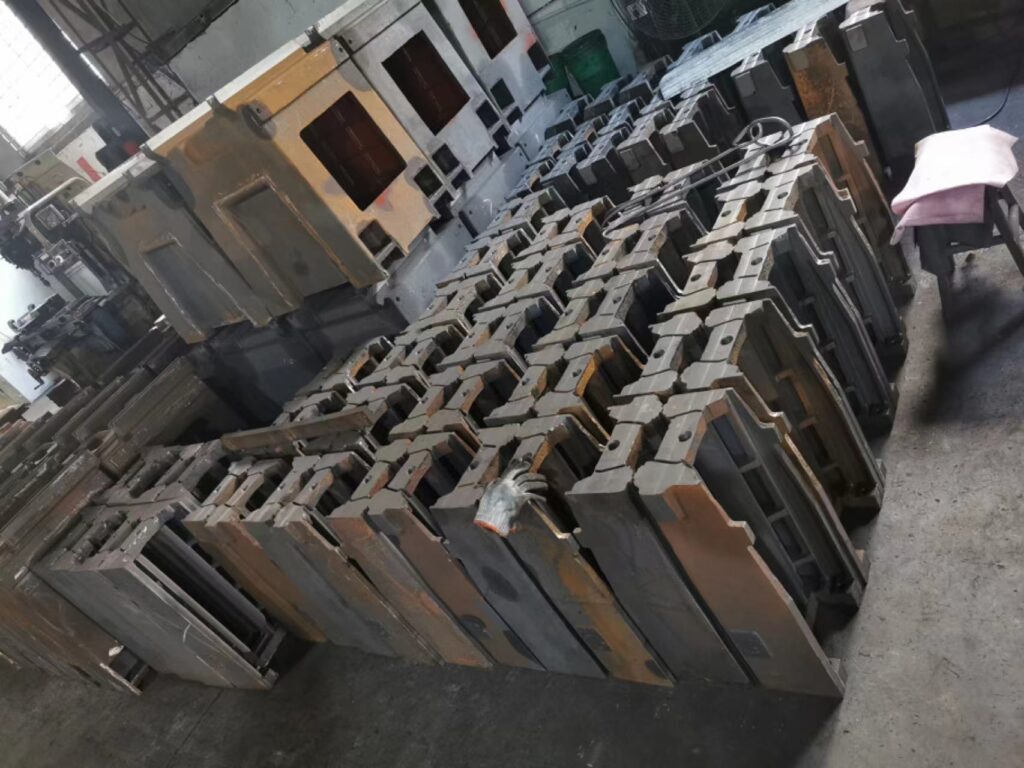
4. Key Factors Affecting Precision Grinding Quality
To achieve high-quality results, several factors must be controlled:
Machine Structure
High rigidity cast iron reduces vibration.
Spindle Performance
High precision spindle ensures stable rotation.
Grinding Wheel Quality
Wheel material and balance directly affect surface finish.
Thermal Stability
Temperature changes can cause dimensional errors.
Operator or Control System
Manual skill or automation system impacts consistency.
5. Applications of Precision Grinding
Precision grinding is widely used in:
- Mold and die manufacturing
- Automotive components
- Aerospace parts
- Precision metal plates
- Tooling and fixtures
It is essential for achieving high-performance and high-accuracy components.
6. Types of Precision Surface Grinding Machines
Manual Surface Grinder
- Flexible operation
- Suitable for small batches
Semi Automatic Surface Grinder
- Hydraulic table movement
- Improved efficiency
Automatic / CNC Grinder
- High automation
- Ideal for mass production
Selecting the right machine depends on production volume and precision requirements.
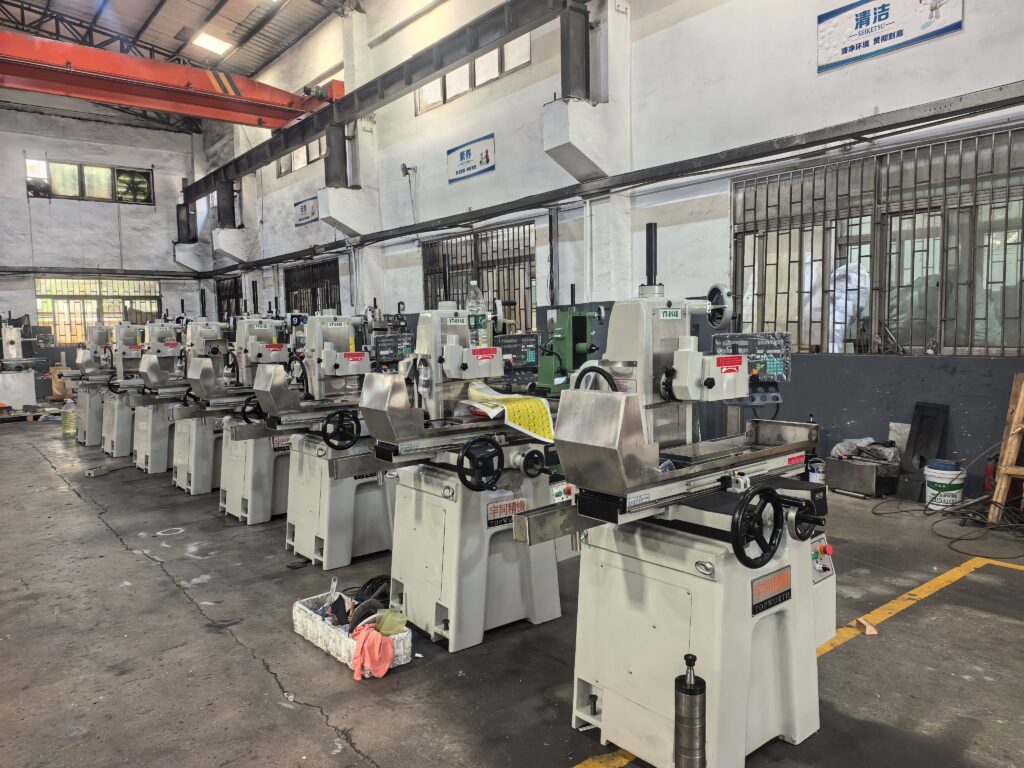
7. How to Choose the Right Precision Grinder
Define your application
- Flat parts → surface grinder
- Complex shapes → CNC grinder
Determine precision requirements
- Standard → ±5μm
- High precision → ±2μm
Evaluate machine quality
- Structure rigidity
- Spindle system
- Component sourcing
Choose a reliable manufacturer
- ISO certification
- Export experience
- Stable product quality
A high-quality supplier ensures long-term performance and reliability.
Get a High Precision Grinding Solution
If you are looking for a reliable precision grinder or precision surface grinding machine, working with a professional manufacturer is critical.
We provide:
- High precision grinding machines
- Stable quality with global components
- Full range: manual, semi-auto, automatic solutions
- Factory direct supply
Contact us today to get a customized solution and quotation.
FAQ
What is precision grinding used for?
Precision grinding is used for achieving tight tolerances and smooth surface finishes in metal parts.
What is the difference between precision grinding and machining?
Grinding provides higher accuracy and surface finish compared to standard machining processes.
What is a precision grinder?
It is a machine designed for high-accuracy grinding operations, including surface and cylindrical grinding.
What industries use precision surface grinding?
Aerospace, automotive, mold making, and precision manufacturing industries.
How to improve precision grinding quality?
Use high-quality machines, stable structure, proper grinding wheels, and correct process parameters.
Conclusion
Precision grinding is essential for modern manufacturing, enabling high accuracy and superior surface quality.
By selecting the right precision grinder and optimizing your precision surface grinding process, you can significantly improve productivity and product quality.