
When a workshop needs a new reciprocating-table grinder, the buying decision rarely starts with a brochure. In fact, it starts with a question that matters more than price: who actually builds the machine? Choosing the right hydraulic surface grinder manufacturer determines delivery time, tolerances, parts support, and long-term ownership cost. Moreover, buyers who skip vetting often learn too late that their supplier is just a trader or assembly shop. This guide explains what a real grinder builder does, how to audit one, and why factory-direct sourcing wins. It also shows how dealers can partner with a machine tool factory directly.
What a Hydraulic Surface Grinder Manufacturer Actually Does
Factory, trader, or assembler?
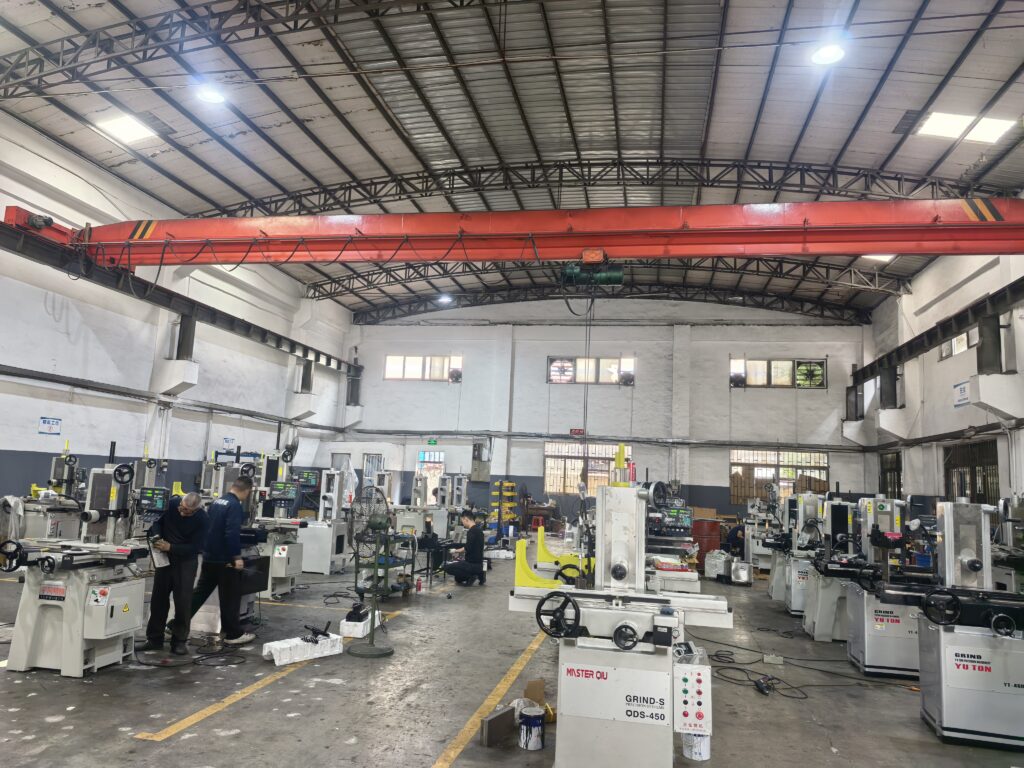
Many suppliers advertise as manufacturers, yet their actual role varies widely. Specifically, three business models dominate the market. A true factory fabricates its own bases, machines critical components, scrapes the ways, and assembles each grinder in-house. Trading companies, by contrast, buy completed machines from several builders and resell them with a margin. Assemblers occupy the middle ground: they buy pre-made beds and columns, then only fit hydraulic and electrical parts. Indeed, their nameplates may look identical to a factory’s, but the engineering depth behind them is not. Consequently, the price gap between these models can reach thirty percent, even when the machines look identical. For buyers, the first audit question is therefore simple. Can you show the machining and scraping workshops on a live video call?
Core components and sourcing
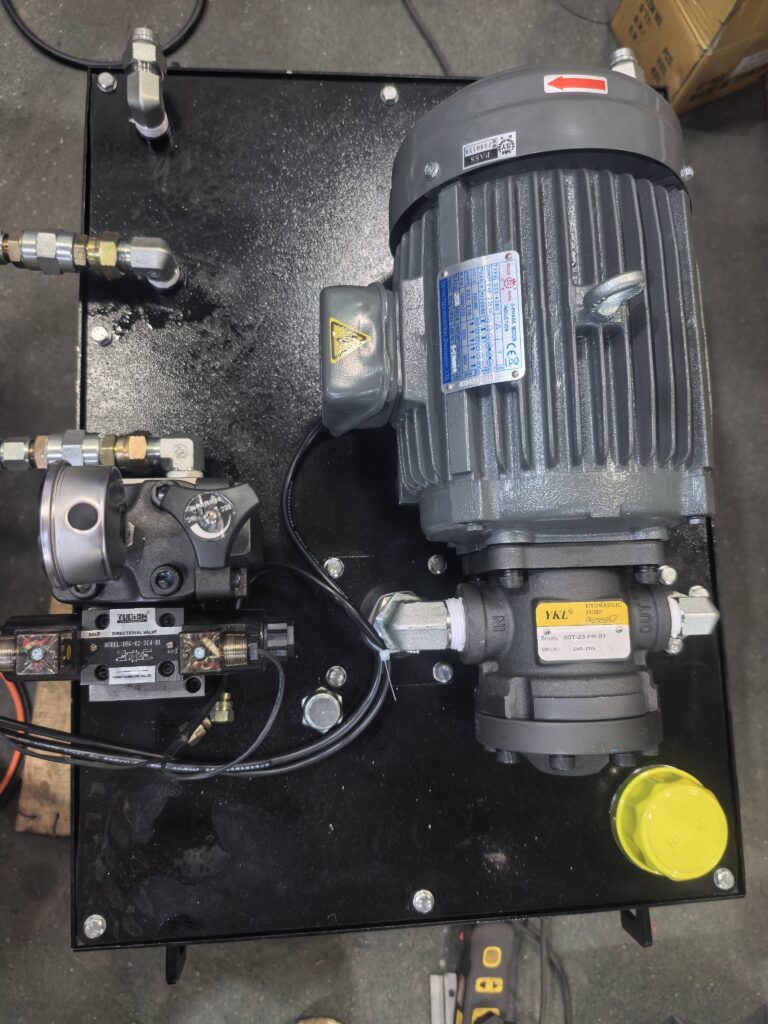
The performance of hydraulic surface grinders depends on a short list of critical parts. In particular, the hydraulic pump, valve block, spindle, linear guides, and electrical controls decide accuracy and long-term reliability. A competent grinding machine maker sources these from Japanese, Taiwanese, American, or European brands and documents every batch. Furthermore, it stocks common wear parts such as seals, filters, and solenoid valves. Replacements then ship within days rather than months. Cheaper assemblers, meanwhile, may use unbranded hydraulic parts whose specifications shift from batch to batch. Thus, a component list with real brand names quickly separates a true factory from a reseller.
In-house scraping, assembly and inspection
Hand scraping is the signature craft of a serious machine tool factory. Indeed, a properly scraped, turcite-coated way holds its oil film and damps vibration for decades. A genuine builder employs dedicated scraping artisans, and each one may spend several days on a single machine. In addition, every grinder should pass a documented inspection. That means geometric accuracy tests, table parallelism, hydraulic pressure checks, and a trial grinding run with measured flatness. Ask for the inspection report format before ordering. Alternatively, request a live video of the test-grinding cell. A factory that refuses has likely outsourced the process.
How to Vet a Hydraulic Surface Grinder Manufacturer
Certifications and factory audits
Paperwork matters because it signals consistent, repeatable processes. For export markets, a credible builder holds ISO 9001 quality management certification. It also complies with CE marking rules for machines shipped to Europe. However, certificates alone are not enough; they must be verifiable and current. Therefore, ask for certificate numbers, cross-check them, and then audit the factory itself. A video tour should show castings, machining centers, scraping stations, assembly lines, and an inspection area. In fact, the most thorough buyers fly to China or hire a local inspector before ordering. Indeed, a single day on the shop floor answers questions that months of email cannot.
Capacity, lead time and quality control
Production capacity tells you whether a supplier can support your growth. A midsize hydraulic grinder supplier with 150 workers and seven workshop buildings ships thousands of machines yearly, custom models included. Moreover, stable capacity means realistic lead times for every order. Standard models ship in four to six weeks, while a large hydraulic surface grinder may need eight to twelve. Ask specific questions about monthly output, in-house versus outsourced processes, and the QC checkpoints between them. For example, who checks casting stress-relief, spindle runout, and final accuracy? As a result, you quickly learn whether quality is built into the process or merely inspected at the end.
Spare parts and warranty reality
Warranty promises are easy to make and hard to enforce across borders. Consequently, evaluate what actually happens when a solenoid valve fails in year three. A responsible factory keeps an English parts catalog and stocks wear parts at the factory and with major distributors. It also answers technical issues within one working day. Additionally, remote video support is standard, and common fault codes are documented in English. In addition, the warranty should state coverage duration, excluded consumables, and who pays freight on replacement parts. Industry media such as Modern Machine Shop regularly note that aftermarket support separates reputable builders from short-term sellers. Thus, the cheapest quote often becomes the most expensive one when support disappears.
Why Factory Direct Beats Middlemen
Price, customization and OEM flexibility
Buying direct removes the trader’s margin, typically ten to twenty percent, and that saving alone justifies the effort. However, the larger advantage is flexibility. A factory can alter table size, spindle power, chuck dimensions, voltage, or paint color to match any workflow. In particular, buyers comparing the surface grinder price across suppliers should compare specifications line by line. A low quote often hides smaller chucks, lighter castings, or missing accessories. In fact, a transparent quotation lists every accessory, motor brand, and included tool. Distributors benefit as well: direct factories offer OEM and ODM branding, custom nameplates, and manuals in the local language. Therefore, a direct relationship protects both your margin and your product’s uniqueness.
Engineering support and communication
Middlemen introduce a slow game of telephone between the shop floor and the buyer. By contrast, a direct relationship lets your engineers talk with the builder’s engineers. Work-holding, wheel selection, feeds, and cycle times all get proper attention. This matters for difficult materials: hardened tool steel, ceramic-coated parts, or thin components prone to magnetic distortion. Furthermore, direct communication speeds up troubleshooting. A short video of the hydraulic unit often resolves an issue within hours. Associations like AMT and SME emphasize that skilled application support is a core part of a machine’s value. Indeed, that support only exists when the supplier employs the people who actually designed the machine.
The trade-off: import and installation
Factory direct is not free of responsibility. In fact, the buyer or distributor handles customs clearance, import duties, inland transport, rigging, and initial installation. Therefore, first-time importers should ask the factory for guidance on HS codes, packing dimensions, and foundation drawings. Most established builders provide installation manuals, leveling instructions, and remote video guidance. Some also offer on-site commissioning through local partners. Moreover, experienced factories prepare these documents proactively, before the vessel even sails. Meanwhile, traders sometimes bundle these services, which helps buyers who prefer one invoice and one point of contact. In both cases, weigh service convenience against the margin you pay and the customization you lose.
China Grinder Manufacturing Clusters
The Dongguan and Greater Bay Area cluster
China’s surface grinder production concentrates in a few well-known clusters. The Greater Bay Area around Dongguan ranks among the deepest. The region combines foundries, stress-relief services, machining shops, hydraulic importers, and control integrators within a one-hour drive. Consequently, a Dongguan grinder builder can source, modify, and replace parts faster than factories in isolated regions. This density also supports skilled labor. Scraping masters, hydraulic technicians, and assembly engineers move between local firms, raising the overall craft level. In addition, buyers can audit several suppliers in a single trip, which makes comparison shopping unusually efficient. Many local factories also export directly, so experienced English-speaking sales and service teams are already in place.
What cluster depth means for buyers
Cluster depth translates into three concrete benefits. First, lead times shorten because no critical part waits for long-haul logistics. Second, customization becomes affordable. A special chuck or modified coolant system is a local purchase, not an international project. Additionally, local tooling shops can design custom fixturing alongside the grinder build. Third, spare-parts availability persists for years. Additionally, clusters attract export-oriented service providers — freight forwarders, inspectors, and translators — who make international orders smoother. Markets from India to Turkey and across Europe are now served directly from Bay Area factories. Therefore, choosing a supplier inside a mature cluster reduces risk at every stage of the purchase.
Partnering as a Distributor with a Hydraulic Surface Grinder Manufacturer
Exclusive territory and OEM/ODM terms
Machine-tool distribution works best when both sides commit for the long term. A reliable hydraulic surface grinder manufacturer offers signed territory protection. A distributor then never competes with the factory’s other customers in its own market. Moreover, OEM and ODM terms let distributors sell under their own brand. Local-language nameplates, manuals, and paint schemes are all included. As a result, the factory’s brand stays invisible to the end customer, which protects the dealer’s pricing position. Contracts should define sales targets, price validity periods, minimum order quantities, and the conditions for renewing exclusivity. In addition, clear policies on parallel imports protect the distributor’s margin from grey-market shipments. Consequently, distributors gain a branded product line without the capital cost of building a factory.
Demo machines, training, parts and leads
A factory that wants loyal partners invests in their success. Specifically, it provides demo machines at favorable terms and trains the distributor’s technicians in installation and maintenance. A starter stock of wear parts is also included. Consequently, dealers earn service revenue from day one instead of waiting on overseas air freight. Marketing support matters as well. Catalogs, videos, exhibition materials, and qualified web leads should all flow to the local partner. Furthermore, the builder should offer joint customer visits, remote application support, and fast escalation for warranty cases. Distributors in emerging markets, in particular, should ask how the factory handles leads generated inside their territory. Thus, a strong distributor program turns a supplier relationship into a shared, repeatable sales engine.
YUTON: Your Hydraulic Surface Grinder Manufacturer in Dongguan
Factory facts and quality system
YUTON — Guangdong Yutong Precision Machinery Co., Ltd — runs a Dongguan factory of about 150 people. The site covers 15,000 square meters across seven workshop buildings. Indeed, that scale and vertical integration let us control every stage, from stress-relieved castings to final test grinding. Our quality management system is independently certified, and our export machines meet European safety and electrical requirements. Moreover, we build with core hydraulic and electrical components sourced from Japan, Taiwan, and the United States. Every machine also leaves the factory with a full inspection report. Customers receive a copy with their machine, along with electrical and hydraulic schematics. In 2025 we shipped roughly 3,100 grinders, which places us among China’s top three producers by volume. Therefore, partners work with a builder that has proven capacity, not a workshop that subcontracts its orders.
The full lineup: manual, hydraulic, CNC
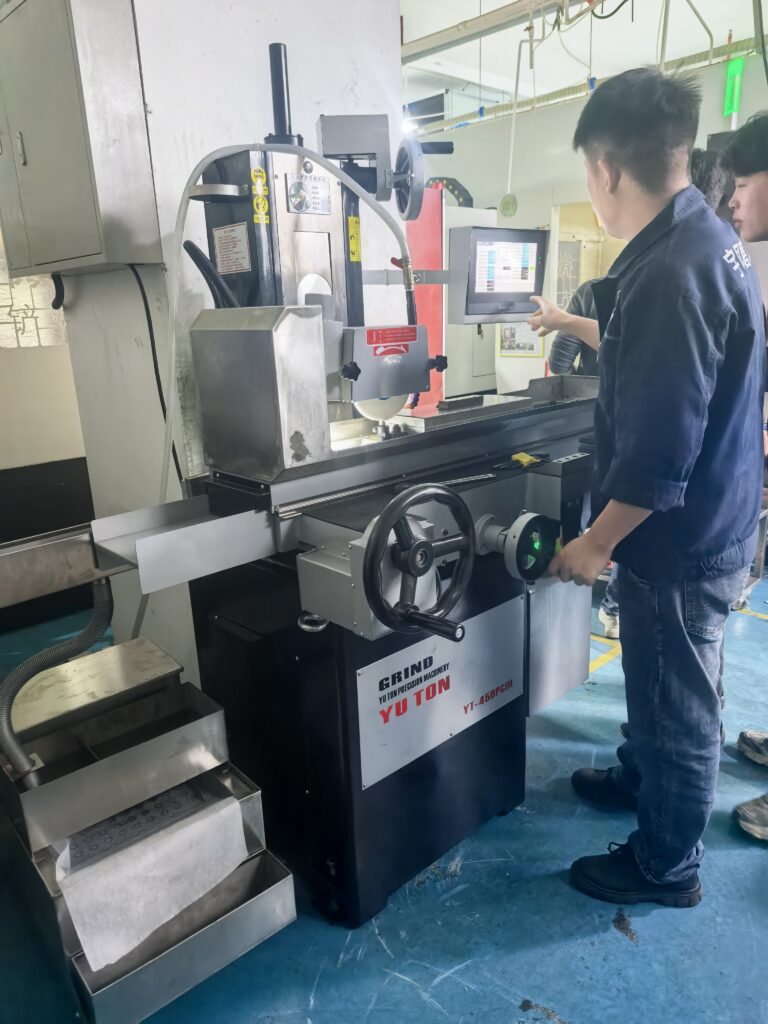
Our range covers the full workshop journey. Small shops and toolrooms start with our manual surface grinders, valued for simplicity and a low entry cost. For mold bases, guideways, and batch production, customers move to our hydraulic line. That includes the heavy “big water grinder” models Chinese workshops rely on for large stock. High-volume users then choose our automatic surface grinder and full CNC models. These offer automatic dressing and programmable incremental downfeed. Tolerance data and cycle parameters can be stored as repeatable recipes. In fact, one factory can supply a distributor’s entire catalog, from basic manual machines to automated production cells. Additionally, shared platforms across the range simplify training and spare-parts stocking for every dealer.
How to start: inquiry or distributor application
Working with YUTON is straightforward. End users should send workpiece dimensions, material, tolerance and finish requirements, batch size, and local power supply. Our engineers then recommend a model and quote within two working days. When you buy hydraulic surface grinder machines direct, you receive foundation drawings and a packing list before production begins. Dealers, meanwhile, can apply to become an authorized distributor. We offer territory protection, OEM and ODM branding, demo machines, spare parts, training, and shared marketing leads. Therefore, whether you run a small toolroom or a national dealership, the first step is the same. Contact YUTON and tell us what you grind.
FAQ: Choosing a Hydraulic Surface Grinder Manufacturer
How do I verify a supplier is a real factory and not a trader?
Ask for a live video tour showing castings, machining, scraping, assembly, and inspection in one continuous shot. In addition, request a component brand list and a sample inspection report. Furthermore, a real factory welcomes third-party audits or customer visits. Traders usually avoid showing any production floor.
What should I check before placing a first order?
Confirm certification status, lead times in writing, warranty terms, and spare-parts availability. Specifically, ask who pays freight on warranty parts and how quickly technical questions are answered. Indeed, a supplier that answers these questions precisely is almost always safer than one offering the lowest price. Thus, vague replies are a warning sign worth taking seriously.
Is factory-direct buying riskier than using a local dealer?
It involves more import work — customs, duties, rigging, and installation. However, the factory provides documentation and remote guidance for every step. Alternatively, buyers who want local service can purchase through an authorized distributor. In both cases, the machine, parts, and engineering know-how originate from the same builder.
Can a factory build machines under my own brand?
Yes; established builders offer OEM and ODM programs with custom nameplates, colors, manuals, and packaging. However, exclusivity terms and minimum order quantities should always be written into a signed contract. Thus, distributors can build a strong local brand while relying on the factory’s production capacity.
How long does a hydraulic surface grinder last?
With proper maintenance, a well-built hydraulic grinder runs accurately for fifteen to twenty years. That means clean oil, correct wheel dressing, and level foundations. Consequently, component quality and scraping craftsmanship matter far more than the initial purchase price. For example, machines with branded hydraulic pumps and hand-scraped ways hold tolerance the longest.
Conclusion
Choosing a factory partner matters far more than comparing spec sheets. Therefore, vet the builder’s workshops, components, certifications, capacity, and aftermarket support before you sign anything. Moreover, factory-direct sourcing pays back through lower cost, custom engineering, and direct technical communication. Mature clusters like Dongguan also reduce the risks of importing. Furthermore, the same depth keeps spare parts available for the full life of the machine. As a hydraulic surface grinder manufacturer, YUTON runs a Dongguan factory of fifteen thousand square meters. We rank among China’s top three grinder producers. Our full lineup runs from manual to CNC grinders. End users: send us workpiece dimensions, material, tolerances, batch size, and power supply. Our engineers will quote the right machine within two working days. Distributors: apply to become an authorized distributor. You gain exclusive territory protection, OEM/ODM branding, demo machines, training, spare parts, and shared sales leads. In fact, the sooner you talk to the factory, the sooner your grinding capacity becomes a competitive advantage.