
When a workshop searches for a hydraulic surface grinder for sale, it wants two things: a reciprocating table that removes stock fast, and a price that survives the finance committee. However, online listings rarely tell the whole story. The gap between a cheap quote and a reliable machine hides in the hydraulic system, the spindle, and the supplier behind the ad. Furthermore, those details never appear in a one-line classified post. Therefore, this guide explains what a hydraulic grinder package should include. It also compares new and used machines on total cost, and shows which specifications drive the price. In addition, it covers factory vetting, the three buying channels, and the YUTON overseas distributor program.
What “Hydraulic Surface Grinder for Sale” Listings Really Include
Machine, Options, and the Fine Print
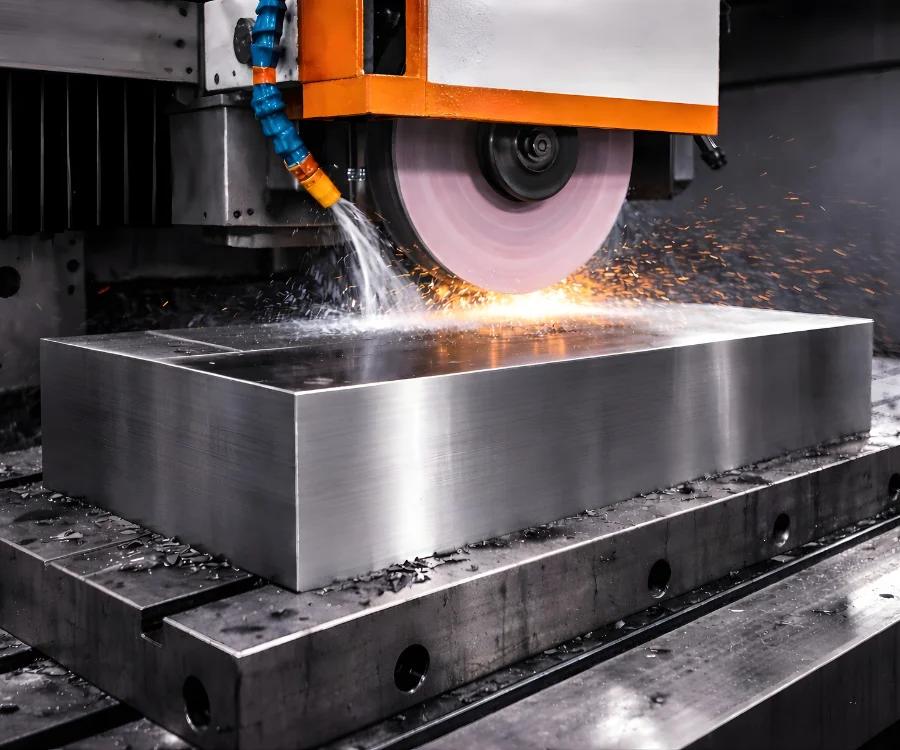
A typical listing shows a table size, a motor rating, and a price. In fact, the machine itself is only the starting point. A complete package for hydraulic surface grinders should itemize the hydraulic power unit, the reciprocating cylinder, the magnetic chuck, the wheel head, the coolant system, and the electrical cabinet. Moreover, buyers should confirm whether the quote includes installation, commissioning, and operator training. For example, a price that excludes the magnet controller or the coolant pump can add thousands of dollars after arrival. Those extras are easy to miss on a one-page quotation.
Why the “Big Water Grinder” Class Matters
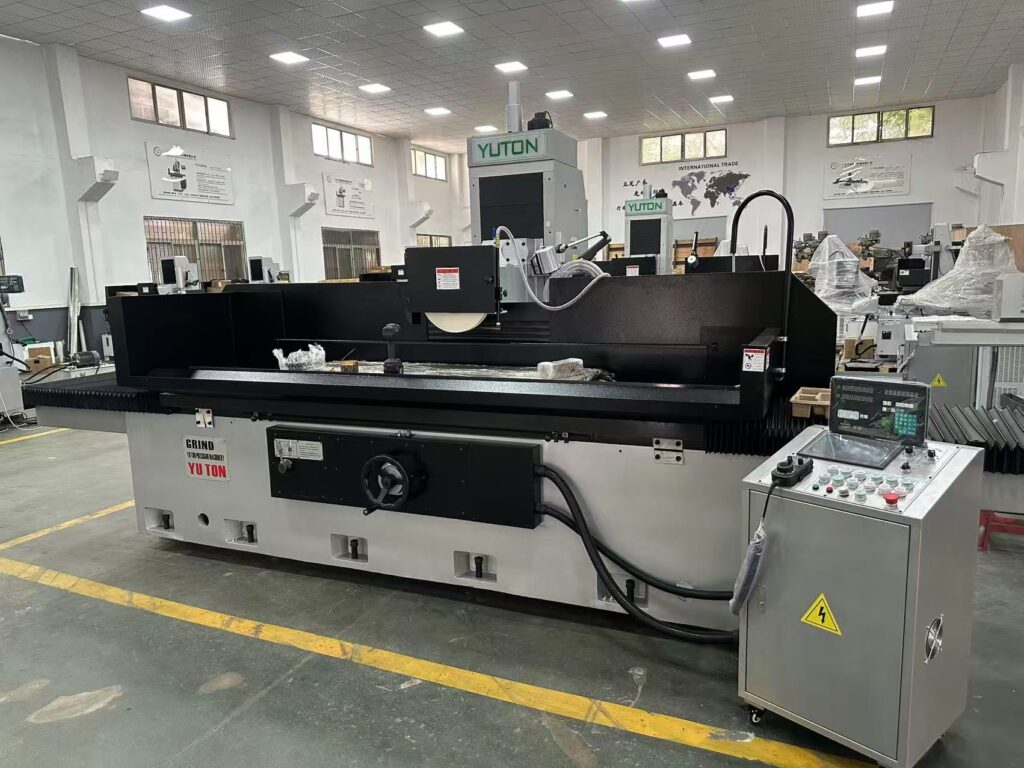
In Chinese factories, large reciprocating machines are often called big water grinders. The name comes from the flood coolant that flows over a wide table during heavy cuts. Specifically, this class handles long mold bases, steel plates, and machine-tool guide rails that smaller saddle machines cannot touch. In addition, a large hydraulic surface grinder brings a heavier bed, a wider wheel, and a more powerful drive motor. Therefore, buyers grinding parts above roughly 600 mm in length should compare this class directly. Upsizing a small machine rarely works, because the frame, the hydraulics, and the chuck all reach their limits together.
Standard Accessories vs Chargeable Extras
Standard delivery usually includes the machine itself, a wheel flange, a balancing stand, basic tools, and an operation manual. However, fine-pole or extended chucks, dust collectors, paper-band filters, and automatic lubrication are often chargeable options. Meanwhile, an automatic surface grinder adds auto down-feed and automatic cycling, which changes both the price and the staffing model. Buyers should therefore request a line-item quotation. In fact, comparing two quotes line by line is the only honest way to judge a surface grinder price. A package that looks dear may simply include more.
New vs Used Hydraulic Surface Grinders: Total Cost of Ownership
Upfront Price and Lead Time
A used hydraulic grinding machine can cost 40 to 60 percent less than a new one. It may also ship immediately if it already sits in the buyer’s country. However, used inventory is unpredictable, because the right table size and control style may not exist when you need it. Moreover, a new machine from a Chinese factory typically reaches a major port in 35 to 50 days. That lead time is fast enough for most capacity-expansion plans. Therefore, buyers should weigh urgency against price before committing.
The Hidden Costs of a Used Machine
Used grinders carry risk in three places: worn ways, tired hydraulics, and obsolete electrical parts. In fact, rescraping a worn table and reconditioning the spindle can cost as much as 30 percent of a new machine. Furthermore, older controllers and solenoid valves are often discontinued, so one failure can mean weeks of downtime. Older machines also lack modern safety guards and efficient motors. By contrast, a new hydraulic grinder arrives with fresh wear surfaces, a full warranty, and documented spare-part numbers. The first five years are usually trouble-free.
When a Used Grinder Still Makes Sense
Used equipment fits buyers with an in-house maintenance team, a known machine history, and an immediate capacity gap. For example, a toolroom buying a familiar brand from a closing factory can win if the machine is inspected under power. Alternatively, buyers without maintenance depth usually do better with a new machine from a responsive supplier. The math should always cover five years. In both cases, the decision rests on total cost of ownership, not the discount on the invoice.
Specs That Determine the Hydraulic Grinder Price
Table Size and Travel
The working surface of the magnetic chuck defines the largest part the machine can grind in one setup. Longitudinal travel, cross travel, and the table-to-wheel-center distance set the real working envelope. In particular, parts that hang off the chuck create clamping problems and accuracy loss. The table should therefore comfortably exceed the longest workpiece. Buyers should send workpiece drawings early in the discussion. Thus, the factory can recommend the correct model instead of the most expensive one.
Hydraulic System and Wheel Spindle
The hydraulic power unit drives the reciprocating table. Its quality decides whether table reversal is smooth or jerky, and whether feed rates stay consistent through a long shift. YUTON machines use hydraulic and electrical components sourced from Japan, Taiwan, and the United States. Indeed, these branded pumps, valves, and contactors are the parts a maintenance team recognizes on site. As a result, replacement parts are easy to source in almost any country. The wheel spindle carries the most critical tolerances. Meanwhile, a precision spindle with high-class bearings holds flatness and finish over years of production. Cheap spindles drift; good ones do not.
Precision, Automation, and Power Supply
Accuracy is usually stated as parallelism and surface roughness over a standard reference length. In addition, buyers should ask whether figures are measured cold or after warm-up, because thermal growth changes the results. Automation ranges from manual cross-feed to fully automatic down-feed with timed spark-out passes. An automatic hydraulic grinder reduces operator fatigue and makes batch work repeatable. Furthermore, power supply must be confirmed at the quotation stage. Specifically, a 380 V/50 Hz machine cannot simply plug into a 460 V/60 Hz shop, so voltage, phase, and frequency all matter.
Where to Buy: Factory Direct vs Trading Company vs Local Dealer
Buying Factory Direct
Ordering direct puts the invoice, engineering support, and warranty under one roof. Consequently, technical questions reach the people who actually built the machine. In addition, customization is straightforward: color, chuck type, voltage, and OEM branding can all be specified. However, direct buyers must handle import paperwork and local installation unless the factory provides remote guidance. For large buyers and overseas distributors, this channel offers the lowest landed cost and the most control. It is the channel YUTON knows best.
Buying Through a Trading Company
Trading companies aggregate many factories and can offer mixed containers of different equipment. They often speak the local language and handle export documentation smoothly. Moreover, a good trader can consolidate a whole workshop order into one shipment. By contrast, traders rarely control build quality, keep engineering depth, or stock spare parts for the brands they resell. Therefore, buyers using this channel should still verify the actual manufacturer. Insist on a pre-shipment inspection, and never pay a deposit before the factory is confirmed.
Buying from a Local Dealer
A local dealer gives the fastest response: local language, local currency, local stock, and on-site service. Moreover, dealers often handle installation, training, and warranty work without waiting for overseas support. The trade-off is price. A dealer margin adds perhaps 15 to 30 percent over factory-direct terms. In fact, that margin can be excellent value for a small shop with only one shift to lose. Large fleet buyers, however, usually negotiate direct terms.
How to Vet a Hydraulic Grinder Supplier
Certifications and Factory Audit
A credible manufacturer opens its doors. Ask for ISO 9001 certification and CE marking documentation, and check that the paperwork names the actual factory. Specifically, a certificate issued to a shell company is worthless. Furthermore, a video tour or an in-person audit should show machining, scraping, assembly, and inspection happening under one roof. A builder that only assembles bought-in parts is a trader, not a factory. For example, industry media such as Modern Machine Shop regularly describe what a capable grinding-machine builder looks like. Associations including AMT and SME also publish guidance on evaluating capital-equipment suppliers.
Spare Parts, Warranty, and Lead Time
Spare parts decide whether a warranty is real. Specifically, ask which wear parts are stocked, how fast they ship, and whether electrical diagrams and part lists are supplied in English. A 12 to 24 month warranty is common, but it is only as good as the response behind it. Meanwhile, lead time should be confirmed in writing, including the shipping window to the destination port. Indeed, a supplier that cannot name its part numbers probably cannot support the machine in year five.
Trial Grinding and Reference Checks
The strongest proof of a grinder is a test. Send a representative workpiece with its material, hardness, and required finish, and ask for a grinding report with measured results. In addition, request references from buyers in similar industries—and actually call them. For example, our own customers in India and Turkey run our machines in mold shops, automotive plants, and steel-service centers. We happily arrange reference calls with their permission. Thus, the trial video and the inspection report should arrive before the balance payment is due.
The YUTON Hydraulic Grinder Lineup and Dealer Program
Our Dongguan Factory in Numbers
YUTON—Guangdong Yutong Precision Machinery Co., Ltd.—builds grinding machines in Dongguan, in southern China. The factory employs about 150 people across 15,000 square meters of floor space and seven workshop buildings. In 2025 we shipped roughly 3,100 grinding machines. That volume places us among China’s top three grinder manufacturers by output. Indeed, the same inspection team signs off on every shipment. Moreover, every model—from manual surface grinders to full-CNC lines—passes through the same assembly discipline and the same quality gates. Therefore, a partner grows with the catalog rather than outgrowing it.
From Hand-Feed Grinders to Full CNC
The product range starts with small hand-feed saddle machines for toolrooms and die shops. It then moves through hydraulic reciprocating grinders—the big water grinder series that anchors our lineup—and ends with fully automatic CNC surface grinders for high-volume production. In fact, many customers ask us about hydraulic versus CNC surface grinding. The answer depends on batch size, part variety, and operator availability. Indeed, hydraulic machines remain the sweet spot for mixed, high-accuracy work where fixturing changes often. However, CNC wins for long runs of identical parts. We help buyers choose instead of pushing the most expensive model.
Distributor Policy: Territory, OEM, and Support
YUTON is actively recruiting overseas agents and dealers. Our program includes exclusive territory protection, so an authorized distributor never competes with us or with another agent in the same region. In addition, we offer OEM and ODM branding for partners who want their own name on the machine. Support covers demo-machine programs, spare-parts supply, installation and training, plus marketing materials and qualified sales leads. Specifically, every lead from a distributor’s region is passed to that partner. Consequently, our agents can quote, install, and service machines locally while engineering questions escalate directly to Dongguan. The partnership is built for repeat business, not one-off orders.
FAQ: Hydraulic Surface Grinder for Sale
How much does a hydraulic grinder cost?
Prices depend mainly on table size, spindle power, and automation level. Indeed, small hydraulic machines cost a fraction of a large big-water-grinder-class unit, while fully automatic models carry a premium. Therefore, the fastest route to an accurate figure is a short inquiry listing workpiece size, material, tolerance, batch volume, and local power supply. Our engineers quote within two working days.
Is it better to buy a new machine from China or a used local machine?
A new Chinese-built machine usually wins on price, warranty, and spare-parts support. A used local machine wins only on immediate availability. However, the used option only works if the machine is inspected under power and comes with a full service history. Moreover, freight and lead times have improved sharply, so new machines reach most markets within six to eight weeks. Thus, most buyers choose new unless a specific used bargain appears.
What power supply do hydraulic grinders require?
Most machines leave the factory configured for the destination country. For example, we build for 380 V/50 Hz, 460 V/60 Hz, and other regional standards once an order is confirmed. In addition, the control circuit and coolant pump voltage must match, not just the main motor. Therefore, buyers should state voltage, phase, and frequency with the first inquiry to avoid costly rework.
Can I order the machine with my own brand name?
Yes, OEM and ODM branding is standard for our authorized distributors. In fact, custom nameplates, paint colors, and manuals are all part of the package. Furthermore, we protect each distributor’s territory, so partners build their own local brand without competition from us. Alternatively, end users receive machines in standard YUTON livery with full documentation.
What support do distributors receive after the order?
Distributors receive spare-parts stock planning, demo-machine support, installation and operator training, and a full package of marketing materials. In addition, we pass qualified sales leads from the distributor’s region directly to that partner. Consequently, our agents can quote, install, and service machines locally, while engineering questions escalate to our Dongguan team. Meanwhile, we stay available for joint customer visits and trade-show support.
Conclusion
A hydraulic grinder is a ten-to-twenty-year asset, so the listing price is only one line of the decision. Every hydraulic surface grinder for sale on the market looks similar in a brochure. Furthermore, the supplier behind the machine—its factory, certifications, parts policy, and dealer support—matters far longer than the discount on the invoice. Therefore, vet the supplier as carefully as the spec sheet.
If you are an end user, send us your workpiece dimensions, material, required tolerance, batch size, and power supply. Our engineers will recommend a model and quote within two working days. If you sell machine tools in your market, apply to become an authorized YUTON distributor. In addition, ask us about territory protection, OEM branding, demo-machine terms, and lead-sharing support.