
A CNC Grinding Center is becoming an essential machine for factories that need stable accuracy, repeatable surface quality, and higher production efficiency. For buyers in Vietnam, Thailand, Malaysia, Indonesia, Singapore, India, the Middle East, and Europe, the decision is no longer only about buying a grinding machine. It is about choosing a complete precision grinding solution that can support long-term manufacturing growth.
This buying guide explains how to evaluate a CNC Grinding Center, what technical features matter most, and how different industries can use CNC grinding to improve part quality, reduce manual labor, and increase export competitiveness.
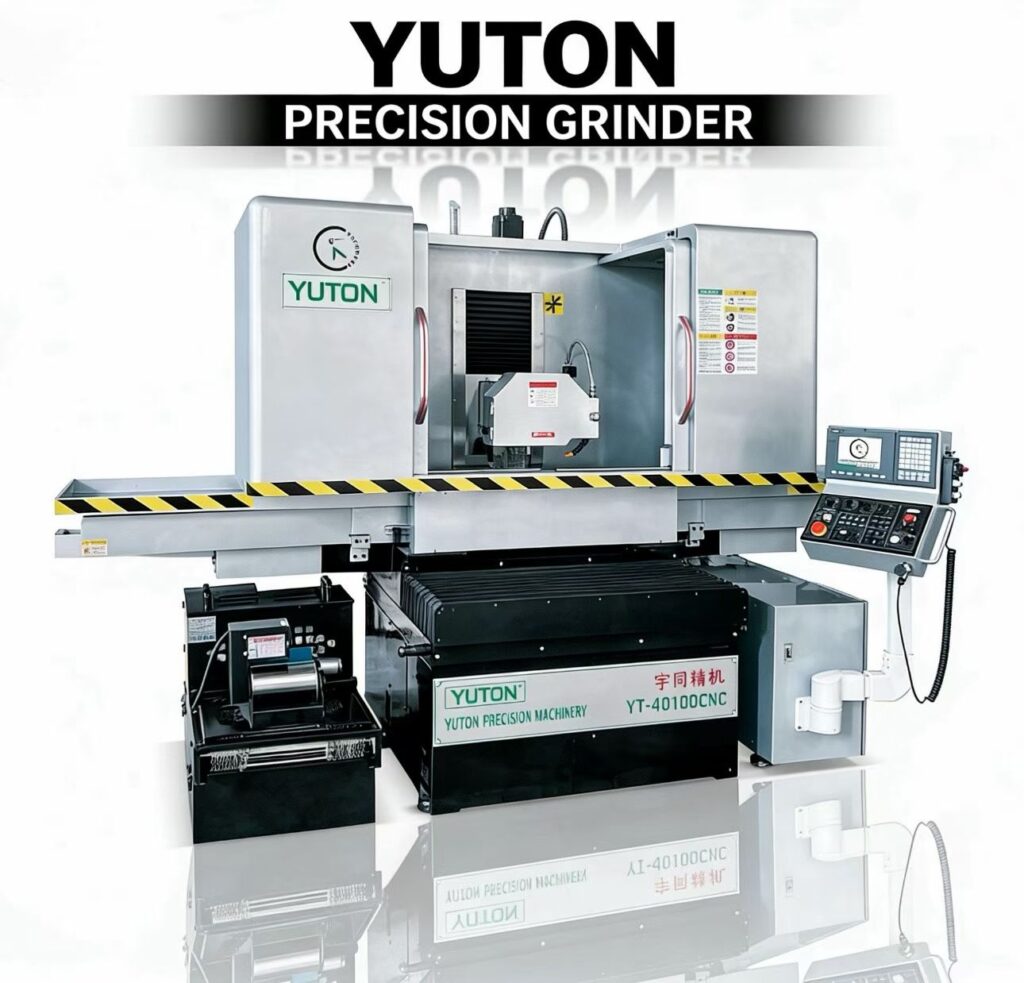
Industry Theme Summary: Why CNC Grinding Center Demand Is Growing
Precision manufacturing is changing quickly. Automotive suppliers, mold makers, machinery factories, electronics component producers, and tool-and-die workshops are all facing tighter tolerance requirements. Manual grinding is still useful for simple jobs, but it often depends heavily on operator skill. A CNC Grinding Center helps factories create a more predictable process.
In Southeast Asia, this trend is especially clear. A CNC Grinding Machine Supplier in Vietnam must support factories that are moving from low-cost production to higher-value precision manufacturing. A Surface Grinder for Automotive Industry Thailand must help local suppliers produce stable parts for automotive, EV, and machinery applications. A Precision Grinding Solution in Malaysia must meet the needs of electronics, tooling, and high-accuracy component production.
What Is a CNC Grinding Center?
A CNC Grinding Center is a computer-controlled grinding machine designed to finish metal parts with high precision. It can control grinding depth, feed speed, wheel movement, spark-out cycles, and dressing operations. Compared with a conventional Surface Grinder, it provides better repeatability, easier program control, and more stable production results.
For manufacturers that process hardened steel, mold plates, guide rails, fixture plates, hydraulic parts, die components, or automotive parts, a CNC Grinding Center can reduce rework and improve delivery consistency.
Key Technical Factors to Evaluate
1. Machine Structure and Rigidity
Grinding accuracy begins with machine structure. A rigid machine body helps reduce vibration and thermal deformation. Buyers should check the base design, column stability, table movement, guideway system, and spindle support. A weak structure may still grind parts, but it will struggle to maintain stable accuracy over long production hours.
2. Table Size and Workpiece Capacity
Before choosing a CNC Grinding Center, define your common workpiece size. A mold factory may need a larger table for plates and dies. An automotive supplier may need faster cycle times for repeated components. A machinery workshop may need flexibility for different shapes. If the table is too small, production becomes limited. If the machine is too large, investment cost increases without clear benefit.
3. Spindle Power and Surface Finish
The spindle is one of the most important parts of a grinding machine. Stable spindle speed and proper power help maintain surface quality and reduce grinding marks. Buyers should ask the supplier about spindle type, wheel size, balancing method, and recommended grinding wheel selection. For fine surface requirements, a Precision Surface Grinder may also be suitable for specific flat grinding applications.
4. CNC Control and Automation
A modern CNC Grinding Center should support program storage, automatic grinding cycles, wheel dressing, safety protection, and simple operator control. For factories planning future automation, an Automatic Surface Grinding Machine can help reduce manual operation and improve shift-to-shift consistency.
Application Scenarios for CNC Grinding Center
The application value of a CNC Grinding Center depends on the part and production goal. In mold manufacturing, it is used for mold bases, plates, inserts, and precision die parts. In automotive production, it supports transmission components, fixture plates, tooling parts, and hardened steel surfaces. In machinery manufacturing, it improves guide surfaces, mounting plates, machine components, and industrial fixtures.
For Vietnam and India, many factories use grinding machines to improve export-quality production. For Thailand and Malaysia, automotive and electronics-related parts are strong application areas. For Singapore, the focus is often high-value precision work. For the Middle East and Europe, buyers may care more about durable equipment, long service life, and stable technical support.
CNC Grinding Center Buying Advice
First, match the machine to your real production parts. Do not choose a CNC Grinding Center only by catalog size or price. Make a list of your workpiece dimensions, material hardness, required tolerance, surface roughness, monthly production volume, and operator skill level.
Second, compare accuracy data carefully. Ask about flatness, parallelism, repeatability, positioning accuracy, and achievable surface finish. These values should be explained in real production conditions, not only as ideal laboratory figures.
Third, evaluate service and training. A buyer in Vietnam, Thailand, Malaysia, Indonesia, Singapore, India, the Middle East, or Europe should ask about installation support, spare parts, remote guidance, operator training, and maintenance documents. A good machine without proper service can still create downtime.
Fourth, consider future growth. If your factory plans to increase production volume, export more precision parts, or reduce dependence on skilled manual grinding operators, choose a CNC Grinding Center that can support automation upgrades. For larger projects, suppliers that offer Industrial Grinding Solutions can provide stronger process support than a simple machine seller.
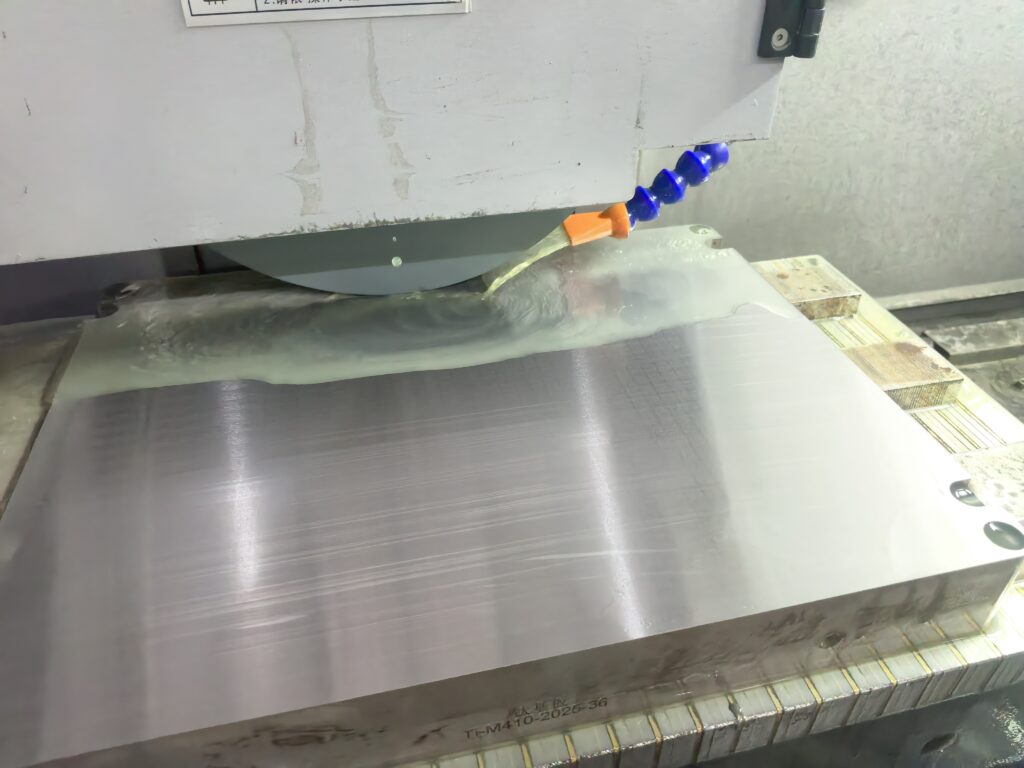
CNC Surface Grinding Machine vs CNC Grinding Center
A CNC Surface Grinding Machine is mainly used for precision flat surfaces. It is ideal for mold plates, fixtures, guide surfaces, and flat components. A CNC Grinding Center may offer broader process capability, stronger automation potential, and better integration for complex production needs.
If your factory mainly produces flat parts, a CNC surface grinder may be the most efficient choice. If your factory needs higher flexibility, more process control, and future automation, a CNC Grinding Center may deliver better long-term value.
Future Trends in CNC Grinding
The future of grinding will be more automated, more digital, and more application-specific. Buyers will increasingly look for machines that reduce manual adjustment, monitor process stability, and support consistent production quality. Automatic wheel dressing, smart control panels, improved coolant systems, and robotic loading will become more common.
For Southeast Asia, the biggest opportunity is upgrading from manual finishing to controlled precision manufacturing. For the Middle East and Europe, the opportunity is reliable long-life equipment for industrial component production. In both cases, the CNC Grinding Center will remain an important investment for factories that need accuracy and productivity together.
FAQ
What is the main benefit of a CNC Grinding Center?
The main benefit of a CNC Grinding Center is repeatable precision. It reduces manual variation, improves surface consistency, and helps factories control quality across multiple production batches.
Which industries need CNC grinding machines?
Automotive, mold making, tool and die, machinery, hydraulic components, aerospace support, electronics tooling, and precision metalworking industries commonly use CNC grinding machines.
How should buyers choose between manual and CNC grinding?
Manual grinding is suitable for simple repair work and small-volume jobs. A CNC Grinding Center is better for repeat production, tighter tolerance, export parts, and factories that want to reduce dependence on operator skill.
Is a CNC Grinding Center suitable for Southeast Asia factories?
Yes. Vietnam, Thailand, Malaysia, Indonesia, Singapore, and India all have growing demand for precision manufacturing. A CNC Grinding Center can help these factories improve quality and compete in global supply chains.
Conclusion
A CNC Grinding Center is a strategic investment for manufacturers that want better accuracy, higher consistency, and stronger production control. For buyers in Vietnam, Thailand, Malaysia, Indonesia, Singapore, India, the Middle East, and Europe, the best choice is not simply the cheapest machine. The best choice is the grinding solution that matches your parts, tolerance, workflow, service needs, and future automation plan.
For customers exporting products to Europe, regulatory compliance is an important consideration when selecting industrial equipment. YUTON machines can be configured to meet applicable CE standards, helping reduce import risks and supporting smooth installation and operation within European factories. Our engineering team can provide the necessary technical documentation and compliance support upon request. Learn more about official EU CE marking requirements through the European Commission CE Marking Guide