
Choosing between surface grinding and belt grinding is one of the most common decisions in metal fabrication. Both methods remove material using abrasives, but their results, costs, and ideal applications differ significantly. This guide compares surface grinding vs belt grinding across six key factors so you can pick the right process for your next project.
How Surface Grinding Works
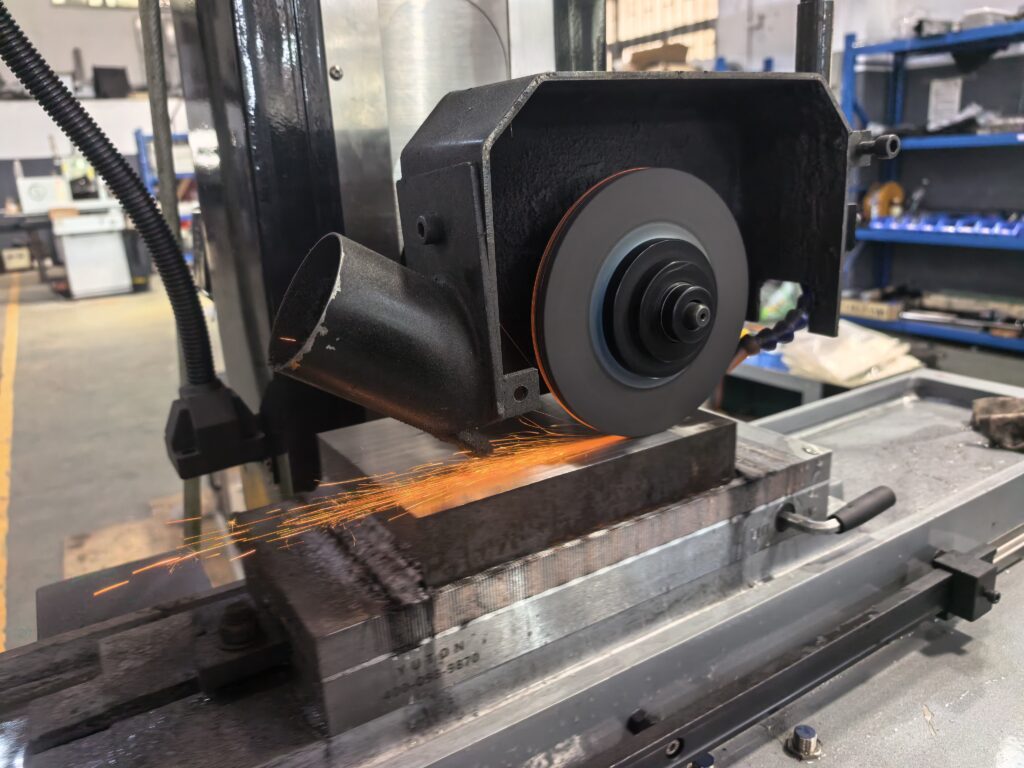
Surface grinding is a high-precision abrasive machining process. A rotating grinding wheel removes material from the workpiece surface, which is typically held on a magnetic chuck. The wheel moves back and forth or rotates in a planetary pattern to produce a flat, smooth finish.
According to international manufacturing standards published by ISO, surface grinding achieves tolerances as tight as ±0.005 mm and surface finishes down to Ra 0.1 μm. These numbers make it the go-to process whenever exact flatness and fine finishes matter.
Common applications include:
- Mold and die manufacturing
- Aerospace component finishing
- Medical device parts
- Automotive engine components
- Precision tool and gauge production
If you need CNC surface grinders built for these demanding tasks, YUTON offers a full range of CNC models designed for high-precision work.
How Belt Grinding Works
Belt grinding uses a continuous loop of abrasive belt that runs over two or more contact wheels. The workpiece is pressed against the moving belt to remove material. Unlike surface grinding, belt grinding prioritizes speed over precision.
Typical tolerances for belt grinding sit around ±0.05 mm, and surface finishes generally range from Ra 0.8 to Ra 6.3 μm. While these numbers fall well below what surface grinding delivers, belt grinding excels at high material removal rates and fast stock removal.
Common applications include:
- Deburring and edge finishing
- Weld seam removal
- Surface conditioning and cleaning
- Stainless steel and aluminum finishing
- Large flat panel preparation
Belt grinding is popular in fabrication shops, metal service centers, and structural steel production where speed matters more than micron-level accuracy.
6 Key Factors: Surface Grinding vs Belt Grinding
When you compare surface grinding vs belt grinding, six dimensions determine which process suits your needs best.
1. Precision and Tolerances
Surface grinding holds a clear advantage here. It achieves tolerances down to ±0.002 mm, while belt grinding typically manages only ±0.05 mm. For applications like mold bases, gauge blocks, or aerospace fittings, even a 0.01 mm deviation can cause assembly failures. In these cases, surface grinding is the only acceptable choice.
2. Surface Finish Quality
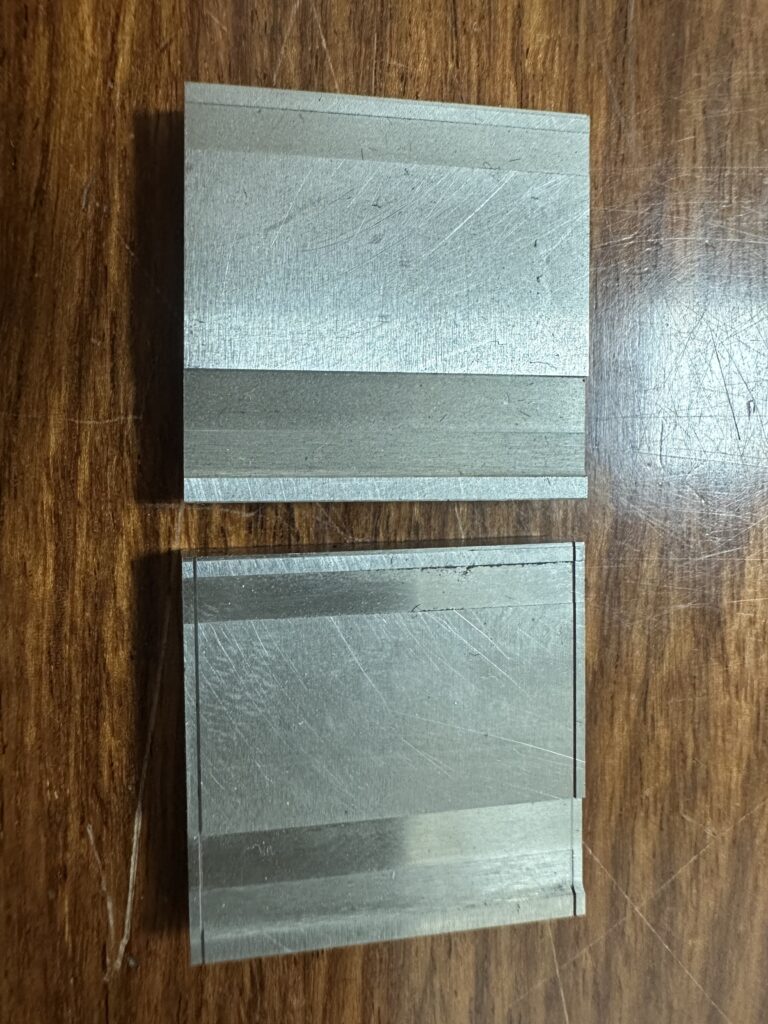
Surface grinding produces Ra values between 0.1 and 0.8 μm, creating a mirror-like finish suitable for sealing surfaces, bearing interfaces, and cosmetic parts. Belt grinding delivers rougher finishes between Ra 0.8 and 6.3 μm. The belt’s directional pattern often leaves visible scratches that require additional steps if a finer finish is needed.
3. Material Removal Rate
This is where belt grinding shows its strength. It removes material 5–10 times faster than surface grinding, making it the better option for heavy stock removal, rapid deburring, or surface cleaning. If you need to strip 5 mm of material from a large steel plate, belt grinding gets the job done in a fraction of the time.
4. Operating Cost and Consumables
Belt grinding wins on cost. Belts are cheaper than grinding wheels and last longer in most applications. Belt grinders also have simpler designs with fewer moving parts, which reduces maintenance. Surface grinding wheels cost more, wear faster in heavy stock removal, and often require coolant systems that add to operating expenses.
5. Part Geometry and Size
Surface grinding handles complex geometries better. You can grind slots, shoulders, and contoured surfaces with the right wheel profile. Belt grinding works best on flat or gently curved surfaces—complex shapes risk uneven belt wear and inconsistent results.
6. Production Volume
For small-batch or one-off precision work, surface grinding provides the flexibility and accuracy needed. For high-volume production of parts that do not require tight tolerances, belt grinding delivers faster throughput at lower per-part cost.
Applications: Where Each Process Excels
The following table shows typical industry preferences:
表格
| Industry | Preferred Process | Reason |
|---|---|---|
| Mold & die making | Surface grinding | Tight tolerances, fine finish |
| Aerospace suppliers | Surface grinding | Precision, repeatability |
| Medical devices | Surface grinding | Surface integrity, accuracy |
| Fabrication shops | Belt grinding | Speed, lower cost |
| Furniture hardware | Belt grinding | Surface conditioning |
| Structural steel | Belt grinding | High material removal |
That said, many shops use both processes. A fabrication shop might use belt grinding for initial stock removal and then switch to a precision surface grinder for final finishing. YUTON provides a range of surface grinders that cover manual, automatic, and CNC configurations for any production requirement.
Industry Trends in 2026
The grinding industry continues to evolve on both fronts. In surface grinding, the push toward automation and smart manufacturing has accelerated. Modern CNC surface grinders now feature real-time monitoring, adaptive control, and automated wheel dressing.
According to the Society of Manufacturing Engineers, smart grinding systems that integrate IoT sensors reduce scrap rates by up to 15% and improve cycle times. Manufacturers who adopt these technologies gain a measurable edge in both quality and cost efficiency.
In belt grinding, advancements focus on wider belts, better tracking systems, and improved abrasive materials that handle harder alloys. However, belt grinding remains a fundamentally speed-oriented process, and its technology roadmap centers on throughput rather than precision gains.
Final Thoughts on Surface Grinding vs Belt Grinding
The choice between surface grinding vs belt grinding depends on your priorities. If you need tight tolerances, fine surface finishes, and high repeatability, surface grinding is the clear winner. If you need fast material removal, lower costs, and can accept looser tolerances, belt grinding delivers better value.
Many machine shops operate both types because each excels in different situations. Understanding the strengths and limits of each process helps you make smarter decisions about equipment investment and production planning.
For manufacturers looking to upgrade their surface grinding capability, explore YUTON’s automatic surface grinders built with Japanese, Taiwanese, and American core components for consistent precision and long service life.
Choosing between surface grinding and belt grinding is one of the most common decisions in metal fabrication. Both methods remove material using abrasives, but their results, costs, and ideal applications differ significantly. This guide compares surface grinding vs belt grinding across six key factors so you can pick the right process for your next project.