
Finding the right surface grinder for sale can feel overwhelming with so many types, brands, and specifications on the market. Whether you run a small tool room or a large-scale production facility, choosing the right machine directly affects your output quality, efficiency, and bottom line. This guide walks you through everything you need to know — from machine types and key features to pricing and supplier evaluation — so you can make a confident purchase decision.
What Is a Surface Grinder and How Does It Work?
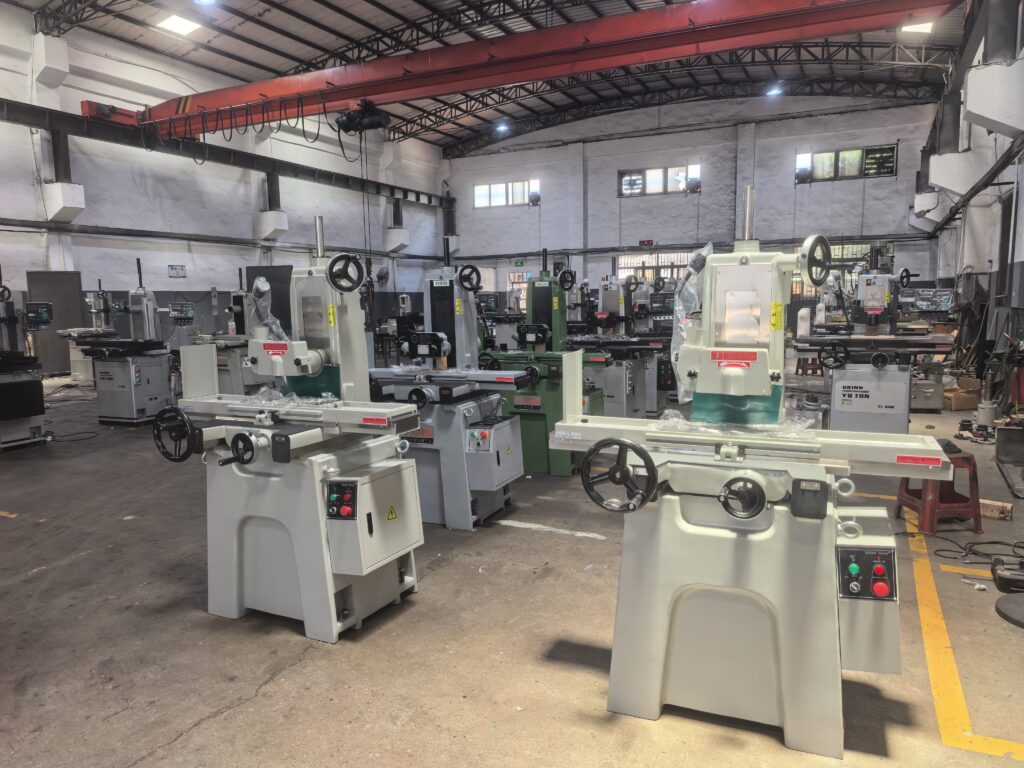
A surface grinder is a machine tool used to produce flat, smooth surfaces on metal, ceramic, or composite workpieces. It works by rotating an abrasive wheel at high speed while the workpiece is held on a magnetic chuck attached to a reciprocating table. The grinding wheel removes small amounts of material, achieving tight tolerances and excellent surface finishes.
Surface grinding is one of the most common abrasive machining processes in manufacturing. It is widely used for:
- Flattening and sizing metal blocks, plates, and dies
- Achieving precise thickness on hardened steel components
- Finishing mold and die surfaces to mirror quality
- Preparing parts for coating or assembly
If you are searching for a surface grinder for sale, understanding the basic working principle helps you match the right machine type to your specific application.
Types of Surface Grinders Available on the Market
When browsing a surface grinder for sale, you will encounter several main categories. Each type serves different production needs.
Manual Surface Grinders
Manual models are the most basic and affordable option. The operator controls table movement, cross-feed, and down-feed by hand. These machines are ideal for:
- Tool rooms and maintenance shops
- One-off jobs and prototype work
- Small workshops with limited budgets
While they require skilled operators, manual grinders offer flexibility and low operating costs.
Hydraulic Surface Grinders
Hydraulic surface grinders use hydraulic systems to drive table movement, providing smoother and more consistent motion than manual models. They are well suited for:
- Medium to heavy-duty production grinding
- Repetitive jobs requiring consistent surface quality
- Factories running multiple shifts
Hydraulic grinders offer a good balance between cost and performance, making them a popular choice for mid-sized manufacturers.
Automatic Surface Grinders
Automatic surface grinders feature PLC-controlled grinding cycles. Once the operator sets the parameters, the machine runs the complete cycle — including rough grinding, finish grinding, spark-out passes, and wheel dressing — automatically. Benefits include:
- Reduced operator dependency
- Higher consistency across batches
- Improved productivity in batch production
CNC Surface Grinders
CNC surface grinders represent the top tier of precision and automation. With programmable controls, they can execute complex grinding profiles, automatic compensation, and in-process measurement. CNC models are the best choice for:
- High-precision mold and die work
- Aerospace and medical component manufacturing
- Lights-out production environments
Key Specifications to Check Before Buying
Not every surface grinder for sale will meet your requirements. Here are the critical specifications to evaluate.
Table Size and Travel
The workpiece size determines the minimum table dimensions you need. Common table sizes range from 6×12 inches (150×300mm) for bench-top models to 24×96 inches (600×2400mm) for large production machines. Always allow some margin beyond your typical workpiece size.
Grinding Wheel Size
Wheel diameter affects both the material removal rate and the surface finish quality. Larger wheels remove material faster but may not reach into small features. Standard wheel diameters range from 200mm to 600mm.
Spindle Power and Speed
Higher spindle power enables heavier cuts and faster material removal. For general-purpose grinding, 3-5 HP is sufficient. For heavy stock removal or hard materials, look for 7.5 HP or above. Variable speed control adds versatility.
Accuracy and Repeatability
Check the machine’s specified flatness, parallelism, and surface finish capability. A quality surface grinder should hold:
- Flatness within 0.005mm or better
- Surface finish down to Ra 0.4μm or finer
- Repeatable positioning within 0.002mm
Magnetic Chuck Quality
The chuck holds the workpiece securely during grinding. Look for electro-magnetic chucks with uniform holding force and minimal residual magnetism after de-energizing. A weak or uneven chuck can cause vibration and poor surface finish.
Manual vs. Automatic vs. CNC: Which Should You Choose?
The decision depends on your production volume, part complexity, and budget.
表格
| Factor | Manual | Hydraulic/Auto | CNC |
|---|---|---|---|
| Best for | Tool rooms, prototyping | Batch production | High-precision, complex work |
| Operator skill | High | Medium | Medium (programming needed) |
| Cost range | $5,000–$25,000 | $20,000–$80,000 | $50,000–$200,000+ |
| Productivity | Low | Medium-High | High |
| Repeatability | Operator-dependent | Good | Excellent |
For most small to mid-size shops, a hydraulic or automatic model offers the best return on investment. CNC machines make sense when you need to hold tight tolerances on complex geometries or when running unmanned shifts.
How Much Does a Surface Grinder Cost?
Pricing for a surface grinder for sale varies widely based on type, size, brand, and features.
Entry-level manual grinders start around $5,000–$15,000. These are suitable for hobby shops and light tool room work.
Mid-range hydraulic and automatic grinders typically cost $20,000–$80,000. This is the sweet spot for most manufacturing operations. Chinese manufacturers like YUTON offer machines in this range with Japanese and Taiwanese core components, providing excellent value.
High-end CNC surface grinders range from $50,000 to over $200,000. European and Japanese brands dominate the top end, but Chinese CNC grinders are closing the quality gap rapidly at lower price points.
In addition to the machine price, factor in these costs:
- Shipping and import duties
- Installation and commissioning
- Initial tooling (grinding wheels, dressers, coolant system)
- Operator training
- Spare parts inventory
New vs. Used Surface Grinders: Pros and Cons
Many buyers considering a surface grinder for sale wonder whether to buy new or used.
New machines come with full warranties, latest technology, and reliable after-sales support. They also offer customization options for specific requirements. However, the upfront cost is higher, and delivery lead times can be 4-12 weeks for certain models.
Used machines can be significantly cheaper — often 40-60% less than new equivalents. However, risks include:
- Unknown maintenance history
- Worn guideways or ball screws reducing accuracy
- Outdated control systems
- Limited or no warranty
If buying used, always inspect the machine in person, check spindle runout, test table movement for smoothness, and verify actual grinding accuracy with a test piece.
Top Features to Look for in 2026
Modern surface grinders come with features that improve both precision and ease of use. When evaluating options, prioritize these:
Auto Wheel Dressing
Automatic wheel dressing ensures the grinding wheel maintains its sharpness and profile throughout production, reducing manual intervention and improving consistency.
Digital Readout (DRO)
A DRO system displays the exact table position in real time, reducing measurement errors and setup time. It is a valuable upgrade even on manual machines.
Coolant Through Spindle
Delivering coolant directly through the spindle improves cooling at the cutting zone, extends wheel life, and produces better surface finishes.
In-Process Gauging
Advanced models include probe systems that measure the workpiece during grinding and automatically compensate for wheel wear, ensuring consistent part dimensions.
Vibration Damping
Good vibration damping is essential for achieving fine surface finishes. Look for machines with heavy cast iron bases, vibration-isolating mounts, and balanced spindle assemblies.
Why Buy from a Reputable Manufacturer?
When searching for a surface grinder for sale, the manufacturer you choose matters as much as the machine itself. A reputable manufacturer provides:
- Consistent build quality — Established manufacturers like YUTON operate ISO 9001-certified facilities with 150+ workers and 15,000㎡ of production space, producing over 3,100 units annually.
- Quality core components — Top manufacturers source critical components from Japan, Taiwan, and the US, including servo systems, ball screws, and bearings.
- Rigorous testing — Each machine should undergo 48+ hours of continuous run-in testing before shipment.
- Global after-sales support — Look for manufacturers with distributors or service partners in your region.
- Customization flexibility — Whether you need a special table size, voltage configuration, or climate adaptation, experienced manufacturers can accommodate.
Practical Tips for First-Time Buyers
If this is your first time purchasing a surface grinder, keep these tips in mind:
- Define your parts first. List the workpiece materials, sizes, tolerances, and surface finish requirements. This narrows down the machine type and specifications.
- Set a realistic budget. Include all ancillary costs — tooling, installation, shipping, and training — not just the machine price.
- Request test cuts. Ask the supplier to grind sample parts using your specifications. This reveals the machine’s actual capability before you commit.
- Check lead times. Standard models may ship within 2-4 weeks, while custom configurations can take 8-12 weeks. Plan accordingly.
- Verify certifications. Ensure the machine meets your country’s safety and import standards (CE for Europe, UL for the US, etc.).
- Negotiate a spare parts package. Include essential spare parts — belts, seals, fuses, and a spare grinding wheel — with your initial order.
FAQ
Q1: What is the most popular surface grinder size for general machining?
The 6×18 inch (150×450mm) and 8×24 inch (200×600mm) sizes are the most popular for general-purpose work. They handle the majority of common workpiece sizes while remaining affordable and space-efficient.
Q2: Can a surface grinder handle hardened steel?
Yes, surface grinders are specifically designed for hardened materials. With the appropriate grinding wheel (typically aluminum oxide or CBN for hardened steels), you can grind materials up to 65 HRC without difficulty.
Q3: How long does a grinding wheel last?
Wheel life depends on the material being ground, the wheel specification, and the grinding parameters. Under normal conditions, a quality wheel can dress and perform effectively for hundreds of parts. Automated dressing systems extend usable wheel life significantly.
Q4: What is the difference between a surface grinder and a milling machine?
A surface grinder uses an abrasive wheel for finishing operations, achieving tighter tolerances and finer surface finishes than milling. A milling machine uses a rotating cutter for heavier material removal and more complex geometries. In most shops, the two machines complement each other.
Q5: Do Chinese surface grinders meet international quality standards?
Yes. Leading Chinese manufacturers operate ISO 9001 and CE-certified facilities, use imported core components, and export to over 50 countries. Machines from top producers deliver performance comparable to Japanese and European brands at a more competitive price point.