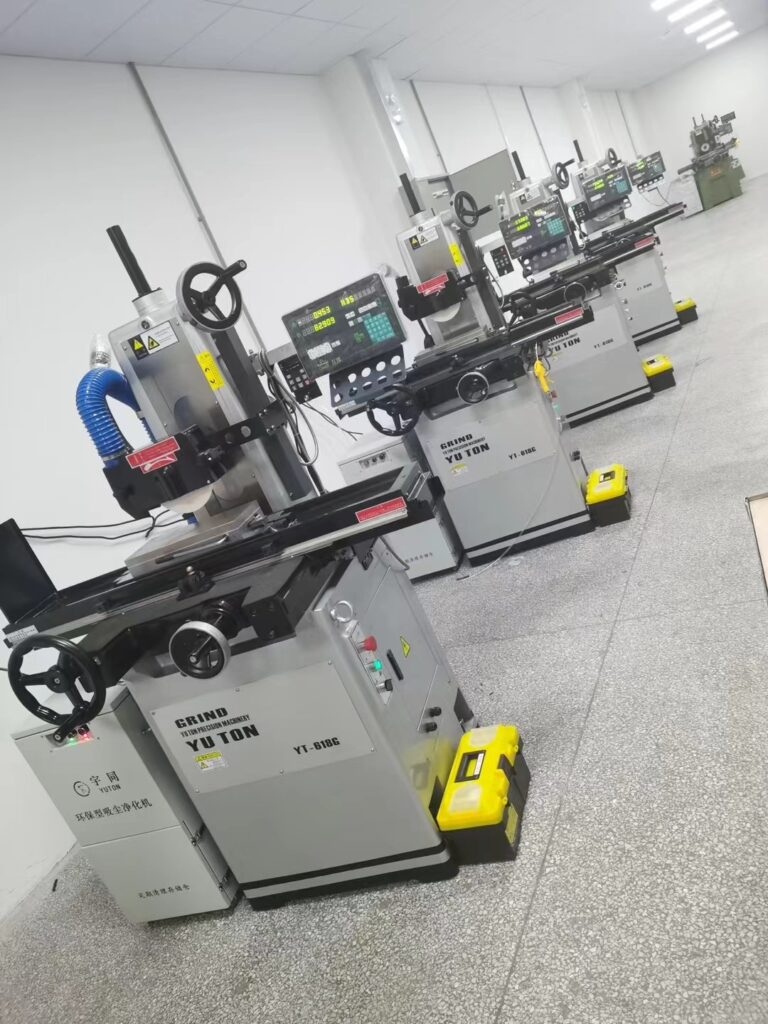
Becoming a manual surface grinder dealer puts you at the entry point of almost every metalworking market. Moreover, hand-feed grinding machines remain in steady demand from mold repair shops, tool rooms and technical schools. This guide explains the market, the economics and the support a serious factory partner should provide in 2026. Consequently, distributors can evaluate the opportunity with numbers instead of guesswork.
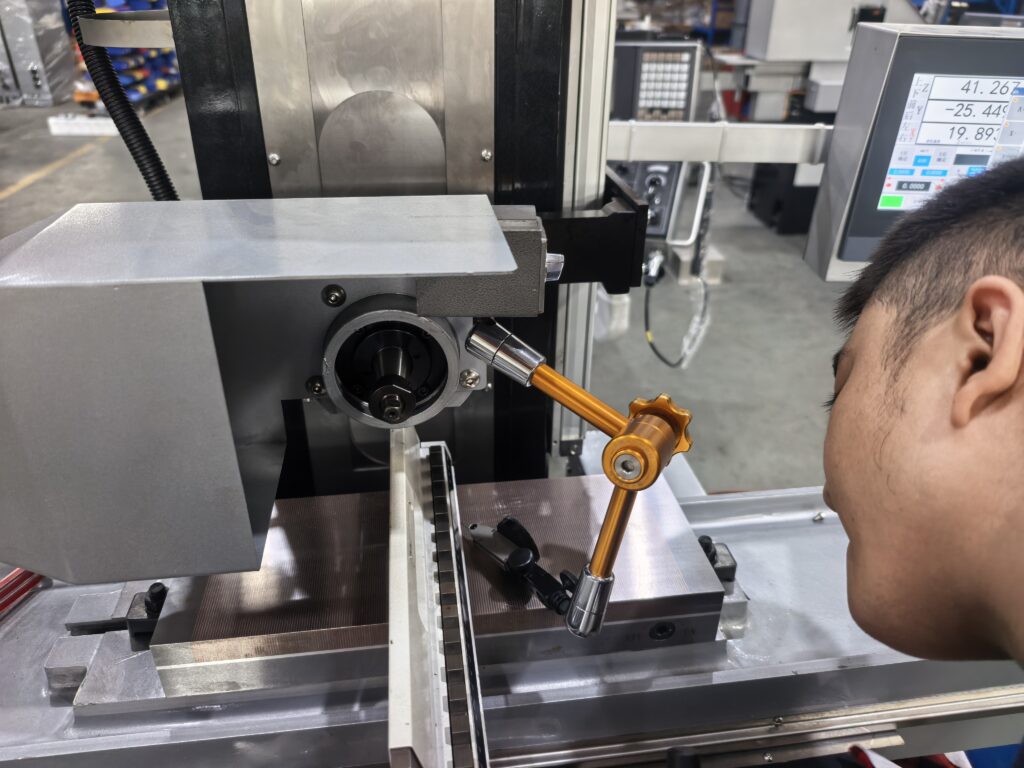
Why Hand-Feed Grinding Machines Still Sell in 2026
Manual grinding never disappeared, even when CNC automation expanded. Furthermore, many everyday jobs do not justify programming time or a six-figure budget. A hand-feed machine sharpens, deburrs and finishes small parts with minimal setup. Therefore, it remains the default purchase for lean workshops around the world.
Who Still Buys Hand-Feed Grinders?
Mold repair shops buy these machines for quick fixes and electrode finishing. Tool rooms use them for fixtures, gauges and one-off components. In addition, small machining job shops keep one nearby for subcontract grinding. Vocational schools also buy them, since students learn fundamentals without CNC complexity.
Emerging economies drive a large share of new demand. Moreover, workshops in industrializing regions need affordable precision before they invest in automation. Therefore, entry-level manual surface grinders often sell in higher volume than complex models.
These machines also fit limited floor space and simple power supplies. Meanwhile, maintenance stays cheap because no servo system or controller is involved. Thus, dealers can demonstrate, deliver and commission a unit within a single working day.
Resale value adds another quiet advantage. These machines hold value well because the design changes slowly. In addition, used units are easy to inspect and recondition. Therefore, trade-in programs let dealers close replacement deals quickly.
Public tenders reward dealers who keep documentation ready. Moreover, schools and training centers often need several identical units at once. In addition, maintenance departments prefer suppliers with a local service record. Therefore, a registered dealer can win volume orders that direct sellers rarely reach.
Buyers also compare these machines against CNC alternatives every day. However, many jobs never need programmed cycles. A skilled operator can finish a small batch faster without writing a single line of code. Meanwhile, the purchase price stays within most maintenance budgets. Thus, the entry machine remains a rational choice rather than a compromise.
The Role of a Manual Surface Grinder Dealer in Your Market
Local dealers provide value that no distant factory can replicate. Specifically, customers want to see a machine grind an actual workpiece before paying. A dealer can run test grinds on local steel and document the achieved finish. In fact, this demonstration often closes deals faster than any printed catalogue.
Buyers also compare local service against direct import prices. However, the cheapest FOB quotation ignores freight, duties and installation. A dealer presents one landed price with a local contact on the invoice. In addition, that contact stays available for years after the sale. Therefore, risk-averse buyers consistently choose the local option.
Many customers also need financing or staged payment plans. Meanwhile, established dealers can structure payment around delivery and acceptance. Furthermore, a direct factory usually requires full payment before the ship even sails. Thus, flexible local terms create a clear competitive advantage.
Delivery and installation form the second layer of value. Furthermore, the dealer levels the machine, calibrates the magnetic chuck and confirms accuracy on site. As a result, the buyer starts producing instead of troubleshooting import paperwork.
Training matters more than many suppliers admit. Operators must learn wheel dressing, cross-feed control and safe clamping. In addition, a short hands-on session prevents most early warranty claims. Therefore, well-trained customers become loyal repeat buyers.
Parts availability is the decisive factor during a breakdown. A dealer with local stock can supply wheels, dressers, belts and bearings within hours. By contrast, direct importers may wait weeks for a single replacement part. Consequently, a capable manual surface grinder dealer wins orders that pure online sellers cannot touch.
Warranty response completes the local offer. Moreover, dealers translate the claim process into the customer’s language and handle return freight. Thus, the end user is really buying uptime, not merely a steel frame.
Manual Surface Grinder Dealer Economics: Margins, MOQ and Repeat Revenue
Margins on entry machines are healthy but rarely spectacular. However, the business becomes attractive through steady volume and repeat sales. A typical starter order begins with a small floor-stock package rather than a single unit. In addition, factory MOQ terms usually become flexible after the first container moves.
Where the Repeat Revenue Comes From
Grinding wheels need replacement on a regular cycle. Furthermore, wheel dressers, balancing stands and coolants generate steady consumable income. Magnetic chucks and precision vises attach to almost every new machine sale. Therefore, accessories lift the average ticket without adding freight complexity.
Service and repair work creates another valuable revenue stream. Indeed, older machines need spindle rework, table re-scraping and way replacement. A trained dealer technician can bill these jobs at strong local rates. Meanwhile, every service visit opens the door to a new machine quotation.
Financing the first container deserves the same discipline as selling it. Furthermore, factories reward fast repeat orders with better payment terms over time. In addition, slow-moving models can be swapped into the next production batch. Thus, floor stock stays fresh without tying up excessive capital.
Demo machines themselves earn money twice. Specifically, the showroom unit produces test grinds during the sales process. After the sale, it can move to a new buyer at a modest discount. In fact, many dealers rotate demo units this way every quarter. Therefore, demonstration cost becomes a working asset rather than an expense.
The smartest upsell follows a proven ladder. Entry manual customers often grow into hydraulic equipment within a few years. Consequently, the first small sale can lead to a much larger capital order. The surface grinder price page helps dealers frame this ladder with transparent figures.
For a manual surface grinder dealer, planning the showroom around this progression is essential. For example, placing a hand-feed model beside a hydraulic unit invites direct comparison. As a result, customers often decide to upgrade before they even leave the building.
How a Manual Surface Grinder Dealer Should Vet a Factory Partner
A cheap invoice says very little about long-term compatibility. Therefore, dealers should audit capacity, quality systems and export experience before signing. A credible surface grinder manufacturer will welcome such an inspection.
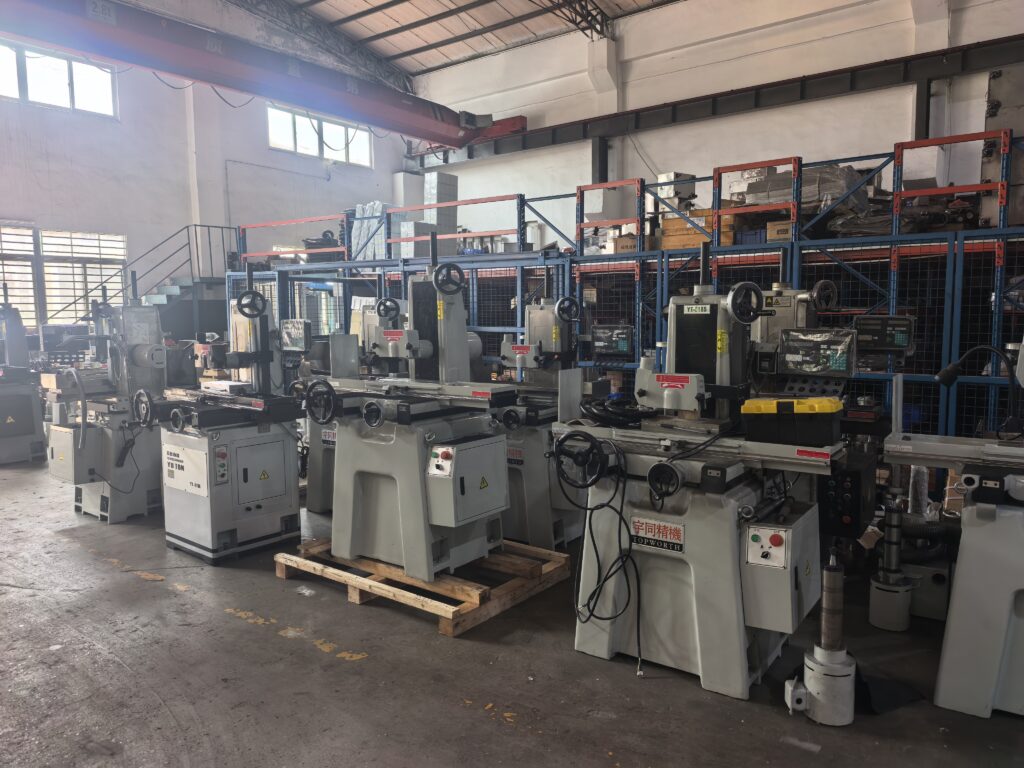
YUTON operates with 150 employees inside a 15,000-square-meter campus of 7 factory buildings in Dongguan. Moreover, the company sold 3,100 machines in 2025. That volume places it among the top three Chinese brands nationally. This scale means consistent casting supply, stable assembly teams and short lead times. In addition, every machine uses core components from first-line Japanese, Taiwanese and American suppliers.
Component sourcing deserves direct questions during a factory tour. Specifically, dealers should ask which bearings, spindles and screws appear in each model. Furthermore, transparent suppliers name these brands openly in quotation documents. By contrast, vague answers about generic parts deserve caution.
Process control is easiest to observe in person. Dealers should watch casting aging, scraping and final geometry inspection. In addition, export packaging and documentation rooms show real shipment experience. Thus, a single visit answers more questions than months of email.
German and Japanese heritage brands dominate the premium end of the market. Meanwhile, established Taiwanese brands hold the mid tier. However, a value-to-mid partner with transparent components can match standard requirements at half the cost. Therefore, dealers should compare total value rather than country stereotypes.
OEM, Territory Exclusivity and Marketing Support
Quality systems deserve documentary proof. YUTON holds ISO 9001 certification, and its export machines carry CE marking for the European market. However, dealers should also verify how the factory handles batch inspection and final geometry reports.
OEM and ODM terms allow dealers to build their own regional brand. Specifically, nameplates, paint colors and manuals can be customized at agreed order volumes. In fact, many regional distributors began this way before taking on a fully branded line.
Territory exclusivity protects serious partners. Furthermore, a standard agreement defines annual targets, assigned countries and channel rules. Therefore, both sides know exactly what performance level unlocks renewal.
Marketing support often decides first-year results. A strong factory partner supplies cut sheets, photos, videos and exhibition materials. In addition, industry media such as Modern Machine Shop help dealers track technology trends. Associations including AMT and SME also publish benchmarks that dealers can cite to technical buyers. Thus, a well-supported dealer enters the market looking established from day one.
Application, Starter Packages and Launch Support
The application process is straightforward and fully transparent. First, a dealer submits company background, target sectors and a simple six-month plan. Next, the YUTON export team reviews local market coverage and responds within days. Therefore, qualified partners can move from inquiry to order quickly.
A starter package balances floor stock against cash flow. Typically, it combines several hand-feed models with a selected spare-parts kit. In addition, dealers can mix manual units with hydraulic surface grinders inside the same container. Mixed loading lowers freight cost per unit and fills the showroom faster.
Dealers aiming at heavy industry can expand later. A large hydraulic surface grinder handles heavy plates and big molds. Meanwhile, batch-oriented buyers may prefer an automatic surface grinder for repetitive work. Thus, one supplier can cover the entire product ladder.
Training begins before the container even arrives. Factory engineers provide assembly checklists, service videos and live online sessions. Furthermore, hands-on training is available at major exhibitions or during factory visits. Consequently, the dealer’s technicians feel confident from the first installation.
Priority markets receive dedicated landing pages and joint lead routing. For example, dedicated pages for Turkey and Mexico connect local buyers with regional partners. Alternatively, dealers in other countries can request market research before making any commitment. Indeed, the program is built for long-term regional cooperation.
Joint marketing makes the first year measurably easier. Furthermore, co-branded flyers, local show offers and email templates arrive before launch. In addition, online inquiries from the assigned territory route directly to the partner. Therefore, dealers generate qualified conversations instead of buying cold leads alone.
Factory events create another channel for serious partners. Moreover, YUTON hosts dealer days during major industry exhibitions. These events include technical workshops, new-model previews and private contract reviews. Thus, partners return home with updated products and fresh selling tools.
FAQ: Manual Surface Grinder Dealer Questions
How much capital does a new dealership require?
A first order usually fits a single 20-foot container with several machines. Moreover, adding a spare-parts kit greatly improves early service response. Therefore, total startup capital depends mainly on your selected models and local showroom costs. Indeed, the YUTON team can propose packages for several different budget levels.
Can I order manual and hydraulic machines in one container?
Yes, mixed containers are standard practice and actively encouraged. In addition, mixing entry and hydraulic models spreads freight cost across more value. For example, many partners pair six hand-feed units with two hydraulic machines. Consequently, the showroom covers both budget buyers and production buyers from day one.
Do you offer territory exclusivity?
Yes, exclusivity is available for committed partners. However, it requires agreed annual targets and active market development. Specifically, the contract names the countries or regions reserved for your company. Thus, serious dealers receive clear protection against cross-channel competition.
What warranty and parts support is included?
Every machine includes a standard warranty with clearly documented terms. Furthermore, dealers receive a recommended spare-parts list and preferential parts pricing. In fact, most common wear items can be shipped together with the initial container. Therefore, local customers experience fast repairs instead of long, costly downtime.
How long does the approval process take?
The review usually takes several business days after the documents arrive. Meanwhile, complex OEM requests may need one short technical discussion. As a result, most qualified partners receive a draft agreement within two weeks. Alternatively, ready-stock models can ship even before the full branding program starts.
Conclusion
Manual grinding remains a volume-driven entry point for workshops worldwide. Moreover, dealers who combine strong local service with a capable factory partner build durable, repeat-revenue businesses. YUTON brings scale, certification and first-tier components to that partnership. In addition, mixed containers, OEM options and territory protection reduce both startup risk and running cost.
End users can send their workpiece dimensions for a precise quotation and test-grind proposal. Dealers ready to grow should apply to become an authorized YUTON distributor today. Furthermore, our export team will reply with market data, package options and exclusivity terms within days.