Every machinery market reaches a turning point. Buyers then trust the local dealer as much as the logo cast into the column. Consequently, more importers ask Chinese factories about a private label surface grinder program. In fact, they would rather build their own brand than keep reselling a supplier’s existing label. This guide explains OEM and ODM branding, customization, pricing, MOQs, and the YUTON partnership model. Many dealers reach this stage after years of thin margins on identical machines. As a result, that dynamic gradually reverses itself once a brand is in place.
What Is a Private Label Surface Grinder?
OEM and ODM explained
OEM stands for original equipment manufacturing. The factory builds a proven machine, then applies the buyer’s nameplate, paint code, and documents. ODM, by contrast, means original design manufacturing, with the builder modifying the engineering itself. Changes may cover table travel, column clearance, coolant delivery, or electrical architecture. In both cases, the machine ships under the buyer’s brand, and end users never meet the builder.
Most programs begin with OEM production of proven, entry-level models such as manual surface grinders. Furthermore, the relationship often evolves into ODM as volume and trust grow. The factory then develops market-specific modifications on the brand owner’s behalf. Thus OEM and ODM form a flexible spectrum rather than two rigid boxes.
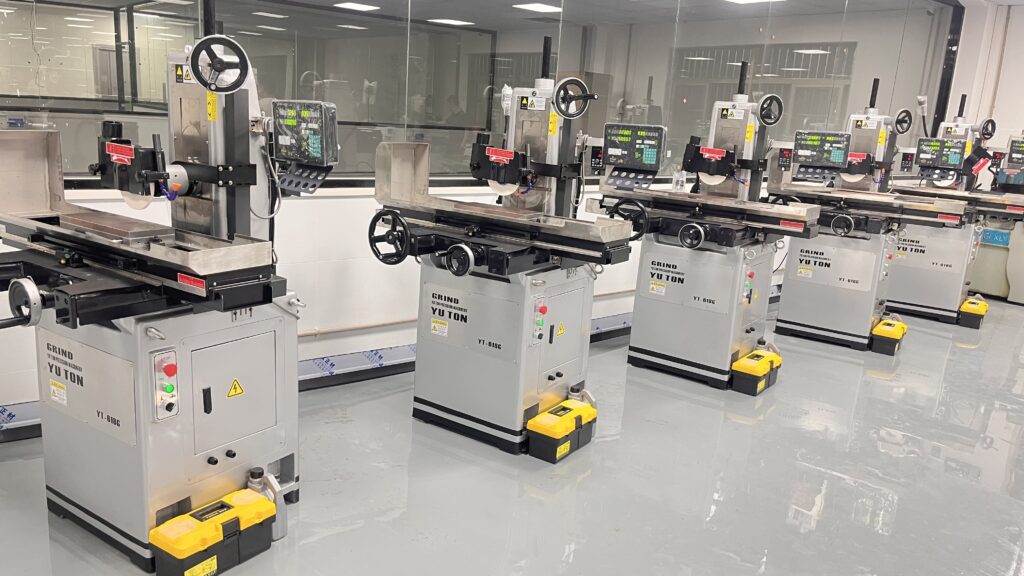
Nearly every grinder category supports this model. Entry 618-size hand-feed machines suit workshops and tool rooms, while hydraulic saddle-types serve mold shops. Indeed, the buyer chooses which models carry the new label and which stay standard.
Who sells branded machines built by another factory
Private labeling is already standard across many industries. Machine tools now follow exactly the same model. In fact, several respected regional grinder names source complete series from Chinese builders. In addition, these brands operate across Europe, the Middle East, and Southeast Asia. Yet they keep sales, service, and brand strategy entirely in their own hands. The brand owner controls the customer relationship, while the manufacturer supplies engineering and capacity. Meanwhile, consistent quality is managed quietly behind the scenes. Industry coverage in Modern Machine Shop describes branded distribution as a mainstream route to market. Moreover, associations such as AMT and SME track the same long-term trend.
Why Distributors Launch a Private Label Surface Grinder Brand
Margin and customer loyalty
Branded machines carry transparent prices. A global-brand model carries a price that every competitor can easily quote. Dealer margins therefore shrink at every repeat negotiation. With an OEM-branded machine, however, the distributor owns the product identity outright. It captures the margin that would otherwise flow to an overseas brand holder. Moreover, repeat buyers grow loyal to the local name and to the servicing technician. Service contracts and spare-parts revenue then stay with the local company as well. In fact, many distributors build their fastest growth on repeat calibration visits.
Protection from price comparison
Customers quickly compare identical model numbers across several competing importers. The sale then becomes a race to the lowest surface grinder price. A custom-branded surface grinder, by contrast, cannot be matched on a shopping tab. Therefore, the conversation shifts toward precision, support, spare parts, and delivery. Additionally, exclusive branding locks out parallel traders who import identical machines. Indeed, brand owners report that price-driven churn falls sharply within two years. Search engines and quoting platforms also struggle to index a product that exists nowhere else. Thus the dealer wins inquiries that would never reach a commodity listing.
What a Factory Can Customize
Nameplates, paint and manuals
Most first orders begin with the visible branding layer. Specifically, the factory produces metal nameplates with the buyer’s logo, model data, and serial sequence. Paint is mixed to an exact RAL or customer-supplied color code. Manuals, warning labels, and quick-start guides are translated into the local language. Indeed, even handwheel markings, certificates, and accuracy reports can carry the brand. Meanwhile, serial-number registration can follow the buyer’s own database scheme. This helps service teams track warranty status across every machine sold.
Configurations, table sizes and electricals
Deeper customization addresses how the machine fits each local application. A large hydraulic surface grinder platform, for example, accepts extended travel or a heavier chuck. High-pressure coolant systems can be added for die steel and mold bases. An automatic surface grinder may receive custom downfeed increments or PLC language packs. Dust-extraction connections are available as another option. Electricals are equally flexible, since motors and pumps can match regional standards. The package can then be documented for CE marking or equivalent conformity rules. Alternatively, the factory keeps its proven base design and changes only demanded features.
Packaging and documentation
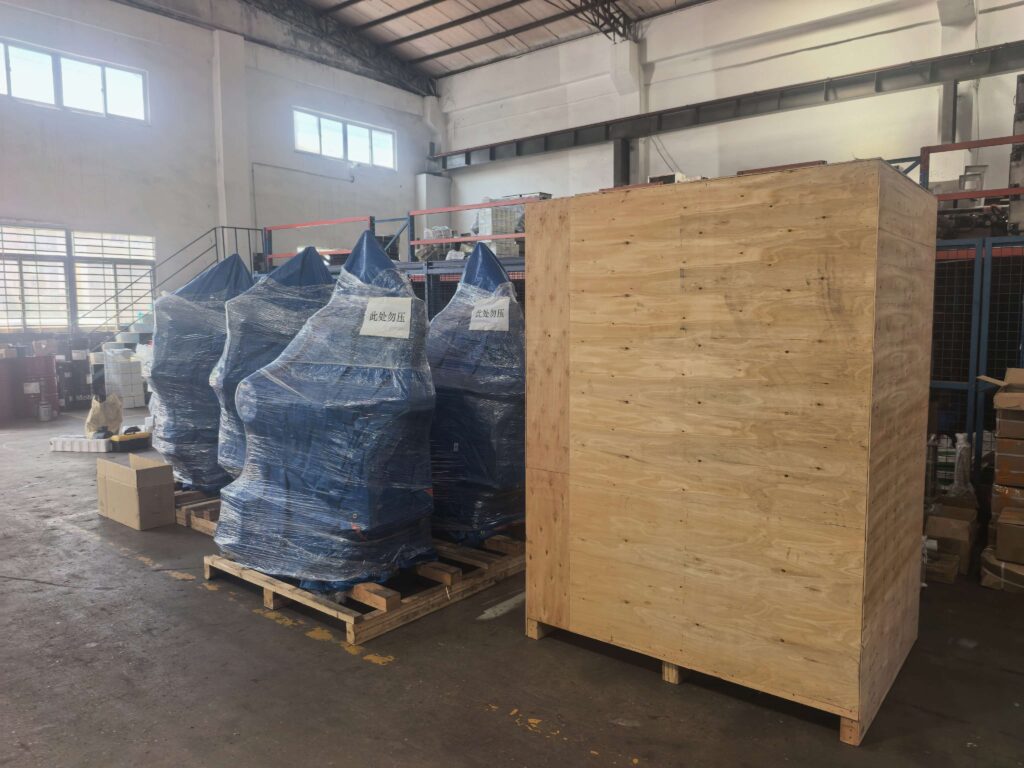
Export packaging matters greatly on a six-week ocean voyage. Crates combine fumigated plywood with vapor-corrosion protection. In addition, the builder prints branded packing lists, reports, and commissioning checklists. All paperwork follows the buyer’s own templates. These documents shorten customs clearance and reduce damage disputes on arrival. Furthermore, they reinforce a professional first impression of the young brand. Photographs and video from factory acceptance tests are included on request. Indeed, these files let distributors pre-inspect machines before the container is sealed.
Pricing, MOQ and Cost Structure
How private-label pricing works
International labels often charge two to four times factory cost. Marketing, intermediaries, and brand overhead absorb that wide difference. Under an OEM arrangement, however, the brand owner buys near the gate price. It then controls every markup along the entire distribution channel. In addition, tier pricing rewards distributors who consolidate annual volume. Consequently, grouped demand across branches earns a substantially better landed cost.
Minimum quantities are normally set per model rather than per brand. In practice, a first order of 6 to 10 units covers custom nameplates and paint. ODM modifications, such as altered table sizes, require considerably higher volumes. Engineering and validation work must be amortized across the production lot. Thus MOQ is best negotiated against a realistic twelve-month forecast. For example, payment terms combine a deposit with a balance payment before shipment. Sample machines usually carry a small surcharge that later volume orders can refund.
Tooling, artwork and first-order costs
New brand owners sometimes assume that custom branding is free. Nameplate tooling, paint-mask films, and manual layout carry one-time costs. Consequently, most factories quote these separately or amortize them in the first lot. Independent test reports may also be billed to the branding project. This applies beyond the factory’s existing ISO 9001 quality system. A transparent private label surface grinder quotation clearly separates these cost lines. Artwork should be supplied in vector files with exact color references. Good preparation at this stage removes weeks from the first-order timeline. Furthermore, the contract identifies who owns the artwork, tooling, and design files. It also defines asset transfer if the relationship ever ends.
Choosing a Factory for OEM Production
Manufacturing depth versus assembly-only shops
Many builders cannot support genuine OEM work. Some shops only assemble purchased castings and bought-in spindles. That model limits traceability and makes design changes slow or impossible. By contrast, a deep factory handles castings, scraping, wiring, and spindles in-house. Such depth controls quality at every stage and speeds every ODM change. Therefore, brand owners should audit the production line before signing exclusivity. Alternatively, a trusted local inspector can conduct that visit on the buyer’s behalf. A short audit checklist covers casting stock, scraping benches, test bars, and inspection rooms. Specifically, ask to see accuracy reports for machines currently in final assembly.
Confidentiality and channel protection
Every branding customer shares one central fear about the factory. It might bypass them, copy the concept, or sell an identical machine locally. A credible manufacturer addresses that fear directly and in writing. It signs nondisclosure and non-circumvention terms from the very first order. It also separates its own-brand sales desk from the OEM account team. In addition, end users are never contacted behind the distributor’s back. Moreover, export-document experience in difficult markets is extremely valuable. Builders familiar with clearance in India, Mexico, and Turkey prevent costly delays. Indeed, one simple test reveals whether channel protection is genuine. Check whether the factory actively promotes its own logo in your country. Furthermore, references from other OEM customers provide the strongest proof of discipline. Alternatively, a small trial order reveals communication quality before exclusivity is signed.
The YUTON Private Label Surface Grinder Program
Factory facts and OEM/ODM capability
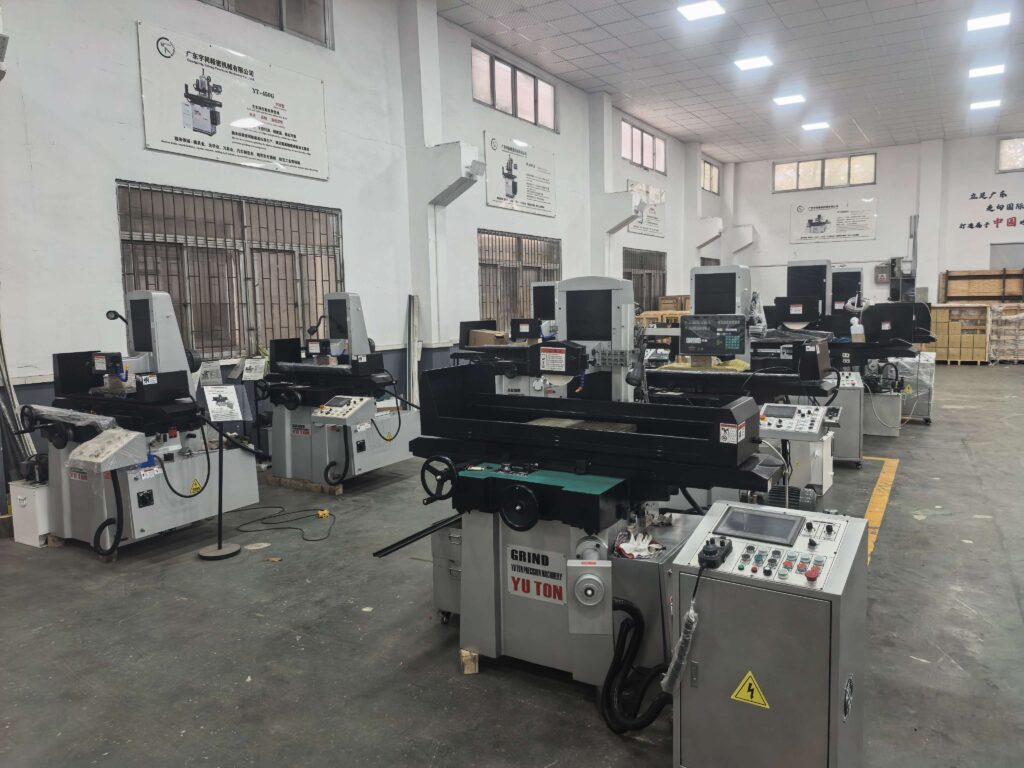
First, consider the factory facts. YUTON is the factory brand of Guangdong Yutong Precision Machinery in Dongguan. Roughly 150 employees work across 15,000 square meters and seven buildings. The product range forms a complete progression of grinder types. It starts with hand-operated models and hydraulic surface grinders in the big water grinder format. The line then extends upward to fully automatic CNC machines. Core components are sourced from Japan, Taiwan, and the United States. Quality gates run from raw casting inspection through laser interferometer checks. In 2025, the factory shipped approximately 3,100 grinding machines. That volume places YUTON among China’s top three grinder producers. In fact, this scale is precisely what makes small-batch branding viable. In addition, every machine leaves the building with a recorded geometry certificate.
On the OEM side, the customization list is concrete. YUTON supplies custom nameplates, customer-color paint, localized manuals, and branded crates. ODM projects cover table dimensions, coolant systems, and regional electrical specifications. In addition, certified quality systems and European conformity documents already exist. Thus most branded orders inherit existing reports instead of restarting certification.
How to start: sample inquiry or distributor application
There are two straightforward entry points into the program. End users and job shops should begin with a sample-based inquiry. They send dimensions, material, tolerance, batch size, and local power-supply details. Engineering then recommends a model and quotes a branded or standard unit. Brand owners and retail chains instead follow a second, partnership route. They then submit a distributor application with private-label terms. Specifically, terms cover exclusivity, annual commitments, samples, spare parts, and training. Additionally, marketing materials and technical support are included as well.
The standard agreement defines every essential protection in writing. It lists regional exclusivity and full ownership of brand and design assets. It also sets minimum annual volumes and strict anti-diversion rules. Nameplate machines must never flow back into protected markets. In particular, warranty duties are clearly divided between factory and brand owner. Furthermore, YUTON strictly separates its own brand from all OEM channels. The factory never approaches an OEM customer’s end users directly. Thus distributors can invest locally without ever competing with their supplier. Indeed, a private label surface grinder partnership starts with a single sample order. A territory review and a realistic volume plan then complete the foundation. In particular, the first-order lead time is stated in writing after artwork approval. Moreover, repeat production follows a rolling forecast held against the annual minimum.
FAQ: Private Label Surface Grinder Orders
What is the minimum order for branded machines?
Most programs begin with 6 to 10 units of one model, enough for nameplates and paint. However, ODM changes such as new table dimensions usually need a larger first lot. Consequently, sharing a realistic annual forecast often produces a more flexible MOQ.
Can we modify the machine design instead of only the logo?
Yes, and the options go well beyond logos and paint. In addition to nameplates, YUTON adapts tables, coolant systems, chucks, controls, and electricals. Furthermore, every change is documented with drawings and inspection standards before tooling begins.
Who owns the branding and design assets?
The brand owner retains all trademark and artwork rights from day one. The agreement also assigns project-specific design work to the brand clearly. As a result, tooling, serial sequences, and translated documents stay identified with your brand.
How is warranty handled for white-label grinders?
Warranty duties are split inside the contract between both parties. The factory covers defects and supplies parts, while the distributor provides first-line service. Consequently, end customers receive fast local support without contacting the factory.
Does YUTON compete with its own OEM customers?
No, because the two sales channels are strictly separated. YUTON signs territory and non-circumvention protections with every branding partner. Indeed, the factory never contacts end users, so your customers remain entirely yours.
Conclusion
A white-label grinder program helps distributors escape model-number price wars. They instead build equity in a brand that no rival can source. However, success requires real manufacturing depth, transparent costs, and channel protection. Indeed, the lowest unit price is the wrong criterion on its own. In addition, the contract must settle ownership, exclusivity, volumes, and warranty upfront. Treated as a multi-year partnership, OEM branding often becomes the dealer’s most profitable division. That result usually arrives within two or three years.
YUTON offers top-three Chinese volume, complete customization, and strict channel separation. Its model is designed never to compete with its own branding partners. End users should therefore send workpiece dimensions, material, tolerance, quantity, and power supply. Consequently, you will receive a model recommendation and a direct quotation in return. Alternatively, brand owners and dealers can apply to become an authorized YUTON distributor with private-label terms. The program includes territory exclusivity, sample machines, long-term spare parts, and technical training.