
A grinder purchase can last decades. The company behind the machine matters as much as the iron itself. A reliable surface grinder supplier protects your tolerances, your delivery promises and your maintenance budget long after installation. In fact, most common grinding complaints are supplier problems. Late shipments, drifting accuracy and missing spares rarely start with the iron. Therefore, sourcing deserves the same care you apply to selecting spindle power or table size. This guide explains how vendors differ, how to audit them, and how to build a lasting partnership.
What a Surface Grinder Supplier Really Is
Factory, trader, or assembler
Labels can mislead buyers. Not every grinder vendor actually manufactures what it sells. In fact, the market contains three common models, and each one carries different risks for the buyer.
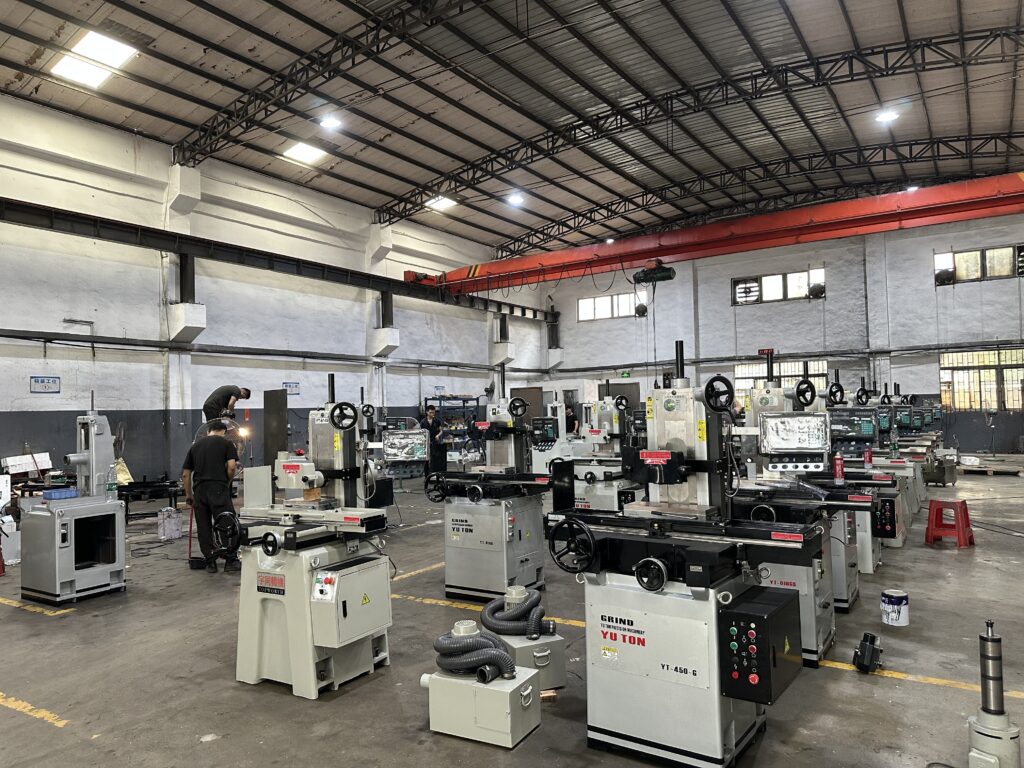
A true factory designs machines, sources or machines castings, scrapes, assembles and tests every unit in-house. Therefore, it controls geometry, lead times and after-sales support directly under one roof. A trader, by contrast, buys from several plants and resells under its own brand or yours. However, traders rarely control build quality, and they can vanish between repeat orders. An assembler buys finished modules, bolts a nameplate onto them and offers almost no engineering depth. Consequently, a low assembler quote often looks attractive until commissioning support is needed.
You can identify the model quickly. Ask who casts the beds, who scrapes the ways and where final test grinding happens. In addition, request dated workshop photos showing machines with visible serial numbers in progress. A trader will deflect these questions, while a factory will answer them with evidence. Most genuine factories respond within a single working day. Trade press and industry bodies also help. Indeed, Modern Machine Shop, AMT and SME all publish buyer education for first-time importers.
What different buyers actually need
Different buyers need very different partners, even when buying the same model. Job shops and toolrooms usually buy one or two machines and need responsive guidance on wheels, fixturing and setup. In addition, they benefit from a vendor that answers technical questions quickly and supplies manuals in plain English. Dealers and importers, by contrast, need repeatable private-label supply, mixed containers and genuine regional exclusivity. Meanwhile, large component manufacturers demand batch consistency, documented inspection reports and stable lead times across repeated orders. Thus, the right machine supplier looks different for every buyer, even when the specification sheet looks identical. A partner that suits a single-machine buyer may be too small for an importer, and vice versa.
How to Evaluate a Surface Grinder Supplier
Quality control and certifications
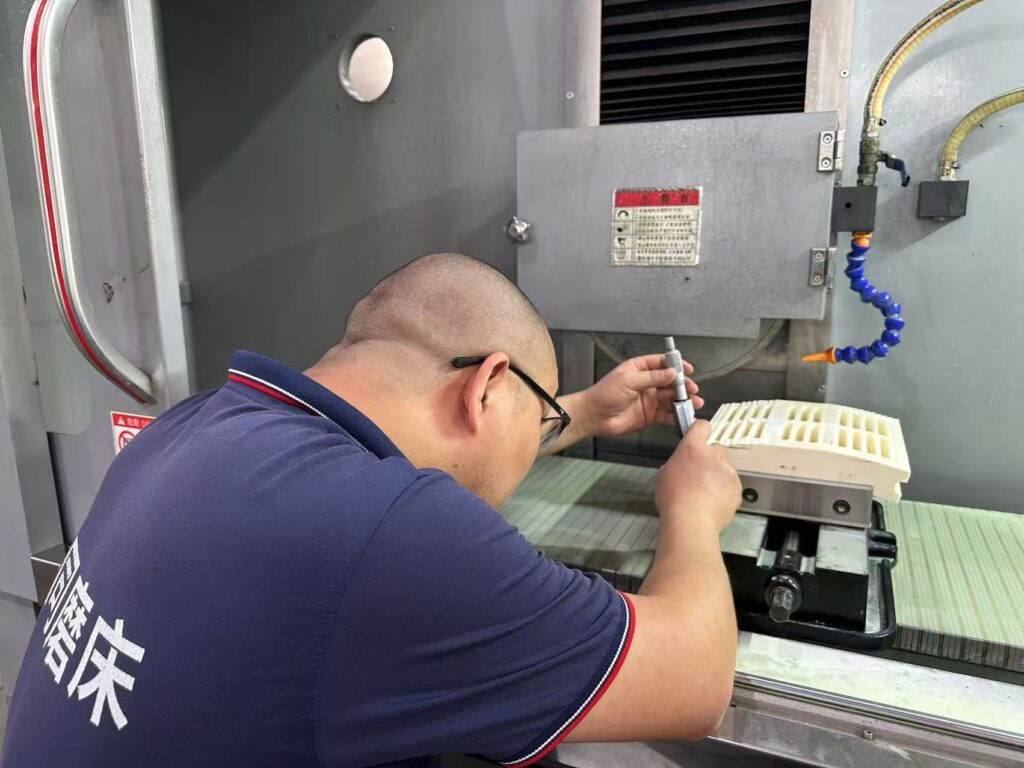
Ask for evidence rather than promises. Specifically, request inspection reports, scraping standards and geometry records from laser interferometers or autocollimators. A credible equipment supplier will hold ISO 9001 certification. In addition, its electrical systems should align with CE marking requirements for European destinations. Furthermore, certificates should sit inside real procedures. Specifically, these include incoming casting checks, spindle run-out tests and trial grinding before shipment. Indeed, a live video audit or an in-person visit separates documented systems from paperwork alone within a single afternoon. Pay attention to small signals during the tour, such as gauge calibration stickers and clearly labeled inspection stations. References from similar buyers add further confidence.
Capacity, lead time and export experience
Capacity reveals whether promises survive the busy season. For example, a builder shipping thousands of machines each year absorbs rush orders far better than a twenty-person workshop. Export experience matters just as much. Seasoned exporters understand plywood cases, fumigation rules, voltage conventions and destination paperwork. In fact, they handle documentation for markets from India to Turkey and Brazil. In addition, they quote realistic delivery windows rather than optimistic ones. Moreover, they warn early when a component is delayed. They also know which ports and carriers handle machine tools with the least damage risk.
Core components and engineering depth
Precision grinding lives or dies on core components. Therefore, ask exactly which spindles, bearings, hydraulic valves and control systems the machine uses. Premium builders specify Japanese, Taiwanese and American components, and they can explain the reason for each choice. Alternatively, vague answers about “famous brand parts” usually signal cost-driven assembly rather than engineering. Depth also shows in customization. Extended chucks, elevated columns, special guarding and CNC upgrades should be designed in-house, not improvised on the assembly floor. Ask to see drawings from a previous special order if your application is non-standard. Good engineering reduces lifetime friction.
Price Quote vs Total Cost of Ownership
Why the cheapest quote often costs more
Start with the invoice. A low quotation is easy to compare, but it represents only one line of a ten-year budget. In fact, buyers who chase the lowest surface grinder price often pay twice. That bill includes rework, scrapped parts and missed delivery commitments. A machine that drifts out of tolerance also burns abrasive, operator time and inspection capacity every single shift. Operators lose confidence in suspect equipment, and inspection workload rises across the whole shop. Consequently, compare total cost of ownership across the machine’s life. Cheap castings may also distort after heat treatment. The proforma number alone tells very little.
Freight, duties, parts and downtime
Include logistics before you decide. Specifically, compare FOB and CIF terms, container loading plans, port charges and the import duties applied in your country. Furthermore, budget early for spare wheels, dressers, seals, hydraulic oil and electrical spares. In addition, estimate downtime in real money. A failed spindle with slow vendor support can idle a toolroom for weeks. By contrast, a slightly higher machine price often pays back within the first year. Stocked spares and fast answers make the difference. Ask every candidate to quote two years of consumables alongside the machine itself. Insurance and inland transport deserve the same scrutiny.
Building a Long-Term Relationship with Your Supplier
Parts continuity and warranty response
Parts define the relationship. A good grinder often runs for fifteen or twenty years. Therefore, confirm in writing that spindles, ways, pumps and control boards remain available long after the purchase order closes. Ask how warranty claims are handled, who pays freight on defective parts and which response times are guaranteed. Moreover, a trustworthy sourcing partner stocks common spares regionally and answers technical questions within hours rather than weeks. As a result, switching your surface grinder supplier after a few years costs real money. It can quietly exceed the price of the original machine. Documentation matters equally, because exploded drawings and part numbers let your maintenance team order correctly the first time.
OEM customization and continuous improvement
Dealers grow fastest when their vendor behaves like a silent product partner. For example, mature OEM and ODM programs cover nameplates, paint colors, manuals and even external machine styling. Additionally, strong partners share installation videos, operator training and local-language documentation for your market. In return, structured feedback from your shop floor should drive real improvements. For example, better sealing, quieter hydraulics and simpler guarding all qualify. Thus, every repeat order can be marginally better than the one before it. Quarterly review calls, even short ones, keep both sides aligned on quality and roadmap. Both sides benefit from this discipline.
Managing a Surface Grinder Supplier as a Dealer or Importer
Mixed containers and delivery planning
Mixing is standard. Importers rarely fill a container with one model. In fact, an experienced factory will combine manual surface grinders, hydraulic surface grinders and accessories in one 40-foot container. That mix keeps your stock holding balanced without extra freight cost. Plan orders around production cycles of two to three months and around seasonal shipping peaks. Furthermore, share a rough six-month forecast. Indeed, even an informal one helps your vendor reserve castings and assembly slots. Accurate loading plans also protect margins, because badly planned freight quickly erodes a dealer’s price advantage.
Communication, audits and backup sourcing
Clear communication prevents the majority of disputes. Specifically, confirm specifications, paint color, voltage, plugs and documentation in writing before production begins, not after it finishes. Annual video audits or on-site visits keep quality standards visible and strengthen trust on both sides. Meanwhile, prudent importers quietly qualify a secondary source for baseline models. However, that backup must be audited to the same standard. In fact, panic switching during a stockout never improves quality. Keep a shared checklist for every order so neither side relies on memory. Disputes become rare when expectations are written down.
Why YUTON Is a Reliable Surface Grinder Supplier
Factory facts and quality system
Here are the factory facts. YUTON (Guangdong Yutong Precision Machinery Co Ltd) runs its own Dongguan factory. It employs roughly 150 people across about 15,000 square meters and seven workshop buildings. Indeed, this level of vertical integration means we control scraping, assembly and final inspection instead of reselling trade machines. Our quality management system is independently certified. Export machines carry the electrical documentation that regulated markets require. Core components are sourced from Japan, Taiwan and the United States. In 2025 we shipped about 3,100 grinding machines, placing us among China’s top three producers by volume. Therefore, buyers receive the scale and consistency of a major builder. Direct engineering access still comes from the factory itself. Video tours, on-site audits and trial grinding of customer workpieces are all available before ordering.
The full lineup and how to start
The product range covers every stage of a grinding shop’s growth. It begins with hand-feed toolroom machines. The range then moves through hydraulic models, including the big water grinder format favored by heavy shops. A large hydraulic surface grinder handles long workpieces, while a fully automatic surface grinder adds CNC control. Consequently, a growing shop can standardize on one vendor from prototype work through high-volume production.
Starting is straightforward. End users should send workpiece dimensions, material, tolerance, batch volume and power-supply details. Our engineers will then recommend a configuration. In addition, dealers can apply to become an authorized YUTON distributor. Support includes regional exclusivity, demo machines, training, marketing materials and routed leads. We can also supply market documentation tailored to local voltage and safety expectations. Response is usually within one working day.
FAQ: Choosing a Surface Grinder Supplier
How do I confirm a vendor is a real factory?
Ask for a live video tour, business documents, workshop photos and export references. Then compare the addresses across all of them. In addition, request a small custom modification; pure traders usually cannot engineer one.
What is a realistic lead time in 2026?
Standard models commonly ship within 30 to 45 days. Customized or very large machines need 60 to 90 days. However, high-volume exporters recover far faster from seasonal peaks. Thus, lead-time history matters more than a single promise.
Should I buy on FOB or CIF terms?
First-time importers often prefer CIF for its simplicity, whereas experienced buyers tend to control freight themselves. Therefore, request both quotations and compare the landed numbers before committing. Local trucking costs should also be included.
Can I sell the machines under my own brand?
Yes, established factories offer OEM nameplates, custom paint colors and branded manuals, usually behind a modest minimum order. In fact, private-label supply is standard practice between serious factories and long-term importers.
How long should spare parts stay available?
Expect support for at least ten years, with critical mechanical parts available even longer. Consequently, parts continuity belongs in the first negotiation, not in the first breakdown.
Conclusion
Choosing the right surface grinder supplier is a ten-year decision rather than a one-time purchase. However, the effort pays itself back through stable tolerances, predictable delivery and fast support when something goes wrong. Start with a shortlist, audit every candidate honestly, and compare total landed cost instead of machine price alone. End users are invited to send workpiece dimensions, material, tolerance, batch volume and power-supply details. We will return a tailored machine recommendation. Moreover, dealers can apply to become an authorized YUTON distributor. Grow alongside a factory that treats partners as long-term customers. In both cases, the goal is simple: machines that run, parts that arrive, and people who answer.