
Metal additive manufacturing has moved from prototype labs to production floors. However, a printed metal part is rarely a finished part. A surface grinder for 3D printed parts transforms rough, near-net-shape components into precise, sealing-ready workpieces. Therefore, precision grinding has become a mandatory post-processing step rather than an optional extra. Moreover, aerospace, medical and mold shops now expect printed parts to meet the same tolerances as machined components. Printing excels at complex geometry, while grinding excels at flatness and surface quality. Industry groups such as SME and AMT track this rapid adoption of additive technology. Consequently, shops that ignore grinding risk delivering parts that look right but fail in service. This guide explains why printed parts need grinding, which alloys benefit most, and how to run the process correctly.
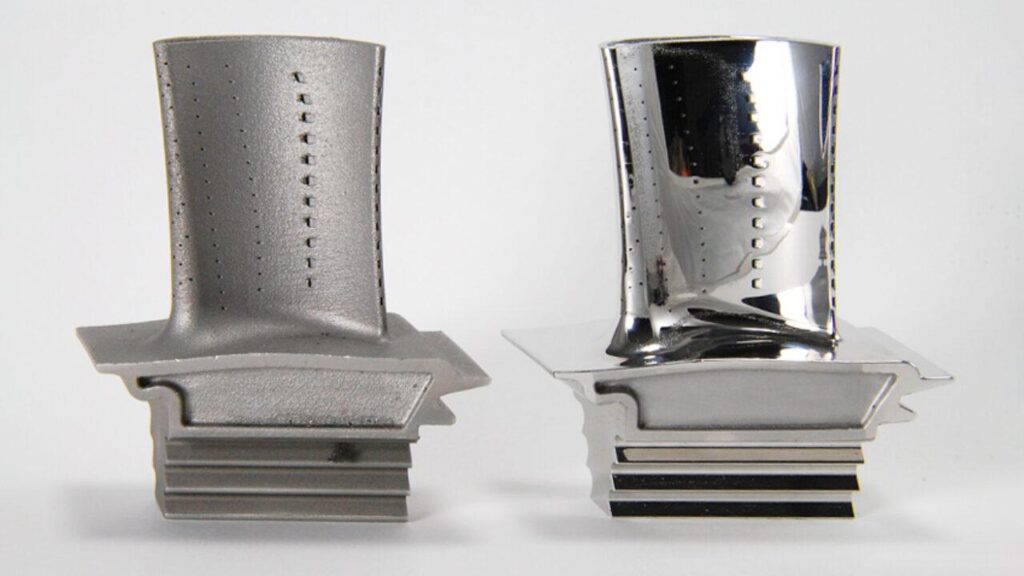
Why Metal 3D Printed Parts Need Surface Grinding After Printing
The Near-Net-Shape Reality of DMLS, SLM and EBM
DMLS, SLM and EBM build parts layer by layer from fine metal powder. These processes deliver near-net-shape geometry and remarkable design freedom. However, they do not deliver finished mating surfaces. As-printed surfaces typically range from Ra 6 to Ra 30 μm. In addition, layer lines, partially melted powder particles and support marks cover every exposed face. Support structures protect overhangs during the build but leave witness marks after removal. Consequently, critical surfaces cannot be used directly for sealing, assembly or precision contact. Furthermore, the as-printed dimension rarely lands exactly on the drawing tolerance.
Why As-Printed Surfaces Fail on Mating and Sealing Faces
Mating faces demand flatness, low roughness and tightly controlled dimensions. A sealing surface on a hydraulic manifold or an implant must be smooth and flat. Moreover, rough AM surfaces trap contaminants and leak under pressure. Surface grinding removes the rough outer skin in controlled, shallow passes. Thus, shops achieve the surface grinding finish that functional faces require. Furthermore, grinding corrects the small dimensional errors and slight warpage left by the print. Indeed, a ground face often becomes the reference for every later operation.
Residual Stress, Distortion and Anisotropy
Printed parts carry heavy residual stress from rapid heating and cooling. When supports are cut away, the part may twist or bend unexpectedly. Furthermore, AM material is anisotropic, so mechanical properties change with build direction. Consequently, a part can warp again during machining if internal stress remains. Grinding removes minimal stock with low cutting force, so it disturbs the part far less than milling. In addition, a properly ground datum face gives every downstream operation a stable reference. Tight surface grinding tolerance becomes realistic only after that datum exists.
Which 3D Printed Materials Benefit Most from Precision Grinding
Titanium Ti-6Al-4V for Aerospace and Medical Parts
Ti-6Al-4V is the most widely printed metal alloy in the industry. It is strong, lightweight and fully biocompatible. However, titanium has low thermal conductivity and heats up quickly during grinding. As a result, surface burn and work hardening are constant risks. Specifically, medical implants and turbine brackets need ground contact faces that milling alone cannot finish reliably. Therefore, most titanium AM lines finish critical faces on a precision grinder. Our detailed guide covers surface grinding for titanium, including wheels and parameters.
Inconel 718 and 625 for Hot-Section Energy Components
Inconel 718 and 625 retain strength at extreme operating temperatures. They dominate turbine blades, combustors and energy-sector components. Moreover, these superalloys work-harden rapidly and wear abrasive grains at high speed. Therefore, grinding is often preferred over hard milling for final precision. Indeed, many shops grind printed Inconel seal slots and blade roots only after full heat treatment. Modern Machine Shop regularly documents how leading shops grind printed superalloys successfully. Our surface grinding for Inconel guide offers detailed wheel and feed advice.
316L Stainless, 17-4PH, H13 Tool Steel and AlSi10Mg
316L stainless provides corrosion resistance for manifolds and surgical tools. 17-4PH and H13 tool steel serve mold inserts with conformal cooling channels. Additionally, AlSi10Mg delivers lightweight structures for racing teams and aerospace programs. Each alloy, however, grinds quite differently in practice. For example, soft 316L tends to load the wheel, while hardened H13 demands sharp, durable abrasives. Meanwhile, aluminum chips can clog wheel porosity if coolant delivery is inadequate. Our surface grinding for stainless steel article explains how to prevent loading and glazing.
Key Challenges When Grinding Additive Manufactured Parts
Hardness Variation, Porosity and the Hard Outer Skin
AM parts are not as uniform as conventional wrought bar stock. The outer skin can be significantly harder than the part core. Furthermore, hardness may swing from one region to another because of the complex thermal history. Internal porosity can also interrupt the cut as the wheel breaks through hidden voids. As a result, the wheel may chatter, pull grains or leave an uneven finish. Light, consistent passes absorb these shocks far better than heavy cuts. In particular, operators should dress the wheel frequently to keep every grain sharp. Thus, the grinding process stays stable even when the material itself is not.
Thin Walls, Lattices and Conformal Cooling Channels
Additive manufacturing enables thin walls, lattices and conformal cooling lines. These features cut weight dramatically but remain fragile after printing. Consequently, aggressive clamping or heavy cuts bend the part before any stock is removed. Vacuum chucks, soft jaws and custom fixtures distribute clamping force safely. Indeed, thoughtful surface grinder workholding matters even more for AM parts than for solid billets. Alternatively, low-melt wax or support alloy can back delicate lattice structures during grinding. Additionally, standard magnetic chucks cannot hold non-magnetic titanium or Inconel at all.
Grinding Burn and the Complex Heat History of AM Parts
Every printed part has already been through a complex series of thermal cycles. Grinding adds still more heat directly at the wheel-to-part contact zone. However, burn on titanium or Inconel can seriously damage fatigue life. Therefore, coolant must flood the grinding zone with clean, correctly mixed fluid. In addition, shallow cuts and frequent dressing keep contact temperatures low. Operators should watch for surface discoloration, a classic early warning sign. Our grinding burn prevention checklist covers coolant concentration, wheel speed and feed rates. As a result, shops protect both surface integrity and long-term part strength.
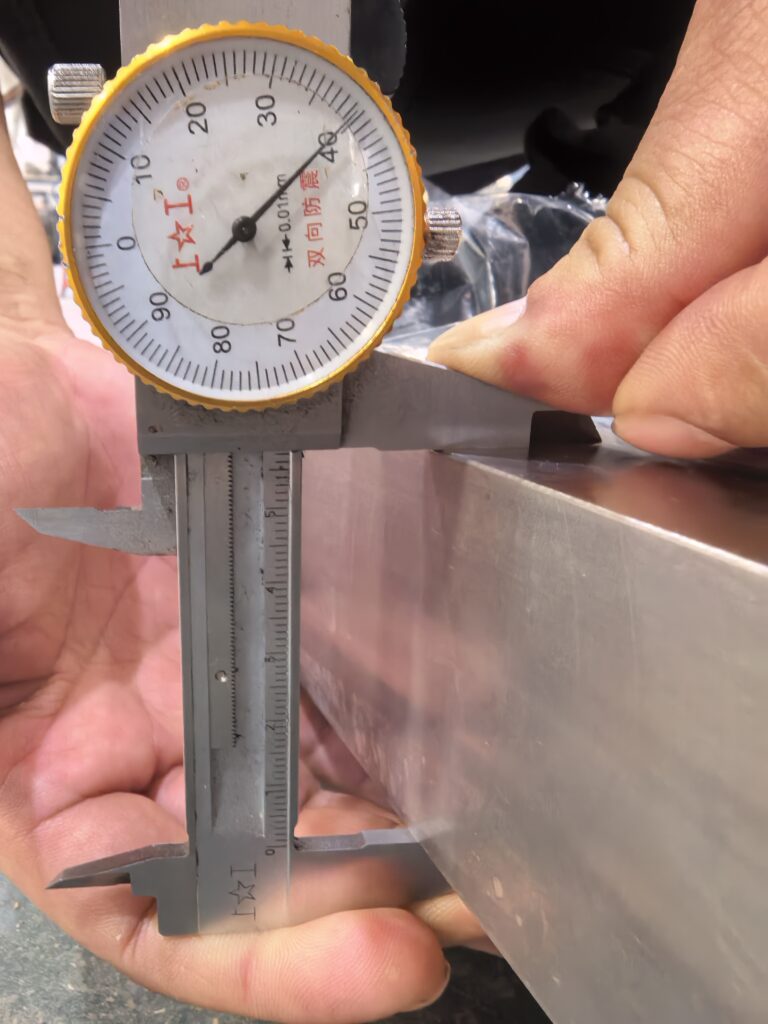
How to Grind 3D Printed Metal Parts: Best Practices That Work
Stress Relief and HIP Before Any Grinding
Heat treatment belongs at the front of the process, not the end. Stress relief stabilizes part geometry before any stock is removed. Moreover, hot isostatic pressing, known as HIP, closes internal porosity in flight-critical or implant parts. Indeed, grinding a part that still carries residual stress invites distortion after the final pass. Therefore, the proven sequence is simple: print, heat treat, then grind. Additionally, hardness testing after treatment confirms the part is truly ready for finishing.
Establish a Datum Face First, Then Grind in Light Passes
The first clean ground face becomes the master datum for the entire part. Every later face references it, so squareness and parallelism stay controlled. Specifically, flip the part onto the datum face before grinding the opposite side. Use light depths of cut, typically 0.005 to 0.015 mm per finishing pass. In addition, finish with spark-out passes to remove deflection and spring-back. As a result, thin or stressed parts remain flat instead of moving after unclamping. Furthermore, inspect flatness after each flip rather than waiting until the very end.
Choose the Right Wheel: CBN, Diamond or Silicon Carbide
Wheel selection should always follow the workpiece material. CBN wheels excel on hardened steels such as H13 and 17-4PH. Diamond wheels handle carbide, ceramics and non-ferrous alloys like AlSi10Mg. Meanwhile, silicon carbide remains a cost-effective choice for titanium and aluminum. Furthermore, softer-grade wheels self-sharpen when grinding gummy stainless alloys. Operators should also match grit size to the required finish and stock amount. Our CBN grinding wheel selection guide matches grit, bond and concentration to each alloy. Thus, wheel choice directly controls finish quality, burn risk and overall wheel life.
Use Low-Stress Clamping and Generous Coolant
Standard magnetic chucks may fail on non-magnetic titanium or Inconel. Therefore, vacuum chucks or laminated fixturing often replace magnets for AM work. Coolant should arrive at high volume, aimed directly at the contact zone. Additionally, keep filters and nozzles clean because AM powder and fine swarf accumulate quickly. A well-designed coolant system also flushes loose grains away from the finished face. Thus, the part stays cool, clean and dimensionally stable through every single pass.
Where Ground AM Parts Matter Most: Key Industries
Aerospace and Defense
Aerospace was the first industry to adopt metal AM at scale. Turbine brackets, blade roots and hydraulic manifolds all carry tight sealing requirements. Moreover, weight savings from printed titanium parts directly cut fuel burn. Therefore, ground mating faces are essential before these parts enter service. Indeed, defense programs apply the same logic to drones and rocket components.
Medical Implants and Surgical Instruments
Medical AM grows rapidly alongside personalized implant design. Hip cups, spinal cages and dental frameworks need smooth, biocompatible surfaces. Furthermore, ground datum faces ensure implants seat exactly as planned. As a result, patients benefit from better fit and faster recovery. In addition, surgical tool makers grind printed 316L and 17-4PH instruments in high volumes.
Mold and Die, Energy and Racing
Mold makers print conformal cooling inserts that cut cycle times dramatically. However, those inserts still need ground parting faces and shut-off surfaces. Energy firms print Inconel burner and turbine parts for power generation. Meanwhile, racing teams use printed titanium and aluminum parts to shave grams. Thus, nearly every high-performance sector now depends on ground AM components.
Choosing the Right Surface Grinder for Additive Post-Processing
CNC Form Grinders for Complex Contours and Automation
CNC surface grinders handle complex profiles, interpolation dressing and unattended cycles. They suit high-value aerospace and medical parts with contoured seal faces. Moreover, automatic in-cycle dressing keeps quality consistent across long production batches. For example, a CNC machine can grind a printed turbine blade root with minimal operator intervention. Furthermore, programmed cycles reduce the operator skill needed to finish difficult AM geometry. Energy and racing teams also rely on them for repeatable batch production.
PLC Semi-Automatic Grinders for High-Mix, Low-Volume Work
Many AM service bureaus run small batches of many different parts. PLC grinders combine automatic grinding cycles with fast manual flexibility. Consequently, changeover between titanium implants and stainless manifolds stays quick. Furthermore, their moderate investment fits job shops newly entering AM post-processing. Operators can run automatic passes on simple faces and switch to manual control for tricky details. In addition, PLC models occupy less floor space than full CNC production lines.
Precision Hand-Feed Grinders for Small Parts and Repair Work
Small printed parts and repair jobs still benefit from a skilled human touch. Hand-feed grinders offer direct tactile control for delicate stock removal. In addition, they remain affordable, reliable and easy to maintain over years of use. Indeed, many tool rooms use them to finish mold insert details and one-off components. Alternatively, they serve as backup machines for quick rework during production surges.
A Trusted Grinder Manufacturer: YUTON
YUTON is the brand of Guangdong Yutong Precision Machinery Co., Ltd., based in Dongguan, China. The company employs 150 skilled people across a 15,000 m² campus with seven factory buildings. Furthermore, YUTON maintains ISO 9001 quality management and CE marking for export markets. In 2025, it shipped 3,100 grinding machines, ranking among China’s top three surface grinder manufacturers. Core components come from leading suppliers in Japan, Taiwan and the United States. Therefore, customers receive precise, durable machines at competitive price points. The YUTON product line includes hand-feed grinders, hydraulic automatic grinders, CNC form grinders, PLC grinders and milling machines. As a result, every AM shop can match the right machine to its post-processing workload.
FAQ: Surface Grinder for 3D Printed Parts
Can you surface grind 3D printed metal parts?
Yes, surface grinding is a standard finishing step for DMLS, SLM and EBM parts. However, the part should first receive stress relief or HIP treatment. In addition, use light cuts and low-stress workholding to avoid distorting thin walls. Therefore, grinding should follow heat treatment rather than precede it.
What surface finish can grinding achieve on printed parts?
Ground AM surfaces commonly reach Ra 0.2 to Ra 0.8 μm on critical faces. Therefore, sealing and mating surfaces become fully functional after grinding. Moreover, finer finishes are possible with fine-grit wheels and extended spark-out passes.
Do I need a CNC grinder for 3D printed work?
Not necessarily. CNC grinders suit complex contours and automated production batches. However, PLC semi-automatic machines handle high-mix work far more economically. Meanwhile, hand-feed grinders work well for small parts, repairs and tool-room jobs.
How do you prevent grinding burn on titanium and Inconel parts?
Start with sharp, freshly dressed wheels and shallow depths of cut. Furthermore, flood the contact zone with high-volume, correctly mixed coolant. Specifically, CBN wheels work well on Inconel, while silicon carbide suits titanium. Thus, heat buildup stays below the burn threshold.
How much stock should a printed part leave for grinding?
Most shops leave 0.2 to 0.5 mm of stock on each critical face. This allowance removes support marks, the rough skin and any print distortion. Additionally, leave enough stock for the datum face to clean up in the first pass.
Conclusion
Metal 3D printing creates excellent near-net shapes, but it does not create finished surfaces. A surface grinder for 3D printed parts converts those rough shapes into precise, flat and sealing-ready components. Moreover, the correct process sequence protects delicate AM structures. Heat treat first, then establish a datum. Next, grind in light passes, choose the right wheel and flood the zone with coolant. Therefore, shops that master this process win more aerospace, medical and mold-tool work. YUTON supplies a complete range of hand-feed, PLC and CNC grinders built for exactly this challenge. Furthermore, 3,100 machines delivered in 2025 show that manufacturers across the world trust the brand. Contact YUTON today to discuss your additive post-processing line.